polyvinyl chloride resin cable and wire grade
CN → US| HS Code | Tariff Rate | Origin | Destination | Doc |
|---|---|---|---|---|
| 8544493040 | 40.3% | CN | US | Official Doc |
| 8544493080 | 40.3% | CN | US | Official Doc |
Product Images


AI Analysis
🔌 PVC Resin for Cable & Wire Grade (Electrical Insulation & Sheathing)
🌐 HS Code Reference & Customs Clearance Guide | 2026 Latest Tariff Analysis | Professional Level Clearance Strategy
📌 1. Product Definition & Classification: Do You Really Understand “PVC Cable Grade”?
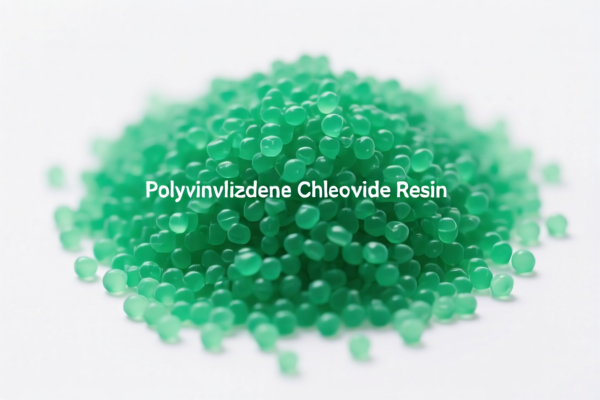
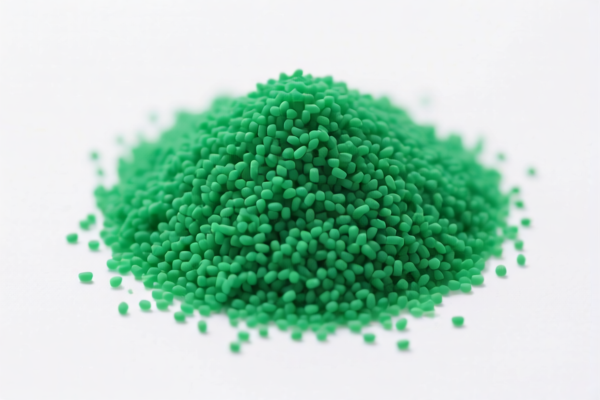
Polyvinyl chloride (PVC) resin for cable and wire applications refers to specialized PVC compounds used as electrical insulation and sheathing materials for electric conductors. These are not finished cables themselves, but raw materials (resins/compounds) used to manufacture insulated wires and cables.
In international trade, the critical distinction is between: * Raw Material (PVC Resin/Compound): The unprocessed or semi-processed material. → HS Code: 3904.xxxx * Finished Product (Insulated Wire/Cable): The product with the conductor and insulation already assembled. → HS Code: 8544.xxxx
⚠️ Critical Distinction:
- If the product is PVC powder, pellets, or compound (raw material) → It belongs to Chapter 39 (Plastics).
- If the product is already insulated wire or cable → It belongs to Chapter 85 (Electrical machinery).
- Do not confuse PVC Resin with Insulated Wires. This guide focuses on the HS Codes for Insulated Wires/Cables (8544) as provided in your<DATA>, but please note that if you are importing raw PVC resin, the HS code would be different (e.g., 3904.10). Based on your<DATA>, the query implies finished insulated conductors, so we proceed with 8544 codes.
📦 2. HS Code Classification Details (2026 Latest Tariff Authority Comparison)
Based on the <DATA> provided, the products fall under Chapter 85: Electrical machinery and equipment. Specifically, Heading 8544: Insulated wire, cable, and other insulated electric conductors.
| HS Code | Product Description | Voltage Range | Material | Applicable Scenario |
|---|---|---|---|---|
8544.49.30.40 |
Other electric conductors, voltage not exceeding 1,000 V | Exceeds 600 V | Copper | Medium-voltage copper cables (601V–1000V), often used in industrial power distribution, HVAC systems, or renewable energy installations. |
8544.49.30.80 |
Other electric conductors, voltage not exceeding 1,000 V | Not specified (Typically ≤600V) | Copper | Low-voltage copper cables (≤600V), standard household wiring, appliance cords, control cables, and low-power industrial connections. |
🔍 Key Reminders:
- Voltage is the key classifier:
-8544.49.30.40is for voltages >600V and ≤1000V.
-8544.49.30.80is for voltages ≤600V (or general "other" below 1000V).
- Material: Both entries specify Copper conductors. Aluminum conductors would fall under different subheadings.
- Insulation: Includes enameled, anodized, or other insulated wires (including PVC, XLPE, etc.).
💰 3. 2026 Latest Tariff Rate Details (Including Additional Taxes, Policy Surcharges)
✅ Applicable Country: United States (US)
✅ Origin: China (CN)
✅ Effective Date: Current rates as per provided data
🎯 1. 8544.49.30.40 – Copper Conductors, Voltage >600V and ≤1000V
| Item | Detail |
|---|---|
| Base Tariff Rate | 0.0% |
| Additional Tariff (Section 301) | 0.0% |
| Total Tax Rate | 0.0% |
| Tax Calculation | CIF Value × 0.0% = $0 |
| De Minimis Exemption | ❌ Not Applicable (Goods are taxable, but rate is 0%) |
| Legal Basis Path | USITC:8544.49.30.40 → No Section 301 Footnote applies to this specific subheading based on provided data. |
📌 Explanation:
- This specific high-voltage (601V–1000V) copper conductor code has a 0% total tax rate under the provided data.
- This is a highly competitive advantage. Ensure your product documentation clearly states the voltage range to qualify for this lower-rate code rather than8544.49.30.80.
- Verify Voltage Rating: If your cable is rated for 600V or less, it may fall under8544.49.30.80, which incurs 30.3% tax. Precision in product labeling is crucial.
🎯 2. 8544.49.30.80 – Other Copper Conductors, Voltage ≤1000V (Typically ≤600V)
| Item | Detail |
|---|---|
| Base Tariff Rate | 5.3% |
| Additional Tariff (Section 301) | 25.0% |
| Total Tax Rate | 30.3% |
| Tax Calculation | CIF Value × 30.3% |
| De Minimis Exemption | ❌ Not Applicable (deny_de_minimis for Section 301 goods over $800) |
| Legal Basis Path | USITC:8544.49.30.80 → Footnote:9903.88.01 (Section 301) |
📌 Explanation:
- This code captures most low-voltage copper cables (≤600V).
- The 30.3% total tax is significant.
- Strategy: If your product can be technically classified as operating in the 601V–1000V range and meets all other criteria for8544.49.30.40, you can save 30.3% in duties. However, misclassification is a serious risk.
- Documentation: Must include technical datasheets showing rated voltage.
🛠️ 4. Customs Clearance Practical Advice (Combat Pitfall Guide)
✅ 1. Required Documentation Checklist (Non-negotiable)
| Document | Required | Explanation |
|---|---|---|
| ✅ Product Specification Sheet | ✔️ | Must clearly state Rated Voltage, Conductor Material (Copper), Insulation Type (e.g., PVC, XLPE), and Standard (e.g., UL, IEC, ASTM). |
| ✅ Technical Data Sheet | ✔️ | Shows voltage ratings, current capacity, and insulation thickness. Critical for proving if it’s >600V or ≤600V. |
| ✅ Commercial Invoice | ✔️ | Must describe goods as: “Insulated Copper Electric Conductors, PVC Insulated, Rated Voltage [XX] V, HS Code 8544.49.30.[40/80]” |
| ✅ Packing List | ✔️ | Itemized list of units, lengths, and gross/net weights. |
| ✅ Certificate of Origin (CO) | ✔️ | Required to verify Chinese origin for Section 301 tax applicability. |
| ✅ UL/IEC Certification | ✔️ | Proof of compliance with safety standards (often required by US buyers/customs). |
✅ 2. Declaration Tips (Key Mantra)
🔥 “Voltage Defines Code, Copper Determines Chapter, Label Clearly, Tax Drops Half!”
| Scenario | Correct Declaration | Wrong Practice |
|---|---|---|
| Cable rated 601V–1000V | 8544.49.30.40 |
Mislabeling as ≤600V → 30.3% tax |
| Cable rated ≤600V | 8544.49.30.80 |
Mislabeling as >600V → Audit risk, penalties |
| Aluminum conductors | Different HS Code (e.g., 8544.49.30.40 may not apply) | Forcing copper code for aluminum → Smuggling/penalty |
| Uninsulated wire | Wrong Chapter (e.g., 7413 for copper wire) | Claiming insulation when none exists → 100% penalty |
✅ 3. Special Case Handling
| Situation | Handling Advice |
|---|---|
| Cable with Multiple Voltage Ratings | Declare the highest rated voltage. If >600V, use 8544.49.30.40 (0% tax). If ≤600V, use 8544.49.30.80 (30.3% tax). |
| Cable Assembled with Connectors | Still falls under 8544 if connectors are integral. Do not separate declaration. |
| OEM Custom Cable | Provide design drawings and voltage specs. Avoid generic descriptions like “Electric Wire.” |
| PVC Resin (Raw Material) | NOT covered in <DATA>. If importing raw PVC pellets, use HS Code 3904.10.00 (Base 5.3%, No 301 tax in most cases, but verify current policy). Do not use 8544 codes for raw resin. |
🌍 5. Global Market Customs Comparison (2026 Latest)
| Country/Region | Recommended HS Code | Tariff (China Origin) | Certification | Notes |
|---|---|---|---|---|
| 🇺🇸 USA | 8544.49.30.40 (If >600V) |
0.0% | UL, NEC | Best Option: Maximize use of >600V rating if technically compliant. |
| 🇺🇸 USA | 8544.49.30.80 (If ≤600V) |
30.3% | UL, NEC | High tax burden. Consider sourcing from non-China origin for exemption. |
| 🇪🇺 EU | 8544.42 / 8544.39 | 0–10% | CE, RoHS | No Section 301 equivalent. Lower overall cost. |
| 🇨🇳 China | 8544.42 / 8544.39 | 5–8% | CCC | Domestic sales or re-export. |
| 🇯🇵 Japan | 8544.42 / 8544.39 | 0–3% | PSE | Low tariffs, strict safety standards. |
📌 Conclusion:
- USA is the only major market with high additional tariffs (30.3%) for low-voltage copper cables.
- Strategic Opportunity: If your product can be engineered or rated for 601V–1000V, you can legally reduce US import duty from 30.3% to 0.0%.
- Risk: Misclassification of voltage can lead to severe penalties. Ensure technical documentation is airtight.
📌 6. Common Errors & Pitfalls (Blood & Tears Lessons)
❌ Error 1: Declaring a 450V cable as 800V to get 0% tax.
👉 Consequence: Customs audit, seizure, and penalties.
✅ Fix: Provide certified voltage rating documentation.
❌ Error 2: Using “PVC Wire” as description without voltage.
👉 Consequence: Customs assigns default code (likely 30.3% tax).
✅ Fix: Always include “Rated Voltage: XXX V” in description.
❌ Error 3: Confusing PVC Resin (Raw) with Insulated Cable.
👉 Consequence: Wrong HS Code (3904 vs 8544), leading to rejection.
✅ Fix: Raw resin = Chapter 39. Finished insulated conductor = Chapter 85.
🎯 7. Conclusion: Precision Classification Saves Thousands!
🎯 Key Takeaway:
🔹 If Voltage >600V → 0% Tax (
8544.49.30.40)
🔹 If Voltage ≤600V → 30.3% Tax (8544.49.30.80)
🔹 Always verify Voltage Rating on Technical Data Sheet.
📌 Actionable Advice:
- For Exporters: Design or rate cables for the 601V–1000V range if technically feasible to save 30.3% in US duties.
- For Importers: Demand UL/IEC certified voltage ratings from suppliers. Do not accept vague “low voltage” claims.
- For Raw PVC Resin Buyers: Use HS Code 3904.10.00 (not in
<DATA>) and check for separate Section 301 applicability.
📣 Immediate Action:
📞 Consult a licensed customs broker for Pre-Ruling if your product voltage is borderline (e.g., 600V vs 601V).
🚀 Accurate HS Code = Accurate Cost = Competitive Edge!
✨ Professional Customs Clearance Starts with Precise Classification!
💼 Every Percent Matters in Global Trade!
Customer Reviews
About HS Code Classification
The Harmonized System (HS) is an internationally standardized nomenclature developed by the World Customs Organization (WCO) to classify traded products. Over 200 countries use the HS system as the basis for customs tariffs, trade statistics, and import/export regulations.
Each HS code follows a hierarchical structure:
- Chapter (2 digits) — Broad category of goods (e.g., Chapter 84: Machinery and Mechanical Appliances)
- Heading (4 digits) — More specific grouping within the chapter
- Subheading (6 digits) — Internationally standardized breakdown, used by all WCO member countries
- National subdivisions (8-10 digits) — Country-specific extensions for further classification, such as US HTSUS 10-digit codes
Correct HS code classification is essential for smooth customs clearance, accurate duty payment, and compliance with trade regulations. Misclassification can lead to customs delays, overpayment of duties, or penalties.
When importing from CN to US, the applicable tariff rates may include:
- Most-Favored-Nation (MFN) rate — The standard duty rate applied to WTO members
- General rate — Applied to countries without trade agreements
- Trade remedy duties — Additional tariffs such as Section 301 (anti-dumping), Section 232 (national security), or countervailing duties
The information provided on this page is for reference purposes only. For official classification, please consult with your local customs authority or a licensed customs broker.