pop fidget toys
CN → US| HS Code | Tariff Rate | Origin | Destination | Doc |
|---|---|---|---|---|
| 9503000073 | 10.0% | CN | US | Official Doc |
| 9503000071 | 10.0% | CN | US | Official Doc |
| 3926909989 | 22.8% | CN | US | Official Doc |
| 9504909080 | 17.5% | CN | US | Official Doc |
| 9504904000 | 10.0% | CN | US | Official Doc |
Product Images
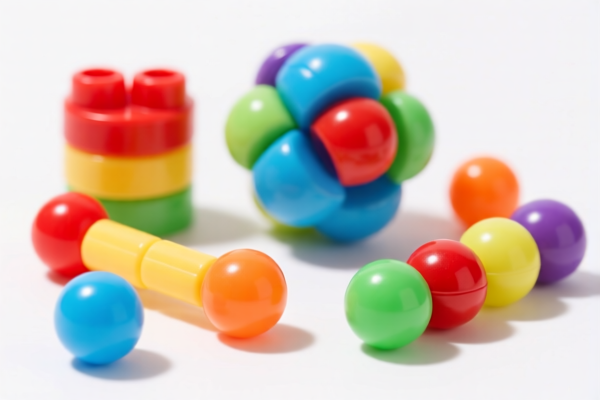
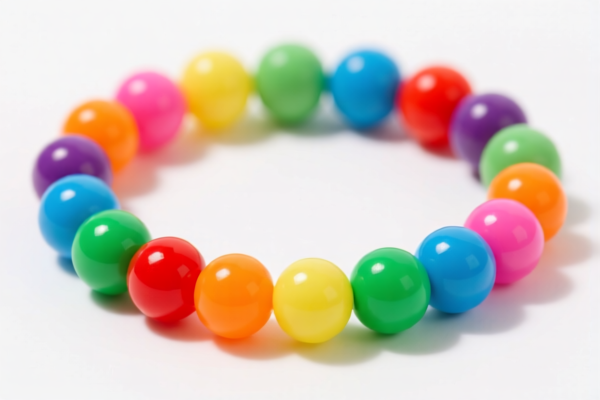
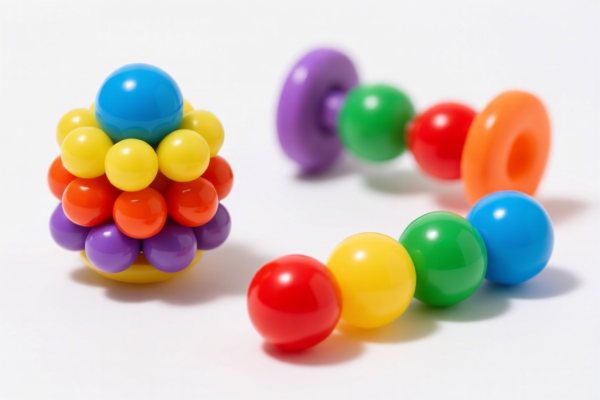
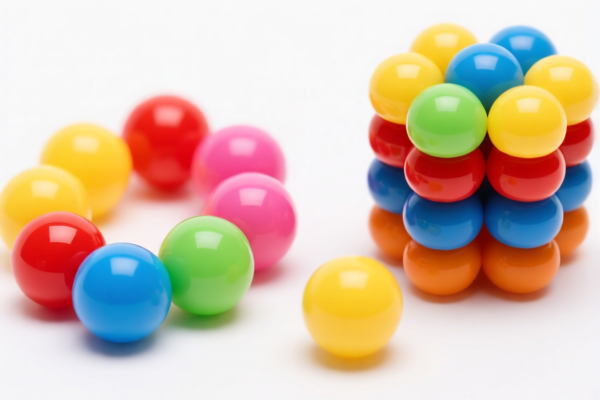
AI Analysis
🌈 Pop Fidget Toys (Pressure Relief Toys / Fidgeters)
🌐 HS Code Reference & Customs Clearance Guide | 2026 Latest Tariff Analysis | Professional Clearance Strategy
📌 1. Product Definition and Classification: Do You Really Understand "Pop Fidget Toys"?
Pop fidget toys, often referred to as "pressure relief toys" or "sensory toys," are small handheld devices designed to reduce stress, anxiety, and improve focus. They typically feature a series of buttons, bubbles, or gears that can be pushed, popped, or rotated. In international trade, their classification varies significantly based on material composition, functionality, and specific design features.
Key Categories: * Standard Fidget Toys (Plastic/Rubber): Most common, featuring pushable buttons or bubbles. Generally classified under Chapter 95 (Toys). * Silicone/Soft Plastic Fidgets: Sometimes viewed as general plastic articles if not clearly "playthings," leading to classification under Chapter 39 (Plastics). * Electronic/Interactive Fidgets: If they have electronic components or are part of a gaming system, they may fall under Chapter 95 or 94 (Gaming Equipment).
⚠️ Critical Distinction Point:
- If the item is primarily for entertainment or stress relief and lacks electronic complexity → Chapter 95 (Toys)
- If the item is made of plastic/rubber and serves as a general stress-relief tool without clear "toy" characteristics in some jurisdictions → Chapter 39 (Plastics)
- If the item is considered a gaming accessory or electronic device → Chapter 95 or 94 (Gaming)
📦 2. HS Code Classification Details (2026 Latest Tariff Authority Comparison)
Based on the provided data, here are the 5 most relevant HS Codes for Pop Fidget Toys, along with their tax implications:
| HS Code | Product Description | Application Scenario | Material/Feature | Total Tax Rate |
|---|---|---|---|---|
9503.00.00.73 |
Pressure Relief Toys - Other Toys | Standard plastic/rubber fidget toys | Plastic, Rubber, Silicone | 10.0% |
9503.00.00.71 |
Other Toys or Puzzles | Silicone/plastic fidgets with no conflict | Silicone, Plastic | 10.0% |
3926.90.99.89 |
Other Plastic Articles | Fidgets classified as general plastic goods | Plastic, Rubber | 22.8% |
9504.90.90.80 |
Games/Entertainment Equipment | Fidgets viewed as entertainment devices | General | 17.5% |
9504.90.40.00 |
Non-coin-operated Game Accessories | Fidgets linked to gaming consoles | General | 10.0% |
🔍 Key Reminder:
- HS Code9503is the most common and favorable classification for standard pop fidgets, with a 10% total tax rate.
- HS Code3926applies if the product is deemed a "general plastic article" rather than a toy, resulting in a higher tax rate of 22.8%.
- HS Code9504is used if the fidget is considered part of a gaming system or entertainment equipment, with rates ranging from 10% to 17.5%.
💰 3. 2026 Latest Tariff Rate Details (Including Surtaxes, Policy Surcharges)
✅ Applicable Country: United States (US)
✅ Origin: China (CN)
✅ Effective Date: From November 10, 2025 (including subsequent imports)
🎯 1. 9503.00.00.73 & 9503.00.00.71 —— Standard Pop Fidget Toys (Chapter 95)
| Item | Content |
|---|---|
| Base Tariff | 0.0% (ad valorem) |
| USITC Surtax | 0.0% |
| Section 122 Surtax | +10% (Specific to China-origin goods under Section 122) |
| Total Tax Rate | 10.0% |
| Tax Calculation | CIF Value × 10% |
| De Minimis Eligibility | ❌ No (If total shipment value exceeds de minimis threshold, full tax applies) |
| Legal Basis Path | Section 122: 10% → USITC: 9503.00.00.73/71 |
📌 Explanation:
- The 10% Section 122 surtax is applied specifically to certain Chinese-origin goods, including many toys and plastic articles.
- Unlike Section 301 tariffs (which can be 25% or higher), Section 122 is a more targeted surtax for specific product categories.
- Total effective tax rate is 10%, which is relatively low compared to other electronic or machinery imports.
🎯 2. 3926.90.99.89 —— Plastic Articles (Chapter 39)
| Item | Content |
|---|---|
| Base Tariff | 5.3% |
| USITC Surtax | 7.5% |
| Section 122 Surtax | +10% |
| Total Tax Rate | 22.8% |
| Tax Calculation | CIF Value × 22.8% |
| De Minimis Eligibility | ❌ No |
| Legal Basis Path | Section 122: 10% + USITC: 7.5% + Base: 5.3% → USITC: 3926.90.99.89 |
📌 Warning:
- If customs classifies your fidget toy as a "plastic article" instead of a "toy," the tax rate more than doubles from 10% to 22.8%.
- This classification often happens if the product lacks clear "toy-like" features (e.g., simple silicone squeezers without buttons/pops).
- Always provide clear product descriptions and images to support toy classification.
🎯 3. 9504.90.90.80 & 9504.90.40.00 —— Gaming/Entertainment Equipment (Chapter 94/95)
| Item | Content |
|---|---|
| Base Tariff | 0.0% |
| USITC Surtax | 7.5% (9504.90.90.80) / 0.0% (9504.90.40.00) |
| Section 122 Surtax | +10% |
| Total Tax Rate | 17.5% (9504.90.90.80) / 10.0% (9504.90.40.00) |
| Tax Calculation | CIF Value × Rate |
| De Minimis Eligibility | ❌ No |
| Legal Basis Path | Section 122: 10% + USITC Surtax → USITC: 9504.90.xx.xx |
📌 Note:
-9504.90.40.00(Non-coin-operated game accessories) has a 10% total rate, same as Chapter 95 toys.
-9504.90.90.80(Other games) has a 17.5% total rate due to the 7.5% USITC surtax.
- Use9504.90.40.00if the fidget is marketed as a "gaming accessory" or "focus tool for gamers."
🛠️ 4. Customs Clearance Practical Advice (Battle-Tested Pitfall Guide)
✅ 1. Preparation Checklist (No Exceptions)
| Document | Required | Notes |
|---|---|---|
| ✅ Product Specifications | ✔️ | Include material (silicone, ABS plastic, etc.), dimensions, button count |
| ✅ Product Photos | ✔️ | Clear images of front, back, and close-ups of buttons/bubbles |
| ✅ Material Declaration | ✔️ | Specify if BPA-free, food-grade silicone, etc. |
| ✅ Commercial Invoice | ✔️ | Clearly state "Pop Fidget Toy" or "Stress Relief Toy" |
| ✅ Packing List | ✔️ | Detail packaging contents to avoid separation issues |
| ✅ Third-Party Test Report | ✔️ | CPC (Children’s Product Certificate) if marketed to children <12 |
✅ 2. Declaration Tips (Key Mantra)
🔥 “Toy vs. Plastic: Description Matters! Clear Photos, Lower Tax!”
| Scenario | Correct Declaration | Incorrect Action |
|---|---|---|
| Standard Pop Fidget | HS 9503.00.00.73 – "Pop Fidget Toy" |
Misdeclare as "Plastic Toy" → May trigger 3926 |
| Silicone Squeezer (No Pops) | HS 3926.90.99.89 – "Plastic Stress Reliever" |
Declare as "Toy" → Risk of reclassification & penalties |
| Gaming Focus Tool | HS 9504.90.40.00 – "Gaming Accessory" |
Declare as "Toy" → May miss gaming-specific exemptions |
| Mixed Shipments | Separate HS Codes per item | Mix all items under one HS → Customs audit risk |
✅ 3. Special Cases Handling
| Scenario | Handling Advice |
|---|---|
| OEM Custom Fidgets | Provide design files + client order to prove "toy" nature |
| Child-Oriented (Age <12) | Must have CPC (Children’s Product Certificate) + ASTM F963 test |
| Adult-Oriented (Age 13+) | Can be declared as "Adult Stress Relief Toy," may avoid CPC |
| Electronic Fidgets (e.g., vibrating) | May fall under 8543 or 9503 with higher scrutiny |
🌍 5. Global Market Clearance Comparison (2026 Latest)
| Country/Region | Recommended HS Code | Tariff Rate | Certification | Notes |
|---|---|---|---|---|
| 🇺🇸 USA | 9503.00.00.73 |
10% | CPC (if <12) | Section 122 applies |
| 🇨🇳 China | 9503.00.00.73 |
0% | CCC (if applicable) | No surtax |
| 🇪🇺 EU | 9503.00.00.70 |
0% | CE + EN71 | No surtax |
| 🇬🇧 UK | 9503.00.00.70 |
0% | UKCA | No surtax |
| 🇯🇵 Japan | 9503.00.00.90 |
0% | PSE (if electronic) | No surtax |
📌 Conclusion:
- The US market is the most complex due to Section 122 surtaxes.
- EU, UK, Japan, and China generally have 0% tariffs for toys, making them easier to clear.
- Always declare as "Toy" if possible to avoid higher3926plastic rates.
📌 6. Common Errors & Pitfall Guide (Lessons Learned)
❌ Mistake 1: Declaring silicone fidgets as "Toys" when they lack interactive elements
👉 Consequence: Customs may reclassify under 3926 → 22.8% tax instead of 10%!
❌ Mistake 2: Missing CPC for products marketed to children
👉 Consequence: Detention at customs, fines, or return shipment!
❌ Mistake 3: Using vague descriptions like "Plastic Object" or "Stress Reliever"
👉 Consequence: Customs lacks clarity → Delay or additional scrutiny!
❌ Mistake 4: Combining different materials in one shipment without proper breakdown
👉 Consequence: Mixed HS codes required → Potential audit risk!
✅ Correct Action:
"Pop Fidget Toy, Plastic, Multi-color, 24 Buttons, For Stress Relief, Age 13+, Model XYZ"
🎯 7. Conclusion: Precise Classification Saves Money!
🎯 Remember the Mantra:
🔹 "Toy vs. Plastic: Choose Wisely! 10% vs. 22.8% – The Difference is Huge!"
🔹 "Clear Photos, Accurate Description, Smooth Clearance!"
📌 Pro Tip:
If your fidget toys are originating from Vietnam, Thailand, or Malaysia, you may be eligible for preferential tariffs under various FTAs.
Consider applying for Advance Rulings to confirm HS Code classification before shipping.
📣 Immediate Action:
📞 Contact a professional customs broker + Provide Product Images + Apply for HS Code Advance Ruling
🚀 Let your fidget toys clear customs smoothly, reduce costs, and boost profits!
✨ Professional Clearance Starts with Precise Classification!
💼 Every cent you save is a cent you earn!
Customer Reviews
About HS Code Classification
The Harmonized System (HS) is an internationally standardized nomenclature developed by the World Customs Organization (WCO) to classify traded products. Over 200 countries use the HS system as the basis for customs tariffs, trade statistics, and import/export regulations.
Each HS code follows a hierarchical structure:
- Chapter (2 digits) — Broad category of goods (e.g., Chapter 84: Machinery and Mechanical Appliances)
- Heading (4 digits) — More specific grouping within the chapter
- Subheading (6 digits) — Internationally standardized breakdown, used by all WCO member countries
- National subdivisions (8-10 digits) — Country-specific extensions for further classification, such as US HTSUS 10-digit codes
Correct HS code classification is essential for smooth customs clearance, accurate duty payment, and compliance with trade regulations. Misclassification can lead to customs delays, overpayment of duties, or penalties.
When importing from CN to US, the applicable tariff rates may include:
- Most-Favored-Nation (MFN) rate — The standard duty rate applied to WTO members
- General rate — Applied to countries without trade agreements
- Trade remedy duties — Additional tariffs such as Section 301 (anti-dumping), Section 232 (national security), or countervailing duties
The information provided on this page is for reference purposes only. For official classification, please consult with your local customs authority or a licensed customs broker.