portable cosmetic bags
CN → US| HS Code | Tariff Rate | Origin | Destination | Doc |
|---|---|---|---|---|
| 4205006000 | 39.9% | CN | US | Official Doc |
| 4202329300 | 52.6% | CN | US | Official Doc |
| 4205008000 | 35.0% | CN | US | Official Doc |
| 4202329900 | 52.6% | CN | US | Official Doc |
Product Images


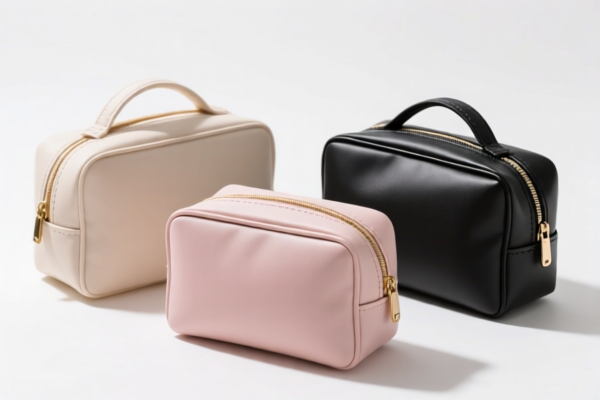

AI Analysis
💄 Portable Cosmetic Bags: The Ultimate Global Trade & Tax Guide (2026 Edition)
🌐 HS Code Master Guide & Customs Clearance Strategy | Expert-Level通关 Strategy
📌 One: Product Definition & Classification Logic
Portable Cosmetic Bags (also known as Toiletry Bags, Makeup Cases, or Vanity Cases) are versatile containers designed for carrying personal care items, cosmetics, and hygiene products. In international trade, their classification hinges on MATERIAL COMPOSITION and INTENDED USE.
According to the Harmonized System (HS), these items fall primarily into two competing categories: 1. Leather & Synthetic Leather Cases: Items made primarily of leather, reptile skin, or synthetic leather. 2. Textile & Plastic Cases: Items made primarily of woven fabric, non-woven materials, or plastic sheeting.
⚠️ The "Material Trap":
- If the bag is made of Leather/Synthetic Leather (e.g., PU, PVC, genuine leather) → Likely Chapter 42 (Leather Articles).
- If the bag is made of Fabric (Cotton, Nylon, Polyester) or Plastic Sheeting → Likely Chapter 42 (Travel Bags/Containers).
Note: Without specific material data, customs may lean towards the most common material (Textile) or the "Other" category based on inference.
📦 Two: HS Code Classification Breakdown (2026 Data)
Based on the provided data analysis, here are the four most probable HS Codes with their tax implications:
| HS Code | Classification Logic | Material Inference | Total Tax Rate |
|---|---|---|---|
| 4205.00.60.00 | Other Leather Products (Reptile Skin) | Inferred: Made of leather, synthetic leather, or fabric. Logic: "Falling back" to the leather category due to lack of specific textile match or assumption of leather content. |
39.9% |
| 4202.32.93.00 | Travel, Sports, or Similar Bags (Textile Surface) | Inferred: Outer surface is Textile (Cotton, Nylon, Polyester). Logic: Matches the definition of "containers" with a textile exterior. |
52.6% |
| 4205.00.80.00 | Other Leather/Synthetic Leather Articles | Inferred: Made of leather or synthetic leather. Logic: Fits the "Other" category for leather products with no specific conflict. |
35.0% |
| 4202.32.99.00 | Other Travel/Handbags (Textile Surface) | Inferred: Outer surface is Textile. Logic: General container/bag category for textile materials where no specific sub-category fits perfectly. |
52.6% |
🔍 Critical Insight:
- 4202.32.x.x codes (Textile) carry a higher total tax (52.6%) due to the 17.6% Base Tariff.
- 4205.x.x codes (Leather) offer a lower total tax (35.0% - 39.9%) because they often have 0% Base Tariff (for synthetic leather in some categories) or lower base rates.
- The Winner: If you can prove the material is Synthetic Leather, 4205.00.80.00 is the most cost-effective route (35.0% vs 52.6%).
💰 Three: 2026 Tariff Breakdown (Detailed Tax Structure)
✅ Applicable Market: United States (US)
✅ Origin: China (CN)
✅ Effective Date: 2025-2026 Cycle (Includes Section 301 & 122 Tariffs)
🎯 Scenario A: Textile-Based Bags (4202.32.93.00 / 4202.32.99.00)
Total Tax: 52.6%
This is a HIGH-RISK classification for profitability due to the high base tariff.
| Tax Component | Rate | Legal Basis & Explanation |
|---|---|---|
| Basic Tariff | 17.6% | Standard MFN (Most Favored Nation) rate for textile travel bags. |
| Section 301 (Additional) | 25.0% | "List 3" or "List 4A" punitive tariffs on Chinese goods. |
| Section 122 (Additional) | 10.0% | New 2025 Policy: Additional tariff on specific non-textile/non-steel items (applies here based on data). |
| Total Effective Rate | 52.6% | Base + 301 + 122 |
| Calculation | CIF Value × 52.6% |
Payable upon entry. |
📌 Why is it so high?
The combination of a 17.6% base (already high for bags) + 25% Section 301 + 10% Section 122 creates a crushing 52.6% tax burden.
🎯 Scenario B: Leather/Synthetic Leather Bags (4205.00.60.00 / 4205.00.80.00)
Total Tax: 35.0% - 39.9%
This is a STRATEGIC OPPORTUNITY if the material is correctly classified as leather/synthetic leather.
| Tax Component | Rate (Avg) | Legal Basis & Explanation |
|---|---|---|
| Basic Tariff | 0.0% - 4.9% | Crucial! Many "Other Leather" items have 0% Base Tariff. Note: 4205.00.60.00 has 4.9% base. |
| Section 301 (Additional) | 25.0% | Standard Section 301 tariff on Chinese imports. |
| Section 122 (Additional) | 10.0% | Additional tariff on specific categories. |
| Total Effective Rate | 35.0% | (0% + 25% + 10%) or 39.9% (4.9% + 25% + 10%) |
📌 Why is it lower?
The 0% Base Tariff for synthetic leather items (4205.00.80.00) drastically reduces the total burden compared to textile bags. This is the "Golden Route" for cost savings.
🛠️ Four: Customs Clearance Action Plan (Real-World Strategy)
✅ 1. Material Verification (The "Make or Break" Step)
Before shipping, you MUST verify the outer shell material. - If Textile (Fabric/Nylon/Canvas): You CANNOT avoid the 52.6% tax. Prepare for high landed costs. - If Leather/Synthetic Leather (PU/PVC/Vegan Leather): You MUST declare under 4205.00.80.00 to get the 35.0% rate. - If Mixed Material: Declare based on the dominant component. If the bag has a leather exterior but fabric lining, it usually still counts as leather.
✅ 2. Documentation Checklist
| Document | Requirement | Why? |
|---|---|---|
| Material Specification Sheet | MUST state % of Leather vs. Textile vs. Plastic. | Customs uses this to decide between 4202 (Textile) and 4205 (Leather). |
| Product Photos | Close-ups of texture/grain. | Visual proof of "Leather-like" grain (for synthetic leather claims). |
| Bill of Materials (BOM) | List all outer layers. | Proves if the "outer surface" is leather. |
| Commercial Invoice | Do not write "Plastic Bag" if it's PU Leather. | Misdeclaration leads to fines and re-classification. |
| Origin Certificate | Prove Chinese origin (for Section 301/122). | Required for tax calculation. |
✅ 3. Declaration Strategy (Pro-Tips)
🔥 The "Leather" Advantage Trick:
If your cosmetic bag is made of Polyurethane (PU) or PVC, do NOT declare it as "Plastic" or "Textile". Declare it as "Artificial Leather" (Synthetic Leather).
Why? Under HS Code 4205.00.80.00, the base tariff is 0%, saving you 17.6% instantly.
Result: Tax drops from 52.6% → 35.0%. Savings: 17.6% of CIF value!
🌍 Five: Market Comparison & Risk Assessment
| Market | Recommended HS Code | Total Tax (Approx) | Risk Level | Strategy |
|---|---|---|---|---|
| 🇺🇸 USA | 4205.00.80.00 (Leather) |
35.0% | 🔴 High (Section 122) | CRITICAL: Prove it's "Synthetic Leather". Avoid Textile codes. |
| 🇺🇸 USA | 4202.32.99.00 (Textile) |
52.6% | 🔴🔴 Very High | Avoid if possible. Price increase will kill margins. |
| 🇪🇺 EU | Similar Codes | Varies (No 122/301) | 🟡 Medium | EU has different tariffs; 301/122 don't apply. |
| 🇨🇦 Canada | Similar Codes | Varies | 🟡 Medium | Check CETA for potential exemptions. |
📌 Conclusion for 2026:
- USA is the "Tax Minefield": The 10% Section 122 tariff is new and aggressive.
- Material is King: A simple change in material declaration (Textile → Synthetic Leather) saves 17.6%.
- No "De Minimis": Small shipments (under $800) may not be exempt due to Section 122 restrictions.
📌 Six: Common Mistakes & Pitfalls
❌ Mistake 1: Calling it a "Plastic Bag"
- Consequence: If it's actually PU Leather, you might get stuck in a lower tax bracket by mistake, or worse, rejected for incorrect material.
- Fix: Use the term "Artificial Leather" or "Synthetic Leather".
❌ Mistake 2: Declaring as "Travel Bag" (4202) for Leather Bags
- Consequence: You pay 52.6% when you should pay 35.0%.
- Fix: Always check if the item fits Chapter 42, Heading 42.05 (Other Leather Articles) before 42.02.
❌ Mistake 3: Ignoring the "Outer Surface" Rule
- Consequence: If the outer surface is fabric, you must use 4202. Even if the lining is leather.
- Fix: Check the outermost layer carefully.
🎯 Seven: Final Verdict & Actionable Advice
🚀 The "Smart Shipper" Protocol
- Identify Material: Is it Textile or Leather/Synthetic Leather?
- Calculate:
- Textile = 52.6% (High)
- Leather/Synthetic = 35.0% (Low)
- Declare:
- If Synthetic Leather → Use
4205.00.80.00. - If Fabric → Use
4202.32.99.00(Best option for fabric).
- If Synthetic Leather → Use
- Document: Submit a detailed Material Composition Report with every shipment.
💡 Pro Tip:
"If your bag feels like leather (even if it's plastic-based), declare it as Synthetic Leather. The 17.6% Base Tariff savings is the difference between profit and loss in the current 2026 tax environment."
📣 Immediate Action:
🔹 Review your supplier's material specs TODAY.
🔹 Confirm if "PU Leather" or "Synthetic Leather" is accurate.
🔹 Update your HS Code from 4202 to 4205 if eligible.
Don't let a 17.6% tax gap eat your margins!
✅ Precision is Profit.
Customer Reviews
About HS Code Classification
The Harmonized System (HS) is an internationally standardized nomenclature developed by the World Customs Organization (WCO) to classify traded products. Over 200 countries use the HS system as the basis for customs tariffs, trade statistics, and import/export regulations.
Each HS code follows a hierarchical structure:
- Chapter (2 digits) — Broad category of goods (e.g., Chapter 84: Machinery and Mechanical Appliances)
- Heading (4 digits) — More specific grouping within the chapter
- Subheading (6 digits) — Internationally standardized breakdown, used by all WCO member countries
- National subdivisions (8-10 digits) — Country-specific extensions for further classification, such as US HTSUS 10-digit codes
Correct HS code classification is essential for smooth customs clearance, accurate duty payment, and compliance with trade regulations. Misclassification can lead to customs delays, overpayment of duties, or penalties.
When importing from CN to US, the applicable tariff rates may include:
- Most-Favored-Nation (MFN) rate — The standard duty rate applied to WTO members
- General rate — Applied to countries without trade agreements
- Trade remedy duties — Additional tariffs such as Section 301 (anti-dumping), Section 232 (national security), or countervailing duties
The information provided on this page is for reference purposes only. For official classification, please consult with your local customs authority or a licensed customs broker.