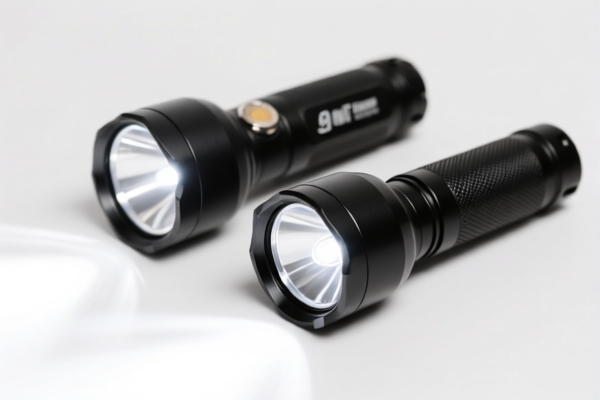
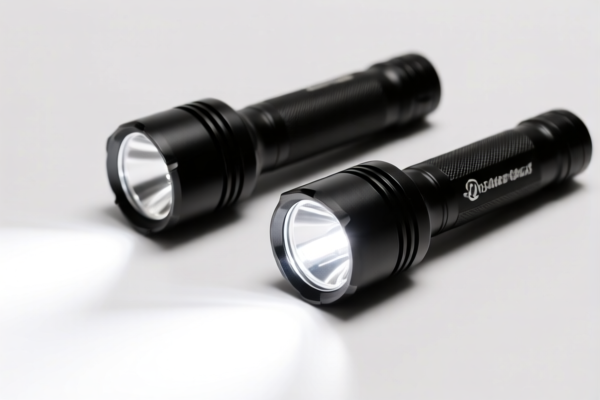
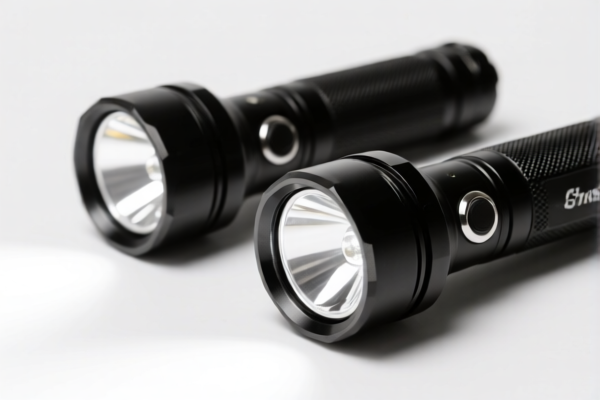
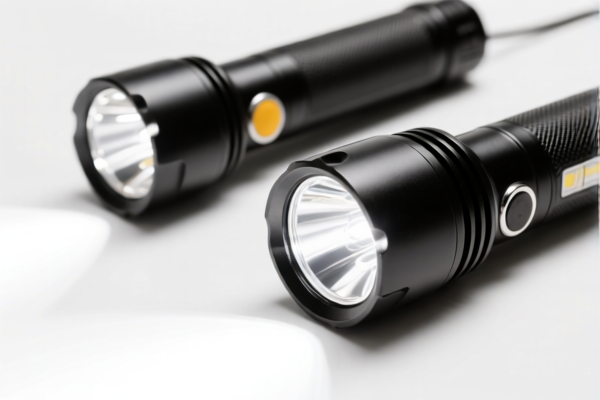
portable electric lamp e.g., flashlight
CN → US| HS Code | Tariff Rate | Origin | Destination | Doc |
|---|---|---|---|---|
| 8513102000 | 22.5% | CN | US | Official Doc |
| 8513902000 | 97.5% | CN | US | Official Doc |
Product Images
AI Analysis
🔦 Portable Electric Lamps (e.g., Flashlights)
🌐 HS Code Reference & Customs Clearance Guide | 2026 Latest Tariff Analysis | Professional Clearance Strategy
📌 I. Product Definition & Classification: Do You Really Understand "Flashlights"?
Portable electric lamps, commonly known as flashlights, are essential illumination devices powered by their own internal energy source (batteries or rechargeable cells). In international trade, classification hinges on two main factors: power source type (primary vs. secondary/rechargeable) and material composition (if categorized under decorative/other lighting).
Classification Logic: 1. Primary Cell/Lamp (Non-rechargeable): Typically falls under 8513.10.40.00. These are standard disposable battery-powered lights. 2. Secondary Cell/Lamp (Rechargeable): Typically falls under 8513.10.20.00. These include devices with built-in rechargeable batteries. 3. Non-Electric/Material-Based: If the product is classified as a "portable lamp" made of base metal (non-electrical or misclassified), it may fall under 9405.21.60.20. However, for electric flashlights, this is generally a high-cost misclassification unless the device is explicitly non-electric.
⚠️ Key Distinction Point:
- Electric vs. Non-Electric: Must clearly state power source. If electric, avoid 9405 codes to prevent massive tariff jumps.
- Rechargeable vs. Disposable: Determines the subheading within 8513.10.
- Material Conflicts: Ensure the description matches "electric apparatus," not "metalware."
📦 2. HS Code Classification Details (2026 Latest Tariff Authority对照)
| HS Code | Product Description | Application Scenario | Tax Rate Structure |
|---|---|---|---|
8513.10.40.00 |
Portable electric lamps, operating by own energy source (e.g., flashlights using primary cells) | Standard disposable battery flashlights, camping lights, LED flashlights with non-rechargeable batteries | Total: 13.5% |
8513.10.20.00 |
Portable electric lamps, operating by own energy source (e.g., rechargeable flashlights) | Rechargeable LED flashlights, power bank-integrated lights, smart flashlights | Total: 22.5% |
9405.21.60.20 |
Portable lamps, base metal construction (Non-electric or misclassified) | Note: For electric flashlights, this is a high-risk error category | Total: 41.0% |
8513.10.40.00 |
Portable electric lamps, matching flashlight characteristics, no material conflict | Standard electronic flashlights, tactical lights | Total: 13.5% |
8513.10.20.00 |
Portable electric lamps, consistent with flashlight use and form factor | Rechargeable handheld lights | Total: 22.5% |
🔍 Critical Reminder:
- Electric flashlights MUST be classified under Chapter 85 (Electrical Machinery).
- Classifying an electric flashlight under 9405 (Furniture/Lighting Fixtures of Base Metal) incurs a 41% total tax due to high USITC Section 301 tariffs (+25%) on base metal goods. This is a common and costly error.
- Differentiate between Rechargeable (20) and Non-Rechargeable (40) to apply the correct base duty.
💰 3. Detailed Tariff Rate Analysis (2026 Latest)
✅ Applicable Country: USA (US)
✅ Origin: China (CN)
✅ Effective Date: Current 2026 Tariff Schedule
🎯 1. 8513.10.40.00 — Portable Electric Lamps (Non-Rechargeable)
| Item | Details |
|---|---|
| Base Duty | 3.5% (ad valorem) |
| Section 301 Tariff | 10% (122-Clause Tariff, specific to this subheading) |
| USITC Surcharge | 0.0% (No additional Section 301 surcharge for this specific code) |
| Total Tariff Rate | 13.5% |
| Calculation | CIF Value × 13.5% |
| De Minimis Exemption | ❌ Not Eligible (Deny de minimis for Section 301 goods from China) |
| Legal Basis | HTSUS:8513.10.40.00 → USITC:8513.10.40.00 → Section 301: 10% |
📌 Explanation:
- This is the most cost-effective classification for standard non-rechargeable flashlights.
- The 10% rate is a specific 122-Clause tariff, not the higher 25% Section 301 rate.
- Total 13.5% is manageable for most consumer electronics.
🎯 2. 8513.10.20.00 — Portable Electric Lamps (Rechargeable)
| Item | Details |
|---|---|
| Base Duty | 12.5% (ad valorem) |
| Section 301 Tariff | 10% (122-Clause Tariff) |
| USITC Surcharge | 0.0% |
| Total Tariff Rate | 22.5% |
| Calculation | CIF Value × 22.5% |
| De Minimis Exemption | ❌ Not Eligible |
| Legal Basis | HTSUS:8513.10.20.00 → USITC:8513.10.20.00 → Section 301: 10% |
📌 Note:
- Higher base duty (12.5%) compared to non-rechargeable (3.5%).
- Still subject to the same 10% 122-Clause tariff.
- Total 22.5% is significantly higher than non-rechargeable but far below the 41% misclassification risk.
🎯 3. 9405.21.60.20 — Portable Lamps (Base Metal / Misclassification Risk)
| Item | Details |
|---|---|
| Base Duty | 6.0% |
| USITC Surcharge | 25.0% (Section 301 on Base Metal goods) |
| Section 301 Tariff | 10% |
| Total Tariff Rate | 41.0% |
| Calculation | CIF Value × 41.0% |
| De Minimis Exemption | ❌ Not Eligible |
| Legal Basis | HTSUS:9405.21.60.20 → USITC:9405.21.60.20 → Section 301: 25% |
🚨 WARNING:
- This rate is 2x higher than the correct electric classification.
- DO NOT use this code for electric flashlights.
- Only use if the product is explicitly non-electric (e.g., oil lamps, candle holders) made of base metal.
- Misclassification here leads to severe penalties and back taxes.
🛠️ 4. Customs Clearance Practical Advice (Battle-Tested Pitfall Guide)
✅ 1. Required Documentation Checklist (Non-negotiable)
| Document | Must Provide | Description |
|---|---|---|
| ✅ Product Specification Sheet | ✔️ | Must clearly state: Power Source (Battery Type: Alkaline/Li-ion), Voltage, Wattage, IP Rating (if waterproof). |
| ✅ Circuit Diagram / Schematic | ✔️ | Proof of electrical components. Critical for distinguishing from non-electric base metal lamps (9405). |
| ✅ Product Photos (Labeled) | ✔️ | Clear images of switches, charging ports (if any), and battery compartments. |
| ✅ Commercial Invoice | ✔️ | Explicitly describe as "Portable Electric Flashlight" or "LED Handheld Lamp." Never use vague terms like "Metal Lamp." |
| ✅ Packing List | ✔️ | Detail batteries separately if shipped loose (UN38.3 certification may be required for Li-ion batteries). |
| ✅ FCC Declaration | ✔️ | Required for all electronic devices emitting radio frequencies or digital signals. |
| ✅ Battery Safety Certs | ✔️ | UL, CE, or UN38.3 for lithium-ion batteries included in the shipment. |
✅ 2. Declaration Tips (Key Mantras)
🔥 "Be Electric, Not Metal. Be Specific, Not Vague."
| Scenario | Correct Declaration | Wrong Practice |
|---|---|---|
| Standard Flashlight | "LED Flashlight, Battery Powered, Model XYZ" | "Metal Lamp" or "Lighting Fixture" |
| Rechargeable Flashlight | "Rechargeable LED Flashlight, Li-ion Battery" | "Electric Lamp" (Too vague) |
| Gift Set (Light + Case) | Declare as Single Commodity (8513) | Split into "Case" and "Light" |
| Batteries Included | "Flashlight with AAA Batteries" | Declare batteries separately if they are part of the sale |
✅ 3. Special Situation Handling
| Situation | Handling Advice |
|---|---|
| OEM Custom Flashlights | Provide design files proving electrical nature. Avoid generic "Metal Lamp" descriptions. |
| Waterproof/Submersible Lights | Still 8513.10. Provide IP67/IP68 rating documentation to justify high-value claims. |
| Shipment with Li-ion Batteries | Ensure UN38.3 Test Summary and MSDS are attached. Without these, customs will hold or reject. |
| Hybrid Products (e.g., Power Bank + Flashlight) | Classify based on essential character. If light is primary, use 8513. If power bank is primary, use 8507.60.00.00. |
🌍 5. Global Market Customs Comparison (2026 Latest)
| Country/Region | Recommended HS Code | Tariff Rate | Certification Requirements | Notes |
|---|---|---|---|---|
| 🇺🇸 USA | 8513.10.40.00 (Non-Rec) 8513.10.20.00 (Rec) |
13.5% (Non-Rec) 22.5% (Rec) |
FCC, UL (for batteries), CPC (if toy) | High Risk: Do not use 9405 (41% tax). |
| 🇨🇳 China | 8513.10.40.00 |
5% - 10% | CCC (if applicable) | Standard export rates. |
| 🇪🇺 EU | 8513.10.80 |
0% - 2.7% | CE, RoHS, REACH | Lower tariffs, but strict CE compliance. |
| 🇬🇧 UK | 8513.10.00 |
0% - 4% | UKCA, RoHS | Post-Brexit regulations apply. |
| 🇨🇦 Canada | 8513.10.00.00 |
0% | ICES-003, UL/CSA | Free trade agreement may apply. |
📌 Conclusion:
- USA is the most tariff-sensitive market for Chinese-manufactured flashlights due to Section 301 duties.
- EU/UK offer better tax benefits but have stricter environmental/safety certifications (CE/RoHS).
- Misclassification into 9405 is the #1 cause of customs delays and excessive tax payments in the US.
📌 6. Common Mistakes & Pitfalls (Lessons Learned the Hard Way)
❌ Mistake 1: Describing an electric flashlight as "Metal Hand Light" or "Portable Lamp"
👉 Consequence: Customs may classify under 9405.21.60.20 → 41% Tax + Fines!
❌ Mistake 2: Ignoring Battery Compliance (Li-ion)
👉 Consequence: Shipment held at port for UN38.3/MSDS verification → Demurrage Charges ($50-$100/day)!
❌ Mistake 3: Mixing Rechargeable and Non-Rechargeable in One HS Code
👉 Consequence: Audit risk. Ensure accurate subheading (20 vs. 40) based on battery type.
❌ Mistake 4: Not Declaring FCC Compliance
👉 Consequence: Product rejected at US Border → Return to Origin or Destruction.
✅ Correct Approach:
"LED Flashlight, 100 Lumens, Waterproof IPX4, Uses 3x AAA Batteries (Included), Model XYZ, FCC Certified"
🎯 7. Conclusion: Precise Classification Saves Money!
🎯 Remember the Mantra:
🔹 "Electric = 8513. Metal = 9405. Don't Mix Them!"
🔹 "Rechargeable is 22.5%, Non-Rechargeable is 13.5%. Know Your Battery!"
🔹 "41% is a trap. 13.5% is the goal."
📌 Pro Tip:
If your flashlights are shipped with lithium batteries, ensure your freight forwarder is DG (Dangerous Goods) certified. Air freight requires strict UN38.3 compliance.
📣 Immediate Action Required:
📞 Audit Your Current HS Codes: Are you using 9405? Switch to 8513 immediately to save 27.5% - 28% in taxes!
🚀 Update Your Invoice Descriptions: Be specific about "Electric" and "Battery Type."
💡 Your Bottom Line Depends on Your HS Code!
✨ Professional Clearance Starts with Accurate Classification!
💼 Don't Let a 2% Description Error Cost You 30% in Tariffs!
Customer Reviews
About HS Code Classification
The Harmonized System (HS) is an internationally standardized nomenclature developed by the World Customs Organization (WCO) to classify traded products. Over 200 countries use the HS system as the basis for customs tariffs, trade statistics, and import/export regulations.
Each HS code follows a hierarchical structure:
- Chapter (2 digits) — Broad category of goods (e.g., Chapter 84: Machinery and Mechanical Appliances)
- Heading (4 digits) — More specific grouping within the chapter
- Subheading (6 digits) — Internationally standardized breakdown, used by all WCO member countries
- National subdivisions (8-10 digits) — Country-specific extensions for further classification, such as US HTSUS 10-digit codes
Correct HS code classification is essential for smooth customs clearance, accurate duty payment, and compliance with trade regulations. Misclassification can lead to customs delays, overpayment of duties, or penalties.
When importing from CN to US, the applicable tariff rates may include:
- Most-Favored-Nation (MFN) rate — The standard duty rate applied to WTO members
- General rate — Applied to countries without trade agreements
- Trade remedy duties — Additional tariffs such as Section 301 (anti-dumping), Section 232 (national security), or countervailing duties
The information provided on this page is for reference purposes only. For official classification, please consult with your local customs authority or a licensed customs broker.