portable printer
CN → US| HS Code | Tariff Rate | Origin | Destination | Doc |
|---|---|---|---|---|
| 8443321020 | 17.5% | CN | US | Official Doc |
| 8471900000 | 35.0% | CN | US | Official Doc |
| 8471809000 | 35.0% | CN | US | Official Doc |
| 8443321090 | 17.5% | CN | US | Official Doc |
Product Images
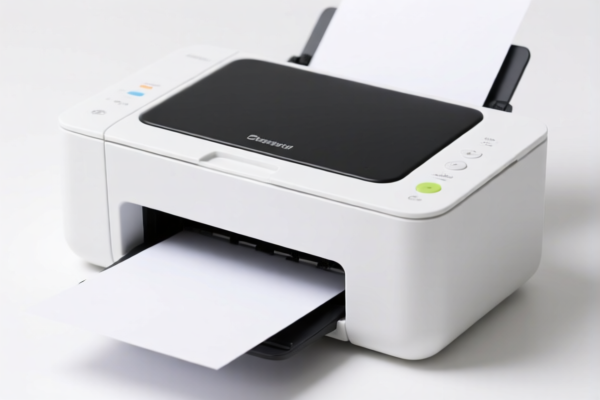
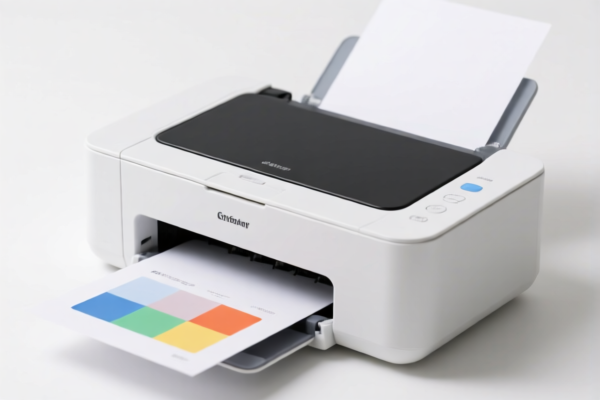
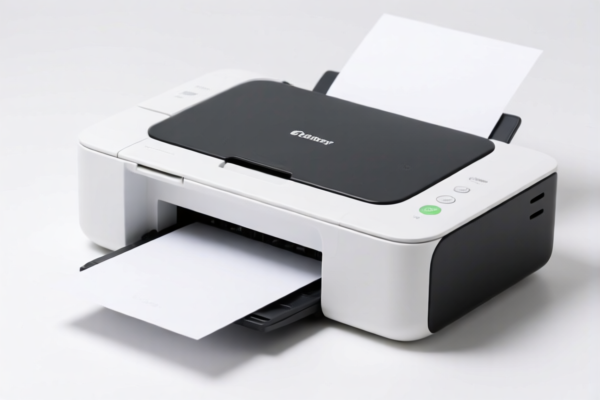
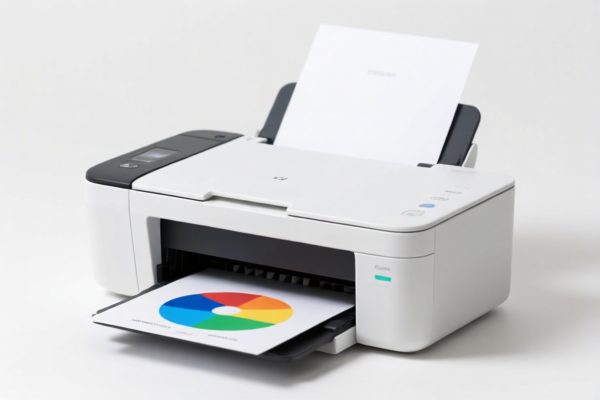
AI Analysis
🖨️ Portable Printer (Portable Printing Devices)
🌐 HS Code Reference & Customs Clearance Guide | 2026 Latest Tariff Analysis | Professional Clearance Strategy
📌 I. Product Definition & Classification: What Exactly Is a "Portable Printer"?
A Portable Printer is a compact, often battery-operated printing device designed for on-the-go document, photo, or label printing. It is typically used with smartphones, tablets, or laptops via Bluetooth, Wi-Fi, or USB connectivity.
In international trade, its classification depends heavily on its primary function and technical integration: * As a Standalone Printer Unit: If it functions primarily as a printing device (printing text/images), it falls under Chapter 84 (Nuclear reactors, boilers, machinery, and mechanical appliances). * As a Peripheral of Automatic Data Processing (ADP) Machines: If it is strictly considered an extension of a computer system (part of the ADP ecosystem) or lacks independent printing logic without the host, it may fall under Chapter 84 (ADP parts) or Chapter 84/85 depending on specific technical details.
⚠️ Key Distinction Point:
- If the device has its own control board, memory, and is marketed specifically as a "Printer" → Likely 8443 (Printers).
- If the device is essentially a module attached to a computer/laptop for data output and lacks independent "printing" capability without the host OS → Likely 8471 (Parts/Peripherals of ADP machines).
📦 II. HS Code Classification Details (2026 Latest Tariff Authority)
Based on the provided data, there are four potential HS Codes for Portable Printers. The choice depends on how the customs authority interprets the device's primary function.
| HS Code | Product Description | Classification Logic | Applicability |
|---|---|---|---|
8443.32.10.20 |
Printer Unit (Other Printer Units) | Classified under "Printer Units" for devices other than laser or ink-jet specifically listed elsewhere. It is the primary classification for standalone portable printers. | ✅ Most Common for dedicated portable printers |
8443.32.10.90 |
Printer Unit (Other Printer Units - Catch-all) | The fallback/deductible category for printer units that do not fit specific sub-categories. | ✅ Used if 8443.32.10.20 is deemed too specific |
8471.90.00.00 |
Other ADP Machine Parts | Classified under "Automatic Data Processing Machines." Argues the printer is a component of the ADP system (e.g., a thermal print module for a smartphone). | ⚠️ Risky; requires proof it's not a standalone printer |
8471.80.90.00 |
Other ADP Units | Classified as a peripheral unit of ADP machines. Used if the device is viewed as a "print unit" attached to a computer. | ⚠️ Risky; often overlaps with 8443 |
🔍 Critical Reminder:
- Chapter 8443 is generally preferred for devices explicitly designed and marketed as printers.
- Chapter 8471 is reserved for parts/peripherals of computers. Misclassifying a standalone printer as an ADP part can lead to customs audits.
- The total tax rate differs significantly between these codes, making correct classification crucial for cost control.
💰 III. 2026 Latest Tariff Rate Breakdown (Including Surtaxes & Policy Add-ons)
✅ Applicable Country: USA (US)
✅ Origin: China (CN)
✅ Effective Date: Post-2025 Policy (Based on provided data)
🎯 1. 8443.32.10.20 & 8443.32.10.90 —— Printer Units (Most Likely Classification)
These two codes share the same tax structure, representing the standard classification for portable printers.
| Item | Details |
|---|---|
| Basic Tariff | 0.0% (Ad Valorem) |
| Section 301 Surtax | +7.5% (Added tariff on Chinese goods) |
| 122 Section Tariff | +10.0% (Specific regulatory surcharge) |
| Total Tax Rate | 17.5% |
| Tax Calculation | CIF Value × 17.5% |
| De Minimis Exemption? | ❌ No (Section 301 and 122 taxes usually do not apply to any import value, though de minimis might apply to basic duty, the surtaxes make it risky for small parcels if not declared correctly. Note: Data indicates no de minimis exemption explicitly, but high surtaxes negate basic duty benefits.) |
| Legal Path | Basic Duty: 0% → Surtax: 7.5% → Section 122: 10% |
📌 Explanation:
- The 17.5% rate is significantly lower than the ADP classification options.
- This is the recommended classification for most commercial portable printers, as it accurately reflects the product's function as a printing device.
- Section 122 refers to specific anti-dumping or countervailing duties depending on the specific product type and origin.
🎯 2. 8471.90.00.00 & 8471.80.90.00 —— ADP Parts/Peripherals (Higher Tax Risk)
These codes classify the printer as part of a computer system, resulting in a much higher tax burden.
| Item | Details |
|---|---|
| Basic Tariff | 0.0% (Ad Valorem) |
| Section 301 Surtax | +25.0% (Higher surtax for ADP parts/peripherals) |
| 122 Section Tariff | +10.0% |
| Total Tax Rate | 35.0% |
| Tax Calculation | CIF Value × 35.0% |
| De Minimis Exemption? | ❌ No |
| Legal Path | Basic Duty: 0% → Surtax: 25.0% → Section 122: 10% |
📌 Explanation:
- The 35% rate is double the cost of the printer-specific classification (17.5%).
- This classification is typically applied if the printer is deemed a "part" of a larger computer system (e.g., a proprietary thermal head for a POS system) rather than a standalone consumer printer.
- Misclassification Risk: If you declare a standalone portable printer as an ADP part to try to avoid higher tariffs, customs may flag it. However, in this data, the ADP parts are more expensive, so this is less of a "tax avoidance" error and more of a "functional misclassification" error.
🛠️ IV. Customs Clearance Practical Advice (Avoid Pitfalls)
✅ 1. Essential Documentation Checklist
| Document | Required? | Description |
|---|---|---|
| Product Specification Sheet | ✅ Yes | Must clearly state: Printing method (Thermal, Inkjet, Laser), Resolution, Connectivity (Bluetooth/Wi-Fi), and Power Source (Battery/AC). |
| Technical Diagram | ✅ Yes | Show internal components. Highlight the print engine. If it has its own control board, it supports classification under 8443. |
| Product Photos | ✅ Yes | Clear images of the device, ports, and any branding. |
| Commercial Invoice | ✅ Yes | Description must be precise: "Portable Thermal Printer, Bluetooth-enabled, Model XYZ". Avoid vague terms like "Office Equipment." |
| Certification Reports | ✅ Yes | FCC (USA), Bluetooth SIG Certification. |
| HS Code Justification | ✅ Recommended | Provide a brief note explaining why it is classified as a printer (8443) rather than an ADP part (8471). |
✅ 2. Declaration Strategy (Key Tips)
🔥 Golden Rule: "Function Determines Code. Standalone = 8443. Part = 8471."
| Scenario | Correct HS Code | Tax Rate | Why? |
|---|---|---|---|
| Standalone Portable Printer (e.g., Brother PB-32, Xiaomi Portable Printer) | 8443.32.10.20 |
17.5% | It is a self-contained printing device. |
| Printer as Part of a POS System | 8471.90.00.00 |
35.0% | It is an integral part of the ADP machine. |
| Generic "Printing Module" for Mobile | 8471.80.90.00 |
35.0% | Viewed as a peripheral unit of the phone/computer. |
✅ 3. Special Cases & Pitfalls
| Case | Handling Advice |
|---|---|
| OEM/ODM Products | Ensure the invoice matches the OEM specifications. If the OEM is in China, the surtaxes apply regardless of final branding. |
| Bundled Sales | If sold with a smartphone, declare separately. Do not bundle the printer into the phone's HS code. |
| Samples | Even for samples, declare the correct HS Code. The 17.5% vs 35% difference applies to the value of the sample. |
| Thermal Printers | Often classified under 8443. Ensure they are not considered "printing heads" (which might fall under 8471) if they are sold as complete units. |
🌍 V. Global Market Comparison (2026 Update)
| Country/Region | Recommended HS Code | Base Tax | US-Specific Surtax | Total Effective Rate (US Import) | Notes |
|---|---|---|---|---|---|
| 🇺🇸 USA | 8443.32.10.20 |
0% | +7.5% (301) +10% (122) | 17.5% | Most favorable for standalone printers. |
| 🇺🇸 USA (ADP Part) | 8471.90.00.00 |
0% | +25% (301) +10% (122) | 35.0% | Avoid unless technically required. |
| 🇪🇺 EU | 8443.32.00 |
0-2.7% | N/A | ~2.7% | No Section 301 taxes. |
| 🇨🇳 China | 8443.32.10.20 |
~1.5-5% | N/A | ~5% | Low import duty. |
| 🇬🇧 UK | 8443.32.00 |
0% | N/A | 0% | Post-Brexit tariffs often lower. |
📌 Conclusion:
- The USA imposes significant additional tariffs on Chinese goods.
- Classifying under 8443.32.10.20 is crucial to minimize the tax burden to 17.5% instead of 35.0%.
- Always provide technical documentation to prove the device is a standalone printer to justify the 8443 classification.
📌 VI. Common Errors & Pitfalls (Lessons Learned)
❌ Error 1: Declaring a standalone portable printer as an "ADP Part" (8471)
👉 Consequence: You pay 35% tax instead of 17.5%. Double the cost!
❌ Error 2: Using vague descriptions like "Printer Accessory" or "Mobile Print Module"
👉 Consequence: Customs may reclassify it as a part (8471) or delay clearance for further inspection.
❌ Error 3: Ignoring Section 122 Tariffs
👉 Consequence: Even if the basic duty is 0%, failing to account for the 10% Section 122 tariff leads to unexpected costs at customs.
❌ Error 4: Confusing "Portable Printer" with "Label Printer"
👉 Consequence: If it's specifically for labels, check if there are more specific sub-codes. However, in the provided data, 8443.32.10.20 is the designated code for "Other Printer Units."
✅ Correct Approach:
"Portable Thermal Printer, Bluetooth, Battery Powered, Model XYZ, FCC Certified"
Use HS Code:8443.32.10.20
Total Duty: 17.5%
🎯 VII. Conclusion: Professional Classification, Lower Costs, Smoother Clearance!
🎯 Remember the Golden Rule:
🔹 "Standalone Printer = 8443 (17.5%). ADP Part = 8471 (35.0%)."
🔹 "Technical Docs Prove Function. Function Determines Code. Code Determines Cost."
📌 Pro Tip:
If your product is OEM/ODM, ensure your supplier provides a Technical Justification Letter stating that the device is a standalone printing unit with its own control system, not merely a peripheral module of a computer. This can be the difference between a smooth clearance and a costly reclassification.
📣 Immediate Action:
📞 Contact Your Freight Forwarder with the correct HS Code (
8443.32.10.20) and technical specs.
🚀 Pre-clearance: Submit documentation 7-14 days before shipment to avoid delays.
💡 Cost Saving: Correct classification saves you 17.5% on your total CIF value compared to misclassification.
✨ Professional Customs Clearance Starts with Accurate Classification!
💼 Your Profit Margin Depends on Precision!
Customer Reviews
About HS Code Classification
The Harmonized System (HS) is an internationally standardized nomenclature developed by the World Customs Organization (WCO) to classify traded products. Over 200 countries use the HS system as the basis for customs tariffs, trade statistics, and import/export regulations.
Each HS code follows a hierarchical structure:
- Chapter (2 digits) — Broad category of goods (e.g., Chapter 84: Machinery and Mechanical Appliances)
- Heading (4 digits) — More specific grouping within the chapter
- Subheading (6 digits) — Internationally standardized breakdown, used by all WCO member countries
- National subdivisions (8-10 digits) — Country-specific extensions for further classification, such as US HTSUS 10-digit codes
Correct HS code classification is essential for smooth customs clearance, accurate duty payment, and compliance with trade regulations. Misclassification can lead to customs delays, overpayment of duties, or penalties.
When importing from CN to US, the applicable tariff rates may include:
- Most-Favored-Nation (MFN) rate — The standard duty rate applied to WTO members
- General rate — Applied to countries without trade agreements
- Trade remedy duties — Additional tariffs such as Section 301 (anti-dumping), Section 232 (national security), or countervailing duties
The information provided on this page is for reference purposes only. For official classification, please consult with your local customs authority or a licensed customs broker.