pot cutter
CN → US| HS Code | Tariff Rate | Origin | Destination | Doc |
|---|---|---|---|---|
| 8203406000 | 38.3% | CN | US | Official Doc |
| 8203403000 | 41.0% | CN | US | Official Doc |
| 8201906000 | 35.0% | CN | US | Official Doc |
| 8201500000 | 0.0% | CN | US | Official Doc |
| 8467895060 | 17.5% | CN | US | Official Doc |
| 8467895090 | 17.5% | CN | US | Official Doc |
Product Images
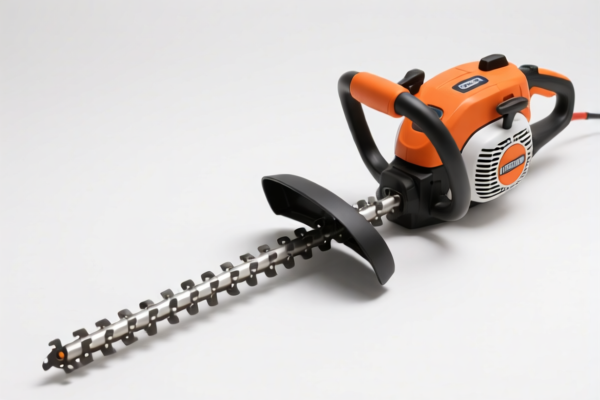
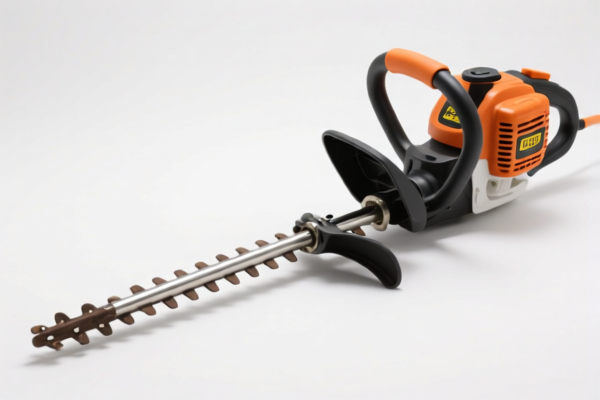
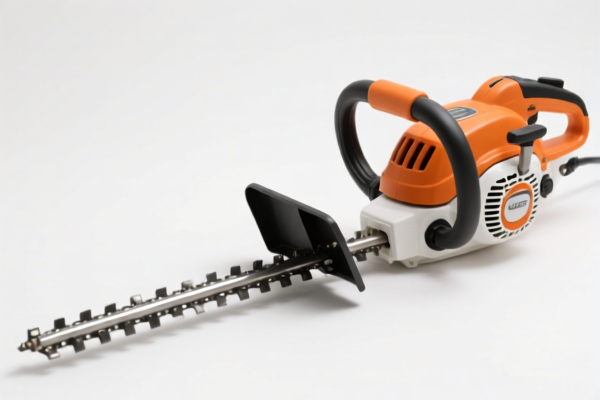
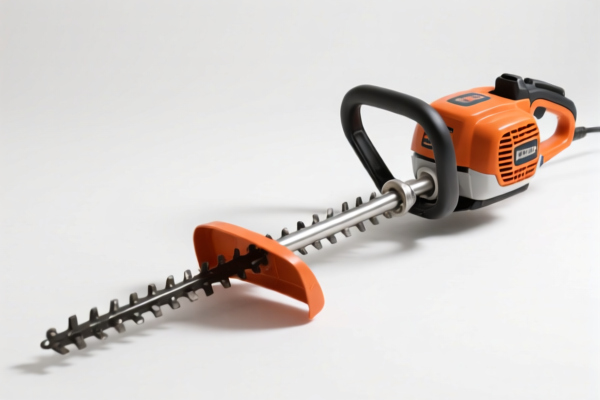
AI Analysis
🔪 Pot Cutter (Metal Cutting Shears / Pipe Cutters / Bolt Cutters)
🌐 HS Code Reference & Customs Clearance Guide | 2026 Latest Tariff Analysis | Professional Customs Strategy
📌 I. Product Definition & Classification: Do You Really Understand "Pot Cutters"?
A "Pot Cutter" in industrial and trade contexts rarely refers to a kitchen utensil. It typically refers to heavy-duty hand tools used to cut metal sheets, pipes, bolts, or industrial containers (such as steel drums/pots). These tools fall under Chapter 82 (Tools, Implements... of Base Metal) or Chapter 84 (Machinery... for Working...) depending on whether they are manual or powered.
Key Distinction: 1. Manual Hand Tools (e.g., tin snips, pipe cutters, bolt cutters, shears for cutting metal drums/pots): Categorized under Chapter 82. 2. Powered Hand Tools (e.g., electric shear, pneumatic cutter, handheld hydraulic cutter): Categorized under Chapter 84.
⚠️ Critical Classification Point:
- If the tool is purely manual (human-powered lever action) → Chapter 82
- If the tool has a motor, pneumatic, or hydraulic power source → Chapter 84
📦 II. HS Code Classification Details (Based on Provided Data)
| HS Code | Product Description | Application Scenario | Power Source | Tax Rate (Total) |
|---|---|---|---|---|
8203.40.30.00 |
Pipe cutters, bolt cutters, perforating punches... with cutting part containing >0.2% Cr/Mo/W or >0.1% V | Heavy-duty industrial bolt cutters, high-quality pipe cutters | Manual | 0.0% |
8203.40.60.00 |
Pipe cutters, bolt cutters, perforating punches... (Other, including parts) | Standard manual pipe cutters, basic bolt cutters, tin snips for "pots" | Manual | 0.0% |
8467.89.50.60 |
Other tools, designed for use in agriculture or horticulture | Niche industrial cutters specifically marketed for ag/hort use (e.g., cutting irrigation pipes) | Powered/Manual* | 7.5% |
8467.89.50.90 |
Other tools (Other Other) | General powered hand tools (electric, pneumatic, hydraulic) for cutting | Powered | 7.5% |
🔍 重点提醒 (Key Notes):
- "Pot Cutters" (Metal Shears/Tin Snips): Usually classified under 8203.40.60.00 or 8203.40.30.00 if they are manual metal-cutting shears.
- Pipe Cutters: If for cutting plastic/metal pipes manually, use 8203.40.xxxx.
- Powered Cutters: If it’s an electric or pneumatic tool for cutting metal sheets or drums, use 8467.89.50.90.
- Tax Advantage: Manual tools (8203 series) have 0% total tax, while powered tools (8467 series) have 7.5% total tax.
💰 III. 2026 Latest Tariff Rate Details (Including Additional Duties)
✅ Applicable Country: USA (US)
✅ Origin: China (CN)
✅ Effective Date: 2025/2026 Current Regime
🎯 1. 8203.40.60.00 — Other Pipe Cutters, Bolt Cutters, etc. (Manual)
| Item | Content |
|---|---|
| Base Tariff | 0.0% (ad valorem) |
| Additional Tariff (Section 301) | 0.0% |
| Total Tariff | 0.0% |
| Tax Calculation | CIF Value × 0% = $0 |
| De Minimis Eligibility | ✅ Yes (Under $800, usually duty-free under Section 321) |
| Legal Basis | HTSUS 8203.40.60.00 |
📌 Explanation:
- Most standard manual hand tools for cutting metal/pipes fall here.
- Zero Duty makes these highly competitive in the US market.
- No additional Section 301 tariffs apply to this specific subheading.
🎯 2. 8203.40.30.00 — High-Performance Cutters (Special Alloy)
| Item | Content |
|---|---|
| Base Tariff | 0.0% |
| Additional Tariff (Section 301) | 0.0% |
| Total Tariff | 0.0% |
| Tax Calculation | CIF Value × 0% = $0 |
| De Minimis Eligibility | ✅ Yes |
| Condition | Cutting part contains >0.2% Chromium, Molybdenum, or Tungsten, OR >0.1% Vanadium |
📌 Explanation:
- This applies to premium-grade cutters made with high-alloy steel.
- Still 0% total tax, but requires material composition declaration.
🎯 3. 8467.89.50.90 — Other Powered Hand Tools (Electric/Pneumatic)
| Item | Content |
|---|---|
| Base Tariff | 0.0% |
| Additional Tariff (Section 301) | 7.5% |
| Total Tariff | 7.5% |
| Tax Calculation | CIF Value × 7.5% |
| De Minimis Eligibility | ✅ Yes (If value <$800) |
| Legal Basis | HTSUS 8467.89.50.90 |
📌 Explanation:
- If your "Pot Cutter" is an electric shear or pneumatic cutter, it falls here.
- 7.5% additional tariff applies to Chinese-origin goods.
- Still relatively low compared to other industrial equipment.
🛠️ IV. Customs Clearance Practical Advice (Avoid Pitfalls)
✅ 1. Required Documentation Checklist
| Document | Mandatory? | Description |
|---|---|---|
| ✅ Product Specifications | ✔️ | Must specify: Manual vs. Powered, material of cutting head, max cutting capacity. |
| ✅ Photos of the Tool | ✔️ | Clear images showing handle, cutting mechanism, and any power source (battery/air hose). |
| ✅ Commercial Invoice | ✔️ | Must clearly state: "Manual Metal Shears" or "Electric Pipe Cutter". Avoid vague terms like "Pot Tool". |
| ✅ Origin Certificate | ✔️ | To confirm Chinese origin (if applicable) for tariff calculation. |
| ✅ Material Declaration | ✔️ | For 8203.40.30.00, declare alloy content if claiming special status. |
✅ 2. Declaration Tips (Key Mnemonics)
🔥 "Manual is Free, Powered is 7.5, Name it Right, No Mistakes!"
| Situation | Correct Declaration | Wrong Approach |
|---|---|---|
| Manual Tin Snips / Bolt Cutters | 8203.40.60.00 |
Misdeclare as 8467 → Unnecessary 7.5% tax |
| Electric Shears for Metal Sheets | 8467.89.50.90 |
Misdeclare as 8203 → Customs rejection + penalty |
| Pipe Cutter (Manual) | 8203.40.60.00 |
Call it "Garden Tool" → Misclassification |
| Hydraulic Cutter (Powered) | 8467.89.50.90 |
Call it "Hand Tool" → Wrong chapter |
✅ 3. Special Scenarios
| Scenario | Handling Advice |
|---|---|
| OEM Custom Cutters | Provide design drawings to prove manual vs. powered operation. |
| "Pot Cutter" for Drums | If it’s a manual shear for cutting steel drums, use 8203.40.60.00. |
| Power-Assisted Shears | If it has a small motor/battery, it’s 8467.89.50.90 (7.5% tax). |
| Parts Only | Base metal parts of tools also classified under corresponding HS codes. |
🌍 V. Global Market Comparison (2026 Latest)
| Country/Region | Recommended HS Code | Tariff (CN Origin) | Certification Required | Notes |
|---|---|---|---|---|
| 🇺🇸 USA | 8203.40.60.00 |
0.0% (Manual) 7.5% (Powered) |
None | Zero duty for manual tools is a major advantage. |
| 🇪🇺 EU | 8205.59.00 |
4.7% | CE (if powered) | Manual tools have moderate duty. |
| 🇨🇳 China | 8203.40.60.00 |
0.0% (Export) | N/A | Duty-free export. |
| 🇬🇧 UK | 8203.40.60.00 |
0.0% (if UK-China FTA applies) | UKCA | Check for preferential tariffs. |
| 🇯🇵 Japan | 8203.40.60.00 |
0.0% | PSE (if powered) | Very favorable for manual tools. |
📌 Conclusion:
- USA offers the best duty rate (0%) for manual "pot cutters".
- Powered versions incur 7.5%, which is still manageable.
- Always declare clearly as "Manual Hand Tool" vs. "Powered Tool" to avoid misclassification.
📌 VI. Common Mistakes & Pitfalls (Lessons Learned)
❌ Mistake 1: Calling a powered electric shear a "Hand Tool"
👉 Consequence: Incorrect HS Code 8203 → Customs may reclassify and charge 7.5% + penalties.
❌ Mistake 2: Using "Kitchen Pot Cutter" as description
👉 Consequence: Confusion with kitchenware (HS 8215) → Delay in clearance.
❌ Mistake 3: Not specifying power source
👉 Consequence: Customs asks for clarification → Delayed shipment.
✅ Correct Practice:
"Manual Metal Shears for Cutting Steel Drums, Non-Powered, High-Carbon Steel, Model ABC"
OR
"Electric Metal Cutting Shears, 110V, for Industrial Use, Model XYZ"
🎯 VII. Conclusion: Precision Classification Saves Money!
🎯 Remember the Rule:
🔹 Manual = 0% Tax (HS 8203)
🔹 Powered = 7.5% Tax (HS 8467)
🔹 Name it Precisely, Declare Accurately!
📌 Pro Tip:
If your "Pot Cutter" is manual, ensure the description explicitly states "Non-Powered" or "Hand Tool" to secure the 0% tariff.
If it’s powered, declare voltage/amperage and apply for the correct 8467 code.
📣 Immediate Action:
📞 Consult a customs broker for pre-classification.
📄 Provide clear product photos and specs.
🚀 Ensure smooth customs clearance with accurate HS Codes!
✨ Professional Customs Clearance Starts with Accurate Classification!
💼 Every Percent of Tax Saved is Profit Earned!
Customer Reviews
About HS Code Classification
The Harmonized System (HS) is an internationally standardized nomenclature developed by the World Customs Organization (WCO) to classify traded products. Over 200 countries use the HS system as the basis for customs tariffs, trade statistics, and import/export regulations.
Each HS code follows a hierarchical structure:
- Chapter (2 digits) — Broad category of goods (e.g., Chapter 84: Machinery and Mechanical Appliances)
- Heading (4 digits) — More specific grouping within the chapter
- Subheading (6 digits) — Internationally standardized breakdown, used by all WCO member countries
- National subdivisions (8-10 digits) — Country-specific extensions for further classification, such as US HTSUS 10-digit codes
Correct HS code classification is essential for smooth customs clearance, accurate duty payment, and compliance with trade regulations. Misclassification can lead to customs delays, overpayment of duties, or penalties.
When importing from CN to US, the applicable tariff rates may include:
- Most-Favored-Nation (MFN) rate — The standard duty rate applied to WTO members
- General rate — Applied to countries without trade agreements
- Trade remedy duties — Additional tariffs such as Section 301 (anti-dumping), Section 232 (national security), or countervailing duties
The information provided on this page is for reference purposes only. For official classification, please consult with your local customs authority or a licensed customs broker.