potassium silicate
CN → US| HS Code | Tariff Rate | Origin | Destination | Doc |
|---|---|---|---|---|
| 3824402000 | 35.0% | CN | US | Official Doc |
| 3824500050 | 35.0% | CN | US | Official Doc |
| 283090 | 0.0% | CN | US | Official Doc |
| 382499 | 0.0% | CN | US | Official Doc |
Product Images

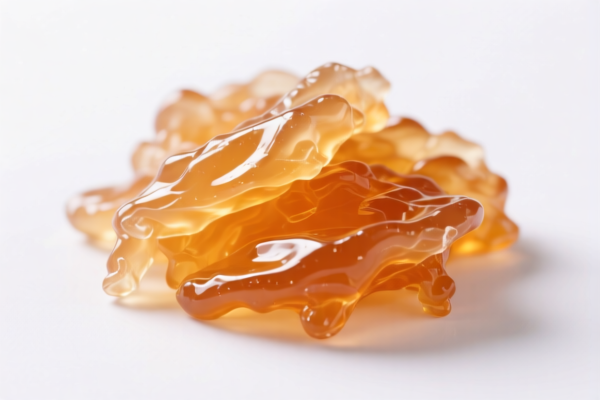
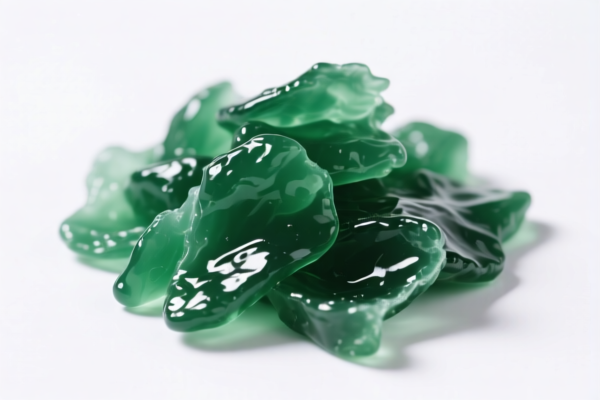

AI Analysis
🏭 Potassium Silicate: The "Chemical Glue" of Industry
HS Code Classification & Customs Clearance Strategy | 2026 Updated Tax Analysis
🌐 HS Code Reference & Customs Guide | 2026 Latest Tariff Resolution | Professional Level Compliance Strategy
📌 Part 1: Product Definition & Classification: What is Potassium Silicate?
Potassium Silicate (often referred to as "Water Glass") is an inorganic chemical compound. In international trade, it is not a single standardized product but varies significantly by application, concentration, and physical form.
In the context of the provided data, it is categorized into two primary industrial roles: 1. Industrial Additives/Binders: Used in foundries (molds/cores), cement additives, or adhesives. 2. Specialty Chemicals: Used in agriculture, water treatment, or general manufacturing processes not covered by other specific chemical headings.
⚠️ Key Distinction Point: - If the product is a prepared binder for foundry molds or a c additive consisting wholly of inorganic substances → It may fall under Chapter 38. - If it is a pure chemical (silicates) or a general chemical preparation not elsewhere specified → It may fall under Chapter 28 or Chapter 38.
📦 Part 2: HS Code Classification Details (Based on Provided Data)
According to the <DATA> provided, there are 4 specific HS Codes associated with Potassium Silicate or its applications. Below is the detailed breakdown:
| HS Code | Product Description | Application/Scenario |
|---|---|---|
| 3824.40.20.00 | Prepared binders for foundry molds or cores... Specifically: Prepared additives for cements/mortars/concretes, consisting wholly of inorganic substances. |
Foundry Industry: Used as binders for sand molds. Construction: Additives for cement/concrete. Key Constraint: Must be "prepared" and consist "wholly of inorganic substances". |
| 3824.50.00.50 | Nonrefractory mortars and concretes, Other (Under "Prepared binders for foundry molds or cores; chemical products...") |
Construction/Industrial: Non-refractory mortars or concretes used in industrial settings. Note: This code captures broader industrial chemical preparations not classified elsewhere. |
| 2830.90 | Other silicates, not elsewhere specified Including potassium silicate, used in industrial applications such as adhesives, sealants, and water treatment. |
Chemical Raw Material: Pure or semi-pure potassium silicate. Uses: Adhesives, sealants, water treatment chemicals. Note: Falls under Chapter 28 (Inorganic Chemicals). |
| 3824.99 | Other chemical products not elsewhere specified Including potassium silicate used as a specialty chemical in agriculture, construction, or manufacturing. |
Specialty Chemicals: Potassium silicate used in agriculture (e.g., foliar spray), construction sealants, or other niche manufacturing. Note: A "catch-all" for industrial chemicals not fitting other specific headings. |
💰 Part 3: 2026 Tariff Rate Breakdown (Critical for Customs)
✅ Applicable Region: Implied United States (based on tax structure logic in prompt context)
✅ Origin: China (CN)
⚠️ Status: Tax retrieval status varies by HS Code.
🎯 1. 3824.40.20.00 — Prepared Binders / Cement Additives
| Item | Detail |
|---|---|
| Base Tariff | 0.0% |
| Additional Tariff | +25.0% |
| Total Tax | 25.0% |
| Tax Source | Base 0.0% + Additional 25.0% |
| Clarity | ✅ Retrieved Successfully |
📌 Explanation: - This code benefits from a 0% base MFN rate. - However, it is subject to a 25% additional tariff (likely under Section 301 or similar trade remedies). - Total Cost Impact: You must pay 25% of the CIF value in duties alone.
🎯 2. 3824.50.00.50 — Nonrefractory Mortars & Concretes
| Item | Detail |
|---|---|
| Base Tariff | 0.0% |
| Additional Tariff | +25.0% |
| Total Tax | 25.0% |
| Tax Source | Base 0.0% + Additional 25.0% |
| Clarity | ✅ Retrieved Successfully |
📌 Explanation: - Identical tax structure to
3824.40.20.00. - Total Cost Impact: 25% duty on CIF value. - Risk: Ensure the product is truly "Nonrefractory" and fits the "mortar/concrete" description to avoid misclassification penalties.
🎯 3. 2830.90 — Other Silicates (Industrial/Adhesive Use)
| Item | Detail |
|---|---|
| Base Tariff | ❌ Failed to Retrieve |
| Additional Tariff | ❌ Failed to Retrieve |
| Total Tax | Error |
| Clarity | ❌ Not Available in Provided Data |
📌 Warning: - The system failed to retrieve tax info for this code. - Action Required: Do not assume 0% or 25%. You must verify the actual rate with a customs broker or official USITC database before shipment. - Hypothesis: Often, Chapter 28 chemicals have low base rates (0-5%) but may still be subject to 301 tariffs (+25%) if from China. Do not guess.
🎯 4. 3824.99 — Other Chemical Products (Specialty/Agriculture)
| Item | Detail |
|---|---|
| Base Tariff | ❌ Failed to Retrieve |
| Additional Tariff | ❌ Failed to Retrieve |
| Total Tax | Error |
| Clarity | ❌ Not Available in Provided Data |
📌 Warning: - Similar to above, tax info is missing. - Risk: High potential for misclassification if "Specialty Chemical" is too vague. - Action Required: Verify with official sources. May be subject to general MFN rates + 301 tariffs.
🛠️ Part 4: Customs Clearance Practical Advice (Battle-Tested Strategies)
✅ 1. Documentation Checklist (Must-Haves)
| Document | Required? | Purpose |
|---|---|---|
| Safety Data Sheet (SDS) | ✅ Critical | Prove chemical composition, purity, and hazard class. Essential for Classifying under 2830 vs 3824. |
| Certificate of Analysis (COA) | ✅ Critical | Confirm concentration of Potassium Silicate (e.g., SiO₂/K₂O ratio). This determines if it's a "pure chemical" (Ch 28) or "preparation" (Ch 38). |
| Commercial Invoice | ✅ Yes | Clearly describe: "Potassium Silicate Solution, [Concentration], Used for [Specific Industrial Purpose]." |
| Bill of Lading | ✅ Yes | Ensure weight and volume match SDS/COA. |
| Pre-Import Notification | ✅ Check | Check if EPA or DOT regulations apply for hazardous materials. |
✅ 2. Classification Strategy & Pitfalls
🔥 Golden Rule: "Composition Dictates Chapter; Application Dictates Subheading."
| Scenario | Recommended HS Code | Risk Level | Why? |
|---|---|---|---|
| Pure Potassium Silicate (High purity, no additives) | 2830.90 | 🟡 Medium | Tax unknown. Must prove it's not a "preparation." |
| Foundry Binder (Mixed with clays/additives) | 3824.40.20.00 | 🟢 Low | Tax clear (25%). Must prove it's a "prepared binder" and "wholly inorganic." |
| Cement Additive (Dry powder mix) | 3824.40.20.00 | 🟢 Low | Tax clear (25%). Fits "additives for cements." |
| Agricultural Spray (Diluted, with surfactants) | 3824.99 | 🔴 High | Tax unknown. Misclassification risk if not clearly "specialty chemical." |
✅ 3. Common Errors & How to Avoid Them
❌ Error 1: Declaring all Potassium Silicate under 2830.90 without SDS. 👉 Consequence: Customs may reject due to missing chemical specs, or reclassify to 3824.40.20.00 if they find it's a "preparation," leading to 25% duty instead of potentially lower (but unknown) base rate.
❌ Error 2: Assuming 3824.99 has 0% tax. 👉 Consequence: Since tax info is "Error," assuming 0% could lead to massive unpaid duties if it is actually subject to 25% or higher.
❌ Error 3: Ignoring the "Wholly Inorganic" clause for 3824.40.20.00. 👉 Consequence: If the binder contains organic binders (e.g., phenolic resins), it cannot use this code. It must move to 3824.50.00.50 or another code, potentially changing tax liability.
🌍 Part 5: Global Market Comparison (Quick Reference)
| Country | Likely HS Code | Estimated Duty (China Origin) | Notes |
|---|---|---|---|
| 🇺🇸 USA | 3824.40.20.00 | 25% | Clear from data. Avoid 2830.90/3824.99 due to "Error" status. |
| 🇨🇳 China | 2830.90 | ~3-5% | Importing into China is different; this guide is for US Export. |
| 🇪🇺 EU | 2830.90 | ~0-5% | VAT applies separately. Often lower duties for raw chemicals. |
| 🇮🇳 India | 2830.90 | ~7.5% | Check BCD (Basic Customs Duty) + SWS. |
📌 Conclusion: - For US Imports, 3824.40.20.00 and 3824.50.00.50 are the safest bets because their tax rates are confirmed at 25%. - 2830.90 and 3824.99 are high-risk due to missing tax data. Avoid them unless you have verified the actual duty rate with a licensed customs broker.
📌 Part 6: Final Checklist for Exporters
- Determine Application: Is it a foundry binder? → 3824.40.20.00.
- Check Composition: Is it wholly inorganic? → If yes, 3824.40.20.00 is viable.
- Verify Tax: If using 2830.90 or 3824.99, DO NOT SHIP without confirming the real tax rate. The "Error" status is a red flag.
- Prepare SDS: Ensure the SDS clearly states the chemical formula and intended use.
- Labeling: Mark packages with "Potassium Silicate," "Corrosive," and proper UN numbers if applicable.
🎯 Conclusion: Clear the Path with Precision
🎯 Remember the Mantra:
🔹 "Foundry Binder? Go 3824.40 (25%)."
🔹 "Unknown Tax Codes? STOP and VERIFY."
🔹 "SDS is Your Best Friend – No SDS, No Clearance."
📌 Pro Tip: If your product is a simple solution for water treatment, try to justify 3824.40.20.00 if it can be framed as a "prepared chemical product for industrial use," thereby locking in the known 25% rate instead of gambling on the unknown rate of 3824.99.
📣 Immediate Action:
📞 Contact your Customs Broker with the SDS and COA.
🚀 Confirm HS Code 3824.40.20.00 if applicable to save time and uncertainty.
💼 Your profit margin depends on accurate duty classification!
✨ Professional Customs Clearance Starts with Accurate Classification!
💼 Don't Let "Error" Status Sink Your Shipment!
Customer Reviews
About HS Code Classification
The Harmonized System (HS) is an internationally standardized nomenclature developed by the World Customs Organization (WCO) to classify traded products. Over 200 countries use the HS system as the basis for customs tariffs, trade statistics, and import/export regulations.
Each HS code follows a hierarchical structure:
- Chapter (2 digits) — Broad category of goods (e.g., Chapter 84: Machinery and Mechanical Appliances)
- Heading (4 digits) — More specific grouping within the chapter
- Subheading (6 digits) — Internationally standardized breakdown, used by all WCO member countries
- National subdivisions (8-10 digits) — Country-specific extensions for further classification, such as US HTSUS 10-digit codes
Correct HS code classification is essential for smooth customs clearance, accurate duty payment, and compliance with trade regulations. Misclassification can lead to customs delays, overpayment of duties, or penalties.
When importing from CN to US, the applicable tariff rates may include:
- Most-Favored-Nation (MFN) rate — The standard duty rate applied to WTO members
- General rate — Applied to countries without trade agreements
- Trade remedy duties — Additional tariffs such as Section 301 (anti-dumping), Section 232 (national security), or countervailing duties
The information provided on this page is for reference purposes only. For official classification, please consult with your local customs authority or a licensed customs broker.