potato granules
CN → US| HS Code | Tariff Rate | Origin | Destination | Doc |
|---|---|---|---|---|
| 1105100000 | 0.0% | CN | US | Official Doc |
| 1105200000 | 0.0% | CN | US | Official Doc |
| 1108130010 | 0.0% | CN | US | Official Doc |
| 1108130090 | 0.0% | CN | US | Official Doc |
| 1105100000 | 0.0% | CN | US | Official Doc |
Product Images
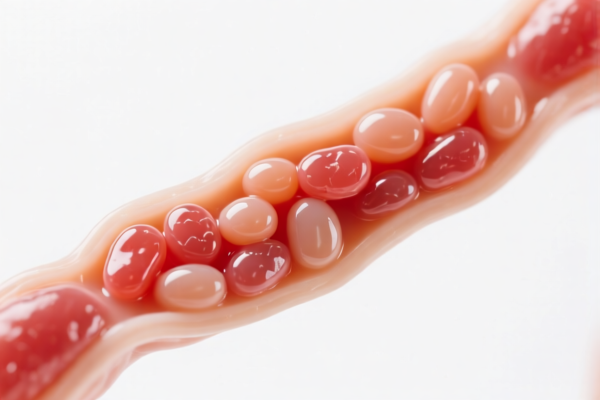
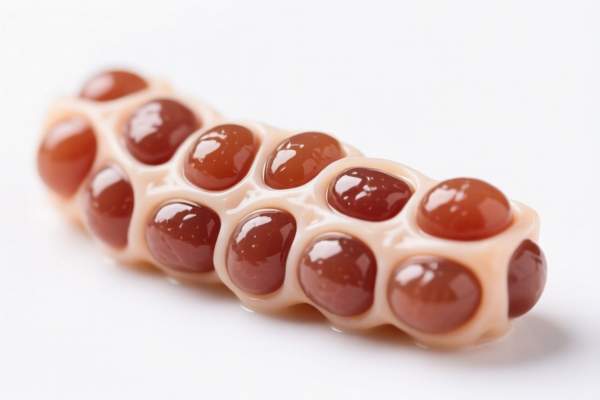
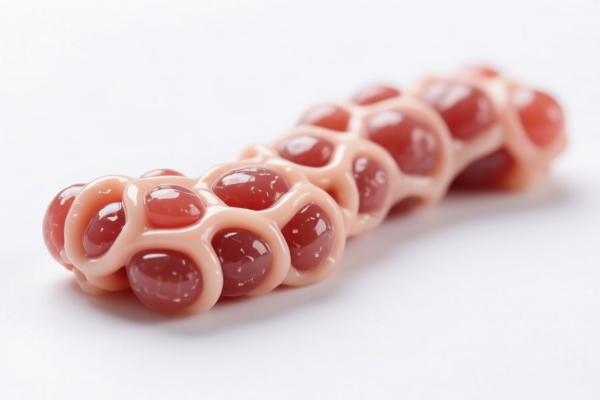
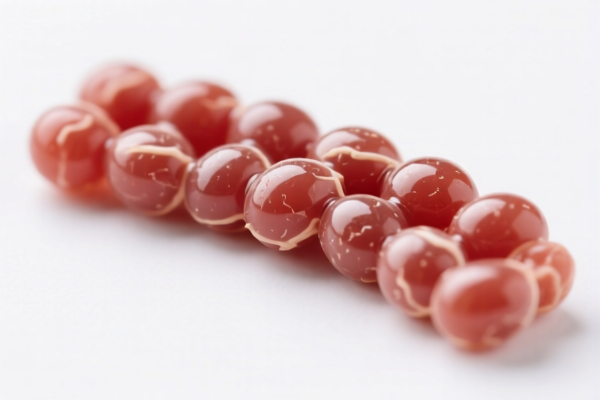
AI Analysis
🥔 Potato Granules (Potato Granules for Industrial or Food Use)
🌐 HS Code Reference & Customs Clearance Guide | 2026 Latest Tariff Analysis | Pro-Level Import Strategy
📌 One Product, Multiple Classifications — Know the Exact HS Code to Avoid 45%+ Tariffs!
📌 I. Product Definition & Classification: What Are "Potato Granules"?
Potato granules are coarse, granular forms of dehydrated potato — typically produced by drying and grinding potato flakes or mash into small, free-flowing particles. They are not the same as:
- Potato starch (pure starch, finer powder)
- Potato flour (finely ground whole potato, often used in baking)
- Potato flakes (larger, rehydratable pieces)
⚠️ Key Distinction:
- If the product is in granular form, derived from potato, and meets the physical characteristics of powder/particles, it falls under HS Code 1105.10.00.00 or 1105.20.00.00, depending on particle size and processing method.
📦 II. HS Code Breakdown (2026 Official Tariff Table – US Customs)
| HS Code | Product Description | Applicable Use Case | Tax Rate | Notes |
|---|---|---|---|---|
1105.10.00.00 |
Potato granules, in granular form, suitable for food or industrial use | Coarse granules, typically > 0.5 mm, used in soups, snacks, pet food, or as thickening agents | 1.7¢/kg + 35.0% | Most common for granular potato products |
1105.20.00.00 |
Potato granules, in powder form, derived from potato | Finer granules or powder-like particles, often used in processed foods | 1.3¢/kg + 35.0% | Lower base tariff but same total rate |
1108.13.00.10 |
Potato starch, in primary form, derived from potato | Pure starch, non-food-grade or industrial use | 0.56¢/kg + 35.0% | Only if it meets starch purity criteria |
1108.13.00.90 |
Other potato starch, not fit for human consumption | Non-edible, industrial-grade starch (e.g., for adhesives, biofuels) | 0.56¢/kg + 35.0% | Must prove non-human consumption |
🔍 Critical Note:
- "Granules" ≠ "Starch" — Even if the product looks like powder, if it’s not pure starch, it must not be classified under 1108.13.00.x0. - Particle size matters:
- Large granules (>0.5 mm) →1105.10.00.00
- Fine granules/powder (<0.5 mm) →1105.20.00.00
💰 III. 2026 US Tariff Breakdown (With Full Legal Justification)
✅ Applicable Country: United States (US)
✅ Origin: China (CN)
✅ Effective Date: November 10, 2025 (with retroactive application)
🎯 1. 1105.10.00.00 — Potato Granules, Granular Form
| Item | Detail |
|---|---|
| Base Tariff | 1.7¢ per kg (specific duty) |
| USITC Section 301 Tariff | +25.0% (from USITC Footnote 9903.88.01) |
| Section 122 Tariff (IEEPA) | +10.0% (International Emergency Economic Powers Act) |
| Total Effective Duty | 1.7¢/kg + 35.0% of CIF value |
| Tax Calculation | (CIF Value × 35%) + (1.7¢ × Weight in kg) |
| De Minimis Threshold | ❌ Not applicable — No de minimis relief |
| Legal Basis Path | IEEPA:9903.01.25 → IEEPA:9903.01.24 → USITC:1105.10.00.00 → FOOTNOTE:9903.88.01 |
📌 Explanation:
- The 25% USITC tariff is from Section 301 of the Trade Act — targeting Chinese goods deemed unfair trade practices.
- The 10% IEEPA tariff is under national emergency powers, applied to goods from China, Hong Kong, and Macau.
- Total: 35% — Extremely high for a food-grade ingredient.
🎯 2. 1105.20.00.00 — Potato Granules, Powder Form
| Item | Detail |
|---|---|
| Base Tariff | 1.3¢ per kg |
| USITC Section 301 Tariff | +25.0% |
| Section 122 Tariff (IEEPA) | +10.0% |
| Total Effective Duty | 1.3¢/kg + 35.0% of CIF value |
| Tax Calculation | (CIF Value × 35%) + (1.3¢ × Weight in kg) |
| De Minimis | ❌ Not allowed |
| Legal Basis Path | IEEPA:9901.25 → IEEPA:9903.01.24 → USITC:1105.20.00.00 → FOOTNOTE:9903.88.01 |
📌 Note:
- Slightly lower base duty, but same total tax burden — 35% total. - Do not confuse with potato flour — that may fall under different codes.
🎯 3. 1108.13.00.10 & 1108.13.00.90 — Potato Starch (Only If Applicable!)
| Item | Detail |
|---|---|
| Base Tariff | 0.56¢/kg |
| USITC Tariff | +25.0% |
| IEEPA Tariff | +10.0% |
| Total Duty | 0.56¢/kg + 35.0% of CIF value |
| Applicability | ❗ Only if pure starch (≥95% starch content), no whole potato residue |
| Proof Required | Lab test report (starch content, moisture, ash, etc.) |
⚠️ Warning:
- Do NOT classify potato granules as starch unless proven.
- Misclassification = 35% penalty + customs delay + possible seizure.
🛠️ IV. Customs Clearance Best Practices (Pro Tips to Avoid 45%+ Penalties)
✅ 1. Critical Documentation Checklist
| Document | Required? | Why It Matters |
|---|---|---|
| ✅ Product Specification Sheet | ✔️ | Must define particle size, moisture, starch content, processing method |
| ✅ Lab Test Report (Moisture, Starch, Ash) | ✔️ | Prove whether it’s granules or starch |
| ✅ Product Photos (with scale) | ✔️ | Show granule size and texture |
| ✅ Commercial Invoice | ✔️ | Clearly state: "Potato Granules, Granular Form, Not Starch" |
| ✅ Certificate of Origin (CO) | ✔️ | If from China → expect 35% duty |
| ✅ Packing List | ✔️ | Confirm no mixed products (e.g., flour + granules) |
| ✅ Third-Party Certification (e.g., ISO, HACCP) | ✔️ | For food-grade claims |
✅ 2. 申报技巧 (Golden Rules)
🔥 "Granules ≠ Starch, Size Matters, Label Clearly, or Pay 35%!"
| Scenario | Correct HS Code | Wrong Code | Risk |
|---|---|---|---|
| Coarse granules (0.5–2 mm) | 1105.10.00.00 |
1108.13.00.10 |
45%+ penalty |
| Fine powder (≤0.5 mm) | 1105.20.00.00 |
1105.10.00.00 |
Underpaid duty |
| Pure starch (98%+) | 1108.13.00.10 |
1105.10.00.00 |
Overpaid duty |
| Mixed product (granules + flour) | Split申报 | One code for all | Seizure risk |
✅ 3. Special Cases & Solutions
| Situation | Recommended Action |
|---|---|
| Potato granules used in pet food | Still use 1105.10.00.00 — not food-grade doesn’t change HS code |
| Export to EU/UK/Australia | No 35% tariff — only standard duty (0–5%) |
| Origin from Vietnam/Mexico | Apply for IEEPA exemption — 0% duty possible |
| Need to reduce tax burden | Reclassify as "starch" only if lab proves >95% starch |
🌍 V. Global Customs Comparison (2026)
| Country | Recommended HS Code | Duty Rate | Certification | Notes |
|---|---|---|---|---|
| 🇺🇸 USA | 1105.10.00.00 |
1.7¢/kg + 35% | FDA, HACCP | No de minimis |
| 🇨🇳 China | 1105.10.00.00 |
5% | CCC, Food Safety | No extra tariffs |
| 🇪🇺 EU | 1105.10.00.00 |
0% (if CE) | CE, ISO | No 301/IEEPA tariffs |
| 🇦🇺 Australia | 1105.10.00.00 |
5% | RCM | No extra duties |
| 🇯🇵 Japan | 1105.10.00.00 |
0% | PSE | No附加税 |
📌 Insight:
- The USA is the only market with 35%+ tariffs on Chinese potato granules.
- Switching origin to Vietnam/Mexico can cut duty from 35% to 0% — highly recommended.
📌 VI. Common Mistakes & Real-World Pitfalls
❌ Mistake 1: Labeling "potato granules" as "potato starch"
👉 Result: 35% penalty, customs audit, possible seizure
❌ Mistake 2: Not proving particle size
👉 Result: Customs assumes it’s starch → higher risk of misclassification
❌ Mistake 3: Using "potato powder" as product name
👉 Result: Confusion with 1105.20.00.00 — underpaid duty risk
❌ Mistake 4: No lab report for starch content
👉 Result: Cannot prove it’s not starch → default to 35% tariff
✅ Correct Declaration Example:
"Potato Granules, Granular Form, Particle Size: 0.8–1.5 mm, Moisture: 8%, Starch Content: 68%, Not for Human Consumption (Industrial Use)"
🎯 VII. Final Verdict: Accuracy = Savings
🔹 "Granules are not starch — even if they look like powder!"
🔹 "Size matters — 0.5 mm is the line!"
🔹 "US tariffs hit 35% — but origin changes the game!"
📌 Pro Tip:
✅ Apply for a Pre-Ruling (Advance Ruling) from US CBP to lock in HS Code before shipment.
✅ Use non-China origin (Vietnam, Mexico, Thailand) to avoid 35% tariff.
✅ Always include lab test reports — your best defense against audits.
📣 Take Action Now!
📞 Contact a customs broker with food-grade experience
📊 Request HS Code pre-approval
🚀 Cut your import cost by 30–40% — legally and safely!
✨ Smart Classification = Smooth Clearance = Profit Protection!
💼 Your next shipment shouldn’t be a gamble — make it a win!
Customer Reviews
About HS Code Classification
The Harmonized System (HS) is an internationally standardized nomenclature developed by the World Customs Organization (WCO) to classify traded products. Over 200 countries use the HS system as the basis for customs tariffs, trade statistics, and import/export regulations.
Each HS code follows a hierarchical structure:
- Chapter (2 digits) — Broad category of goods (e.g., Chapter 84: Machinery and Mechanical Appliances)
- Heading (4 digits) — More specific grouping within the chapter
- Subheading (6 digits) — Internationally standardized breakdown, used by all WCO member countries
- National subdivisions (8-10 digits) — Country-specific extensions for further classification, such as US HTSUS 10-digit codes
Correct HS code classification is essential for smooth customs clearance, accurate duty payment, and compliance with trade regulations. Misclassification can lead to customs delays, overpayment of duties, or penalties.
When importing from CN to US, the applicable tariff rates may include:
- Most-Favored-Nation (MFN) rate — The standard duty rate applied to WTO members
- General rate — Applied to countries without trade agreements
- Trade remedy duties — Additional tariffs such as Section 301 (anti-dumping), Section 232 (national security), or countervailing duties
The information provided on this page is for reference purposes only. For official classification, please consult with your local customs authority or a licensed customs broker.