power plug
CN → US| HS Code | Tariff Rate | Origin | Destination | Doc |
|---|---|---|---|---|
| 8537109170 | 37.7% | CN | US | Official Doc |
| 8536698000 | 37.7% | CN | US | Official Doc |
| 8544429090 | 87.6% | CN | US | Official Doc |
| 8537109120 | 37.7% | CN | US | Official Doc |
| 8544429010 | 87.6% | CN | US | Official Doc |
Product Images
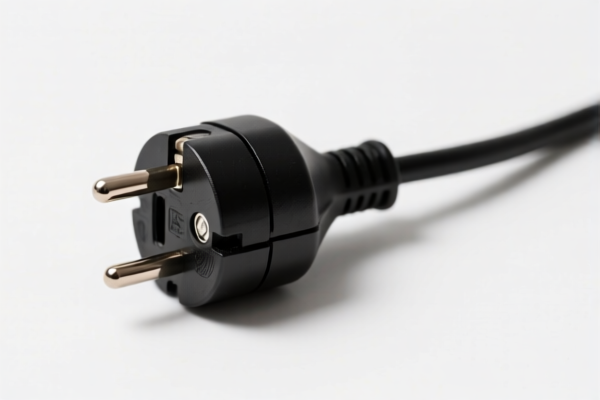
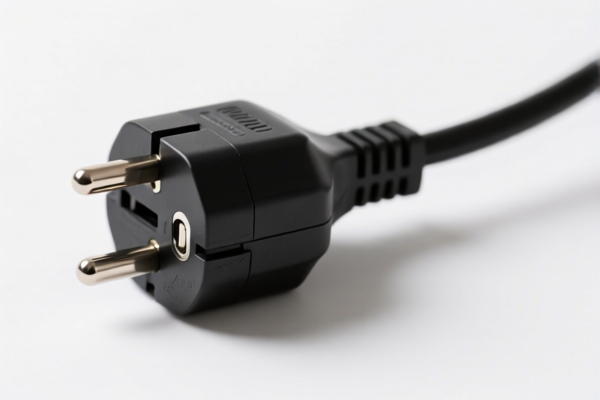
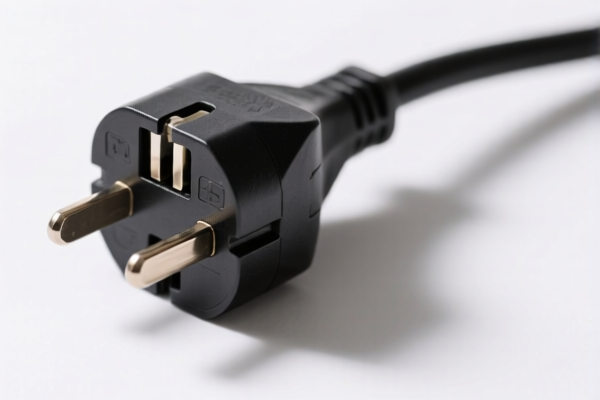

AI Analysis
🔌 Power Plugs & Electrical Connectors (High Tariff Alert: USA Imports)
🌐 HS Code Reference & Customs Clearance Guide | 2026 Latest Tariff Analysis | Professional Clearance Strategy
📌 I. Product Definition: What Exactly is a "Power Plug"?
In international trade, "Power Plug" is a broad, colloquial term that does not exist in the Harmonized System (HS). It must be dissected into specific components based on voltage, function, and construction. Misclassification here is fatal due to the 87.6% tariff trap.
There are two primary categories for "Power Plugs" in this data set: 1. Power Distribution Equipment (Switchgear/Panelboards): Complex control boards, usually with switches/breakers, voltage ≤ 1000V. 2. Electrical Conductors with Connectors (Cables/Wires): Cords, extension cords, or wires with plugs/sockets attached, voltage ≤ 1000V. 3. Other Connection Devices (Sockets/Outlets): Standalone sockets or plugs without wires, often made of insulating plastic/metal.
⚠️ Critical Distinction Point:
- If it is a wired assembly (plug + cable) → Look at 8544.42.90 (High Tariff: 87.6%)
- If it is a standalone plug/socket (no wire) → Look at 8536.69.80 or 8537.10.91 (Medium Tariff: 37.7%)
- If it is a control panel/board → Look at 8537.10.91 (Medium Tariff: 37.7%)
📦 II. HS Code Classification Details (2026 Latest Tariff Authority)
| HS Code | Product Description | Application Scenario | Key Characteristics |
|---|---|---|---|
8537.10.91.70 |
Distribution boards/panels for electricity, voltage ≤ 1000V | Industrial control panels, main distribution boxes, switchgear | Contains switches, relays, or instruments for controlling electricity |
8536.69.80.00 |
Other connection devices for electrical apparatus (e.g., sockets, standalone plugs) | Wall outlets, standalone power plugs, insulated plastic/metal connectors | No wire attached; insulating material + metal conductive parts |
8544.42.90.90 |
Electrical conductors with connectors (plugs/sockets), voltage ≤ 1000V | Extension cords, appliance cords, wired plugs | Wired assembly; includes steel, aluminum, or copper products |
8537.10.91.20 |
Parts/components of electrical distribution/control equipment, voltage ≤ 1000V | Control panels, switchboard parts | Similar to .70 but often classified as specific parts/components |
8544.42.90.10 |
Electrical conductors with connectors (Extension Cord form), voltage ≤ 1000V | Dedicated extension cords, wired power cords | Specifically classified as "extension cords" or similar wired assemblies |
🔍 Key Reminder:
- Wired vs. Non-Wired: This is the biggest risk. A "Power Plug" with a cord attached falls under 8544 (87.6% tariff). A loose plug/sock falls under 8536 (37.7% tariff).
- Voltage Limit: All items listed are for ≤ 1000V. Higher voltage changes the HS code entirely.
- Material Note: For8544, if the product contains steel, aluminum, or copper, an additional 50% tariff may apply under Section 122, pushing the total to 87.6% (Base 2.6% + 25% + 10% + 50% metal surcharge? Note: The data states total 87.6% with specific details, implying the 50% is part of the calculation logic for total).
💰 III. 2026 Latest Tariff Rate Breakdown (Including Surcharges & Policy Add-ons)
✅ Applicable Country: United States (US)
✅ Origin: China (CN)
✅ Effective Time: 2025 November 10 onwards (including subsequent imports)
🎯 1. 8537.10.91.70 / 8537.10.91.20 —— Power Distribution Panels/Components
| Item | Content |
|---|---|
| Base Tariff | 2.7% |
| Section 301 Surcharge | +25.0% (USITC Footnote) |
| Section 122 Surcharge | +10.0% (IEEPA/Other) |
| Total Tax Rate | 37.7% |
| Tax Calculation | CIF Value × 37.7% |
| De Minimis Exemption | ❌ Not Available |
| Legal Basis Path | Base: 2.7% → 301: 25.0% → 122: 10.0% |
📌 Explanation:
- These are considered "Industrial/Commercial" equipment.
- The 37.7% rate is high but significantly lower than wired cords.
- Ensure the product is clearly a "distribution board" or "control panel" and not just a simple plug.
🎯 2. 8536.69.80.00 —— Standalone Sockets/Plugs (No Wire)
| Item | Content |
|---|---|
| Base Tariff | 2.7% |
| Section 301 Surcharge | +25.0% |
| Section 122 Surcharge | +10.0% |
| Total Tax Rate | 37.7% |
| Tax Calculation | CIF Value × 37.7% |
| De Minimis Exemption | ❌ Not Available |
| Legal Basis Path | Base: 2.7% → 301: 25.0% → 122: 10.0% |
📌 Explanation:
- If you are shipping loose plugs or outlet sockets (e.g., a box of 100 power plugs without wires), this is the correct code.
- Strategy: Try to separate wires from plugs if possible to reduce the tariff from 87.6% to 37.7%.
🎯 3. 8544.42.90.90 / 8544.42.90.10 —— Wired Conductors/Extension Cords
| Item | Content |
|---|---|
| Base Tariff | 2.6% |
| Section 301 Surcharge | +25.0% |
| Section 122 Surcharge | +10.0% |
| Metal Product Surcharge | +50.0% (Steel, Aluminum, Copper products) |
| Total Tax Rate | 87.6% |
| Tax Calculation | CIF Value × 87.6% |
| De Minimis Exemption | ❌ Not Available |
| Legal Basis Path | Base: 2.6% → 301: 25.0% → 122: 10.0% → Metal: 50.0% |
📌 Warning:
- This is the highest risk category.
- Any electrical wire, cable, or extension cord with a plug must declare this code.
- The 50% metal surcharge applies because these products contain copper/steel.
- 87.6% is extremely high. Even a $10 item incurs nearly $9 in duty.
- Do not try to misdeclare wired cords as "parts" or "plugs" without wires. Customs will inspect and penalize.
🛠️ IV. Customs Clearance Practical Advice (Battle-Tested Pitfall Guide)
✅ 1. Required Documentation Checklist (Missing Items Cause Delays)
| Document | Mandatory? | Notes |
|---|---|---|
| ✅ Product Specification Sheet | ✔️ | Must clearly state Voltage (≤1000V), Current Rating, Plug Type (NEMA, IEC, etc.) |
| ✅ Circuit Diagram / Structure Photo | ✔️ | Crucial to prove if it is "Wired" (8544) or "Standalone" (8536) |
| ✅ Product Photos (Label + Connector) | ✔️ | Show the plug shape, wire gauge, and material |
| ✅ Third-Party Test Report | ✔️ | UL, CE, FCC, or RoHS (if applicable) |
| ✅ Commercial Invoice | ✔️ | Clearly describe as "Power Cord" or "Distribution Panel", NOT just "Power Plug" |
| ✅ Packing List | ✔️ | Specify if wires are packed separately or attached |
✅ 2. Declaration Tips (Key Mantras)
🔥 "Wired is Expensive, Loose is Cheaper, Name it Right!"
| Scenario | Correct HS Code | Wrong Declaration | Consequence |
|---|---|---|---|
| Extension Cord / Wired Plug | 8544.42.90.90 / .10 |
"Power Plug" or "Accessory" | 87.6% Tax + Penalty for misdeclaration |
| Loose Plug/Socket (No Wire) | 8536.69.80.00 |
"Extension Cord" | 37.7% Tax (Correct, but don't overpay!) |
| Control Panel / Switchboard | 8537.10.91.70 |
"Power Plug" | 37.7% Tax (Correct classification needed) |
| Cable without Connectors | Different Code (Not in Data) | 8544.42.90 |
Incorrect; wires alone are different |
✅ 3. Special Handling Strategies
| Situation | Advice |
|---|---|
| High-Value Cords | Calculate cost-benefit. 87.6% may make direct shipping unprofitable. Consider duty drawback or re-export. |
| Separating Wires | If your product is a "Plug+Wire" kit, check if you can ship the plug (37.7%) and wire (different code, potentially lower or higher, but avoid the 50% metal surcharge if possible) separately. Consult a broker first. |
| OEM Custom Plugs | Provide design drawings to prove it's a "custom component" and not a standard consumer good, which may help in classification defense. |
| Mixed Containers | If mixing "Loose Plugs" and "Wired Cords", declare them separately. Do not mix under one HS code. |
🌍 V. Global Market Comparison (2026 Update)
| Country/Region | Recommended HS Code | Tariff (China Origin) | Certification | Notes |
|---|---|---|---|---|
| 🇺🇸 USA | 8544.42.90 (Wired) / 8536.69 (Loose) |
87.6% (Wired) / 37.7% (Loose) | UL, CUL, FCC | Highest tariffs globally. 122 + 301 clauses apply. |
| 🇪🇺 EU | 8536.69 / 8544.42 |
0% - 6% (Varies) | CE, VDE | No 301/122 surcharges. Much cheaper. |
| 🇨🇳 China | 8536.69 / 8544.42 |
0% - 10% (MFN) | CCC | Low import duty, but check domestic standards. |
| 🇯🇵 Japan | 8536.69 / 8544.42 |
0% - 3% | PSE | Very low tariffs. No surcharges. |
| 🇬🇧 UK | 8536.69 / 8544.42 |
0% - 4% | UKCA | Post-Brexit rules, generally low. |
📌 Conclusion:
- USA is the most expensive market for electrical connectors due to Section 301 and Section 122 tariffs.
- Wired products (8544) are penalized heavily (87.6%) due to metal content.
- Loose components (8536) are more favorable (37.7%) but still significant.
📌 VI. Common Mistakes & Pitfall Guide (Lessons from Experience)
❌ Mistake 1: Declaring a Wired Extension Cord as a "Power Plug" (Loose)
👉 Result: Classified as 8536 → 37.7% if caught by random check? NO! Customs will inspect, find the wire, and reclassify to 8544 → 87.6% + Penalty.
✅ Fix: Always declare wired products as 8544.42.90.
❌ Mistake 2: Ignoring the 50% Metal Surcharge in 8544
👉 Result: Underestimating duty by 50%.
✅ Fix: Budget for 87.6% total tax for any copper/steel-containing wired product.
❌ Mistake 3: Using "Power Cable" for Control Panels
👉 Result: Wrong HS Code. 8544 is for conductors. 8537 is for panels.
✅ Fix: Distinguish between "Wire" (8544) and "Board/Panel" (8537).
🎯 VII. Conclusion: Precision in Classification Saves Money
🎯 Remember the Mantra:
🔹 "Wired = 87.6%, Loose = 37.7%, Panel = 37.7%."
🔹 "Separate wire from plug if legal to reduce cost."
🔹 "Never misdeclare wire as plug. Customs sees it."
📌 Pro Tip:
If you are importing large volumes of wired plugs/cords into the US, consider:
1. Section 321 De Minimis Exemption: Not available for these HS codes (as per data: deny_de_minimis).
2. FTZ (Foreign Trade Zone): Defer duties until sale.
3. Third-Country Sourcing: Import from Vietnam/Mexico to avoid China-specific surcharges (if eligible).
📣 Immediate Action:
📞 Contact a US Customs Broker for Pre-Ruling on your specific product.
🚀 Classify correctly, pay the right tax, clear customs smoothly.
✨ Professional Clearance Starts with Accurate Classification!
💼 Your Profit Margin Depends on Your HS Code!
Customer Reviews
About HS Code Classification
The Harmonized System (HS) is an internationally standardized nomenclature developed by the World Customs Organization (WCO) to classify traded products. Over 200 countries use the HS system as the basis for customs tariffs, trade statistics, and import/export regulations.
Each HS code follows a hierarchical structure:
- Chapter (2 digits) — Broad category of goods (e.g., Chapter 84: Machinery and Mechanical Appliances)
- Heading (4 digits) — More specific grouping within the chapter
- Subheading (6 digits) — Internationally standardized breakdown, used by all WCO member countries
- National subdivisions (8-10 digits) — Country-specific extensions for further classification, such as US HTSUS 10-digit codes
Correct HS code classification is essential for smooth customs clearance, accurate duty payment, and compliance with trade regulations. Misclassification can lead to customs delays, overpayment of duties, or penalties.
When importing from CN to US, the applicable tariff rates may include:
- Most-Favored-Nation (MFN) rate — The standard duty rate applied to WTO members
- General rate — Applied to countries without trade agreements
- Trade remedy duties — Additional tariffs such as Section 301 (anti-dumping), Section 232 (national security), or countervailing duties
The information provided on this page is for reference purposes only. For official classification, please consult with your local customs authority or a licensed customs broker.