power plug lock
CN → US| HS Code | Tariff Rate | Origin | Destination | Doc |
|---|---|---|---|---|
| 8536694010 | 35.0% | CN | US | Official Doc |
| 8544429090 | 87.6% | CN | US | Official Doc |
| 8544422000 | 85.0% | CN | US | Official Doc |
| 8536698000 | 37.7% | CN | US | Official Doc |
| 8301406030 | 23.2% | CN | US | Official Doc |
Product Images
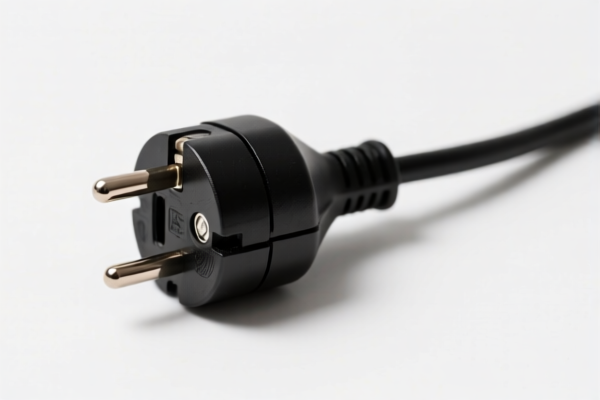
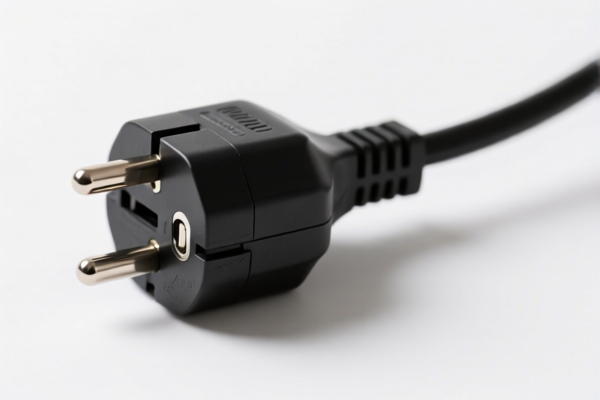
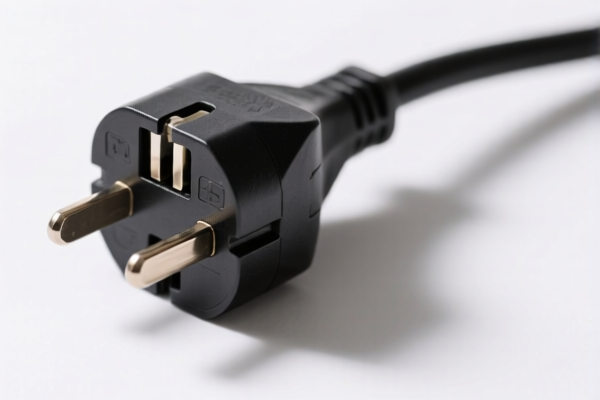

AI Analysis
🔌 Power Plug Locks (Electrical Connectors & Locking Mechanisms)
🌐 HS Code Reference & Customs Clearance Guide | 2024/2025 Latest Tariff Structure | Professional Clearance Strategy
📌 1. Product Definition & Classification: Do You Truly Understand "Power Plug Locks"?
A "Power Plug Lock" generally refers to devices that serve either as electrical connectors/plugs or as locking mechanisms for electrical sockets/plugs. In international trade, this term is ambiguous and must be dissected into two distinct categories based on function and structure:
Category A: Electrical Connectors (Plugs/Cables)
Devices designed to establish an electrical connection. If the "lock" refers to a locking mechanism integrated into an electrical plug (e.g., a locking power cord), it is primarily classified as an electrical connector or cable assembly.
Category B: Locking Devices (Physical Locks)
Mechanical devices used to secure a plug into a socket or to prevent unauthorized use. If it is a dedicated mechanical lock (e.g., a lockbox for a plug, or a specific lock for an indoor/outdoor door socket), it falls under hardware/lock categories.
⚠️ Key Distinction Point:
- If the product’s primary function is transmitting electricity (even with a locking feature) → Classify under Chapter 85 (Electrical Machinery);
- If the product’s primary function is mechanical security (locking a socket/plug physically without being part of the conductive circuit) → Classify under Chapter 83 (Base Metal Articles/Locks).
📦 2. HS Code Classification Details (Based on Provided Data)
The following HS Codes are derived from the provided data for "Power Plug" and "Electric Plug Core Lock" contexts. Note that the data explicitly links "Power Plug" to electrical categories and "Plug Core Lock" to hardware.
| HS Code | Product Description (Based on Data) | Tax Rate (Total) | Key Characteristics & Application |
|---|---|---|---|
8536.69.40.10 |
Electrical Connector: Plug | 35.0% | Fits "Plugs" for voltage ≤ 1,000 V. Primary function is electrical connection. |
8544.42.90.90 |
Insulated Conductor: With Connectors | 87.6% | Fits "Insulated conductors with connectors" for voltage ≤ 1,000 V. May include steel/aluminum/copper components triggering higher duties. |
8544.42.20.00 |
Electrical Conductor Assembly | 85.0% | Fits "Conductor assemblies equipped with connectors." Emphasizes the electrical connection function. |
8536.69.80.00 |
Electrical Circuit Connection Device: Plug | 37.7% | Specifically "Plugs" for circuits < 1,000 V. Direct match for standard power plugs. |
8301.40.60.30 |
Electric Lock Core / Lock | 23.2% | Fits "Locks for indoor/outdoor doors." Note: The data explicitly links "Electric Plug Core Lock" to this lock category, suggesting a mechanical or electro-mechanical locking device, not just a conductor. |
🔍 Critical Observation:
- The term "Power Plug Lock" is a hybrid. If it is a locking power cord, it likely falls under 8536 or 8544 (electrical).
- If it is a lock for a plug/socket (security device), the data suggests 8301.40.60.30 (locks).
- High Tariff Warning: Electrical connectors (8536/8544) face significantly higher duties (35%-87.6%) due to additional tariffs compared to locks (23.2%).
💰 3. Detailed Tariff Analysis (2024/2025 Latest Rates)
✅ Applicable Context: Based on provided data, taxes include Base Duty, Additional Tariffs (e.g., Section 301, 122 Clause), and potential material-specific surcharges.
🌍 Origin: Likely China (implied by "122 Clause" and high additional tariffs typical of US-China trade context).
🎯 1. 8536.69.40.10 – Electrical Plug (Voltage ≤ 1,000 V)
| Item | Detail |
|---|---|
| Base Duty | 0.0% |
| Additional Duty (Section 301) | 25.0% |
| 122 Clause Duty | 10% |
| Total Tax Rate | 35.0% |
| Calculation | CIF Value × 35% |
| De Minimis Eligibility | ❌ Likely Denied (High additional tariffs usually override de minimis for commercial shipments) |
📌 Explanation:
- This is a mid-range tariff option for electrical plugs.
- The 35% total is driven by the 25% Section 301 duty + 10% 122 Clause duty.
- No base duty, but significant punitive tariffs apply.
🎯 2. 8544.42.90.90 – Insulated Conductor with Connectors (Material Surcharge Applies)
| Item | Detail |
|---|---|
| Base Duty | 2.6% |
| Additional Duty (Section 301) | 25.0% |
| 122 Clause Duty | 10% |
| Steel/Aluminum/Copper Surcharge | 50% |
| Total Tax Rate | 87.6% |
| Calculation | CIF Value × 87.6% |
| De Minimis Eligibility | ❌ Denied |
📌 Explanation:
- HIGHEST TARIFF.
- This code applies if the product is classified as an "Insulated Conductor" AND contains steel, aluminum, or copper components that trigger the 50% surcharge.
- Risk: If your "Power Plug Lock" has metal conductors (copper wires) and is classified here, the cost is prohibitive.
- Mitigation: Ensure classification under8536(Plug) instead of8544(Conductor) if possible to avoid the 50% surcharge.
🎯 3. 8544.42.20.00 – Electrical Conductor Assembly
| Item | Detail |
|---|---|
| Base Duty | 0.0% |
| Additional Duty (Section 301) | 25.0% |
| 122 Clause Duty | 10% |
| Steel/Aluminum/Copper Surcharge | 50% |
| Total Tax Rate | 85.0% |
| Calculation | CIF Value × 85.0% |
| De Minimis Eligibility | ❌ Denied |
📌 Explanation:
- Similar to above, but base duty is 0%.
- Still suffers the 50% metal surcharge, resulting in 85%.
- Avoid this classification if a lower-tariff8536code is applicable.
🎯 4. 8536.69.80.00 – Electrical Circuit Connection Device (Plug)
| Item | Detail |
|---|---|
| Base Duty | 2.7% |
| Additional Duty (Section 301) | 25.0% |
| 122 Clause Duty | 10% |
| Total Tax Rate | 37.7% |
| Calculation | CIF Value × 37.7% |
| De Minimis Eligibility | ❌ Denied |
📌 Explanation:
- A competitive alternative to8536.69.40.10.
- Slightly higher due to 2.7% base duty, but no metal surcharge.
- Use if8536.69.40.10is rejected or if the plug design fits this "other plug" category better.
🎯 5. 8301.40.60.30 – Electric Lock Core / Lock (Hardware)
| Item | Detail |
|---|---|
| Base Duty | 5.7% |
| Additional Duty (Section 301) | 7.5% |
| 122 Clause Duty | 10% |
| Total Tax Rate | 23.2% |
| Calculation | CIF Value × 23.2% |
| De Minimis Eligibility | ❌ Denied (Likely, due to additional tariffs) |
📌 Explanation:
- LOWEST TARIFF in the list.
- Applies if the product is deemed a lock (e.g., a locking mechanism for doors or sockets) rather than an electrical conductor.
- Strategy: If the "Power Plug Lock" is primarily a security device (e.g., a lock that prevents a plug from being pulled out, or a lockbox), argue for this classification to save 12-64% in duties.
🛠️ 4. Customs Clearance Practical Advice (Avoid Pitfalls)
✅ 1. Documentation Checklist (Non-Negotiable)
| Document | Required? | Notes |
|---|---|---|
| ✅ Product Photos | ✔️ | Must show plug end, lock mechanism, insulation, and connectors. |
| ✅ Technical Data Sheet | ✔️ | Specify voltage (≤1,000V), current, material (copper/steel/aluminum), and function (electrical vs. mechanical lock). |
| ✅ Circuit Diagram | ✔️ | Critical for distinguishing between 8536 (Plug) and 8544 (Conductor). |
| ✅ Commercial Invoice | ✔️ | Clearly state: "Power Plug with Locking Feature" OR "Electric Lock Core for Socket" depending on classification. |
| ✅ Material Composition | ✔️ | List % of Copper, Steel, Aluminum. Triggers 50% surcharge if > threshold in 8544 codes. |
✅ 2. Classification Strategy (Key Mnemonic)
🔥 “Function First, Material Second: Electrical Plug vs. Metal Lock”
| Scenario | Recommended HS Code | Reason |
|---|---|---|
| Standard Power Plug with Locking Pin | 8536.69.40.10 or 8536.69.80.00 |
Primary function is electrical connection. Lower tariff (35-37.7%). |
| Power Cord with Locking Connector | 8536.69.40.10 |
Classified as a plug, not a conductor assembly. Avoids 50% surcharge. |
| Mechanical Lock for Electrical Socket | 8301.40.60.30 |
Primary function is mechanical security. Lowest tariff (23.2%). |
| Cable Assembly with Connectors & Metal Core | 8544.42.90.90 |
AVOID IF POSSIBLE. High tariff (87.6%) due to 50% metal surcharge. |
✅ 3. Special Cases & Risk Mitigation
| Situation | Recommendation |
|---|---|
| Product has Copper Wires | Do NOT classify under 8544 if 8536 is applicable. Argue it is a "Plug" (8536), not a "Conductor" (8544), to avoid 50% surcharge. |
| "Lock" is Electro-Mechanical | If it uses electricity to lock, it may still be 8536. If it is purely mechanical, argue for 8301. |
| Customs Questions Material Content | Provide a Bill of Materials (BOM) showing non-metal components or minimal metal usage to challenge surcharges if misclassified. |
| De Minimis Claims | Do NOT rely on de minimis ($800) for these items if additional tariffs apply. Most commercial shipments will be assessed. |
🌍 5. Global Market Comparison (2024/2025)
| Market | Recommended HS Code | Est. Duty (China Origin) | Key Certification |
|---|---|---|---|
| 🇺🇸 USA | 8536.69.40.10 |
35.0% | UL, ETL, FCC |
| 🇺🇸 USA (Lock) | 8301.40.60.30 |
23.2% | ASTM, ANSI |
| 🇺🇸 USA (Conductor) | 8544.42.90.90 |
87.6% | UL, RoHS |
| 🇪🇺 EU | 8536.69.80 |
0% - 4% | CE, RoHS, REACH |
| 🇨🇳 China | 8536.69.40 |
0% - 10% | CCC |
📌 Conclusion:
- The USA is the most expensive market due to Section 301 and 122 Clause tariffs.
- EU and China offer significantly lower duties.
- Critical: Misclassification as a "Conductor" (8544) in the USA can lead to 87.6% duty, destroying profit margins. Always argue for "Plug" (8536) or "Lock" (8301).
📌 6. Common Errors & Pitfalls (Blood & Tears Lessons)
❌ Error 1: Classifying a "Locking Power Plug" as a "Conductor with Connectors" (8544)
👉 Consequence: 87.6% duty due to 50% metal surcharge.
👉 Fix: Argue it is a "Plug" (8536), which is a finished connector, not a raw conductor.
❌ Error 2: Claiming De Minimis for High-Value Industrial Power Plugs
👉 Consequence: Customs seizure or retroactive duty assessment.
👉 Fix: Always declare for commercial entry.
❌ Error 3: Ignoring the "122 Clause" (10%)
👉 Consequence: Underpaying duties by 10%, leading to penalties.
👉 Fix: Include 122 Clause in all duty calculations for China-origin goods.
❌ Error 4: Vague Description "Power Plug"
👉 Consequence: Customs flags for manual review, delays, and potential misclassification.
👉 Fix: Use precise terms: "IEC 60320 C13 Male Plug with Locking Mechanism, 10A, 250V."
✅ Correct Approach:
"Electric Plug, Locking Type, Voltage ≤1,000V, Model XYZ, UL Certified, With Copper Conductors (Classify as 8536.69.40.10)"
🎯 7. Conclusion: Precision Saves Money!
🎯 Remember the Golden Rule:
🔹 “Plug is 35%, Conductor is 87%, Lock is 23%.”
🔹 “Function defines Code: Electrical? Go 8536. Mechanical? Go 8301.”
🔹 “Metal Surcharge is the Enemy: Avoid 8544!”
📌 Pro Tip:
If your "Power Plug Lock" is a locking mechanism for a socket (not the plug itself), strongly consider 8301.40.60.30 (23.2%) to save over 12% compared to electrical plug codes. If it is a plug with a lock, use 8536.69.40.10 (35.0%).
📣 Immediate Action:
📞 Provide Photos and Technical Specs to your customs broker.
📝 Request an Advance Ruling if shipping large volumes.
🚀 Correct Classification = Lower Duty = Higher Profit!
✨ Professional Clearance Starts with Accurate Classification!
💼 Every percent of duty saved is pure profit!
Customer Reviews
About HS Code Classification
The Harmonized System (HS) is an internationally standardized nomenclature developed by the World Customs Organization (WCO) to classify traded products. Over 200 countries use the HS system as the basis for customs tariffs, trade statistics, and import/export regulations.
Each HS code follows a hierarchical structure:
- Chapter (2 digits) — Broad category of goods (e.g., Chapter 84: Machinery and Mechanical Appliances)
- Heading (4 digits) — More specific grouping within the chapter
- Subheading (6 digits) — Internationally standardized breakdown, used by all WCO member countries
- National subdivisions (8-10 digits) — Country-specific extensions for further classification, such as US HTSUS 10-digit codes
Correct HS code classification is essential for smooth customs clearance, accurate duty payment, and compliance with trade regulations. Misclassification can lead to customs delays, overpayment of duties, or penalties.
When importing from CN to US, the applicable tariff rates may include:
- Most-Favored-Nation (MFN) rate — The standard duty rate applied to WTO members
- General rate — Applied to countries without trade agreements
- Trade remedy duties — Additional tariffs such as Section 301 (anti-dumping), Section 232 (national security), or countervailing duties
The information provided on this page is for reference purposes only. For official classification, please consult with your local customs authority or a licensed customs broker.