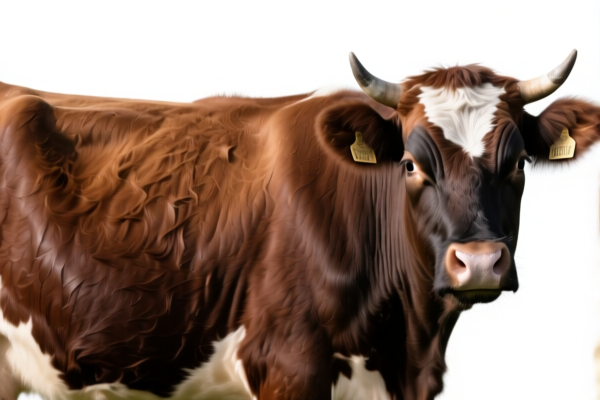
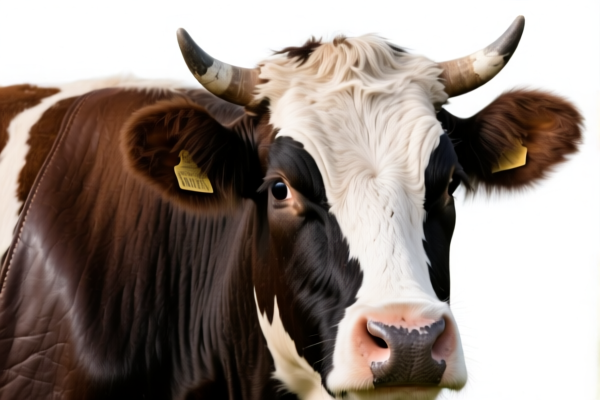
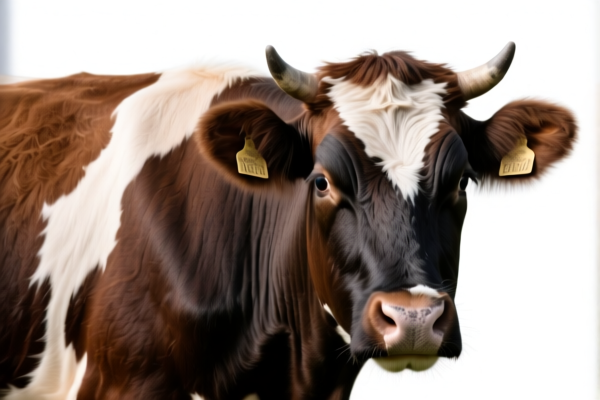
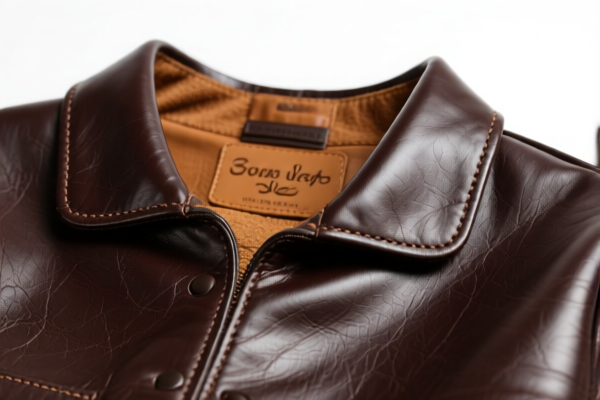
premium bovine full grain leather
CN → US| HS Code | Tariff Rate | Origin | Destination | Doc |
|---|---|---|---|---|
| 4107111020 | 35.0% | CN | US | Official Doc |
| 4107113000 | 13.6% | CN | US | Official Doc |
| 4107118000 | 12.4% | CN | US | Official Doc |
| 4107111020 | 35.0% | CN | US | Official Doc |
| 4107118000 | 12.4% | CN | US | Official Doc |
Product Images
AI Analysis
🐂 Premium Bovine Full Grain Leather (优质牛全粒面皮革)
🌐 HS Code Reference & Customs Clearance Guide | 2026 Latest Tariff Analysis | Professional Compliance Strategy
📌 I. Product Definition & Classification: Do You Truly Understand "Premium Bovine Leather"?
Premium Bovine Full Grain Leather is the highest quality grade of cowhide, retaining the original grain surface without sanding or splitting. In international trade, it is strictly categorized based on its physical state (whole hide vs. split piece) and processing level. The distinction is critical because the HS Code and resulting tariff burden vary significantly between "whole hides" and "leather pieces."
⚠️ Key Distinction Point:
- Whole Hide/Unsplit: Retains the full structural integrity of the skin, often processed but not split into layers → Tends toward 4107.11.80.00 (Lower Base Tariff) or 4107.11.10.20 (If deemed "raw/unsplit" premium)
- Split Piece/Split Leather: Separated into layers or cut into specific shapes, often indicating a lower grade or specific industrial use → Tends toward 4107.11.30.00
- Raw/Unsplit Premium: High-end, unsplit, often for luxury goods → Triggers the highest scrutiny and specific sub-codes like 4107.11.10.20
📦 II. HS Code Classification Details (2026 Latest Tariff Authority Mapping)
Based on the provided data, here is the precise mapping for "Premium Bovine Full Grain Leather" variants:
| HS Code | Product Description | Key Characteristics | Typical Use Case |
|---|---|---|---|
4107.11.10.20 |
Premium Bovine Unsplit Leather (Piece/Whole) | High-End Raw/Unsplit, No Splitting, Full Grain | Luxury handbags, high-end footwear, premium automotive interiors |
4107.11.30.00 |
Premium Bovine Split Leather (Piece) | Split or Cut Pieces, Full Grain Surface, Not Split Layers | Standard leather goods, belts, lower-tier luxury items |
4107.11.80.00 |
Premium Bovine Whole Hide (Tanned/Processed) | Whole Hide, Treated/Processed, Full Grain | Bulk leather supply, upholstery, large surface area applications |
🔍 Critical Reminder:
- "Full Grain" (全粒面) means the natural grain is preserved. If the leather has been split (劈层) to separate the top grain from the flesh side, it falls under different sub-headings.
- "Whole Hide" (整张皮) vs. "Piece" (片): Customs officers will inspect whether the product is a continuous hide or cut into specific shapes. This distinction drives the HS Code selection between10.20,30.00, and80.00.
💰 III. 2026 Latest Tariff Rate Breakdown (Including Add-ons & Policy Surcharges)
✅ Applicable Country: USA (US)
✅ Country of Origin: China (CN)
✅ Effective Time: Current Rates Applied
🎯 1. 4107.11.10.20 —— Premium Bovine Unsplit Leather (High Tariff Tier)
| Item | Content |
|---|---|
| Base Tariff | 0.0% |
| Section 301 Add-on | +25.0% |
| IEEPA Add-on (122 Clause) | +10.0% |
| Total Effective Rate | 35.0% |
| Tax Calculation | CIF Value × 35% |
| De Minimis Eligibility | ❌ No (Denied) |
| Legal Basis Path | USITC:4107.11.10.20 → Section301:25% → IEEPA:10% |
📌 Explanation:
- This code is for premium, unsplit bovine leather. It attracts the highest total tariff (35%) due to the 25% Section 301 duty and 10% IEEPA surcharge.
- The Base Tariff is 0%, meaning the entire cost burden comes from punitive add-ons.
- Risk: High. This code is often targeted for luxury goods materials. Misclassification as "split" or "processed whole hide" to lower the rate can lead to severe penalties.
🎯 2. 4107.11.30.00 —— Premium Bovine Split/Cut Leather (Medium Tariff Tier)
| Item | Content |
|---|---|
| Base Tariff | 3.6% |
| Section 301 Add-on | 0.0% |
| IEEPA Add-on (122 Clause) | +10.0% |
| Total Effective Rate | 13.6% |
| Tax Calculation | CIF Value × 13.6% |
| De Minimis Eligibility | ❌ No |
| Legal Basis Path | USITC:4107.11.30.00 → IEEPA:10% |
📌 Explanation:
- This code applies to leather pieces that are full grain but classified as "split" or cut forms.
- Savings Opportunity: The Section 301 25% duty is 0% for this specific sub-heading, significantly lowering the burden to 13.6%.
- Caveat: You must prove the leather is legally classified as "split" or "piece" rather than "whole unsplit hide." If customs determines it is actually unsplit, you will face back-taxes and penalties.
🎯 3. 4107.11.80.00 —— Premium Bovine Whole Hide (Processed) (Lowest Tariff Tier)
| Item | Content |
|---|---|
| Base Tariff | 2.4% |
| Section 301 Add-on | 0.0% |
| IEEPA Add-on (122 Clause) | +10.0% |
| Total Effective Rate | 12.4% |
| Tax Calculation | CIF Value × 12.4% |
| De Minimis Eligibility | ❌ No |
| Legal Basis Path | USITC:4107.11.80.00 → IEEPA:10% |
📌 Explanation:
- This code is for treated/processed whole hides. It has the lowest total tariff (12.4%).
- Why is it cheaper? The base tariff is higher than code10.20(2.4% vs 0%), but it avoids the 25% Section 301 duty.
- Strategy: If your leather is processed/tanned and sold as whole hides, this is the most cost-effective classification. Ensure the description explicitly states "Tanned" or "Processed" and "Whole Hide."
🛠️ IV. Customs Clearance Practical Advice (Actionable Pitfall Avoidance)
✅ 1. Documentation Checklist (Non-Negotiable)
| Document | Mandatory? | Purpose |
|---|---|---|
| Product Specification Sheet | ✔️ | Must detail: Material (Bovine), Process (Tanned/Chrome/Tan), State (Whole Hide/Piece), Grade (Full Grain) |
| Photos of Goods | ✔️ | Clear images showing the grain surface (to prove full grain) and edges (to prove no splitting if claiming 10.20 or 80.00) |
| Commercial Invoice | ✔️ | Must use precise language: "Premium Bovine Full Grain Leather, [Whole Hide/Piece], Tanned/Untanned" |
| Packing List | ✔️ | Must match invoice exactly. Note: "Whole Hides" are counted by number of hides; "Pieces" by weight or count. |
| Processing Certificate | ✔️ | If claiming 80.00 (Processed), provide proof of tanning/processing to justify "Processed" status. |
✅ 2. Declaration Strategy (Key Mantra)
🔥 "Grade Defines Code, State Defines Rate, Process Defines Duty!"
| Scenario | Correct HS Code | Why? |
|---|---|---|
| Luxury, Unsplit, Raw/Premium | 4107.11.10.20 |
High value, unsplit, triggers 35% tariff. Justify with premium branding and unsplit edges. |
| Cut Pieces, Full Grain Surface | 4107.11.30.00 |
If leather is cut into specific shapes (not whole hides), use this. Saves 21.4% vs 10.20. |
| Tanned/Processed Whole Hides | 4107.11.80.00 |
If sold as large, processed hides, this is the cheapest option (12.4%). Avoids 301 Duty. |
| Split Leather (Flesh Side Exposed) | Check Other Codes | If "Full Grain" is lost, it may fall under different sub-headings with different rates. |
✅ 3. Special Handling & Risk Mitigation
| Situation | Advice |
|---|---|
| Misclassification Risk | Do NOT declare "Whole Hide" as "Piece" to save tax. Customs may inspect and assess 35% + penalties. |
| "Full Grain" Verification | Ensure the leather genuinely retains its natural grain. If sanded/buffed, it is not Full Grain and may not qualify for these premium codes. |
| Split Leather | If the leather is physically split (two layers), do NOT use 10.20 or 80.00. Use 30.00 or other split codes. |
| Processing Status | For 80.00, ensure the leather is processed (tanned). Raw skins may fall under different chapters or codes. |
🌍 V. Global Market Comparison (2026 Context)
| Market | Recommended HS Code | Effective Tariff | Key Requirement |
|---|---|---|---|
| 🇺🇸 USA | 4107.11.80.00 |
12.4% | Must be Tanned/Processed Whole Hide. Avoids 301 Duty. |
| 🇺🇸 USA | 4107.11.30.00 |
13.6% | Must be Pieces/Cut. Avoids 301 Duty. |
| 🇺🇸 USA | 4107.11.10.20 |
35.0% | Premium Unsplit. Highest risk/cost. |
| 🇨🇳 China | 4107.11.80.00 |
Low Base | No US Add-ons. Standard import duties apply. |
| 🇪🇺 EU | 4107.11.80.00 |
Varies | Check EU Tariff for Tanned Bovine Leather. No US IEEPA/301. |
📌 Conclusion:
- USA is the most punitive market for bovine leather due to Section 301 and IEEPA duties.
- Optimization Strategy: If your product allows, classify as Processed Whole Hides (80.00) or Pieces (30.00) to avoid the 25% Section 301 duty, reducing the total rate from 35% to 12.4%-13.6%.
📌 VI. Common Errors & Pitfalls (Lessons Learned)
❌ Error 1: Declaring "Full Grain" for sanded or corrected grain leather.
👉 Consequence: Customs rejection, fines, and reclassification to lower-grade codes.
❌ Error 2: Using 4107.11.10.20 for cut leather pieces.
👉 Consequence: 35% tariff applied when 13.6% was available → Overpayment of 21.4%.
❌ Error 3: Using 4107.11.80.00 for raw, unprocessed skins.
👉 Consequence: Misclassification of "Processed" status → Penalty for false declaration.
❌ Error 4: Ignoring the "Split" status.
👉 Consequence: If leather is split, using 80.00 (Whole Hide) or 10.20 (Unsplit) leads to back-taxes and audits.
✅ Correct Declaration Example:
"Tanned Bovine Full Grain Leather, Whole Hides, Chrome Tanned, Class 1, for Upholstery, Model ABC-123" →
4107.11.80.00
"Cut Bovine Full Grain Leather Pieces, Vegetable Tanned, for Handbags, Model DEF-456" →4107.11.30.00
🎯 VII. Final Advice: Smart Classification, Maximize Profit!
🎯 Remember the Golden Rule:
🔹 "Whole + Processed = 12.4% | Pieces = 13.6% | Unsplit Premium = 35.0%"
🔹 "Avoid Section 301 by choosing the right Sub-Heading!"
📌 Pro Tip:
If you are shipping small quantities (e.g., samples), ensure they are clearly labeled as "Samples for Evaluation" and consider if they qualify for de minimis (though leather often does not). For commercial shipments, always pre-clear HS Codes with a licensed customs broker.
📣 Immediate Action:
📞 Contact a US Customs Broker: Provide physical samples and technical specs.
📄 Apply for an Advance Ruling: Lock in the 12.4% or 13.6% rate before shipping.
🚀 Optimize Your Supply Chain: Shift production or sales strategy to maximize the use of80.00or30.00codes.
✨ Precision Classification Saves You 22% in Tariffs!
💼 Every Dollar Saved is a Dollar Earned in Global Trade!
Customer Reviews
About HS Code Classification
The Harmonized System (HS) is an internationally standardized nomenclature developed by the World Customs Organization (WCO) to classify traded products. Over 200 countries use the HS system as the basis for customs tariffs, trade statistics, and import/export regulations.
Each HS code follows a hierarchical structure:
- Chapter (2 digits) — Broad category of goods (e.g., Chapter 84: Machinery and Mechanical Appliances)
- Heading (4 digits) — More specific grouping within the chapter
- Subheading (6 digits) — Internationally standardized breakdown, used by all WCO member countries
- National subdivisions (8-10 digits) — Country-specific extensions for further classification, such as US HTSUS 10-digit codes
Correct HS code classification is essential for smooth customs clearance, accurate duty payment, and compliance with trade regulations. Misclassification can lead to customs delays, overpayment of duties, or penalties.
When importing from CN to US, the applicable tariff rates may include:
- Most-Favored-Nation (MFN) rate — The standard duty rate applied to WTO members
- General rate — Applied to countries without trade agreements
- Trade remedy duties — Additional tariffs such as Section 301 (anti-dumping), Section 232 (national security), or countervailing duties
The information provided on this page is for reference purposes only. For official classification, please consult with your local customs authority or a licensed customs broker.