prepared leather or suede
CN → US| HS Code | Tariff Rate | Origin | Destination | Doc |
|---|---|---|---|---|
| 411410 | 0.0% | CN | US | Official Doc |
| 411490 | 0.0% | CN | US | Official Doc |
| 4202399000 | 55.0% | CN | US | Official Doc |
| 4202329900 | 52.6% | CN | US | Official Doc |
| 4107197040 | 15.0% | CN | US | Official Doc |
| 4107197050 | 15.0% | CN | US | Official Doc |
Product Images
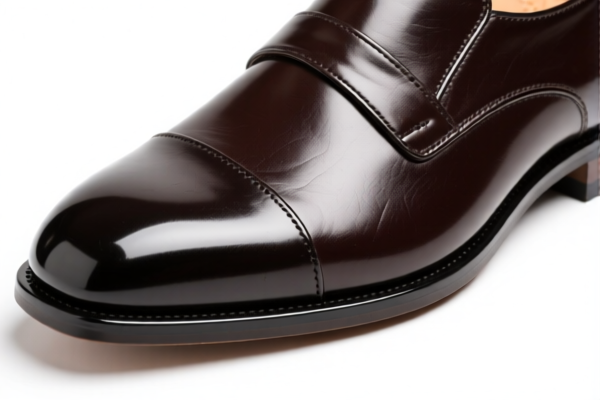
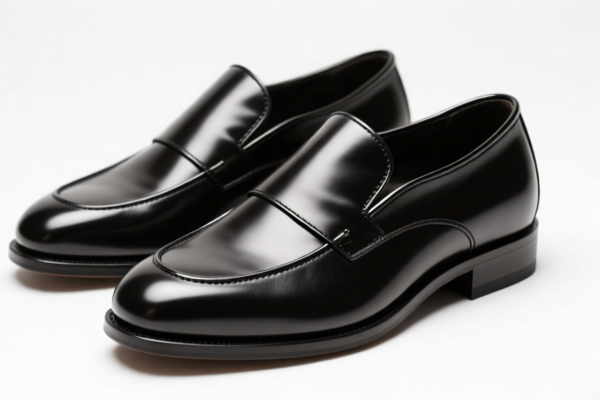
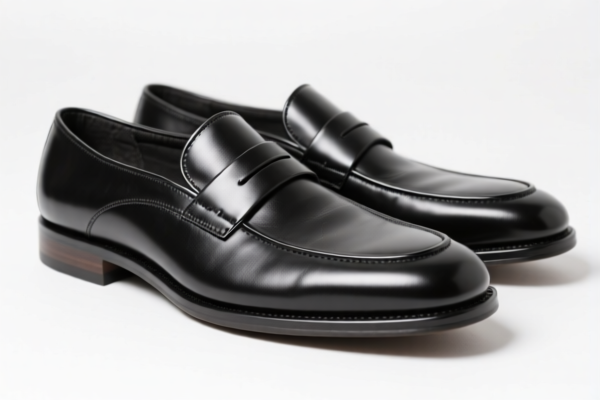
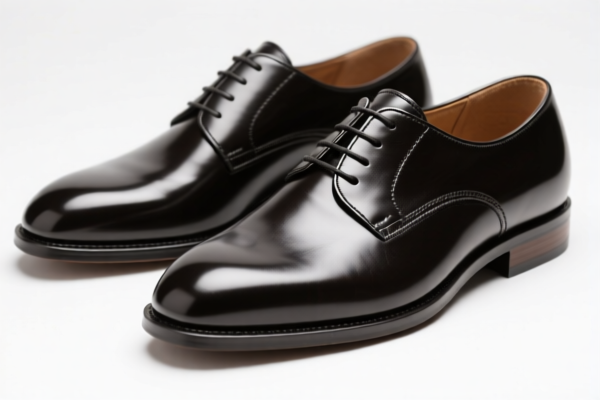
AI Analysis
👞 Prepared Leather and Suede (HS 4114)
🌐 HS Code Reference & Customs Clearance Guide | 2026 Latest Tariff Analysis | Professional Logistics Strategy
📌 I. Product Definition & Classification: What Exactly is "Prepared Leather"?
Prepared leather and suede represent a critical intermediate stage in the leather industry. Unlike raw hides (Chapter 41, heading 41.01-41.03) or fully manufactured articles (Chapter 42), Chapter 41, Heading 41.14 specifically covers leather that has undergone specific tanning, crusting, or surface treatments but has not been further prepared into finished consumer goods.
In international trade, this category is split into two distinct functional groups:
1. Footwear & Glove Leather (4114.10):
Leather specifically treated, buffed, or prepared for the direct manufacture of footwear, gloves, or similar wearable articles. These items often have specific softness, flexibility, or finishing requirements unique to apparel.
2. Other Prepared Leather (4114.90):
Leather prepared for all other uses (e.g., upholstery, luggage, bookbinding, industrial applications) that does not fall under the specific "footwear/glove" designation.
⚠️ Critical Distinction:
- If the leather is explicitly intended for footwear or gloves, it goes to 4114.10.
- If the leather is for bags, belts, upholstery, or general goods, it goes to 4114.90.
- Note: If the leather is "further prepared" (e.g., lacquered, metallic, or specifically dressed for non-apparel use beyond standard crusting), it may fall under Heading 41.07 or 41.14 depending on the animal and specific preparation method. See Section II for detailed breakdown of Heading 41.07 vs. 41.14 nuances.
📦 II. HS Code Classification Details (2026 Latest Tariff Alignment)
Based on the provided data, the following HS Codes apply to "Prepared Leather and Suede." Note that some codes refer to specific sub-categories of "Further Prepared Leather" (Heading 41.07) which are often confused with Heading 41.14. We distinguish them below for precision.
| HS Code | Product Description | Primary Application | Preparation Level |
|---|---|---|---|
4114.10 |
Prepared leather and suede, for footwear, gloves, or similar articles | Shoes, Boots, Gloves, Wallets (if classified as glove-like) | Standard preparation for apparel |
4114.90 |
Other prepared leather and suede | Luggage, Upholstery, Belts, General Leather Goods | Standard preparation for non-apparel |
4107.19.70.40 |
Bovine/Equine Leather, without hair, not fancy Glove/Garment | General purpose bovine leather, not for fancy apparel | Further prepared (crusted/tanned) |
4107.19.70.50 |
Bovine/Equine Leather, without hair, not fancy Bag/Case | Bags, Cases, Straps, Collars | Further prepared (crusted/tanned) |
4202.39.90.00 |
Articles carried in pocket/handbag, of leather, Other | Wallets, Purses, Cardholders (Finished Goods) | Finished Article (Not raw/prepared leather) |
4202.32.99.00 |
Articles in pocket/handbag, outer surface textile/plastics | Textile-backed wallets, Plastic-coated cases | Finished Article with mixed materials |
🔍 Key Insight:
- 4114.10/90 are for semi-finished leather.
- 4202.3x are for finished containers (like a wallet). Do not classify a finished wallet as "prepared leather" (4114); it must go to Chapter 42.
- 4107.19 codes apply to whole hides/skins of bovine/equine animals that are "further prepared" but do not fit the fancy glove/garment or bag/strap specific categories. This is a common catch-all for industrial-grade bovine hides.
💰 III. 2026 Tariff Rate Analysis & Duty Breakdown
✅ Applicable Countries: United States (US)
✅ Origin: China (CN) (Based on typical tariff structures; verify origin for other regions)
✅ Status: Rates as provided in source data.
🎯 1. 4114.10 & 4114.90 — Prepared Leather for Footwear/Gloves or Other
| Item | Content |
|---|---|
| Description | Prepared leather, suede, buffed/unbuffed |
| Tax Detail | Failed to retrieve tax information |
| Total Tax | Error |
| Action Required | ⚠️ Manual Verification Needed. Since the automated system failed to retrieve the rate, you must consult the latest USITC HTSUS database or a customs broker. Historically, these codes often carry base duties (e.g., 3.2% - 5.6%) but may be subject to Section 301 tariffs depending on the specific year and origin. |
| Recommendation | Do not assume 0%. Check for Section 301 Additional Duties (often +7.5% to +25% on Chinese leather goods). |
🎯 2. 4107.19.70.40 — Bovine/Equine Leather (Not Fancy Glove/Garment)
| Item | Content |
|---|---|
| Description | Whole hides/skins, bovine/equine, without hair, not fancy glove/garment |
| Base Tariff | 5.0% |
| Additional Tariff | 0.0% |
| Total Tax | 5.0% |
| Calculation | CIF Value × 5.0% |
| De Minimis | ❌ Not applicable for this classification (Duty > 0) |
| Legal Basis | Standard HTSUS Heading 41.07 provision |
📌 Explanation:
- This code captures standard industrial bovine leather that is not "fancy" (i.e., not for high-end fashion gloves or garments).
- No additional Section 301 tariff is listed in the source data for this specific sub-code.
- Caution: If the leather is intended for gloves or garments but is not "fancy," it may still be misclassified. Ensure it truly does not qualify for4114.10.
🎯 3. 4107.19.70.50 — Bovine/Equine Leather (Not Fancy Bag/Case)
| Item | Content |
|---|---|
| Description | Whole hides/skins, bovine/equine, without hair, not fancy bag/case |
| Base Tariff | 0.0% |
| Additional Tariff | 0.0% |
| Total Tax | 0.0% |
| Calculation | Duty-Free |
| De Minimis | ✅ Potentially eligible if under $800 (if de minimis applies to the entry type) |
| Legal Basis | Standard HTSUS Heading 41.07 provision |
📌 Explanation:
- This is a highly favorable code for standard bovine hides not destined for fancy bags, cases, straps, or collars.
- If your product is a plain, industrial-grade cowhide not used for high-end fashion bags, this code offers 0% duty.
- Critical Check: Ensure the leather is not "split" or "fancy." If it is split or destined for high-end bags, it may fall into a different subheading with duties.
🎯 4. 4202.39.90.00 & 4202.32.99.00 — Finished Leather Goods (Wallets, Purses)
| Item | Content |
|---|---|
| Description | Finished containers (wallets, purses), leather or textile |
| Base Tariff | 0.0% |
| Additional Tariff | 0.0% |
| Total Tax | 0.0% |
| Note | These are finished goods, not raw/prepared leather. |
📌 Explanation:
- These codes apply to completed items like wallets, cardholders, or small leather goods.
- Duty-Free in this dataset.
- Do not confuse with4114(raw/prepared leather). A finished wallet is Chapter 42, not Chapter 41.
🛠️ IV. Customs Clearance Practical Advice (Avoiding Pitfalls)
✅ 1. Documentation Checklist (Non-Negotiable)
| Document | Required? | Reason |
|---|---|---|
| ✅ Commercial Invoice | ✔️ | Must specify "Prepared Leather," not just "Leather" |
| ✅ Product Specification Sheet | ✔️ | Details tanning method, animal type (Bovine/Equine), and end-use |
| ✅ Photo of Hides/Suede | ✔️ | To prove it is not a finished article (e.g., no stitching, no lining) |
| ✅ End-Use Declaration | ✔️ | Critical for distinguishing 4114.10 (footwear/glove) vs. 4114.90 (other) |
| ✅ Country of Origin Certificate | ✔️ | Required to verify eligibility for any potential preferential rates or Section 301 exemptions |
✅ 2. Classification Strategy (Key Mnemonics)
🔥 "Raw vs. Finished, End-Use is King!"
| Scenario | Correct Code | Why? |
|---|---|---|
| Bovine Hide, tanned, no hair, for industrial bags | 4107.19.70.50 |
Not "fancy," not for gloves/garments. 0% Duty. |
| Bovine Hide, tanned, no hair, for fancy shoes | 4114.10 |
Specific use for footwear. Tax Unknown (Verify). |
| Suede, buffed, for gloves | 4114.10 |
Specific use for gloves. Tax Unknown (Verify). |
| Finished Leather Wallet | 4202.39.90.00 |
It's a finished container, not raw leather. 0% Duty. |
| Leather Piece for Bookbinding | 4114.90 |
Not for footwear/gloves. Tax Unknown (Verify). |
✅ 3. Special Case Handling
| Situation | Recommendation |
|---|---|
| Mixed Materials | If leather is combined with textile/plastic (e.g., laminated), it may still be Chapter 41 if leather is principal material. If plastic is principal, it may be Chapter 39. |
| "Fancy" Leather | If leather is dyed, printed, or finished for high-end fashion, it may not qualify for 4107.19.70.40/50. Check if it fits 4107.11 or 4107.19 without the .70.40/50 suffix. |
| Split Leather | Split leather (second layer) may have different duties. Ensure it is correctly identified as "split" or "full grain." |
| Section 301 Tariffs | For 4114.10 and 4114.90, always check for Section 301 additional duties. The source data shows "Error," so assume risk until confirmed. |
🌍 V. Global Market Comparison (2026)
| Country/Region | Recommended HS Code | Tariff Rate | Notes |
|---|---|---|---|
| 🇺🇸 USA | 4107.19.70.50 |
0% | Best for standard bovine hides |
| 🇺🇸 USA | 4107.19.70.40 |
5% | For non-fancy bovine leather |
| 🇺🇸 USA | 4114.10/90 |
Unknown | Verify manually. Likely base duty + potential Section 301 |
| 🇪🇺 EU | 4107 / 4114 |
Varies | Often lower base duties, but VAT applies |
| 🇨🇳 China | 4114 |
Varies | Import duties may apply for raw leather |
📌 Conclusion:
- USA:4107.19.70.50is the zero-duty sweet spot for standard bovine hides not for fancy bags/gloves.
- Risk Area:4114.10and4114.90have unclear tax data in the source. Do not assume 0%. Always verify with a customs broker.
- Finished Goods: If you are shipping wallets or bags, use Chapter 42 codes (4202.3x) for clarity and potentially lower duties (0% in this dataset).
📌 VI. Common Errors & Pitfalls (Lessons Learned)
❌ Error 1: Classifying a finished wallet as 4114.90 (Prepared Leather)
👉 Consequence: Misclassification. Wallets are finished goods (Ch. 42). May lead to duty underpayment or penalties.
👉 Fix: Use 4202.39.90.00.
❌ Error 2: Assuming 4114.10 has 0% duty because 4114.90 might have
👉 Consequence: Tax Error. The source data shows "Error" for 4114.10. It may have higher duties.
👉 Fix: Manually verify 4114.10 rates in USITC HTSUS.
❌ Error 3: Misidentifying "Fancy" vs. "Standard" Leather
👉 Consequence: Using 4107.19.70.50 (0%) for "fancy" leather that should be 4107.19.70.40 (5%) or other.
👉 Fix: Ensure leather is not for fancy bags/gloves to qualify for 0%.
🎯 VII. Conclusion: Professional Classification Saves Money
🎯 Remember the Mnemonic:
🔹 "Bovine Hide, Not Fancy Bag → 0% Duty!" (
4107.19.70.50)
🔹 "Footwear/Glove Leather → Verify Tax!" (4114.10- Error Status)
🔹 "Finished Wallet → Chapter 42!" (4202.39.90.00)
📌 Pro Tip:
If you are importing bovine hides, aim for 4107.19.70.50 for 0% duty.
If you are importing prepared suede or glove leather, contact a customs broker immediately to verify the tax rate for 4114.10, as it is not clearly defined in the source data.
📣 Immediate Action:
📞 Consult a Customs Broker for
4114.10and4114.90tax verification.
📄 Prepare End-Use Declarations to justify classification under4107.19.70.50(0% duty) if applicable.
🚀 Avoid Misclassification of finished goods as raw leather to prevent penalties.
✨ Accurate Classification is the Key to Smooth Clearance!
💼 Maximize Your Profit by Minimizing Duty Errors!
Customer Reviews
About HS Code Classification
The Harmonized System (HS) is an internationally standardized nomenclature developed by the World Customs Organization (WCO) to classify traded products. Over 200 countries use the HS system as the basis for customs tariffs, trade statistics, and import/export regulations.
Each HS code follows a hierarchical structure:
- Chapter (2 digits) — Broad category of goods (e.g., Chapter 84: Machinery and Mechanical Appliances)
- Heading (4 digits) — More specific grouping within the chapter
- Subheading (6 digits) — Internationally standardized breakdown, used by all WCO member countries
- National subdivisions (8-10 digits) — Country-specific extensions for further classification, such as US HTSUS 10-digit codes
Correct HS code classification is essential for smooth customs clearance, accurate duty payment, and compliance with trade regulations. Misclassification can lead to customs delays, overpayment of duties, or penalties.
When importing from CN to US, the applicable tariff rates may include:
- Most-Favored-Nation (MFN) rate — The standard duty rate applied to WTO members
- General rate — Applied to countries without trade agreements
- Trade remedy duties — Additional tariffs such as Section 301 (anti-dumping), Section 232 (national security), or countervailing duties
The information provided on this page is for reference purposes only. For official classification, please consult with your local customs authority or a licensed customs broker.