preserved pine landscape posts
CN → US| HS Code | Tariff Rate | Origin | Destination | Doc |
|---|---|---|---|---|
| 4407110002 | 35.0% | CN | US | Official Doc |
| 4407190002 | 35.0% | CN | US | Official Doc |
Product Images
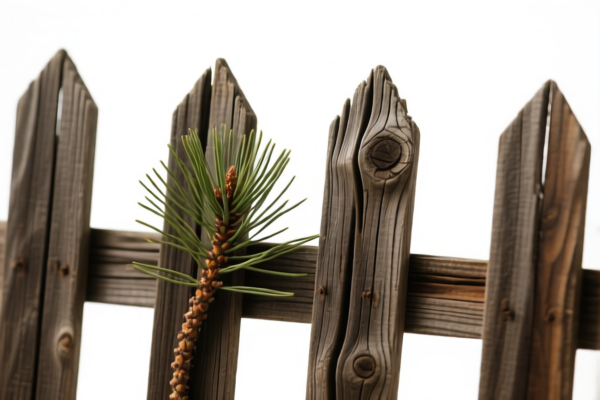
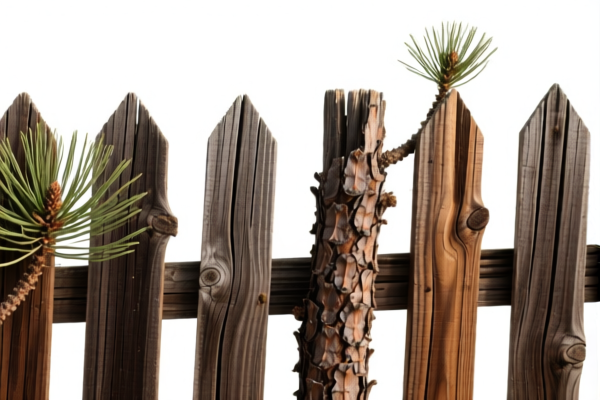
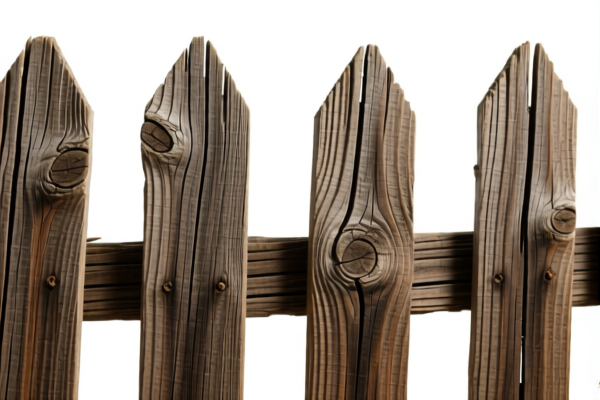
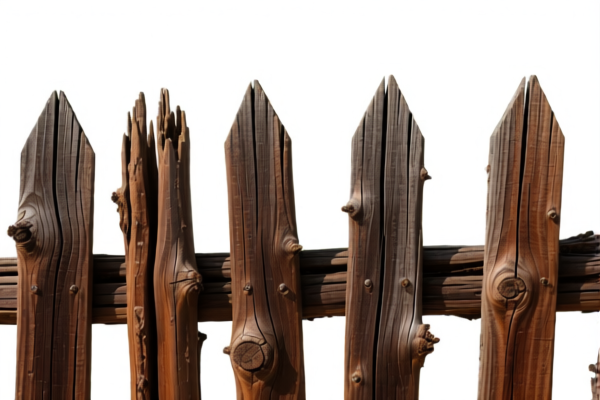
AI Analysis
🌲 Preserved Pine Landscape Posts (Treated Wood Lumber)
🌐 HS Code Reference & Customs Clearance Guide | 2026 Latest Tariff Analysis | Professional Compliance Strategy
📌 1. Product Definition & Classification: Understanding "Preserved Pine"
Preserved Pine Landscape Posts are wooden components used for outdoor fencing, decking, garden structures, or landscaping. The critical defining feature here is "Preserved" (treated with paint, stain, creosote, or other preservatives) and the material is Pine (Pinus spp.), which is a Coniferous wood.
In international trade (specifically under the Harmonized System), this product is classified not as a finished article, but as sawn wood (planks/posts) that has undergone surface treatment.
⚠️ Key Distinction:
- If the pine is untreated → It falls under general coniferous sawn wood headings (e.g., 4407.11.00.00 without the specific treatment suffix).
- If the pine is treated (with preservatives, paint, or stain) → It falls under the specific subheadings for treated coniferous wood.
- Note: "Landscape Posts" often imply a specific shape, but if they are simply sawn/planed lengths of wood exceeding 6mm in thickness, they are classified as sawn wood rather than manufactured articles (which would be Chapter 46 or 44 final products).
📦 2. HS Code Classification Details (2026 Latest Tariff Authority)
Based on the provided data, the correct HS Codes for Preserved Pine Landscape Posts are strictly limited to the following two codes. No other codes apply according to the source data.
| HS Code | Product Description | Key Attributes |
|---|---|---|
4407.11.00.02 |
Coniferous: Of pine (Pinus spp.) Other: Treated with paint, stain, creosote or other preservative | ✅ Primary Match Specifically identifies Pine. Specifically identifies Treatment (preserved). Thickness > 6mm. |
4407.19.00.02 |
Coniferous: Other: Treated with paint, stain, creosote or other preservative | ⚠️ Secondary/Alternative Use only if the pine species cannot be definitively identified as Pinus spp. Also requires treatment. Thickness > 6mm. |
🔍 Critical Note:
- Both codes require the wood to be sawn, chipped, sliced, or peeled with a thickness exceeding 6 mm.
- The term "Preserved" in your input directly maps to the phrase "Treated with paint, stain, creosote or other preservative" in the HS descriptions.
- Code4407.11.00.02is the most accurate if you can confirm the wood is Pine (Pinus spp.). If the species is mixed or unknown, use4407.19.00.02.
💰 3. 2026 Latest Tariff Rate Breakdown (Detailed Tax Clauses)
✅ Applicable Jurisdiction: United States (US)
✅ Origin: China (CN) (Implied by the 25% additional duty structure common in current trade data)
✅ Effective Time: Current trade regulations (2025-2026)
🎯 1. 4407.11.00.02 — Preserved Pine Sawn Wood (The Primary Code)
| Item | Content |
|---|---|
| Base Tariff Rate | 0.0% (Ad Valorem) |
| Additional Duty (Section 301) | +25.0% |
| Total Effective Tax Rate | 25.0% |
| Tax Calculation | CIF Value × 25.0% |
| Tax Detail Source | 基础关税: 0.0%, 加征关税: 25.0% |
| Legal Basis | USITC Footnote for Section 301 Tariffs on Chinese Goods |
📌 Explanation:
- The base tariff for many sawn wood products is 0%.
- However, due to ongoing trade tensions, a 25% additional duty is applied to this specific HS Code origin China.
- Total Cost Impact: You pay 25% of the declared value in duties. This is a significant cost factor that must be included in your landed cost calculation.
🎯 2. 4407.19.00.02 — Other Coniferous Preserved Sawn Wood
| Item | Content |
|---|---|
| Base Tariff Rate | 0.0% (Ad Valorem) |
| Additional Duty (Section 301) | +25.0% |
| Total Effective Tax Rate | 25.0% |
| Tax Calculation | CIF Value × 25.0% |
| Tax Detail Source | 基础关税: 0.0%, 加征关税: 25.0% |
| Legal Basis | USITC Footnote for Section 301 Tariffs on Chinese Goods |
📌 Explanation:
- Even if the pine species is not specified as Pinus (falling under "Other"), the tax rate remains identical at 25%.
- There is no tax advantage to choosing the "Other" code unless you lack species identification.
🛠️ 4. Customs Clearance Practical Advice (Real-World Pitfall Guide)
✅ 1. Preparation Checklist (Must-Have Documents)
| Document | Required? | Why It’s Important |
|---|---|---|
| ✅ Commercial Invoice | ✔️ | Must explicitly state: "Pine Wood Posts, Treated with Preservative" |
| ✅ Packing List | ✔️ | Detail dimensions, weight, and number of posts. |
| ✅ Certificate of Origin | ✔️ | Prove origin to determine if 301 tariffs apply. |
| ✅ Treatment Certificate | ✔️ | Critical! Prove the wood was treated with specific preservatives (e.g., Creosote, ACQ). This validates the HS Code suffix .02. |
| ✅ ISPM 15 Mark | ✔️ | Wood packaging materials must be heat-treated/fumigated. Posts themselves may need phytosanitary certificates if raw wood is considered high-risk. |
| ✅ Species Declaration | ✔️ | Confirm if it is Pinus spp. to justify using 4407.11 vs 4407.19. |
✅ 2. Declaration Tips (Key Mnemonics)
🔥 "Treated Wood, Check the Tag, Declare Species, Avoid the Bag."
| Situation | Correct Declaration | Incorrect Declaration |
|---|---|---|
| Pine + Preservative | 4407.11.00.02 |
Claiming "Untreated" → Risk of penalty for false declaration. |
| Unknown Pine | 4407.19.00.02 |
Guessing Pinus → If tested, might be reclassified, but tax is same. |
| Untreated Pine | 4407.11.00.00 (No .02) |
Declaring as Treated → Wrong HS, potential audit. |
| Finished Decking Boards | Could be Chapter 44 or 46 | Declaring as "Raw Sawn Wood" → Risk of misclassification if too processed. |
✅ 3. Special Considerations for "Landscape Posts"
| Scenario | Handling Advice |
|---|---|
| Is it a "Post" or "Lumber"? | If the posts are square/cylindrical and specifically shaped for use as fence posts, some customs officers might argue they are "manufactured articles." However, based on the provided data, they are classified under 4407 (Sawn Wood). Ensure the product is not too refined (e.g., drilled holes, metal inserts) which might push it to Chapter 46 or 44 final articles with different rates. |
| Preservative Type | If the wood is treated with chromated copper arsenate (CCA) or other restricted chemicals, check EPA and customs environmental regulations. Some preservatives may have additional import restrictions beyond tariffs. |
| ISPM 15 Compliance | Ensure any wood pallets/crates used for shipping are marked with the ISPM 15 logo. Non-compliant packaging can lead to rejection of the entire shipment at the port. |
🌍 5. Global Market Comparison (2026)
| Country/Region | Recommended HS Code | Tariff Rate (China Origin) | Key Requirements | Notes |
|---|---|---|---|---|
| 🇺🇸 USA | 4407.11.00.02 |
25% | ISPM 15, Preservative Declaration | High duty due to Section 301. |
| 🇨🇳 China | 4407.11.00.02 |
~5-10% (Import Duty) | Phytosanitary Certificate | Low import duty, strict biosecurity. |
| 🇪🇺 EU | 4407.11.00 |
0% (Under Most Favored Nation) | REACH, FSC Certification | No 25% additional duty. Strict chemical regulations for preservatives. |
| 🇬🇧 UK | 4407.11.00 |
0% | UKCA Mark (if packaged), ISPM 15 | Post-Brexit rules mirror EU closely for timber. |
📌 Conclusion:
- The US market is the most expensive due to the 25% additional tariff.
- If possible, consider sourcing preserved wood from non-China origins (e.g., Vietnam, Mexico, EU) to potentially avoid the 25% duty, provided FTA rules are met.
📌 6. Common Mistakes & Pitfalls (Lessons Learned)
❌ Mistake 1: Declaring "Pine Wood" without specifying "Treated."
👉 Consequence: If tested and found treated, you face penalties for false declaration and back-taxes. The .02 suffix is mandatory for treated wood.
❌ Mistake 2: Ignoring ISPM 15.
👉 Consequence: Customs may reject the shipment or require costly fumigation/destruction of packaging.
❌ Mistake 3: Assuming "Landscape Post" is a finished good.
👉 Consequence: If the post is heavily machined (e.g., carved, joined), it might not be "sawn wood." However, standard square/cylindrical posts are usually treated as sawn wood. If in doubt, provide technical drawings to prove it is not a manufactured article.
❌ Mistake 4: Not checking preservative content.
👉 Consequence: Some preservatives (e.g., specific heavy metals) may be restricted by EPA or state regulations, leading to rejection even if customs clearance is granted.
✅ Correct Practice:
"Sawn Wood of Pine, Treated with Creosote, Length 2m, Diameter 10cm, HS Code 4407.11.00.02"
🎯 7. Conclusion: Professional Declaration, Save Time & Money!
🎯 Remember the Mnemonic:
🔹 "Pine + Treated = 4407.11.00.02"
🔹 "Tax is 25%, Don't Forget the 301 Duty!"
🔹 "Treated Wood Needs Proof, Or Customs Will Boil You!"
📌 Pro Tip:
If your supply chain is flexible, consider trans-shipment or sourcing from non-China countries to avoid the 25% Section 301 tariff. Even a small difference in origin can save significant costs.
📣 Immediate Action:
📞 Contact your customs broker with the Treatment Certificate and Species Confirmation.
🚀 Declare accurately as4407.11.00.02to ensure smooth clearance and avoid penalties.
✨ Professional Customs Compliance Starts with Accurate Classification!
💼 Your Cost Efficiency Depends on the Right HS Code!
Customer Reviews
About HS Code Classification
The Harmonized System (HS) is an internationally standardized nomenclature developed by the World Customs Organization (WCO) to classify traded products. Over 200 countries use the HS system as the basis for customs tariffs, trade statistics, and import/export regulations.
Each HS code follows a hierarchical structure:
- Chapter (2 digits) — Broad category of goods (e.g., Chapter 84: Machinery and Mechanical Appliances)
- Heading (4 digits) — More specific grouping within the chapter
- Subheading (6 digits) — Internationally standardized breakdown, used by all WCO member countries
- National subdivisions (8-10 digits) — Country-specific extensions for further classification, such as US HTSUS 10-digit codes
Correct HS code classification is essential for smooth customs clearance, accurate duty payment, and compliance with trade regulations. Misclassification can lead to customs delays, overpayment of duties, or penalties.
When importing from CN to US, the applicable tariff rates may include:
- Most-Favored-Nation (MFN) rate — The standard duty rate applied to WTO members
- General rate — Applied to countries without trade agreements
- Trade remedy duties — Additional tariffs such as Section 301 (anti-dumping), Section 232 (national security), or countervailing duties
The information provided on this page is for reference purposes only. For official classification, please consult with your local customs authority or a licensed customs broker.