printed bamboo tray
CN → US| HS Code | Tariff Rate | Origin | Destination | Doc |
|---|---|---|---|---|
| 4419110000 | 13.2% | CN | US | Official Doc |
| 4419199000 | 13.2% | CN | US | Official Doc |
| 9403820030 | 35.0% | CN | US | Official Doc |
| 9403820015 | 35.0% | CN | US | Official Doc |
| 4602110900 | 45.0% | CN | US | Official Doc |
Product Images
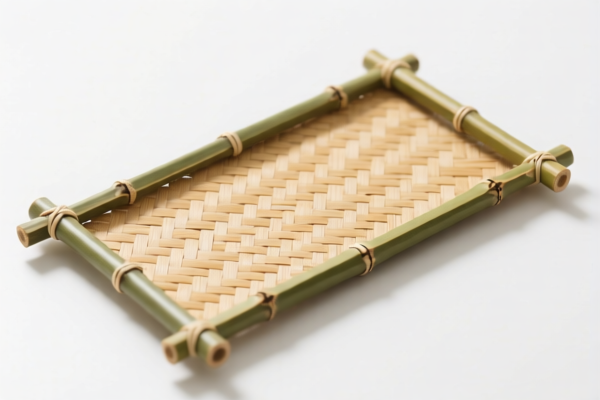

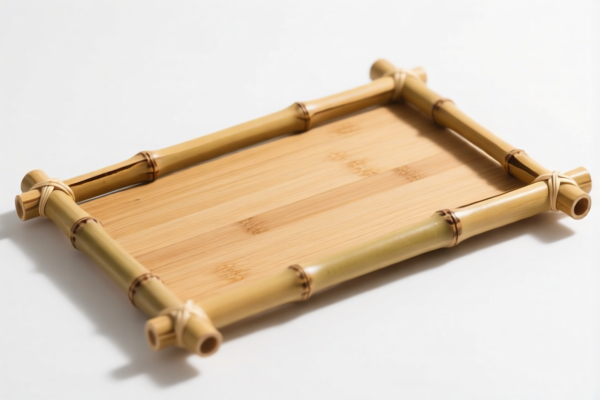
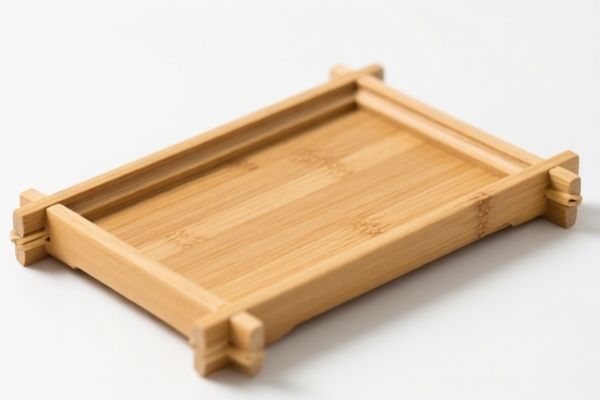
AI Analysis
🎋 Printed Bamboo Tray (竹制托盘)
🌐 HS Code Reference & Customs Clearance Guide | 2026 Latest Tariff Analysis | Professional Strategy
📌 I. Product Definition & Classification: Do You Really Know "Bamboo Trays"?
A Printed Bamboo Tray is a versatile household item, typically used for serving food, tea, or organizing small items. In international trade, its classification is highly sensitive to its functional purpose. Is it a kitchen tool (dishware), a furniture component, or a woven basket? The distinction dramatically affects the duty rate.
⚠️ Critical Distinction Point:
- If it is used for serving food/drinks or kitchen prep → Falls under Chapter 44 (Wood/Bamboo Articles) as cutlery/kitchenware.
- If it is a structural part of furniture (e.g., a tray top for a table) → Falls under Chapter 94 (Furniture).
- If it is a woven container with handles/sides for carrying goods → Falls under Chapter 46 (Basketry).
📦 II. HS Code Classification Details (2026 Latest Tariff Alignment)
| HS Code | Product Description | Application Scenario | Classification Logic |
|---|---|---|---|
4419.11.00.00 |
Bamboo Tableware (Trays) | Food service trays, breakfast trays, tea trays | ✅ Best Match for standard serving trays |
4419.19.90.00 |
Other Bamboo Tableware/Kitchenware | Non-standard shaped trays, decorative trays for kitchen use | ✅ General category for bamboo cutlery/kitchen tools |
9403.82.00.30 |
Other Furniture (Bamboo) | Trays used as parts of furniture sets (e.g., nesting table tops) | ❌ High Risk: Only if defined as furniture component |
9403.82.00.15 |
Household Furniture (Bamboo) | Bamboo trays integrated into home furniture design | ❌ High Risk: Misclassification common for decorative items |
4602.11.09.00 |
Woven Baskets & Containers | Trays with high sides/handles treated as "woven baskets" | ❌ Least Likely: Unless it has significant depth/basket structure |
🔍 Key Reminder:
- For standard flat or shallow serving trays, Chapter 44 is the most accurate and cost-effective classification. - Classifying a simple tray as Furniture (9403) or Basketry (4602) often triggers higher tariffs and requires stricter proof of function.
💰 III. 2026 Latest Tariff Rate Breakdown (Including Additional Taxes, Policy Surcharges)
✅ Applicable Country: United States (US)
✅ Origin: China (CN)
✅ Effective Time: Current US Trade Policy (Section 301 + IEEPA)
🎯 1. 4419.11.00.00 —— Bamboo Tableware (Serving Trays)
| Item | Detail |
|---|---|
| Base Duty Rate | 3.2% (ad valorem) |
| Section 301 Surcharge | 0.0% |
| IEEPA Surcharge (Section 122) | 10.0% |
| Total Tax Rate | 13.2% |
| Tax Calculation | CIF Value × 13.2% |
| De Minimis Exemption | ❌ Not Applicable (For shipments >$800, standard rules apply; but note: bamboo articles are often scrutinized) |
| Legal Basis Path | HTSUS:4419.11.00 → IEEPA:9903.01.25 (10% China Surcharge) |
📌 Explanation:
- Base Rate (3.2%): Standard MFN rate for bamboo tableware. - IEEPA 10%: Current additional tariff on many Chinese bamboo/wood products. - Total 13.2%: Lowest among the options. This is the recommended classification for standard printed bamboo trays.
🎯 2. 4419.19.90.00 —— Other Bamboo Tableware/Kitchenware
| Item | Detail |
|---|---|
| Base Duty Rate | 3.2% |
| Section 301 Surcharge | 0.0% |
| IEEPA Surcharge (Section 122) | 10.0% |
| Total Tax Rate | 13.2% |
| Tax Calculation | CIF Value × 13.2% |
| De Minimis Exemption | ❌ Not Applicable |
| Legal Basis Path | HTSUS:4419.19.90 → IEEPA:9903.01.25 |
📌 Note:
- If your tray doesn't fit the specific "Tableware" definition of 4419.11 (e.g., it's a very decorative kitchen tool), it falls here. - Same tax rate (13.2%) as above. Safe and cost-effective.
🎯 3. 9403.82.00.30 / 9403.82.00.15 —— Bamboo Furniture Parts
| Item | Detail |
|---|---|
| Base Duty Rate | 0.0% |
| Section 301 Surcharge | 25.0% |
| IEEPA Surcharge (Section 122) | 10.0% |
| Total Tax Rate | 35.0% |
| Tax Calculation | CIF Value × 35.0% |
| De Minimis Exemption | ❌ Not Applicable |
| Legal Basis Path | HTSUS:9403.82 → USITC:Footnote 9903.88.01 (25% Section 301) + IEEPA:9903.01.25 (10%) |
📌 Warning:
- DO NOT USE unless the tray is explicitly part of a furniture set (e.g., a tray table top sold as a component of a bookshelf). - 35% Tax is 2.6x higher than the tableware classification. Common mistake causes massive cost increases.
🎯 4. 4602.11.09.00 —— Woven Bamboo Baskets/Containers
| Item | Detail |
|---|---|
| Base Duty Rate | 10.0% |
| Section 301 Surcharge | 25.0% |
| IEEPA Surcharge (Section 122) | 10.0% |
| Total Tax Rate | 45.0% |
| Tax Calculation | CIF Value × 45.0% |
| De Minimis Exemption | ❌ Not Applicable |
| Legal Basis Path | HTSUS:4602.11.09 → USITC:Footnote 9903.88.01 (25% Section 301) + IEEPA:9903.01.25 (10%) |
📌 Critical Error:
- 45% Tax is the highest possible rate for bamboo trays. - Only apply if the item is a deep, woven basket with handles, intended for storage/carrying, not serving. - Misclassifying a simple tray as a "woven basket" leads to penalties and back taxes.
🛠️ IV. Customs Clearance Practical Advice (Battle-Tested Tips)
✅ 1. Essential Documentation Checklist
| Document | Required? | Note |
|---|---|---|
| ✅ Product Specifications | ✔️ | Define use: "Serving Tray" vs. "Storage Basket" |
| ✅ Product Photos | ✔️ | Clear images showing flat shape, no handles (if applicable) |
| ✅ Commercial Invoice | ✔️ | Clearly state: "Printed Bamboo Serving Tray" |
| ✅ Packing List | ✔️ | Weight, dimensions, number of pieces |
| ✅ Origin Certificate | ✔️ | To verify China origin (affects IEEPA) |
| ✅ Material Composition | ✔️ | Confirm 100% Bamboo (affects Chapter 44 vs. 46) |
✅ 2. Declaration Best Practices (Key Mnemonics)
🔥 "Serve as Tableware, Avoid Furniture, Don't Call it Basket!"
| Scenario | Correct Declaration | Wrong Declaration | Result |
|---|---|---|---|
| Standard Flat Tray | 4419.11.00.00 |
9403.82.00.30 |
Save 21.8% tax |
| Kitchen Prep Tray | 4419.19.90.00 |
9403.82.00.15 |
Save 21.8% tax |
| Deep Woven Basket | 4602.11.09.00 |
4419.11.00.00 |
Avoid 31.8% penalty |
| Furniture Component | 9403.82.00.30 |
4419.11.00.00 |
Pay 21.8% more |
✅ 3. Special Handling Cases
| Case | Strategy |
|---|---|
| OEM Custom Trays | Provide design specs showing "serving" function. Avoid "basket" language. |
| Trays with Handles | If handles are small/flat, still 4419. If deep/woven, consider 4602 (but 45% tax!). |
| Set with Bowls/Plates | Declare as "Tableware Set" under 4419.11.00.00 if primary function is serving. |
| Decorative Wall Tray | If hung on wall, may be 9403 (Furniture/Decor). Risky. Prefer 4419 if it can serve. |
🌍 V. Global Market Comparison (2026 Latest)
| Country/Region | Recommended HS Code | Tariff Rate | Certification | Notes |
|---|---|---|---|---|
| 🇺🇸 USA | 4419.11.00.00 |
13.2% | FDA (if food contact) | Cheapest. Avoid 9403/4602. |
| 🇨🇳 China | 4419.11.00.00 |
~5-8% | No special cert | Domestic duty varies. |
| 🇪🇺 EU | 4419.11.00 |
0-2% | FSC, Food Contact | Low tax. No IEEPA. |
| 🇬🇧 UK | 4419.11.00 |
0-5% | UKCA | Post-Brexit rules. |
| 🇯🇵 Japan | 4419.11.00 |
8-10% | FSC | Moderate tax. |
📌 Conclusion:
- USA is the most tariff-sensitive market for bamboo trays. - Misclassification from 13.2% to 35% or 45% is a common and costly error. - Always aim for Chapter 44 unless the product is definitively a basket or furniture part.
📌 VI. Common Mistakes & Pitfalls (Lessons Learned)
❌ Mistake 1: Calling a simple serving tray a "Bamboo Basket"
👉 Consequence: Tax jumps from 13.2% to 45%.
❌ Mistake 2: Declaring a tray as "Furniture" to avoid wood inspections
👉 Consequence: Tax jumps to 35%. Furniture has stricter safety standards.
❌ Mistake 3: Not specifying "Bamboo" in description
👉 Consequence: Customs may reclassify to generic wood, triggering different duties.
❌ Mistake 4: Ignoring IEEPA 10% surcharge
👉 Consequence: Underpayment, penalties, and cargo detention.
✅ Correct Declaration Example:
"Printed Bamboo Serving Tray, Flat Design, Food-Grade Finish, Model BT-2026, HS 4419.11.00.00"
🎯 VII. Conclusion: Precision Classification Saves Money!
🎯 Remember:
🔹 "Trays are Tableware (4419), not Furniture (9403) or Baskets (4602)."
🔹 "13.2% Tax vs. 45% Tax: A difference that matters!"
🔹 "Declare accurately, pay less, clear faster."
📌 Pro Tip:
If your bamboo tray has deep sides and is used for storage, it might genuinely be a basket (4602). In that case, the 45% tax applies. But if it's for serving, insist on 4419.
📣 Immediate Action:
📞 Confirm your product's primary function with your supplier.
📄 Prepare photos showing serving use.
🚀 Use HS Code 4419.11.00.00 for standard trays to save 21.8%-31.8% in tariffs.
✨ Professional Customs Clearance Starts with Accurate Classification!
💼 Every percentage point counts in global trade!
Customer Reviews
About HS Code Classification
The Harmonized System (HS) is an internationally standardized nomenclature developed by the World Customs Organization (WCO) to classify traded products. Over 200 countries use the HS system as the basis for customs tariffs, trade statistics, and import/export regulations.
Each HS code follows a hierarchical structure:
- Chapter (2 digits) — Broad category of goods (e.g., Chapter 84: Machinery and Mechanical Appliances)
- Heading (4 digits) — More specific grouping within the chapter
- Subheading (6 digits) — Internationally standardized breakdown, used by all WCO member countries
- National subdivisions (8-10 digits) — Country-specific extensions for further classification, such as US HTSUS 10-digit codes
Correct HS code classification is essential for smooth customs clearance, accurate duty payment, and compliance with trade regulations. Misclassification can lead to customs delays, overpayment of duties, or penalties.
When importing from CN to US, the applicable tariff rates may include:
- Most-Favored-Nation (MFN) rate — The standard duty rate applied to WTO members
- General rate — Applied to countries without trade agreements
- Trade remedy duties — Additional tariffs such as Section 301 (anti-dumping), Section 232 (national security), or countervailing duties
The information provided on this page is for reference purposes only. For official classification, please consult with your local customs authority or a licensed customs broker.