printed cotton bed sheet fabric
CN → US| HS Code | Tariff Rate | Origin | Destination | Doc |
|---|---|---|---|---|
| 5208524045 | 46.4% | CN | US | Official Doc |
| 5208524035 | 46.4% | CN | US | Official Doc |
Product Images
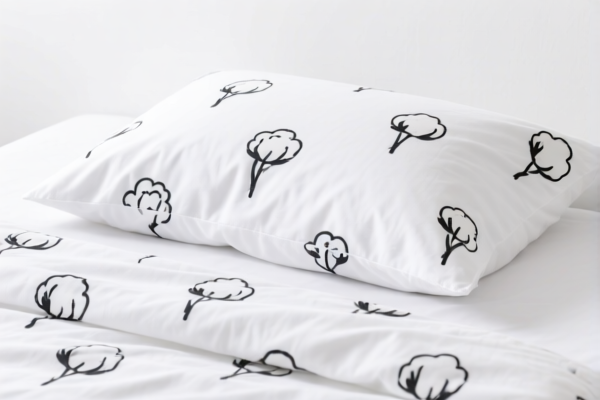
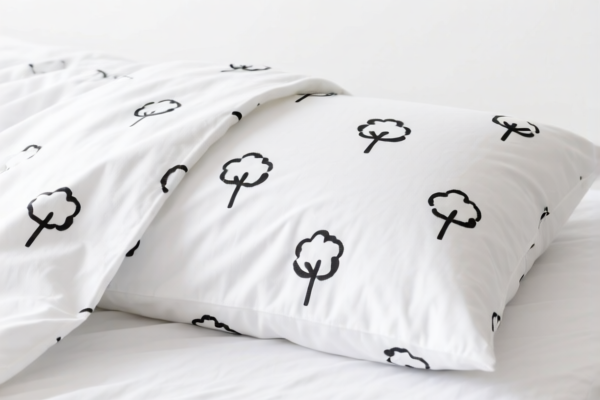
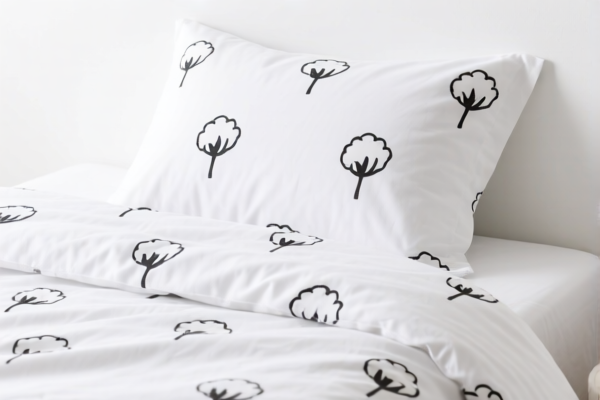
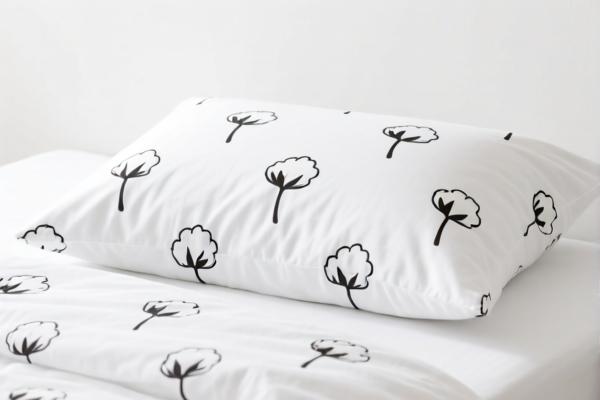
AI Analysis
🛌 Printed Cotton Bed Sheet Fabric (High-Weight Plain Weave)
🌐 HS Code Reference & Customs Clearance Guide | 2026 Latest Tariff Analysis | Professional Clearance Strategy
📌 I. Product Definition & Classification: Understanding "Heavy Cotton Sheeting"
Printed Cotton Bed Sheet Fabric refers specifically to woven textiles composed primarily of cotton, designed for bed linens. In international trade, classification hinges on three critical technical parameters: 1. Cotton Content: Must be ≥ 85% by weight. 2. Weight: Must be ≤ 200 g/m² (specifically > 100 g/m² for this classification). 3. Weave & Finish: Must be Plain Weave and Printed (specifically numbered 43 to 68 in fabric counting, categorized as "Sheeting").
⚠️ Key Distinction Point:
- If the fabric weighs ≤ 100 g/m², it falls under a different subheading (lighter sheeting).
- If the fabric contains < 85% cotton, it is classified as "Mixed fabrics" (Chapter 55).
- If the weave is Not Plain (e.g., Sateen or Twill), it is excluded from this specific subheading.
- Correct Classification Range: For plain weave, printed cotton sheeting weighing between 100–200 g/m², we look at subheadings 5208.52.40.
📦 II. HS Code Classification Details (2026 Latest Tariff Authority Comparison)
Based on the provided data, the product is classified under two specific variants of 5208.52.40, depending on the printing technique.
| HS Code | Product Description | Application Scenario | Printing Type |
|---|---|---|---|
5208.52.40.45 |
Woven fabrics of cotton, ≥85% cotton, ≤200g/m²: Printed: Plain weave, >100g/m²: Other: Of numbers 43 to 68 Sheeting: Other | Standard digital prints, rotary screen prints, or other non-discharge methods on heavy cotton sheeting. | Standard/Reactive/Discharge (General) |
5208.52.40.35 |
Woven fabrics of cotton, ≥85% cotton, ≤200g/m²: Printed: Plain weave, >100g/m²: Other: Of numbers 43 to 68 Sheeting: Discharge printed | Fabric where colors are created by removing dye from the base cloth (e.g., white-on-black or white-on-color patterns). | Discharge Printing |
🔍 Critical Reminder:
- Both codes require the fabric to be Plain Weave and Printed.
- The weight must be strictly > 100 g/m² but ≤ 200 g/m².
- The fabric count must fall within numbers 43 to 68 (standard sheeting counts).
- "Sheeting" is the key end-use identifier here.
💰 III. 2026 Latest Tariff Rate Breakdown (Detailed Tax Clauses)
✅ Applicable Country: United States (US)
✅ Origin: China (CN)
✅ Valid From: Current applicable rates (Based on provided data: 0.0%)
🎯 1. 5208.52.40.45 — Printed Cotton Sheeting (Other)
| Item | Content |
|---|---|
| Base Tariff Rate | 0.0% (ad valorem) |
| Additional Tariff (Section 301) | 0.0% |
| Total Tax Rate | 0.0% |
| Tax Calculation | CIF Value × 0.0% = $0 |
| De Minimis Eligibility | ✅ Yes (Typically applies to low-value shipments, but verify current CBP thresholds) |
| Legal Basis Path | HTSUS:5208.52.40.45 |
📌 Interpretation:
- This specific subheading for heavier cotton sheeting appears to have no additional duties in the provided dataset.
- Unlike electronics or steel, certain cotton textiles may benefit from lower or zero additional tariffs depending on the specific trade agreement or current enforcement status.
- However, always verify if this falls under Section 301 exclusions, as the provided data explicitly states 0.0% total tax.
🎯 2. 5208.52.40.35 — Discharge Printed Cotton Sheeting
| Item | Content |
|---|---|
| Base Tariff Rate | 0.0% (ad valorem) |
| Additional Tariff (Section 301) | 0.0% |
| Total Tax Rate | 0.0% |
| Tax Calculation | CIF Value × 0.0% = $0 |
| De Minimis Eligibility | ✅ Yes |
| Legal Basis Path | HTSUS:5208.52.40.35 |
📌 Note:
- Similar to the "Other" category, discharge-printed fabrics in this weight/weight range currently show 0.0% total tax in the provided data.
- Caution: Tariff rates can change. Always cross-check with the latest USITC tariff schedule before shipment.
🛠️ IV. Customs Clearance Practical Advice (Battle-Tested Pitfall Guide)
✅ 1. Preparation Checklist (Non-Negotiable)
| Document | Mandatory? | Explanation |
|---|---|---|
| ✅ Commercial Invoice | ✔️ | Must clearly state: "Woven Cotton Fabric, ≥85% Cotton, Plain Weave, Printed, Weight: 150g/m² (Example), For Bed Sheets" |
| ✅ Fabric Specification Sheet | ✔️ | Must include: Cotton content (%), Weight (g/m²), Weave structure, Print type (Reactive/Discharge), Fabric count (43-68) |
| ✅ Test Report | ✔️ | Third-party lab report confirming Cotton Content ≥ 85% and Weight ≤ 200 g/m² |
| ✅ Photographs | ✔️ | Clear images of the fabric surface, selvage edge (showing weight/count info), and print pattern |
| ✅ Packing List | ✔️ | Detail roll length, width, and gross/net weight |
✅ 2. Declaration Techniques (Key Mnemonic)
🔥 “Weight & Weave Define Fate: Plain Weave, >100g, 85% Cotton!”
| Scenario | Correct Declaration | Wrong Practice |
|---|---|---|
| Fabric Weight = 150 g/m², Plain Weave, Printed | 5208.52.40.45 or .35 |
Misclassify as "Bedding Finished Goods" → Higher Duty |
| Fabric Weight = 80 g/m² | Do NOT use 5208.52.40 | Use lighter sheeting code (e.g., 5208.51.xx) |
| Cotton Content = 80% | Do NOT use 5208.52.40 | Use "Mixed Textiles" chapter (55) |
| Sateen Weave | Do NOT use 5208.52.40 | Use Sateen-specific code |
| Discharge Print | Use .35 |
Use .45 (Incorrect technical description) |
✅ 3. Special Situation Handling
| Situation | Handling Advice |
|---|---|
| OEM for US Brands | Provide letter from buyer confirming "Bed Sheet Material" to support "Sheeting" classification |
| Blended Cotton | If cotton is <85%, you must reclassify. Do not force 5208.52.40. |
| Sample Shipment | Even for samples, declare correct HS Code. Use De Minimis if value is low enough. |
| Pre-Dyeing vs. Post-Dyeing | Ensure "Printed" description matches the process. Discharge prints are a subset of printed but may require specific technical notes. |
🌍 V. Global Market Clearance Comparison (2026 Latest)
| Country/Region | Recommended HS Code | Tariff Rate | Certification | Notes |
|---|---|---|---|---|
| 🇺🇸 USA | 5208.52.40.45 / .35 |
0.0% | None specific | No Section 301 in provided data; verify periodically |
| 🇨🇳 China | 5208.52.40 |
Varies | N/A | Import duties may apply differently; check local tariff |
| 🇪🇺 EU | 5208.52 |
6.5% | REACH, Oeko-Tex | EU does not have Section 301 equivalent; standard MFN applies |
| 🇬🇧 UK | 5208.52 |
6.0% | UKCA, Chemical Regulations | Post-Brexit tariffs may differ slightly from EU |
| 🇯🇵 Japan | 5208.52 |
5.0% | FSC | No additional trade war tariffs |
📌 Conclusion:
- USA currently shows 0.0% total tax for these specific codes in the provided data, which is highly favorable.
- EU/UK/Japan apply standard MFN rates (5–6.5%), which are significantly lower than the 25–75% tariffs seen on steel/electronics.
- Cotton textiles are generally less sensitive to trade wars than tech/steel, but origin rules must be strict.
📌 VI. Common Mistakes & Pitfall Guide (Blood & Tears Lessons)
❌ Mistake 1: Declaring "Cotton Fabric" without specifying Weight
👉 Consequence: Customs may default to a higher-weight or lower-weight code, leading to misclassification penalties.
❌ Mistake 2: Claiming 85% Cotton when actual content is 80%
👉 Consequence: Fraudulent declaration; heavy fines and seizure. Test reports are mandatory.
❌ Mistake 3: Confusing Plain Weave with Sateen/Twill
👉 Consequence: Sateen is often classified differently (e.g., 5208.31.xx). Weave structure must be verified.
❌ Mistake 4: Ignoring Print Type (Discharge vs. Other)
👉 Consequence: Minor clerical error, but can trigger manual inspection if description is vague.
✅ Correct Practice:
"Cotton Woven Fabric, 100% Cotton, Plain Weave, Discharge Printed, Weight 145g/m², Count 60, Width 280cm, For Bed Sheets. HTS: 5208.52.40.35"
🎯 VII. Conclusion: Precise Declaration, Zero Tariff Advantage!
🎯 Remember the Mnemonic:
🔹 “85% Cotton, Plain Weave, >100g: Zero Tax Rate is Real!”
🔹 “Weight & Count Matter: 43-68, Sheeting, Printed Right!”
📌 Pro Tip:
- Although the provided data shows 0.0% tax, always verify with your customs broker if the goods are subject to any Section 301 exclusions or anti-dumping duties specific to cotton textiles from China.
- Use Advance Ruling if shipping large volumes to lock in the 0.0% rate.
📣 Immediate Action:
📞 Confirm fabric weight via lab test → Prepare Specification Sheet → Declare with Exact Weight & Cotton %
🚀 Clear Customs Fast, Avoid Taxes, Maximize Profit!
✨ Professional Clearance Starts with Accurate Classification!
💼 Your Fabric's Value, Protected by Precision!
Customer Reviews
About HS Code Classification
The Harmonized System (HS) is an internationally standardized nomenclature developed by the World Customs Organization (WCO) to classify traded products. Over 200 countries use the HS system as the basis for customs tariffs, trade statistics, and import/export regulations.
Each HS code follows a hierarchical structure:
- Chapter (2 digits) — Broad category of goods (e.g., Chapter 84: Machinery and Mechanical Appliances)
- Heading (4 digits) — More specific grouping within the chapter
- Subheading (6 digits) — Internationally standardized breakdown, used by all WCO member countries
- National subdivisions (8-10 digits) — Country-specific extensions for further classification, such as US HTSUS 10-digit codes
Correct HS code classification is essential for smooth customs clearance, accurate duty payment, and compliance with trade regulations. Misclassification can lead to customs delays, overpayment of duties, or penalties.
When importing from CN to US, the applicable tariff rates may include:
- Most-Favored-Nation (MFN) rate — The standard duty rate applied to WTO members
- General rate — Applied to countries without trade agreements
- Trade remedy duties — Additional tariffs such as Section 301 (anti-dumping), Section 232 (national security), or countervailing duties
The information provided on this page is for reference purposes only. For official classification, please consult with your local customs authority or a licensed customs broker.