printer paper
CN → US| HS Code | Tariff Rate | Origin | Destination | Doc |
|---|---|---|---|---|
| 4802554000 | 35.0% | CN | US | Official Doc |
| 4811592000 | 10.0% | CN | US | Official Doc |
| 4802541000 | 10.0% | CN | US | Official Doc |
| 4811909080 | 35.0% | CN | US | Official Doc |
| 4820900000 | 35.0% | CN | US | Official Doc |
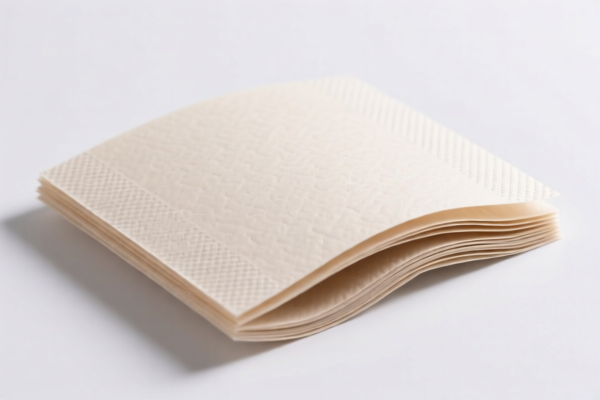
Product Images


AI Analysis
📄🖨️ Printer Paper: The Ultimate HS Code & Customs Clearance Guide (2026)
🌐 HS Code Reference & Customs Strategy | 2026 Tariff Breakdown | Professional Export Guide
📌 I. Product Definition: What Exactly is "Printer Paper"?
Printer Paper is the lifeblood of global documentation, ranging from everyday office output to specialized medical and industrial printing. However, under the Harmonized System (HS), it is not a single product but a family of paper grades differentiated by: * Coating: Uncoated (plain copy paper) vs. Coated/Surface-Treated (glossy, special effect). * Weight & Texture: Standard 75-80gsm vs. Heavyweight cardstock. * End-Use: Office writing, high-speed laser printing, or medical imaging.
⚠️ Critical Distinction:
- Uncoated Paper (Writing/Printing): Generally lower duties if purely for writing. - Coated/Specialty Paper: Higher duties, especially under Section 122 (U.S. Specific). - Medical Printing Paper: Often treated as a distinct "consumable" category, attracting higher rates.
📦 II. HS Code Classification Details (2026 Latest Tariff Schedule)
Based on the specific summaries provided for your goods, here is the authoritative mapping of Printer Paper to the correct HS Codes and their corresponding tax logic.
| HS Code | Product Description & Logic | Key Tax Indicator |
|---|---|---|
4802.55.40.00 |
Uncoated Printing Paper • Summary: "For printing, compliant with printing usage, material is uncoated paper and cardboard." • Logic: Standard office paper without chemical coating. |
35.0% |
4811.59.20.00 |
Coated/Surface Treated Printing Paper • Summary: "Printing paper, compliant with printing paper characteristics, material reasonably inferred as paper." • Logic: Paper with a specific surface treatment (coating) for better ink reception. |
10.0% |
4802.54.10.00 |
Writing Paper / Copy Paper • Summary: "For printing, material consistent with writing paper, usage fits writing paper scenarios." • Logic: Standard uncoated paper used for manual writing or standard laser/inkjet output. |
10.0% |
4811.90.90.80 |
Specialty Coated/Treated Paper • Summary: "For printing, usage falls under coated or surface-treated category, no material conflict." • Logic: Specialized coated papers not fitting standard writing categories. |
35.0% |
4820.90.00.00 |
Medical/Industrial Printing Paper • Summary: "Medical printing paper, material is paper, usage belongs to printing consumables/stationery." • Logic: Specific for medical records, X-ray films (paper base), or specialized thermal paper. |
35.0% |
🔍 Key Insight:
The 35.0% rate is the "penalty" rate for specific types of paper (likely due to Section 122 or specific trade remedy duties on coated/specialty medical papers), while the 10.0% rate applies to standard uncoated writing/printing paper.
💰 III. 2026 Tariff Rate Deep Dive (Detailed Breakdown)
✅ Applicable Market: United States (US)
✅ Origin: China (CN)
✅ Effective Date: Based on 2026 Tariff Update & Section 122 Enforcement
🎯 A. The "35% Tax Trap" (High Duty Categories)
Applicable HS Codes: 4802.55.40.00, 4811.90.90.80, 4820.90.00.00
| Tax Component | Rate | Legal Source |
|---|---|---|
| Base Duty | 0.0% | Standard MFN Rate |
| Add-on Duty (Section 301) | +25.0% | USITC Footnote / Section 122 (Targeted Chinese Paper) |
| 122-Claw Clause | +10.0% | Section 122 Specific (Specialized/Coated/Medical Paper) |
| TOTAL RATE | 35.0% | High Risk! |
📌 Explanation:
- Why 35%? These codes trigger a dual-layer penalty: A standard 25% Section 301 duty on paper products + an additional 10% "Section 122" surcharge specifically targeting coated, medical, or specialized paper imports from China. - Impact: On a $10,000 shipment, you pay $3,500 in taxes immediately upon entry. - No De Minimis: These items cannot be shipped via low-value courier (e.g., de minimis exemption does NOT apply here).
🎯 B. The "10% Strategic Rate" (Standard Categories)
Applicable HS Codes: 4811.59.20.00, 4802.54.10.00
| Tax Component | Rate | Legal Source |
|---|---|---|
| Base Duty | 0.0% | Standard MFN Rate |
| Add-on Duty | 0.0% | No Section 301 surcharge for these specific sub-categories. |
| 122-Claw Clause | +10.0% | Section 122 Specific (Applies to all paper imports under this framework) |
| TOTAL RATE | 10.0% | Manageable |
📌 Explanation:
- Why only 10%? While these papers (Uncoated/Writing) avoid the heavy 25% Section 301 surcharge, they still incur the 10% Section 122 levy. - Strategy: If your paper is standard office copy paper (4802.54.10.00), you save 25% compared to the coated or medical variants! - Calculation: On a $10,000 shipment, tax is only $1,000.
🛠️ IV. Customs Clearance Practical Guide (Avoiding Pitfalls)
✅ 1. Documentation Checklist (Must-Have)
| Document | Requirement | Why It Matters |
|---|---|---|
| 📄 Product Specification Sheet | MANDATORY | Must explicitly state: "Uncoated" vs. "Coated", "Weight (gsm)", "Usage (Writing vs. Medical)". |
| 📸 Product Photos | Clear | Show the texture. Glossy = Coated (High Tax). Matte = Uncoated (Lower Tax). |
| 📦 Packing List | Detailed | Separate shipments for "Medical Paper" vs. "Office Paper". Mixing them causes errors. |
| 🏷️ Material Composition | Precise | Confirm "100% Pulp" or "Recycled". Contaminants can change the HS Code. |
| 🏢 End-Use Declaration | Critical | For 4820.90.00.00, prove it is for Medical use. If used in office, it might be re-classified. |
✅ 2. Classification Strategy (The "How-To")
🔥 Golden Rule: "Material & Usage define the Tax, not just the Name!"
| Scenario | Correct HS Code | Tax Rate | Risk of Misclassification |
|---|---|---|---|
| Standard Office Copy Paper (Uncoated, A4, 75gsm) | 4802.54.10.00 |
10% | ⚠️ Low (Standard) |
| Glossy Photo Paper (Coated, High Gloss) | 4811.90.90.80 |
35% | ⚠️ High (If declared as "Writing Paper") |
| X-Ray Film / Medical Record Paper | 4820.90.00.00 |
35% | ⚠️ High (If declared as "Office Paper") |
| Specialty Coated Printing Paper | 4811.59.20.00 |
10% | ⚠️ Medium (Must prove specific coating type) |
Warning: If you declare "Medical Paper" as "Standard Writing Paper" to save tax, Customs will seize the goods and charge back-taxes + penalties.
✅ 3. Special Handling for Section 122 (122-Claw)
The 10% "Section 122" tax is a specific levy that applies to all paper imports under this framework, regardless of the base code. * Action: Ensure your invoice explicitly mentions "Subject to Section 122". * Payment: This tax is non-negotiable and must be paid upfront during customs entry. * No Exemptions: Unlike some agricultural goods, there are no de minimis exemptions for paper under Section 122.
🌍 V. Global Market Comparison (2026)
| Region | Recommended HS Code | Estimated Tax (China Origin) | Key Requirement |
|---|---|---|---|
| 🇺🇸 USA | See Above (4802/4811/4820) | 10% - 35% | Strict Section 122 Enforcement |
| 🇪🇺 EU | Similar Codes (4802/4811) | ~5.5% (Standard) | CE Marking, FSC Certification |
| 🇨🇳 China | Similar Codes | 13% VAT (Import) | No Section 122 |
| 🇯🇵 Japan | Similar Codes | ~3% - 5% | JIS Certification |
📌 Conclusion:
The US market is the most expensive for printer paper due to the 35% maximum rate (25% + 10%). If your product is Uncoated Writing Paper, you are lucky (10%). If it is Coated/Medical, prepare for the 35% hit.
📌 VI. Common Errors & Blood-Test Lessons
❌ Error 1: "One Size Fits All" Declaration
👉 Result: Declaring "Printer Paper" generically leads to a conservative 35% assessment on the whole shipment by Customs.
✅ Fix: List every specific HS Code on the commercial invoice.
❌ Error 2: Confusing "Uncoated" with "Coated"
👉 Result: Shipping Glossy Photo Paper as "Writing Paper" (4802.54.10.00) to pay 10% instead of 35%.
✅ Fix: Provide a Microscope Test Report or chemical analysis proving coating status.
❌ Error 3: Ignoring Section 122
👉 Result: Failing to pay the 10% surcharge leads to Customs Holds and daily fines.
✅ Fix: Budget for the 10% + 25% (if applicable) immediately.
❌ Error 4: Medical Paper Misuse
👉 Result: Using 4820.90.00.00 for general office use without proof of medical intent.
✅ Fix: If not medical, re-classify to 4802.54.10.00 (10%).
🎯 VII. Final Pro-Tips: Save Money, Speed Up Clearance
🎯 The "Save 25%" Rule:
If your paper is Uncoated and used for Writing/Standard Printing, aggressively fight to keep it in
4802.54.10.00.
Why? You avoid the 25% Section 301 duty. You only pay the 10% Section 122.
Result: 25% Savings on every kilogram!
🚀 Action Plan: 1. Audit your inventory: Separate Uncoated vs. Coated vs. Medical. 2. Update Invoices: Use precise descriptions (e.g., "Uncoated, 80gsm, A4"). 3. Pre-File: Submit a Binding Ruling Request to CBP (Customs) before shipping large volumes. 4. Budget: Set aside 35% of the CIF value for Coated/Medical paper; 10% for Uncoated.
✨ Professional Customs Clearance Starts with Precision!
💼 Don't let a tax rate difference ruin your margin!
"One wrong digit in the HS Code = $3500 vs $1000 in taxes."
📢 Contact your logistics partner today to optimize your Printer Paper classification!
Customer Reviews
About HS Code Classification
The Harmonized System (HS) is an internationally standardized nomenclature developed by the World Customs Organization (WCO) to classify traded products. Over 200 countries use the HS system as the basis for customs tariffs, trade statistics, and import/export regulations.
Each HS code follows a hierarchical structure:
- Chapter (2 digits) — Broad category of goods (e.g., Chapter 84: Machinery and Mechanical Appliances)
- Heading (4 digits) — More specific grouping within the chapter
- Subheading (6 digits) — Internationally standardized breakdown, used by all WCO member countries
- National subdivisions (8-10 digits) — Country-specific extensions for further classification, such as US HTSUS 10-digit codes
Correct HS code classification is essential for smooth customs clearance, accurate duty payment, and compliance with trade regulations. Misclassification can lead to customs delays, overpayment of duties, or penalties.
When importing from CN to US, the applicable tariff rates may include:
- Most-Favored-Nation (MFN) rate — The standard duty rate applied to WTO members
- General rate — Applied to countries without trade agreements
- Trade remedy duties — Additional tariffs such as Section 301 (anti-dumping), Section 232 (national security), or countervailing duties
The information provided on this page is for reference purposes only. For official classification, please consult with your local customs authority or a licensed customs broker.