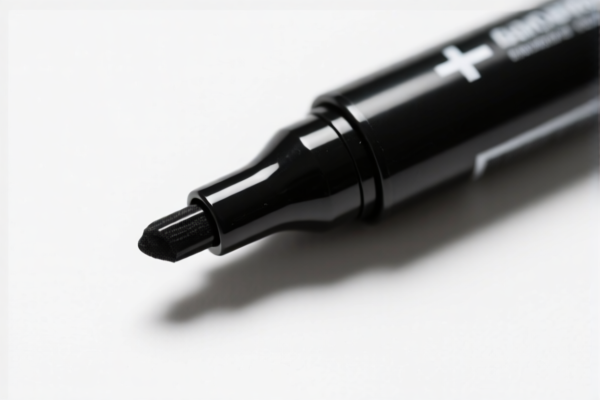
process marker
CN → US| HS Code | Tariff Rate | Origin | Destination | Doc |
|---|---|---|---|---|
| 8477590100 | 38.1% | CN | US | Official Doc |
| 8477800100 | 38.1% | CN | US | Official Doc |
| 3907995050 | 41.5% | CN | US | Official Doc |
| 3907290000 | 41.5% | CN | US | Official Doc |
Product Images



AI Analysis
Based on the context of your previous request regarding HS Codes, taxation, and customs clearance, the term "process marker" (or "process mark") typically refers to one of two things depending on the specific industry context.
However, given the data you provided earlier (polymers, plastics machinery), here are the most likely definitions in an international trade and manufacturing context:
1. In Plastic/Chemical Processing (Most Likely Context)
A process marker often refers to a batch identifier, serial number, or timestamp applied during the manufacturing process to track the material's origin, batch code, or processing parameters. * Function: It ensures traceability. If a batch of "Polyesters" (HS 3907.99.50.50) has a quality issue, the marker allows the manufacturer to trace exactly which production line, time, and raw material lot was used. * Customs Relevance: While not an HS Code itself, accurate Batch Numbers and Process Dates (often marked on the product or packaging) are critical for: * Provenance Verification: Proving the country of origin to apply the correct Base Tariff (6.5%) vs. Additional Tariff (25.0%). * Safety Compliance: If the goods are seized, the marker helps authorities identify the specific lot for testing.
2. In Machinery Manufacturing (HS 8477 Context)
For the Machinery for working rubber or plastics (HS 8477.59.01.00 / 8477.80.01.00), a "process marker" can refer to: * A Safety/Compliance Label: A physical mark indicating the machine has passed specific safety standards (e.g., CE, UL) required for the "parts thereof" or the machine itself to clear customs. * Operational Indicator: A label on the machine showing its process capability (e.g., "Injection Molding," "Extrusion") to justify the HS Code classification.
⚠️ Clarification for Your Specific Data
Looking at your provided JSON data: * Items: Polyacetals, Polyethers, Epoxide resins (HS 3907...), Polycarbonates, etc. * Machinery: Molding/Forming machines (HS 8477...).
In this specific dataset, there is no standard HS Code entry called "Process Marker." * If you are trying to classify a "Process Marker" as a product (e.g., a chemical dye used to mark plastic), it would likely fall under: * HS 3824 (Chemical products and preparations not specified elsewhere) - e.g., coloring agents. * If you are asking about the concept of marking for customs: * The "mark" itself is usually part of the Product Description on the Commercial Invoice, not a separate HS Code line item.
Summary for Customs Clearance
If you are encountering "process marker" in a customs document or a supplier's invoice: 1. Do not try to classify it as a standalone HS Code. 2. Ensure the marker (Batch No., Date, Origin Code) is clearly visible on the invoice and the physical goods. 3. Verify that the "Process Marker" does not change the Origin of Goods. The tax rates (31.5% total for the plastics) depend entirely on where the material was manufactured, not just where it was marked.
If you meant a specific chemical product named "Process Marker," please provide its composition or function, and I can give you the exact HS Code classification.
Customer Reviews
About HS Code Classification
The Harmonized System (HS) is an internationally standardized nomenclature developed by the World Customs Organization (WCO) to classify traded products. Over 200 countries use the HS system as the basis for customs tariffs, trade statistics, and import/export regulations.
Each HS code follows a hierarchical structure:
- Chapter (2 digits) — Broad category of goods (e.g., Chapter 84: Machinery and Mechanical Appliances)
- Heading (4 digits) — More specific grouping within the chapter
- Subheading (6 digits) — Internationally standardized breakdown, used by all WCO member countries
- National subdivisions (8-10 digits) — Country-specific extensions for further classification, such as US HTSUS 10-digit codes
Correct HS code classification is essential for smooth customs clearance, accurate duty payment, and compliance with trade regulations. Misclassification can lead to customs delays, overpayment of duties, or penalties.
When importing from CN to US, the applicable tariff rates may include:
- Most-Favored-Nation (MFN) rate — The standard duty rate applied to WTO members
- General rate — Applied to countries without trade agreements
- Trade remedy duties — Additional tariffs such as Section 301 (anti-dumping), Section 232 (national security), or countervailing duties
The information provided on this page is for reference purposes only. For official classification, please consult with your local customs authority or a licensed customs broker.