process marker pen
CN → US| HS Code | Tariff Rate | Origin | Destination | Doc |
|---|---|---|---|---|
| 3215901000 | 38.1% | CN | US | Official Doc |
| 3215905000 | 36.8% | CN | US | Official Doc |
| 9608200000 | 21.5% | CN | US | Official Doc |
| 9608992000 | 0.0% | CN | US | Official Doc |
| 3926100000 | 15.3% | CN | US | Official Doc |
| 3926901000 | 20.9% | CN | US | Official Doc |
Product Images
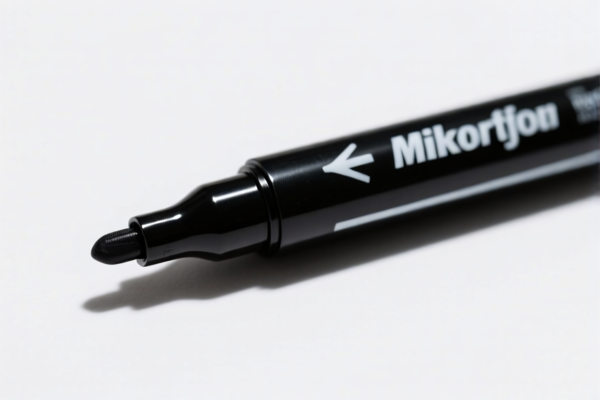
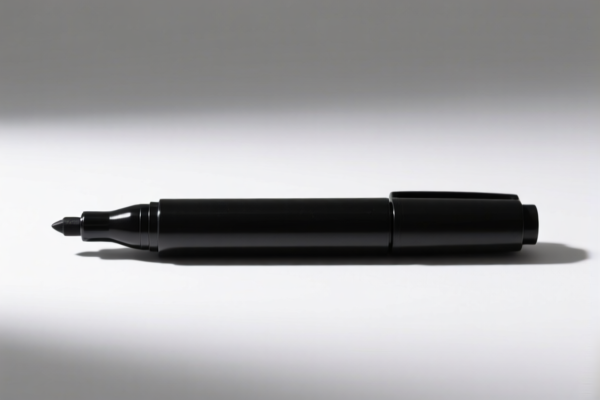
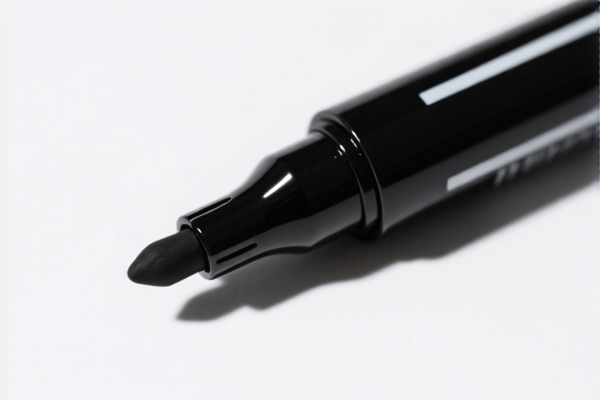
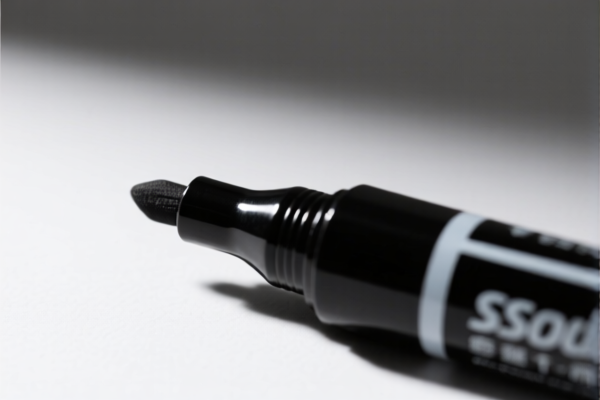
AI Analysis
🖊️ Process Marker Pens (Felt Tipped & Porous-Tipped)
🌐 HS Code Reference & Customs Clearance Guide | 2026 Latest Tariff Analysis | Professional Compliance Strategy
📌 I. Product Definition & Classification: Do You Really Understand "Process Markers"?
Process Marker Pens (commonly known as felt-tip pens, porous-tipped pens, or permanent markers) are writing instruments designed for high-visibility marking, drafting, labeling, or artistic use. Unlike ballpoint pens which use viscous oil-based ink, process markers use fast-drying, often alcohol-based or water-based inks delivered through a porous fiber tip or felt nib.
In international trade, they are strictly categorized by their tip type and ink delivery mechanism, not just their appearance.
⚠️ Key Distinction:
- If it has a felt tip, porous tip, or felt nib → It falls under Heading 9608.20 (Markers/Pens).
- If it is a refill cartridge specifically for these markers → It falls under 9608.99.20.00.
- If it is just the ink liquid → It falls under Heading 3215 (Inks), NOT 9608.
📦 II. HS Code Classification Details (2026 Latest Tariff Authority Cross-Reference)
Based on the provided <DATA>, here is the precise breakdown for Process Marker Pens and related items:
| HS Code | Product Description | Applicable Scenario | Tax Rate (US Import from China) |
|---|---|---|---|
9608.20.00.00 |
Felt tipped and other porous-tipped pens and markers | Standard permanent markers, highlighters, drafting markers, whiteboard markers with felt tips | 11.5% |
9608.99.20.00 |
Other: Refill cartridges | Replacement ink cartridges for marker pens | 0.0% |
3215.90.10.00 |
Drawing ink | Pure drawing ink (liquid only, not in a pen structure) | 0.0% |
3215.90.50.00 |
Other inks | General printing/writing inks (liquid only) | 0.0% |
3926.10.00.00 |
Office or school supplies of plastics | Plastic cases, empty pen holders, or plastic office supplies that are NOT pens/markers themselves | 0.0% |
3926.90.10.00 |
Buckets and pails of plastic | Plastic containers, NOT pens | 0.0% |
🔍 Critical Note:
-9608.20.00.00is the primary code for Process Markers.
- Items like empty plastic barrels or pen caps without ink/nib may sometimes be misclassified under plastics (3926.10.00.00) if they are not assembled into a writing instrument. However, assembled markers must go to9608.20.00.00.
- Refills are separate (9608.99.20.00) and have 0% tax, making them strategically important for aftermarket sales.
💰 III. 2026 Latest Tariff Rate Details (Including Surtaxes)
✅ Applicable Country: United States (US)
✅ Origin: China (CN)
✅ Effective Date: Current applicable rates under Section 301 and IEEPA regulations.
🎯 1. 9608.20.00.00 —— Felt Tipped & Porous-Tipped Markers
| Item | Content |
|---|---|
| Base Tariff | 4.0% (General Rate) |
| Additional Surtax (Section 301) | +7.5% (Specific surtax for this HS subheading) |
| Total Tax Rate | 11.5% |
| Tax Calculation | CIF Value × 11.5% |
| De Minimis Exemption? | ❌ Not Applicable for standard commercial shipments. However, for B2C cross-border e-commerce (de minimis < $800), these goods may enter duty-free if they qualify under the de minimis rule, but this is subject to strict enforcement and potential future changes. For traditional B2B, tax applies. |
| Legal Basis | HTSUS 9608.20.00 → Section 301 Footnote |
📌 Explanation:
- The 11.5% total tax is a combination of the standard US Most Favored Nation (MFN) rate (4%) and the retaliatory/additional tariff imposed on Chinese goods.
- Unlike electronics or steel, this rate is moderate, not prohibitive, but still a significant cost factor for bulk imports.
🎯 2. 9608.99.20.00 —— Refill Cartridges for Markers
| Item | Content |
|---|---|
| Base Tariff | 0.0% |
| Additional Surtax | 0.0% |
| Total Tax Rate | 0.0% |
| Legal Basis | HTSUS 9608.99.20.00 |
📌 Strategic Advantage:
- If your business model involves selling markers + refill packs, the refills are tax-free. This can be a competitive pricing tool.
🛠️ IV. Customs Clearance Practical Advice (Pitfall Avoidance Guide)
✅ 1. Documentation Checklist (Non-negotiable)
| Document | Required? | Explanation |
|---|---|---|
| ✅ Product Specification Sheet | ✔️ | Must clearly state: "Felt Tip," "Porous Tip," "Ink Type (Alcohol/Water-based)." Avoid vague terms like "writing tool." |
| ✅ Material Composition | ✔️ | Specify tip material (e.g., polyester felt, natural felt) and ink composition. |
| ✅ Commercial Invoice | ✔️ | Clearly describe as "Process Marker Pens, Felt Tip" under HS 9608.20.00.00. |
| ✅ Packing List | ✔️ | Ensure quantities match invoice. |
| ✅ SDS (Safety Data Sheet) | ✔️ | Critical! Since markers often contain flammable alcohol-based inks, customs and carriers require SDS to verify shipping safety (UN3082 or UN1263). |
✅ 2. Declaration Tips (Key Mantra)
🔥 "Describe the Tip, Not Just the Ink!"
| Scenario | Correct Declaration | Wrong Practice |
|---|---|---|
| Standard Permanent Marker | HS 9608.20.00.00 Description: "Felt-tip permanent marker pen" |
Using "Pen" (9608.50.00) → Risk of reclassification |
| Highlighter | HS 9608.20.00.00 Description: "Porous-tip felt marker, fluorescent color" |
Using "Office Supply" (3926.10) → Incorrect, leads to penalty |
| Refill Cartridge | HS 9608.99.20.00 Description: "Refill cartridge for marker pen" |
Packing it with markers without separate line item → Confusion |
| Empty Plastic Pen Case | HS 3926.10.00.00 Description: "Plastic pen holder, empty" |
Including it in marker shipment → Valuation issues |
✅ 3. Special Cases & Risk Management
| Scenario | Handling Advice |
|---|---|
| OEM Branded Markers | Ensure the brand name is not infringing. Provide authorization letters if requested. |
| Mixed Container (Markers + Refills) | Declare separately! List markers under 9608.20.00.00 (11.5%) and refills under 9608.99.20.00 (0%). Mixing them may lead to higher taxation on the entire shipment if not clearly itemized. |
| Ink-Based Samples | If sending small quantities of liquid ink (not in pens), use 3215.90.10.00 (0%). Do NOT use pen codes for liquid ink. |
| Flammable Ink | Ensure proper UN packaging and labeling. Customs may hold shipments without proper hazard documentation. |
🌍 V. Global Market Clearance Comparison (2026)
| Country/Region | Recommended HS Code | Tariff Rate (China Origin) | Key Requirements |
|---|---|---|---|
| 🇺🇸 USA | 9608.20.00.00 |
11.5% (4% Base + 7.5% Surtax) | SDS for flammable inks; Accurate description |
| 🇪🇺 EU | 9608.20.00 |
Varies (Often 4-6%) | REACH compliance for ink chemicals; CE marking not required for stationery |
| 🇨🇳 China | 9608.20.00 |
Varies (Export rebate applies) | Standard export declaration |
| 🇬🇧 UK | 9608.20.00 |
Similar to EU post-Brexit | UKCA marking not typically required for pens, but safety standards apply |
📌 Conclusion:
- USA is the most costly market due to the 7.5% additional surtax on top of the base rate.
- Refills (9608.99.20.00) are a golden opportunity for 0% duty in the US. Consider bundling strategies or separate shipments for refills.
📌 VI. Common Mistakes & Pitfalls (Lessons Learned)
❌ Mistake 1: Declaring "Marker Pens" under "Office Supplies" (Plastics)
👉 Consequence: Misclassification. Customs may assess back-taxes at the higher rate or delay shipment for re-evaluation.
👉 Correct: Always use 9608.20.00.00 for assembled markers with felt/porous tips.
❌ Mistake 2: Ignoring Ink Composition (Flammability)
👉 Consequence: Carrier rejection or customs hold if SDS is missing. Alcohol-based markers are often classified as Dangerous Goods (DG) for air/sea freight.
👉 Correct: Provide SDS and declare as DG if applicable, even if duty is low.
❌ Mistake 3: Combining Refills and Markers Without Separate Line Items
👉 Consequence: If not separated, customs may apply the higher tax rate (11.5%) to the entire value of the refill cartridges.
👉 Correct: List 9608.20.00.00 and 9608.99.20.00 on separate lines of the invoice.
✅ Correct Practice:
"Felt-Tip Permanent Marker, Alcohol-Based Ink, Model XYZ, 12pcs/box" → HS 9608.20.00.00
"Replacement Refill Cartridge for Marker, Model XYZ, 5pcs/box" → HS 9608.99.20.00
🎯 VII. Conclusion: Precision in Classification Saves Cost
🎯 Remember:
🔹 "Felt Tip = 9608.20 (11.5%)"
🔹 "Refill = 9608.99.20 (0%)"
🔹 "Liquid Ink = 3215.90 (0%)"
🔹 "Don't Mix Line Items!"
📌 Pro Tip:
If you are shipping to the US, separate your refill shipments from your marker shipments to save 11.5% tax on the refill portion. This is a simple but effective cost-saving measure.
📣 Immediate Action:
📞 Confirm HS Code with your customs broker before shipping.
📄 Prepare SDS for all ink-containing products.
🚀 Ensure accurate invoice descriptions to avoid delays.
✨ Professional clearance starts with precise classification!
💼 Every percentage point counts in the bottom line!
Customer Reviews
About HS Code Classification
The Harmonized System (HS) is an internationally standardized nomenclature developed by the World Customs Organization (WCO) to classify traded products. Over 200 countries use the HS system as the basis for customs tariffs, trade statistics, and import/export regulations.
Each HS code follows a hierarchical structure:
- Chapter (2 digits) — Broad category of goods (e.g., Chapter 84: Machinery and Mechanical Appliances)
- Heading (4 digits) — More specific grouping within the chapter
- Subheading (6 digits) — Internationally standardized breakdown, used by all WCO member countries
- National subdivisions (8-10 digits) — Country-specific extensions for further classification, such as US HTSUS 10-digit codes
Correct HS code classification is essential for smooth customs clearance, accurate duty payment, and compliance with trade regulations. Misclassification can lead to customs delays, overpayment of duties, or penalties.
When importing from CN to US, the applicable tariff rates may include:
- Most-Favored-Nation (MFN) rate — The standard duty rate applied to WTO members
- General rate — Applied to countries without trade agreements
- Trade remedy duties — Additional tariffs such as Section 301 (anti-dumping), Section 232 (national security), or countervailing duties
The information provided on this page is for reference purposes only. For official classification, please consult with your local customs authority or a licensed customs broker.