programming board learning kit
CN → US| HS Code | Tariff Rate | Origin | Destination | Doc |
|---|---|---|---|---|
| 8542390090 | 60.0% | CN | US | Official Doc |
| 8543709301 | 10.0% | CN | US | Official Doc |
| 8542310030 | 60.0% | CN | US | Official Doc |
| 8543709860 | 37.6% | CN | US | Official Doc |
| 9504909080 | 17.5% | CN | US | Official Doc |
Product Images
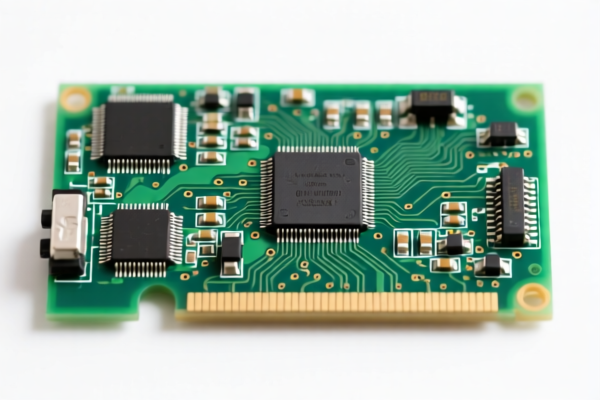
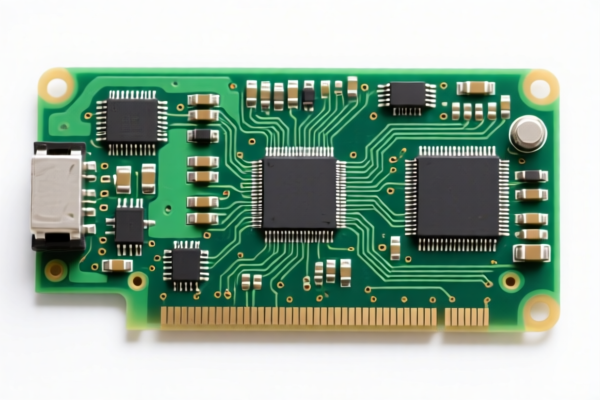
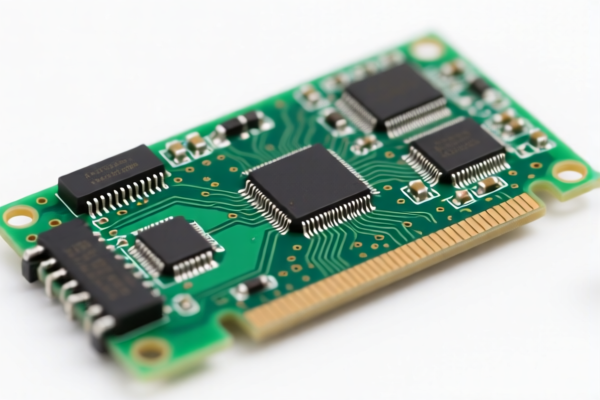
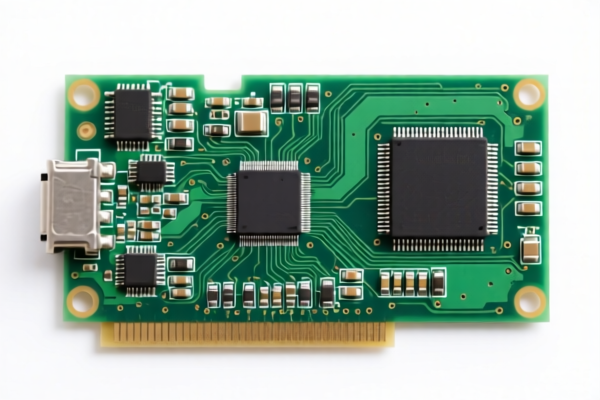
AI Analysis
🧠 Programming Board Learning Kit (Microcontroller Development Boards)
🌐 HS Code Reference & Customs Clearance Guide | 2026 Latest Tariff Analysis | Professional通关 Strategy
📌 Part I: Product Definition & Classification: What Exactly Is a "Programming Board Learning Kit"?
A Programming Board Learning Kit (often containing components like Arduino, ESP32, Raspberry Pi Pico, or similar microcontroller dev boards) is a versatile electronic device used for education, prototyping, and hobbyist programming. In international trade, its classification depends heavily on whether it is viewed as a component (IC), a general-purpose device, or a consumer good.
⚠️ Key Classification Dilemma:
- Is it an Integrated Circuit (IC)? → High tariff (60%) due to Section 301 & IEEPA.
- Is it a General Electronic Device? → Medium/Low tariff (10% - 37.6%) depending on specific function.
- Is it a Game/Toy? → Low tariff (17.5%) but risky if not strictly for entertainment.
📦 Part II: HS Code Classification Matrix (Based on Provided Data)
| HS Code | Summary / Logic | Total Tax Rate | Tax Detail Breakdown |
|---|---|---|---|
| 8542.39.00.90 | Viewed as Electronic Integrated Circuits (Logic Application). Falls under "Other" category for ICs. | 60.0% | Base: 0.0% Section 301: 50.0% IEEPA 122: 10% |
| 8543.70.93.01 | Viewed as Educational Equipment / Portable Interactive Electronic Device with Integrated Circuits. | 10.0% | Base: 0.0% Section 301: 0.0% IEEPA 122: 10% |
| 8542.31.00.30 | Viewed as Controller IC (Microcontroller). Classified as IC because bit-count is not explicitly defined, falling into the "Other" bucket. | 60.0% | Base: 0.0% Section 301: 50.0% IEEPA 122: 10% |
| 8543.70.98.60 | Viewed as an Independent Electronic Device with its own function. Fits "Machines & Apparatus" with no material conflict. | 37.6% | Base: 2.6% Section 301: 25.0% IEEPA 122: 10% |
| 9504.90.90.80 | Viewed as a Game/Entertainment Product if marketed primarily for gaming or play. | 17.5% | Base: 0.0% Section 301: 7.5% IEEPA 122: 10% |
🔍 Critical Analysis:
- The lowest tax rate (10%) is achieved by classifying it as Educational Equipment (8543.70.93.01).
- The highest tax rate (60%) occurs when customs views it merely as an Integrated Circuit (8542 series).
- The risky low rate (17.5%) requires proving the primary purpose is Gaming, which may trigger additional scrutiny if the product is technically a dev board.
💰 Part III: Detailed Tariff Breakdown (US Imports from China)
✅ Applicable Country: United States (US)
✅ Origin: China (CN)
✅ Effective Date: Current Trade Rules (Section 301 & IEEPA)
🎯 1. The "Educational" Pathway (Lowest Cost)
HS Code: 8543.70.93.01
Summary: Learning kits align with educational devices, falling under portable interactive electronic devices with integrated circuits.
| Item | Value |
|---|---|
| Base Tariff | 0.0% |
| Section 301 Surcharge | 0.0% |
| IEEPA Section 122 Surcharge | 10.0% |
| Total Effective Rate | 10.0% |
| Tax Calculation | CIF Value × 10% |
| De Minimis Eligibility | ⚠️ Check Specifics: IEEPA often removes de minimis exemptions for China. Verify current CBP rulings. |
| Legal Basis | IEEPA: Section 122 (10% surcharge on Chinese imports) |
📌 Why this works:
- Customs acknowledges the educational intent and interactive nature.
- No Section 301 (50%) applies because it is not classified as a standard IC or computer hardware under Footnote 9903.88.01.
🎯 2. The "Independent Device" Pathway (Medium Cost)
HS Code: 8543.70.98.60
Summary: An electronic apparatus with independent functions, fitting the category of other machines and apparatus.
| Item | Value |
|---|---|
| Base Tariff | 2.6% |
| Section 301 Surcharge | 25.0% |
| IEEPA Section 122 Surcharge | 10.0% |
| Total Effective Rate | 37.6% |
| Tax Calculation | CIF Value × 37.6% |
| De Minimis Eligibility | ❌ Likely Denied |
| Legal Basis | USITC Footnotes + IEEPA |
📌 Why this happens:
- If the board is seen as a standalone gadget (e.g., a specialized robot controller) rather than a general dev kit, it attracts the 25% Section 301 surcharge.
🎯 3. The "IC/Component" Pathway (Highest Cost)
HS Codes: 8542.39.00.90 & 8542.31.00.30
Summary: Classified as Integrated Circuits. Whether as "Other Logic ICs" or "Controllers," the lack of explicit bit-definition pushes it to the "Other" bucket.
| Item | Value |
|---|---|
| Base Tariff | 0.0% |
| Section 301 Surcharge | 50.0% |
| IEEPA Section 122 Surcharge | 10.0% |
| Total Effective Rate | 60.0% |
| Tax Calculation | CIF Value × 60% |
| De Minimis Eligibility | ❌ Denied |
| Legal Basis | Heavy Section 301 application on electronic components |
📌 Why this is dangerous:
- Microcontrollers (like ATmega, ESP32) are technically ICs. If customs ignores the "kit" or "educational" context and sees only the chip, the 50% penalty applies.
🎯 4. The "Gaming" Pathway (Low Cost, High Risk)
HS Code: 9504.90.90.80
Summary: If marketed as a game product, it falls under consumer game goods.
| Item | Value |
|---|---|
| Base Tariff | 0.0% |
| Section 301 Surcharge | 7.5% |
| IEEPA Section 122 Surcharge | 10.0% |
| Total Effective Rate | 17.5% |
| Tax Calculation | CIF Value × 17.5% |
| De Minimis Eligibility | ⚠️ High Risk: CBP aggressively audits game goods from China for de minimis abuse. |
| Legal Basis | Chapter 95 (Toys/Games) |
📌 Why this is risky:
- A "Programming Board" is technically a tool, not a game. Misclassifying it as a game can lead to audits, penalties, and back-taxes if the primary function is deemed educational/industrial.
🛠️ Part IV: Customs Clearance Practical Advice (Pitfall Avoidance)
✅ 1. Documentation Checklist (Must-Haves)
| Document | Required? | Purpose |
|---|---|---|
| Product Manual / User Guide | ✅ Yes | Proves educational/interactive intent. Highlight "Learning Kit," "STEM Education," "Coding Platform." |
| Bill of Materials (BOM) | ✅ Yes | Shows the board contains more than just the IC (e.g., casing, USB connector, LEDs). This supports 8543 (Device) over 8542 (IC). |
| High-Res Photos | ✅ Yes | Show the full kit: Board + Cables + Components + Packaging. Avoid showing just the naked chip. |
| Commercial Invoice Description | ✅ Yes | Use keywords: "Educational Electronics," "STEM Learning Kit," "Interactive Dev Board." Avoid generic terms like "Electrical Part." |
| Marketing Materials | ✅ Yes | Proof that the product is sold to schools, hobbyists, or for coding education. |
✅ 2. Declaration Strategy (The "Golden Rule")
🔥 "Declare Function, Not Just Component!"
| Scenario | Recommended HS Code | Why? |
|---|---|---|
| Selling as a STEM Kit for Schools | 8543.70.93.01 |
Strongest case for 10% tax. Emphasize "Educational." |
| Selling as a Standalone Dev Board (No Box/Extras) | 8543.70.98.60 |
Acceptable if it has its own interface/power. 37.6% tax. |
| Selling Just the Bare PCB | 8542.39.00.90 |
Avoid if possible. 60% tax. Only use if you have no other choice. |
| Selling as a "Gaming Console" for Kids | 9504.90.90.80 |
Risky. Only if the board is pre-loaded with simple games and marketed as a toy. 17.5% tax. |
✅ 3. Critical Warnings
-
Do NOT call it "Integrated Circuit" on the Invoice:
If you write "IC Board" or "Microcontroller Chip," customs will likely auto-flag it to 8542, resulting in 60% tax. Instead, use "Electronic Learning Device" or "Interactive Education Kit." -
Avoid "De Minimis" Abuse for 8542/8543:
Since IEEPA Section 122 applies, small packages ($800 limit) may NOT be exempt from the 10% (or higher) surcharge. Check current CBP directives on de minimis for Chinese electronics. -
Pre-Order an Advance Ruling:
Given the ambiguity between 8542 (IC) and 8543 (Device), the safest route is to request a Binding Ruling from CBP. Describe your kit in detail and ask for confirmation of8543.70.93.01.
🌍 Part V: Market Comparison (2026 Outlook)
| Market | Recommended HS Code | Est. Total Tax | Key Requirement |
|---|---|---|---|
| 🇺🇸 USA | 8543.70.93.01 |
10% | Must prove Educational Purpose. Invoice must say "Learning Kit." |
| 🇪🇺 EU | 8543.70 |
Varies (0-5%) | CE Marking, RoHS Compliance. No Section 301 equivalent, but VAT applies. |
| 🇨🇳 China | 8543.70 |
0-10% | Standard import duties. No anti-dumping surcharges. |
| 🇬🇧 UK | 8543.70 |
~5-10% | Post-Brexit rules. Similar to EU but with UKCA marking. |
📌 Conclusion:
The US market is the most challenging due to the layered tariffs (Section 301 + IEEPA).
Strategy: Position the product strictly as Educational/Interactive Equipment to qualify for the 10% rate. Avoid generic "Electronics" or "IC" terminology.
📌 Part VI: Common Mistakes & Blood-Stained Lessons
❌ Mistake 1: Describing the product as "Arduino Microcontroller Board"
👉 Result: Customs sees "Microcontroller" → Classifies as 8542 (IC) → 60% Tax!
✅ Fix: Describe as "Educational Coding Platform & Learning Kit."
❌ Mistake 2: Shipping as "Gift" to claim De Minimis exemption
👉 Result: CBP audits "Gift" shipments from China. IEEPA taxes still apply.
✅ Fix: Declare accurately as "Commercial Educational Goods."
❌ Mistake 3: Ignoring the IEEPA 122 Clause
👉 Result: Underestimating costs by 10%.
✅ Fix: Always add 10% to your landed cost calculation for Chinese electronics.
🎯 Part VII: Conclusion: Smart Classification Saves Money
🎯 Key Takeaway:
🔹 Don't fight the IC classification. You are not just selling a chip; you are selling a Learning Experience.
🔹 Use HS Code8543.70.93.01. It is the "Sweet Spot" for 10% tax.
🔹 Document Everything. Manuals, photos, and marketing materials must support the "Educational" narrative.
📌 Pro Tip:
If your kit includes a specific educational curriculum (PDFs, online courses, step-by-step guides), emphasize this in the documentation. It strengthens the case for 8543.70.93.01.
📣 Action Plan:
1. Update Invoice Description: Change "PCB Board" to "STEM Educational Interactive Kit."
2. Prepare BOM: Show the board is part of a larger "System" (with case, cables, etc.).
3. Calculate Landed Cost: Use 10% tax rate for budgeting, but keep 37.6% as a worst-case buffer.
4. Consult a Broker: Confirm 8543.70.93.01 is accepted for your specific product photos.
✨ Precision in Classification = Precision in Profit!
💼 Clear the Border, Clear the Mind, Clear the Profit Margin!
Customer Reviews
About HS Code Classification
The Harmonized System (HS) is an internationally standardized nomenclature developed by the World Customs Organization (WCO) to classify traded products. Over 200 countries use the HS system as the basis for customs tariffs, trade statistics, and import/export regulations.
Each HS code follows a hierarchical structure:
- Chapter (2 digits) — Broad category of goods (e.g., Chapter 84: Machinery and Mechanical Appliances)
- Heading (4 digits) — More specific grouping within the chapter
- Subheading (6 digits) — Internationally standardized breakdown, used by all WCO member countries
- National subdivisions (8-10 digits) — Country-specific extensions for further classification, such as US HTSUS 10-digit codes
Correct HS code classification is essential for smooth customs clearance, accurate duty payment, and compliance with trade regulations. Misclassification can lead to customs delays, overpayment of duties, or penalties.
When importing from CN to US, the applicable tariff rates may include:
- Most-Favored-Nation (MFN) rate — The standard duty rate applied to WTO members
- General rate — Applied to countries without trade agreements
- Trade remedy duties — Additional tariffs such as Section 301 (anti-dumping), Section 232 (national security), or countervailing duties
The information provided on this page is for reference purposes only. For official classification, please consult with your local customs authority or a licensed customs broker.