protection switch
CN → US| HS Code | Tariff Rate | Origin | Destination | Doc |
|---|---|---|---|---|
| 7326908688 | 87.9% | CN | US | Official Doc |
| 7326190080 | 87.9% | CN | US | Official Doc |
| 8538906000 | 38.5% | CN | US | Official Doc |
| 8538908180 | 38.5% | CN | US | Official Doc |
| 8536509065 | 35.0% | CN | US | Official Doc |
Product Images
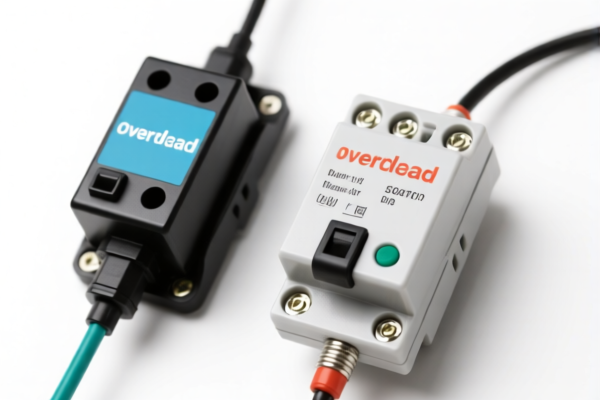
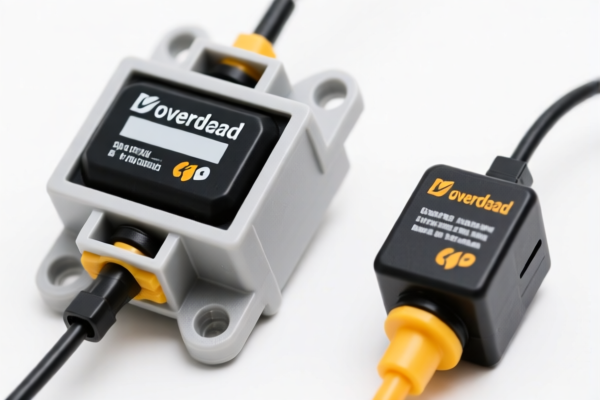
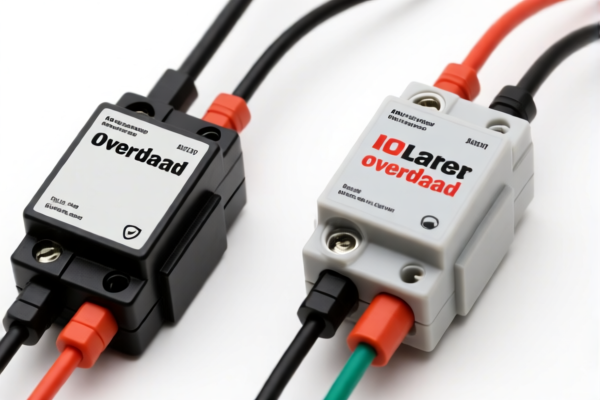
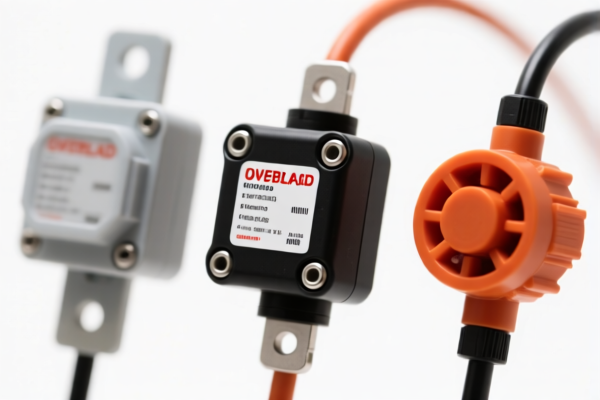
AI Analysis
🛡️ Protection Switch Covers (Electrical Switchgear Components)
🌐 HS Code Reference & Customs Clearance Guide | 2026 Latest Tariff Analysis | Professional Clearance Strategy
📌 I. Product Definition & Classification: Do You Really Understand "Protection Switch Covers"?
A "Protection Switch Cover" is a safety component used in electrical systems to prevent accidental contact with live parts, protect against dust/moisture, or provide physical protection to switches and breakers. In international trade, the classification depends heavily on material composition and functional specificity.
There are two main classification paths: 1. Material-Based Classification (Iron/Steel): If the cover is primarily valued as a fabricated metal article without specific electrical function details, it falls under Section XV (Base Metals). 2. Function-Based Classification (Electrical Parts): If the cover is specifically designed as a part of an electrical switchgear or control panel, it falls under Chapter 85 (Electrical Machinery and Equipment).
⚠️ Key Distinction Point: * If it is a generic steel/iron bracket or box used to cover electrical components → Classify under 7326.90 or 7326.19. * If it is a specific molded part of a switch or control panel → Classify under 8538.90 or 8536.50.
📦 II. HS Code Classification Details (2026 Latest Tariff Authority Comparison)
Based on the provided data, here are the four possible HS Codes for "Protection Switch Covers" and their corresponding tax implications.
| HS Code | Product Description | Applicable Scenario | Primary Material/Function |
|---|---|---|---|
7326.90.86.88 |
Other articles of iron or steel (General Metal Articles) | Generic iron/steel covers; not specifically identified as switch parts | ✅ Iron/Steel |
7326.19.00.80 |
Other articles of iron or steel (Fasteners/Parts) | Classified as "parts" of iron/steel articles | ✅ Iron/Steel |
8538.90.60.00 |
Parts suitable for use solely or principally with apparatus of heading 8535 or 8536 | Specific molded parts for switches/breakers (Voltage ≤ 1,000V) | ⚡ Electrical Part |
8538.90.81.80 |
Other parts of switches, protectors, etc. | General switchgear parts (Catch-all category for switch components) | ⚡ Electrical Part |
8536.50.90.65 |
Electrical Switches (The Switch Itself) | Misclassification Risk: If the product is the switch, not just the cover | ⚡ Electrical Device |
🔍 Critical Reminder: * Generic Metal Covers: If the product is a simple steel box used to cover various types of equipment, it is safer to classify under 7326 (Base Metals). However, this incurs higher tariffs due to Section 122 (Steel/Aluminum/Copper) rules. * Specific Electrical Parts: If the cover is custom-molded for a specific switch brand/model and fits exclusively, classify under 8538.90. This avoids the heavy "122 Clause" steel tariffs. * Avoid "Switch" Classification: Do not classify a cover as a switch (
8536.50). This is a factual error that can lead to audits or penalties.
💰 III. 2026 Latest Tariff Rate Detailed Analysis (Including Surcharges & Policy Add-ons)
✅ Applicable Country: United States (US)
✅ Origin: China (CN)
✅ Effective Time: Current Trade Restrictions Apply (Section 301 & 122 Clauses)
🎯 1. 7326.90.86.88 & 7326.19.00.80 —— Iron/Steel Articles (High Tariff Risk)
These codes classify the product as "Other Articles of Iron or Steel." They trigger the heaviest penalties.
| Item | Content |
|---|---|
| Base Tariff | 2.9% (ad valorem) |
| Section 301 Additional Tariff | +25.0% |
| Section 122 Tariff (Steel/Al/Cu) | +50.0% (Specific to steel articles under certain conditions) |
| Total Tax Rate | 87.9% |
| Tax Calculation | CIF Value × 87.9% |
| De Minimis Eligibility | ❌ No (Denied for Section 122 & 301 items) |
| Legal Basis Path | USITC:7326.90.86.88 → SECTION_122:10% (Steel) → SECTION_301:25% → TOTAL: 87.9% |
📌 Explanation: * The 87.9% rate is catastrophic for profit margins. * The 50% Section 122 tariff applies specifically because these codes fall under "Steel Articles." * The 25% Section 301 tariff applies to all Chinese-origin goods in this category. * Strategy: Avoid these codes unless the product is explicitly a generic metal housing with no specific electrical branding or design.
🎯 2. 8538.90.60.00 & 8538.90.81.80 —— Electrical Switch Parts (Optimized Tariff)
These codes classify the product as a "Part of an Electrical Switch." This is the preferred classification for specific protective covers, as it avoids the Section 122 steel penalties.
| Item | Content |
|---|---|
| Base Tariff | 3.5% |
| Section 301 Additional Tariff | +25.0% |
| Section 122 Tariff | None (Not classified as generic steel articles) |
| Total Tax Rate | 38.5% |
| Tax Calculation | CIF Value × 38.5% |
| De Minimis Eligibility | ❌ No (Section 301 applies) |
| Legal Basis Path | USITC:8538.90.60.00 → SECTION_301:25% → TOTAL: 38.5% |
📌 Explanation: * The 38.5% rate is significantly lower than the 87.9% for steel classifications. * The 25% Section 301 tariff still applies because the origin is China. * Crucial Point: You must prove the item is a "part" of a switch (e.g., provided with a bill of materials for a specific switch model, or molded specifically for it) to justify this classification.
⚠️ 3. 8536.50.90.65 —— Electrical Switch (Incorrect for "Cover")
| Item | Content |
|---|---|
| Base Tariff | 0.0% |
| Section 301 Additional Tariff | +25.0% |
| Total Tax Rate | 25.0% |
| Status | Risk of Misclassification |
📌 Warning: * If you are importing a cover, do not declare it as a switch. * While the rate (25%) looks lowest, customs may flag this as a "Factual Error" (Importing a cover as a switch). * Penalties for misclassification can exceed the tax savings. Only use this if the product includes the switching mechanism.
🛠️ IV. Customs Clearance Practical Advice (Battle-Tested Pitfall Guide)
✅ 1. Documentation Checklist (Non-Negotiable)
| Document | Required | Explanation |
|---|---|---|
| ✅ Product Description | ✔️ | Use precise terms: "Protective Cover for Electrical Switch, Model XYZ" |
| ✅ Technical Drawings | ✔️ | Show that it is a part designed to fit a specific switch (HS 8538) OR a generic metal box (HS 7326) |
| ✅ Bill of Materials (BOM) | ✔️ | If claiming HS 8538, show it is sold/used with switch assembly |
| ✅ Commercial Invoice | ✔️ | Clearly state: "Part for Electrical Switch" |
| ✅ Material Declaration | ✔️ | Specify: "100% Galvanized Steel" or "Polycarbonate" (If plastic, HS changes completely!) |
✅ 2. Classification Strategy (Key Mantra)
🔥 “Specific Parts Beat Generic Steel! (8538 > 7326)”
| Scenario | Correct Classification | Avoid If... |
|---|---|---|
| Cover is molded for Brand A Switch | 8538.90.60.00 (38.5%) |
You cannot prove it's for Brand A (Risk → 7326) |
| Cover is a generic steel box | 7326.90.86.88 (87.9%) |
You can argue it's a "part" of a control panel |
| Cover is Plastic | 3926.90 (Not in Data) |
Declare as Steel (Heavy fines) |
✅ 3. Special Handling for Section 122 & 301
- Section 122 Steel Tariff (50%): This applies to iron/steel articles under HTS 7326 and 7307. Do not use these codes if the item is a specific electrical component.
- Section 301 Tariff (25%): Applies to both 7326 and 8538 classifications. You cannot avoid the 25% tax on Chinese origin. Focus on avoiding the additional 50% (Section 122) and higher base rates.
🌍 V. Global Market Clearance Comparison (2026 Latest)
| Country/Region | Recommended HS Code | Tariff Rate | Certification | Notes |
|---|---|---|---|---|
| 🇺🇸 USA | 8538.90.60.00 |
38.5% | UL, NEMA | Avoid 7326 (87.9%). High risk for steel parts. |
| 🇨🇳 China | 8538.90.60.00 |
~5-8% | CCC | Lower tariffs for import into China. |
| 🇪🇺 EU | 8538.90.90 |
~2-3% | CE, RoHS | No major anti-dumping on switches. |
| 🇬🇧 UK | 8538.90.90 |
~2-3% | UKCA | Post-Brexit rules apply. |
📌 Conclusion: * USA is the most difficult market due to Section 301 and Section 122 tariffs. * Classify as Electrical Parts (8538) to save ~49.4% in tariffs compared to Generic Steel (7326). * Do not misdeclare as "Switches" (8536) to save 13.5%; the compliance risk is too high.
📌 VI. Common Errors & Pitfall Guide (Lessons from the Trenches)
❌ Mistake 1: Classifying a switch cover as "Other Steel Articles" (7326)
👉 Result: 87.9% Tariff.
💡 Fix: Provide evidence that it is a "part" of a switch assembly (HS 8538).
❌ Mistake 2: Declaring a plastic cover as "Iron/Steel" (7326)
👉 Result: Customs detention, re-inspection, and penalty.
💡 Fix: Check material. If plastic, use Chapter 39 (not in current data but standard).
❌ Mistake 3: Saying "Switch Cover" in description but declaring as "Switch" (8536)
👉 Result: Audit for undervaluation/misclassification.
💡 Fix: Be honest. "Protective Cover for Switch" is the correct term.
❌ Mistake 4: Ignoring Section 122
👉 Result: Unexpected $50,000+ bill on a $100,000 shipment.
💡 Fix: Ensure the HS Code does NOT trigger Section 122 (Steel/Aluminum/Cu).
✅ Correct Description Example:
"Protective Cover for Electrical Switch, Model X-100, Made of Galvanized Steel, Specifically Designed for Use with Switchgear, Not Sold Separately"
🎯 VII. Conclusion: Precision Classification Saves Money!
🎯 Remember the Mantra:
🔹 "Part of Switch (8538) = 38.5%"
🔹 "Generic Steel (7326) = 87.9%"
🔹 "Misclassified Switch (8536) = Compliance Risk"
📌 Pro Tip:
If your switch covers are OEM parts sold with the switch, ensure the commercial invoice lists them as "Parts for Switch". This supports the 8538 classification and helps defend against Section 122 steel tariffs.
📣 Immediate Action:
📞 Consult a customs broker to review your technical drawings.
🚀 Save nearly 50% in tariffs by choosing the right HS Code!
✨ Professional Clearance Starts with Accurate Classification!
💼 Your margin depends on it!
Customer Reviews
About HS Code Classification
The Harmonized System (HS) is an internationally standardized nomenclature developed by the World Customs Organization (WCO) to classify traded products. Over 200 countries use the HS system as the basis for customs tariffs, trade statistics, and import/export regulations.
Each HS code follows a hierarchical structure:
- Chapter (2 digits) — Broad category of goods (e.g., Chapter 84: Machinery and Mechanical Appliances)
- Heading (4 digits) — More specific grouping within the chapter
- Subheading (6 digits) — Internationally standardized breakdown, used by all WCO member countries
- National subdivisions (8-10 digits) — Country-specific extensions for further classification, such as US HTSUS 10-digit codes
Correct HS code classification is essential for smooth customs clearance, accurate duty payment, and compliance with trade regulations. Misclassification can lead to customs delays, overpayment of duties, or penalties.
When importing from CN to US, the applicable tariff rates may include:
- Most-Favored-Nation (MFN) rate — The standard duty rate applied to WTO members
- General rate — Applied to countries without trade agreements
- Trade remedy duties — Additional tariffs such as Section 301 (anti-dumping), Section 232 (national security), or countervailing duties
The information provided on this page is for reference purposes only. For official classification, please consult with your local customs authority or a licensed customs broker.