PS Plastic Scrap
CN → US| HS Code | Tariff Rate | Origin | Destination | Doc |
|---|---|---|---|---|
| 3915900090 | 35.0% | CN | US | Official Doc |
| 3825610000 | 35.0% | CN | US | Official Doc |
| 3915200000 | 35.0% | CN | US | Official Doc |
| 3825690000 | 35.0% | CN | US | Official Doc |
| 3915100000 | 35.0% | CN | US | Official Doc |
Product Images
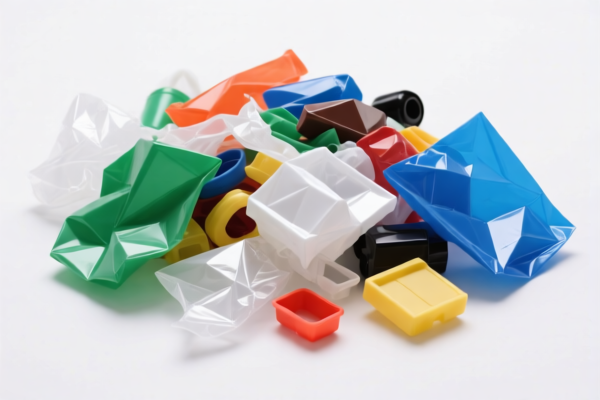

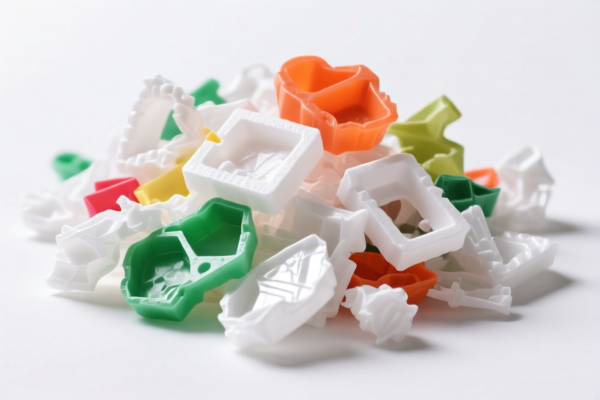
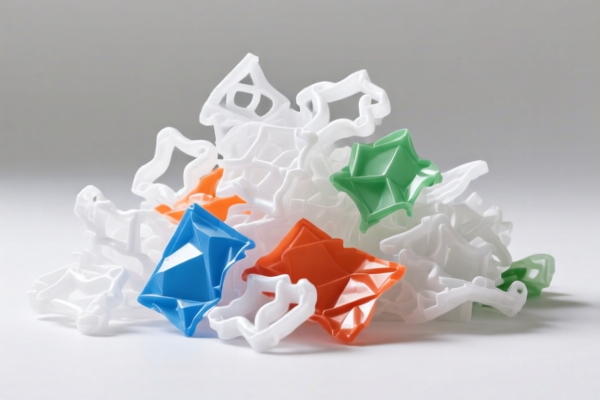
AI Analysis
🧪 PS Plastic Scrap – Comprehensive HS Code & Tariff Guide (2026 Edition)
🌐 HS Code Classification & Customs Clearance Strategy | 2026 Updated Tariff Breakdown | Expert-Level Import Compliance
📌 1. Product Definition & Classification: What Exactly Is "PS Plastic Scrap"?
PS Plastic Scrap refers to waste materials generated during the manufacturing, processing, or cleaning of Polystyrene (PS) — a thermoplastic polymer derived from styrene monomers. This includes:
- Cleaned PS production waste (e.g., trimmings, defective parts, off-spec material)
- Post-consumer PS waste (e.g., packaging, disposable cutlery, foam packaging)
- Industrial scrap from injection molding, extrusion, or sheet fabrication
⚠️ Critical Distinction:
- If the scrap is clean, free of contaminants, and mechanically recyclable → classified under plastic waste
- If it contains chemical residues, solvents, or mixed polymers → may fall under chemical industrial waste
📦 2. HS Code Classification Breakdown (2026 Official Tariff Schedule)
| HS Code | Product Description | Classification Basis | Tax Rate | Key Conditions |
|---|---|---|---|---|
3915.90.00.90 |
Other plastic waste, not specified elsewhere, including PS scrap | Matches "other plastic waste" under 3915.90 | 35.0% | Must be clean, non-hazardous, recyclable |
3825.61.00.00 |
Organic high molecular weight materials, waste from chemical industry | PS is a synthetic polymer; scrap qualifies as chemical waste | 35.0% | Applies if scrap has chemical processing history |
3915.20.00.00 |
Waste and scrap of polystyrene (PS) – specifically benzene-based polymer | Direct match for PS waste | 35.0% | Requires identification as PS (e.g., resin ID code #6) |
3825.69.00.00 |
Other waste from chemical industry, not elsewhere specified | Covers residual PS waste with organic contaminants | 35.0% | Applies when scrap is not pure PS, e.g., solvent-washed |
3915.10.00.00 |
Waste and scrap of ethylene polymers (e.g., PE, HDPE, LDPE) | ❌ Incorrect for PS | 35.0% | Do NOT use — only applies to polyethylene-based materials |
🔍 Important Note:
- All five codes apply a total tariff of 35.0%, but only3915.20.00.00is the most accurate and recommended for pure PS scrap. -3825.61.00.00and3825.69.00.00are secondary options if the scrap is chemically treated or contaminated.
💰 3. Detailed Tariff Breakdown (US Market – 2026)
✅ Applicable to: United States (US)
✅ Origin: China (CN), Hong Kong (HK), or other countries under U.S. trade restrictions
✅ Effective Date: November 10, 2025 (post-2025 trade policy update)
🎯 1. 3915.90.00.90 – Other Plastic Waste (Including PS Scrap)
| Tax Component | Rate | Legal Basis | Notes |
|---|---|---|---|
| Base Duty | 0.0% | General Tariff Schedule (HTSUS) | No base tariff |
| Section 301 (USITC) Additional Duty | +25.0% | USITC Footnote 9903.88.01 | Applies to goods from China/HK |
| Section 122 (IEEPA) Additional Duty | +10.0% | IEEPA: 9903.01.24 | Imposed under International Emergency Economic Powers Act |
| Total Effective Tariff | 35.0% | — | Non-negotiable |
| De Minimis Threshold | ❌ Not applicable | — | No exemption for de minimis (even $200 value) |
| Legal Pathway | IEEPA:9903.01.24 → USITC:3915.90.00.90 → FOOTNOTE:9903.88.01 |
— | Must be cited in invoice |
📌 Explanation:
- 25% USITC = 301 Tariff on Chinese goods (ongoing since 2018)
- 10% IEEPA = Emergency economic powers targeting China’s industrial exports
- Total = 35% — one of the highest tariffs on recyclable materials in the U.S.
🎯 2. 3825.61.00.00 – Organic High Molecular Weight Materials (Chemical Waste)
| Tax Component | Rate | Legal Basis | Notes |
|---|---|---|---|
| Base Duty | 0.0% | HTSUS | Standard rate |
| USITC Additional Duty | +25.0% | Footnote 9903.88.01 | Applies to China-origin goods |
| IEEPA Additional Duty | +10.0% | IEEPA: 9903.01.24 | Applies to chemical industrial waste |
| Total Tariff | 35.0% | — | Same as above |
| De Minimis | ❌ Not allowed | — | No relief even for small shipments |
| Legal Pathway | IEEPA:9903.01.24 → USITC:3825.61.00.00 → FOOTNOTE:9903.88.01 |
— | Must justify "chemical industrial waste" status |
📌 When to Use:
- If the PS scrap was washed with solvents (e.g., acetone, toluene)
- If it contains residual monomers or catalysts
- If it’s not mechanically recyclable but chemically processable
🎯 3. 3915.20.00.00 – Waste & Scrap of Polystyrene (PS) – Recommended Code
| Tax Component | Rate | Legal Basis | Notes |
|---|---|---|---|
| Base Duty | 0.0% | HTSUS | Standard |
| USITC Additional Duty | +25.0% | Footnote 9903.88.01 | Applies to China-origin |
| IEEPA Additional Duty | +10.0% | IEEPA: 9903.01.24 | Applies to all PS scrap from China |
| Total Tariff | 35.0% | — | Most accurate and defensible |
| De Minimis | ❌ Not applicable | — | No exemption |
| Legal Pathway | IEEPA:9903.01.24 → USITC:3915.20.00.00 → FOOTNOTE:9903.88.01 |
— | Best choice for clean PS scrap |
✅ Why This Is the Best Choice:
- Directly matches PS polymer waste
- Most defensible in audit
- Clear documentation path (resin ID, material certificate)
🎯 4. 3825.69.00.00 – Other Chemical Industry Waste
| Tax Component | Rate | Legal Basis | Notes |
|---|---|---|---|
| Base Duty | 0.0% | HTSUS | Standard |
| USITC Additional Duty | +25.0% | Footnote 9903.88.01 | China-origin |
| IEEPA Additional Duty | +10.0% | IEEPA: 9903.01.24 | Applies to chemical waste |
| Total Tariff | 35.0% | — | Same as others |
| De Minimis | ❌ Not allowed | — | No relief |
| Legal Pathway | IEEPA:9903.01.24 → USITC:3825.69.00.00 → FOOTNOTE:9903.88.01 |
— | Use only if not pure PS |
📌 When to Use:
- Scrap is mixed with other polymers (e.g., PS + PVC)
- Contains chemical residues or non-recyclable contaminants
🎯 5. 3915.10.00.00 – Waste of Ethylene Polymers (e.g., PE, PP) – ❌ Incorrect
| Tax Component | Rate | Legal Basis | Notes |
|---|---|---|---|
| Base Duty | 0.0% | HTSUS | Standard |
| USITC Additional Duty | +25.0% | Footnote 9903.88.01 | Applies |
| IEEPA Additional Duty | +10.0% | IEEPA: 9903.01.24 | Applies |
| Total Tariff | 35.0% | — | But wrong code! |
| De Minimis | ❌ Not allowed | — | No relief |
| Risk | ⚠️ High | — | Misclassification risk → penalties, delays, or seizure |
❌ Do NOT Use This Code for PS scrap — it’s for polyethylene-based materials only.
🛠️ 4. Customs Clearance Best Practices (Pro Tips to Avoid Penalties)
✅ 1. Required Documentation (MUST-HAVE)
| Document | Why It Matters | Format |
|---|---|---|
| ✅ Commercial Invoice | Must clearly state: "Polystyrene (PS) Scrap, Clean, Recyclable, Resin ID #6" | PDF/Excel |
| ✅ Material Safety Data Sheet (MSDS/SDS) | Proves no hazardous chemicals | |
| ✅ Certificate of Origin (CO) | Required for tariff eligibility | Notarized |
| ✅ Test Report / Lab Analysis | Confirms PS composition (e.g., FTIR, GC-MS) | Lab-certified |
| ✅ Waste Manifest / Recycling Certificate | Proves it’s recyclable, not hazardous | Issued by recycling facility |
| ✅ Product Photos (with labels) | Shows physical condition, contamination level | JPG/PNG |
✅ 2.申报技巧(Key Rules to Remember)
🔥 “PS Scrap = 3915.20.00.00 — Only if clean and pure. Otherwise, 3825.61/69.00.00.”
| Scenario | Correct HS Code | Common Mistake |
|---|---|---|
| Clean PS trimmings, no solvent | 3915.20.00.00 |
Misclassified as 3915.10.00.00 |
| PS scrap washed with acetone | 3825.61.00.00 |
Misclassified as 3915.90.00.90 |
| Mixed plastic scrap (PS + PP) | 3825.69.00.00 |
Misclassified as 3915.20.00.00 |
| PS foam packaging (clean) | 3915.20.00.00 |
Misclassified as 3915.90.00.90 |
✅ 3. Special Cases & Risk Mitigation
| Situation | Recommended Action |
|---|---|
| PS scrap from non-China origin (e.g., Vietnam, Mexico, Germany) | Apply for IEEPA exemption → 0% additional duty |
| Small shipment (< $200) | ❌ No de minimis relief — still 35% tariff |
| Re-export or re-import of recycled PS | Must declare as recycled material, not virgin |
| Audit or Customs Inquiry | Provide lab report + resin ID + photos to defend classification |
🌍 5. Global Market Comparison (2026)
| Country | Recommended HS Code | Tariff | Certification | Notes |
|---|---|---|---|---|
| 🇺🇸 United States | 3915.20.00.00 |
35.0% | None (but documentation required) | Highest tariff |
| 🇨🇳 China | 3915.20.00.00 |
5% (with VAT) | CCC, RoHS | No 301/IEEPA duties |
| 🇪🇺 EU | 3915.20.00.00 |
0% (if recyclable) | CE, REACH | No additional tariffs |
| 🇦🇺 Australia | 3915.20.00.00 |
5% | RCM | No extra duties |
| 🇯🇵 Japan | 3915.20.00.00 |
0% | PSE | No additional taxes |
📌 Insight:
- The U.S. is the only major market imposing 35% on PS scrap
- China, EU, and Japan are far more favorable for recyclable PS imports
📌 6. Common Mistakes & Costly Errors
❌ Mistake 1: Using 3915.10.00.00 for PS scrap
👉 Result: Misclassification → $5,000+ in penalties, delayed release
❌ Mistake 2: Not providing lab analysis or resin ID
👉 Result: Customs holds shipment → $200/day storage fees
❌ Mistake 3: Declaring "plastic waste" without specifying PS
👉 Result: Assigned to 3915.90.00.90 → higher risk of audit
❌ Mistake 4: Assuming de minimis applies
👉 Result: Pay 35% on $100 shipment → $35 tax — no relief!
✅ Correct Declaration Example:
"Polystyrene (PS) Scrap, Clean, Resin ID #6, 100% Recyclable, No Solvent Residues, Origin: China"
🎯 7. Final Verdict: How to Win the Clearance Game
🔹 Use
3915.20.00.00— it’s the most accurate and defensible
🔹 Avoid3915.10.00.00— it’s for PE, not PS
🔹 Always provide lab proof — no exceptions
🔹 Apply for IEEPA exemption if from Vietnam/Mexico
🔹 Never assume de minimis applies — it does not
📣 Act Now: Avoid Costly Delays & Penalties
📞 Contact a U.S. Customs Broker + Request HS Code Pre-Ruling
🚀 Get your PS scrap classified correctly before shipment
💼 Save thousands in tariffs, avoid audits, and ensure smooth clearance
✨ Pro Tip:
If your PS scrap is from a non-China country, you may qualify for 0% additional duty under IEEPA exemption.
Apply for a Pre-Ruling (Advance Ruling) — it’s worth the $500 fee.
📌 Remember:
"A wrong HS code = 35% tax + penalties + delays.
A right HS code = smooth clearance + cost control + peace of mind."
✅ Your PS scrap deserves precision.
Your business deserves protection.
Start with the right classification — today.
Customer Reviews
About HS Code Classification
The Harmonized System (HS) is an internationally standardized nomenclature developed by the World Customs Organization (WCO) to classify traded products. Over 200 countries use the HS system as the basis for customs tariffs, trade statistics, and import/export regulations.
Each HS code follows a hierarchical structure:
- Chapter (2 digits) — Broad category of goods (e.g., Chapter 84: Machinery and Mechanical Appliances)
- Heading (4 digits) — More specific grouping within the chapter
- Subheading (6 digits) — Internationally standardized breakdown, used by all WCO member countries
- National subdivisions (8-10 digits) — Country-specific extensions for further classification, such as US HTSUS 10-digit codes
Correct HS code classification is essential for smooth customs clearance, accurate duty payment, and compliance with trade regulations. Misclassification can lead to customs delays, overpayment of duties, or penalties.
When importing from CN to US, the applicable tariff rates may include:
- Most-Favored-Nation (MFN) rate — The standard duty rate applied to WTO members
- General rate — Applied to countries without trade agreements
- Trade remedy duties — Additional tariffs such as Section 301 (anti-dumping), Section 232 (national security), or countervailing duties
The information provided on this page is for reference purposes only. For official classification, please consult with your local customs authority or a licensed customs broker.