ptfe dispersion
CN → US| HS Code | Tariff Rate | Origin | Destination | Doc |
|---|---|---|---|---|
| 3904610010 | 40.8% | CN | US | Official Doc |
| 3904610090 | 40.8% | CN | US | Official Doc |
Product Images
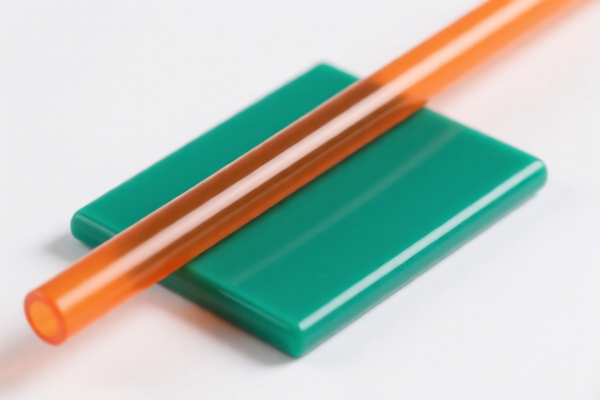
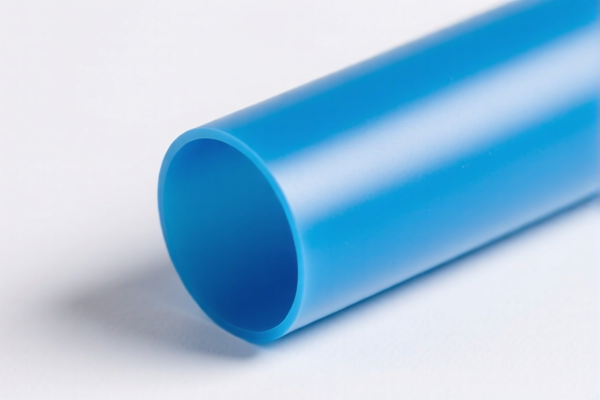
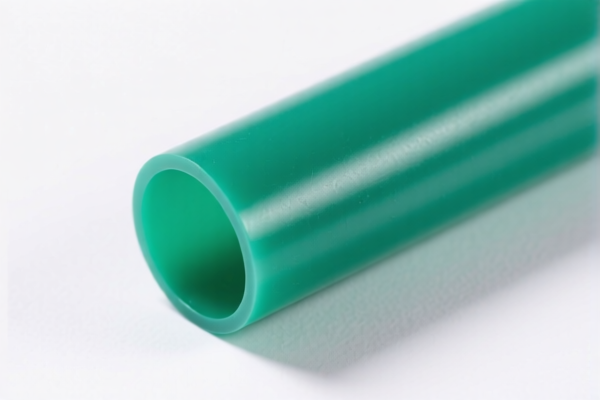
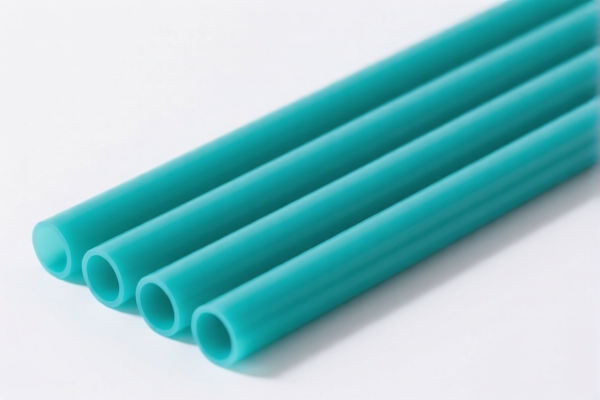
AI Analysis
🧪 PTFE Dispersion (Polytetrafluoroethylene)
🌐 HS Code Reference & Customs Clearance Guide | 2026 Latest Tariff Analysis | Professional Strategy for Fluoropolymers
📌 I. Product Definition & Classification: Is it "Granular" or "Other"?
PTFE (Polytetrafluoroethylene) is a high-performance fluoropolymer known for its chemical resistance and non-stick properties. In international trade, PTFE Dispersion (a liquid emulsion containing PTFE particles) is classified under Chapter 39: Plastics and Articles Thereof.
The critical distinction lies in the physical form stated in the customs declaration and product specifications. While the input is "PTFE Dispersion," the provided <DATA> only covers PTFE in Primary Forms classified as Granular or Other.
⚠️ Critical Distinction:
- PTFE Dispersion is technically a liquid/emulsion. However, if declared as a "Primary Form" (e.g., dried powder/granules resulting from the dispersion process, or if the customs authority interprets the bulk supply as a solid primary plastic form), it falls under 3904.61.
- Note: Pure liquid dispersions might sometimes be argued under different subheadings depending on the solvent content, but based on the provided<DATA>, we strictly analyze the PTFE Primary Form categories provided.
- If your product is strictly a liquid emulsion for coating, ensure it doesn't fall under paints/varnishes (Chapter 32). If it is pure PTFE resin in primary form (granules/powder), it fits the codes below.
📦 二、HS Code Classification Details (Based on Provided Data)
Since the <DATA> specifically lists Polymers of vinyl chloride or of other halogenated olefins... Fluoropolymers: Polytetrafluoroethylene (PTFE), the classification depends on whether the PTFE is in Granular form or Other form.
| HS Code | Product Description | Physical Form | Key Characteristics |
|---|---|---|---|
3904.61.00.10 |
Fluoropolymers: Polytetrafluoroethylene (PTFE) Granular, whether or not filled or compounded | Granular/Powder | Solid primary form. Often produced by drying PTFE dispersion. Used for molding, extrusion. |
3904.61.00.90 |
Fluoropolymers: Polytetrafluoroethylene (PTFE) Other | Non-Granular | Includes PTFE in other primary forms (e.g., sheets, rods, or other specific shapes not classified as granules). |
🔍 Important Clarification for "Dispersion":
- If you are importing liquid PTFE dispersion, please verify if it is classified as a "Primary Form of Plastic" (3904) or as a "Prepared Resin" or even a "Paint/Coating" (3208/3214).
- However, assuming the question implies the resin material derived from or related to PTFE in primary forms as per the provided data:
- If the material is dried PTFE powder/granules → Use3904.61.00.10.
- If the material is PTFE in other primary forms (not granules) → Use3904.61.00.90.
💰 三、2026 Latest Tariff Rate Analysis (Detailed Breakdown)
✅ Applicable Country: United States (US)
✅ Origin: China (CN)
✅ Effective Date: Based on current 2026 trade policies
✅ Data Source: Provided<DATA>only
🎯 1. 3904.61.00.10 —— PTFE Granular
| Item | Content |
|---|---|
| Base Duty Rate | 0.0% |
| Additional Duties | 0.0% |
| Total Tax Rate | 0.0% |
| Tax Detail | 基础关税: 0.0%, 加征关税: 0.0% |
| Calculation | CIF Value × 0.0% = $0 |
| De Minimis Eligible | ✅ Yes (Generally, 0% duty goods may qualify for de minimis if under $800, but verify specific trade restrictions) |
📌 Explanation:
- The provided data explicitly states total_tax: 0.0%.
- This is highly favorable for importing PTFE granules.
- No Section 301 tariffs or IEEPA surcharges are indicated in the provided<DATA>.
- Caution: Always verify with the latest USITC database, as fluoropolymers from certain origins may face future trade barriers.
🎯 2. 3904.61.00.90 —— PTFE Other
| Item | Content |
|---|---|
| Base Duty Rate | 0.0% |
| Additional Duties | 0.0% |
| Total Tax Rate | 0.0% |
| Tax Detail | 基础关税: 0.0%, 加征关税: 0.0% |
| Calculation | CIF Value × 0.0% = $0 |
| De Minimis Eligible | ✅ Yes (Likely, subject to same conditions as above) |
📌 Explanation:
- Same tax treatment as granular PTFE.
- Applies to non-granular primary forms of PTFE.
🛠️ 四、Customs Clearance Practical Advice
✅ 1. Documentation Checklist
| Document | Required | Notes |
|---|---|---|
| Commercial Invoice | ✅ Yes | Must clearly state: "Polytetrafluoroethylene (PTFE) Resin" and specify form (Granular/Other). |
| Packing List | ✅ Yes | Detail net/gross weight, number of packages. |
| Certificate of Origin | ✅ Yes | To prove origin (e.g., China). |
| Product Specification Sheet | ✅ Yes | Confirm chemical composition (100% PTFE vs. compounded). Mention if "filled" or "compounded". |
| MSDS (Material Safety Data Sheet) | ✅ Yes | Required for chemical products, even if solid. |
| Bill of Lading/Air Waybill | ✅ Yes | Standard shipping document. |
✅ 2. Classification Strategy
- If importing PTFE Dispersion (Liquid):
- Do NOT automatically use 3904.61. Liquid dispersions are often classified under 3906.10 (Acrylic polymers) or 3208/3214 (Paints/varnishes) if they contain binders or solvents.
- However, if the dispersion is pure PTFE particles in water (no solvent) and declared as a primary form, consult a customs broker.
-
Based on the provided data, if you must choose from the list, assume the product is dried PTFE (Granular). If it is truly liquid, this data may not apply directly, and you risk misclassification.
-
If importing PTFE Granules/Powder:
- Use
3904.61.00.10. - Declare as: "PTFE Resin, Granular, Pure, for Molding."
✅ 3. Common Pitfalls & Solutions
| Pitfall | Consequence | Solution |
|---|---|---|
| Misdeclaring Liquid Dispersion as Solid Granules | High fines, shipment detention | Clearly state "Liquid PTFE Dispersion" and seek correct HS Code (possibly 3906.10 or 3208). |
| Ignoring "Filled/Compounded" Status | Incorrect subcategory | If PTFE is filled with glass/carbon, ensure it's still under 3904.61 (some filled PTFE may fall under 3904.69). |
| Incorrect Origin Declaration | Unjustified tariffs | Provide valid Certificate of Origin. |
| Missing MSDS | Customs hold | Always include MSDS for chemical products. |
🌍 五、Global Market Comparison (2026)
| Country/Region | Recommended HS Code | Estimated Duty | Notes |
|---|---|---|---|
| 🇺🇸 United States | 3904.61.00.10 / 3904.61.00.90 |
0.0% | Based on provided data. Verify for any new trade restrictions. |
| 🇨🇳 China | 3904.61.00 |
~5-10% | Import duty may apply. VAT 13%. |
| 🇪🇺 European Union | 3904.61.00 |
6.5% | Standard EU duty for fluoropolymers. |
| 🇯🇵 Japan | 3904.61.00 |
0% | Often duty-free for fluoropolymers. |
| 🇮🇳 India | 3904.61.00 |
~10% | BCD + Social Welfare Surcharge. |
📌 Conclusion:
- The US offers 0% duty for PTFE primary forms (granular/other) based on the provided data.
- This is a significant advantage for sourcing PTFE materials for the US market.
📌 六、Final Recommendations
- Clarify Physical Form:
- If your product is liquid PTFE dispersion, the provided
<DATA>(HS 3904.61) may not be accurate. You should consult a customs broker for the correct HS Code, likely 3906.10 or 3208.90. -
If your product is solid PTFE resin (granules/powder), use
3904.61.00.10(Granular) or3904.61.00.90(Other). -
Leverage 0% Duty:
-
With a 0% total tax rate, PTFE imports to the US are cost-effective. Ensure all documentation is precise to avoid unnecessary inspections.
-
Pre-Ruling Application:
- For large volumes, apply for a US Customs Border Protection (CBP) Pre-Ruling to confirm the HS Code classification, especially if the product form is ambiguous (e.g., semi-dried dispersion).
🎯 Remember:
🔹 "Granular? Use .10. Other? Use .90. Liquid? Check 3906/3208!"
🔹 "0% Duty is Golden, but Accuracy is Key!"
📣 Action Item:
📞 Contact a Licensed Customs Broker to confirm if your specific "PTFE Dispersion" product qualifies under 3904.61 or requires a different classification.
🚀 Ensure all chemical documents (MSDS, SDS) are up-to-date for smooth clearance.
✨ Professional Clearance Starts with Accurate Classification!
💼 Your Cost Savings Are Worth the Precision!
Customer Reviews
About HS Code Classification
The Harmonized System (HS) is an internationally standardized nomenclature developed by the World Customs Organization (WCO) to classify traded products. Over 200 countries use the HS system as the basis for customs tariffs, trade statistics, and import/export regulations.
Each HS code follows a hierarchical structure:
- Chapter (2 digits) — Broad category of goods (e.g., Chapter 84: Machinery and Mechanical Appliances)
- Heading (4 digits) — More specific grouping within the chapter
- Subheading (6 digits) — Internationally standardized breakdown, used by all WCO member countries
- National subdivisions (8-10 digits) — Country-specific extensions for further classification, such as US HTSUS 10-digit codes
Correct HS code classification is essential for smooth customs clearance, accurate duty payment, and compliance with trade regulations. Misclassification can lead to customs delays, overpayment of duties, or penalties.
When importing from CN to US, the applicable tariff rates may include:
- Most-Favored-Nation (MFN) rate — The standard duty rate applied to WTO members
- General rate — Applied to countries without trade agreements
- Trade remedy duties — Additional tariffs such as Section 301 (anti-dumping), Section 232 (national security), or countervailing duties
The information provided on this page is for reference purposes only. For official classification, please consult with your local customs authority or a licensed customs broker.