ptfe rod
CN → USProduct Images
AI Analysis
🧱 PTFE Rod (Polytetrafluoroethylene) – The "King of Plastics"
🌐 HS Code Reference & Clearance Guide | 2026 Latest Tariff Analysis | Professional Clearance Strategy
📌 Part I: Product Definition & Classification: Do You Really Understand "PTFE Rod"?
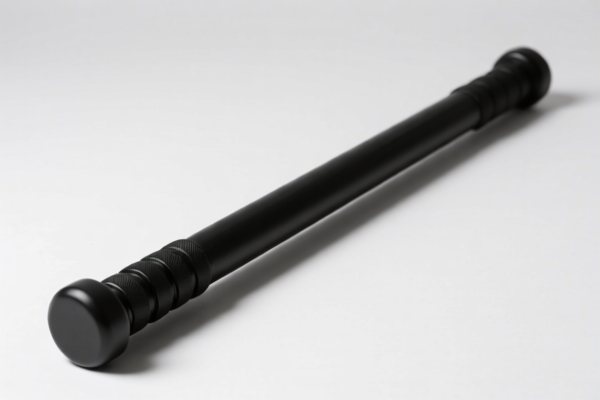
PTFE Rods are semi-finished plastic products made from Polytetrafluoroethylene resin. Known for their excellent chemical resistance, non-stick properties, and high-temperature stability, they are widely used in chemical, mechanical, electrical, and aerospace industries. In international trade, PTFE rods are generally classified under Chapter 39 (Plastics and Articles Thereof), specifically heading 3926.
Key Classification Distinction:
- Raw/Milled PTFE Powder → Molded into Rods: If the product is already in the form of a rod (even if unfinished, i.e., not yet cut to specific final dimensions for a machine), it is classified as a "Plastic Article" or "Plastic Semi-finished Product."
- PTFE Rod vs. PTFE Sheet/Tube: The shape (rod, sheet, tube) does not change the HS Code at the 6-digit or 8-digit level for general trade, as long as it remains in the form of semi-finished goods.
- Reinforced PTFE: If the PTFE is mixed with other materials (e.g., glass fiber, carbon fiber) to create a composite, it may still fall under 3926 if the plastic remains the essential character. However, if it becomes a "composite material" with significant non-plastic components, other chapters might apply (rare for pure PTFE rods).
⚠️ Critical Point:
- Do NOT classify PTFE rods under Chapter 30 (Pharmaceuticals) or Chapter 3901-3914 (Primary Forms like Powders/Sheets) if they are already formed into rods.
- Correct Chapter: 39 (Plastics).
- Correct Heading: 3926 (Other articles of plastics).
📦 Part II: HS Code Classification Details (2026 Latest Tariff Authority Comparison)
| HS Code | Product Description | Applicable Scenario | Key Feature |
|---|---|---|---|
| 3926.90.90 | Other articles of plastics, other than those of heading 3917–3921, 3922, 3923, 3924, 3925, 3926.10, 3926.20, 3926.30, 3926.40, 3926.90.10 | General PTFE Rods, PTFE Sheets, PTFE Pipes (non-insulated), PTFE Gaskets, PTFE Bearings | Semi-finished plastic goods; no special purpose designated |
| 3926.90.99.90 (US Specific) | Articles of plastics: Other | Often used as a catch-all for plastics not elsewhere specified | Includes most PTFE rods unless specific exclusion applies |
| 3901.10 (Error) | Polyethylene in primary forms | ❌ Wrong: PTFE is not PE | Only for pellets/powders |
| 3904.10 (Error) | Vinyl chloride polymers | ❌ Wrong: PTFE is not PVC | Only for PVC |
🔍 Key Reminder:
- In the US HTSUS, PTFE rods typically fall under 3926.90.90.90 or similar subheadings under "Other."
- In the EU CN, PTFE rods fall under 3926 90 97 (Other) or 3926 90 99 depending on specific national interpretations.
- Crucial: PTFE rods are NOT considered "primary forms" (like powders or granules) once shaped. They are "articles of plastics."
💰 Part III: 2026 Latest Tariff Rate Details (Including Surcharges & Policy Add-ons)
✅ Applicable Country: United States (US)
✅ Origin: China (CN)
✅ Effective Date: From November 10, 2025 (and subsequent imports)
🎯 1. 3926.90.90.90 —— Plastic Articles, Other (Including PTFE Rods)
| Item | Content |
|---|---|
| Base Duty Rate | 5.3% (General Rate) |
| USITC Surcharge | +7.5% (From USITC Footnote 9903.88.01) |
| IEEPA Surcharge | +10% (For China/HK products, from Nov 10, 2025) |
| Total Rate | 22.8% |
| Tax Calculation | CIF Value × 22.8% |
| De Minimis Eligible? | ❌ No (deny_de_minimis) |
| Legal Basis Path | IEEPA:9903.01.25 → IEEPA:9903.01.24 → USITC:3926.90.90.90 → FOOTNOTE:9903.88.01 |
📌 Explanation:
- "USITC Surcharge 7.5%" comes from the US Trade Act Section 301 tariffs.
- "IEEPA 10%" is the additional tariff under the International Emergency Economic Powers Act for Chinese goods.
- Total 22.8% is a moderate-to-high tariff. Compared to electronics (which can be 45%+), this is manageable but still significant for bulk shipments.
🎯 2. 3926.90.90.10 (If Applicable – Specific Plastic Articles)
| Item | Content |
|---|---|
| Base Duty Rate | 5.3% |
| USITC Surcharge | +7.5% |
| IEEPA Surcharge | +10% |
| Total Rate | 22.8% |
| Tax Calculation | CIF × 22.8% |
| De Minimis Eligible? | ❌ No |
📌 Note:
- Most PTFE rods fall under the general "Other" category. Ensure no specific exclusion applies.
- If the PTFE rod is medical grade and intended for medical devices, it may still fall under 3926 but requires additional FDA documentation.
🛠️ Part IV: Clearance Practical Advice (Real-World Pitfall Guide)
✅ 1. Preparation Checklist (Must-Have Documents)
| Document | Required | Explanation |
|---|---|---|
| ✅ Product Specification Sheet | ✔️ | Must state: Material (PTFE), Shape (Rod), Dimensions, Color, Density |
| ✅ Certificate of Origin (CO) | ✔️ | Essential for determining origin (China vs. non-China) to avoid IEEPA tariffs |
| ✅ Commercial Invoice | ✔️ | Clearly state: "Polytetrafluoroethylene (PTFE) Rods, Semi-finished Plastic Articles" |
| ✅ Packing List | ✔️ | Detail net/gross weight, carton dimensions |
| ✅ Safety Data Sheet (SDS) | ✔️ | PTFE is generally inert, but some formulations may have additives; required for customs health/safety check |
| ✅ Third-Party Test Report | ✔️ | Optional but recommended: Confirm material composition (100% PTFE vs. composite) |
✅ 2. Declaration Tips (Key Mantras)
🔥 "Shape Defines Code, Material Defines Chapter!"
| Scenario | Correct Declaration | Incorrect Practice |
|---|---|---|
| Standard PTFE Rods | 3926.90.90.90 |
Misclassified as 3901 (Primary Form) → Penalty |
| PTFE Rods with Additives | 3926.90.90.90 |
Declare as "Chemical Product" → Delay |
| PTFE Rods for Medical Use | 3926.90.90.90 + FDA Documentation |
Declare as "Medical Device" without proper license → Seizure |
| PTFE Sheets/Plates | 3926.90.90.90 |
Split shipment into rods/sheets to lower duties → Fraud Risk |
✅ 3. Special Cases Handling
| Scenario | Handling Advice |
|---|---|
| OEM Custom Lengths | If cut to specific final product dimensions (e.g., bearing rings), it may be considered a "part" of a machine, potentially changing HS Code. Keep them as "rods" to stay in 3926. |
| Mixed Container (PTFE + Other Plastics) | Declare separately! Do not mix PTFE with PVC or PE in one HS Code line. |
| Reclaimed/Recycled PTFE | If made from recycled PTFE, still falls under 3926 but may require additional environmental compliance documents. |
| High-Performance Composite PTFE | If >50% by weight is fiberglass, it may shift to Chapter 3909 or other composite categories. Verify material composition. |
🌍 Part V: Global Market Clearance Comparison (2026 Latest)
| Country/Region | Recommended HS Code | Tariff | Certification Requirements | Notes |
|---|---|---|---|---|
| 🇺🇸 USA | 3926.90.90.90 |
22.8% (China) | None (General) | High tariff due to 301/IEEPA |
| 🇨🇳 China | 3926.90.90 |
5.5% | None | Low tariff |
| 🇪🇺 EU | 3926 90 97 |
6.5% | REACH Compliance | No IEEPA-style surcharge |
| 🇦🇺 Australia | 3926.90.90 |
5% | ACCC Compliance | Moderate tariff |
| 🇯🇵 Japan | 3926.90.90 |
6.0% | PSE (if electrical) | Stable tariff |
📌 Conclusion:
- USA is the most expensive market for Chinese PTFE rods due to 22.8% total tariff.
- EU, Australia, Japan have lower, stable tariffs (~5-7%).
- Consider supply chain diversification (e.g., sourcing from Vietnam or Malaysia) to avoid IEEPA surcharges in the US.
📌 Part VI: Common Errors & Pitfalls (Blood & Tears Lessons)
❌ Error 1: Classifying PTFE rods as 3901 (Primary Forms)
👉 Consequence: Customs rejects because "rod" is not a "primary form." → Reshipment or Penalty
❌ Error 2: Ignoring IEEPA Surcharge for Chinese Origin
👉 Consequence: Underpaid duties by 10%. → Audit, Back Taxes + Interest
❌ Error 3: Misdeclaring "Plastic Parts" vs. "Semi-finished Goods"
👉 Consequence: If declared as "parts," may require additional standards. → Delay in Clearance
❌ Error 4: Not specifying Material Composition
👉 Consequence: Customs suspects smuggling or wrong classification. → Inspection Hold
✅ Correct Practice:
"Polytetrafluoroethylene (PTFE) Rods, White, 50mm Diameter, Semi-finished Plastic Articles, Made in China, Model XYZ, REACH Compliant"
🎯 Part VII: Conclusion: Precise Declaration, Cost Savings!
🎯 Remember the Mantra:
🔹 "Rod is Article, Not Primary Form; 3926 is Key, Don't Deviate!"
🔹 "22.8% for China to US, Think Before You Ship!"
🔹 "Clear Origin, Clear Tariff, Clear Customs!"
📌 Pro Tip:
If your PTFE rods are originated from Vietnam, Mexico, Thailand, or Malaysia, you may exempt IEEPA surcharges, reducing the total tariff to ~7.5%.
Recommend Advance Ruling if unsure about composite materials.
📣 Take Action Now:
📞 Contact Professional Customs Broker + Provide Material SDS + Apply for HS Code Advance Ruling
🚀 Let your PTFE rods clear smoothly, reduce costs, and boost profits!
✨ Professional Clearance Starts with Accurate Classification!
💼 Every cent counts in global trade!
Customer Reviews
About HS Code Classification
The Harmonized System (HS) is an internationally standardized nomenclature developed by the World Customs Organization (WCO) to classify traded products. Over 200 countries use the HS system as the basis for customs tariffs, trade statistics, and import/export regulations.
Each HS code follows a hierarchical structure:
- Chapter (2 digits) — Broad category of goods (e.g., Chapter 84: Machinery and Mechanical Appliances)
- Heading (4 digits) — More specific grouping within the chapter
- Subheading (6 digits) — Internationally standardized breakdown, used by all WCO member countries
- National subdivisions (8-10 digits) — Country-specific extensions for further classification, such as US HTSUS 10-digit codes
Correct HS code classification is essential for smooth customs clearance, accurate duty payment, and compliance with trade regulations. Misclassification can lead to customs delays, overpayment of duties, or penalties.
When importing from CN to US, the applicable tariff rates may include:
- Most-Favored-Nation (MFN) rate — The standard duty rate applied to WTO members
- General rate — Applied to countries without trade agreements
- Trade remedy duties — Additional tariffs such as Section 301 (anti-dumping), Section 232 (national security), or countervailing duties
The information provided on this page is for reference purposes only. For official classification, please consult with your local customs authority or a licensed customs broker.