pu belt
CN → US| HS Code | Tariff Rate | Origin | Destination | Doc |
|---|---|---|---|---|
| 5911102000 | 38.8% | CN | US | Official Doc |
| 3926906090 | 39.2% | CN | US | Official Doc |
| 5911101000 | 37.9% | CN | US | Official Doc |
| 4203300000 | 37.7% | CN | US | Official Doc |
| 4203406000 | 35.0% | CN | US | Official Doc |
Product Images
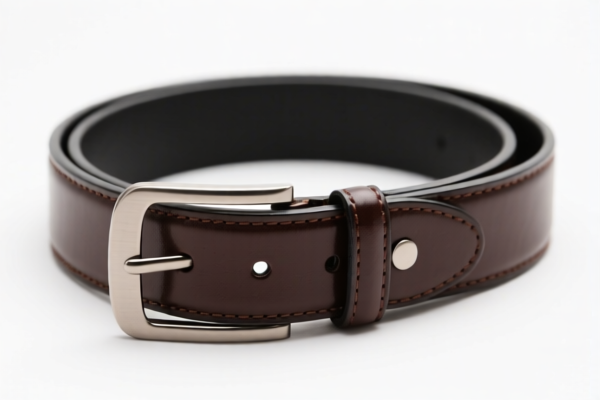
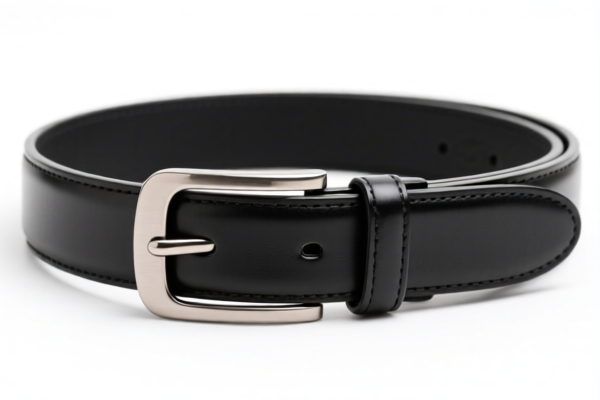
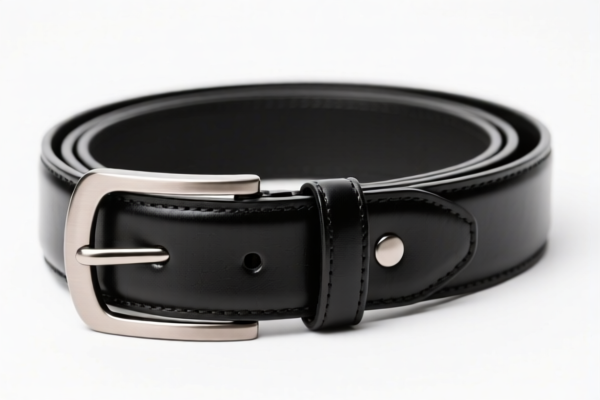
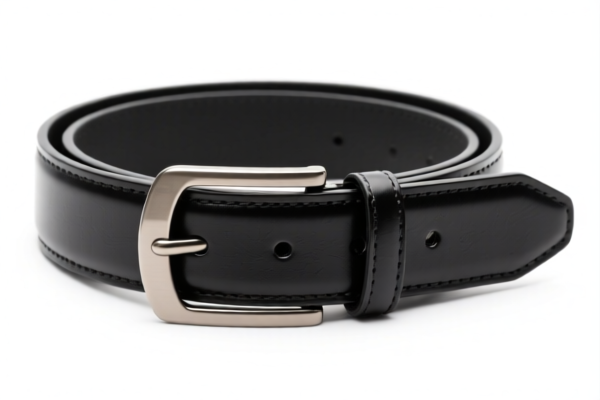
AI Analysis
🎡 PU Belts (Polyurethane Timing/Drive Belts)
🌐 HS Code Reference & Clearance Guide | 2026 Latest Tariff Analysis | Professional通关 Strategy
📌 Part I: Product Definition & Classification: What exactly is a "PU Belt"?
Polyurethane (PU) belts are industrial components used for power transmission, indexing, or conveying. In international trade, they are often misclassified due to the composite nature of their materials (rubber-like outer layer, fiberglass/cord core, fabric lining).
The key to correct classification lies in the primary function and material composition: * Textile/Fabric-based Belts: If the belt is primarily identified by its textile fabric structure (even if coated with PU), it may fall under Chapter 59 (Textile Articles). * Plastic/Rubber-based Belts: If the belt is considered a finished plastic article or a specific type of plastic belt without textile dominance, it may fall under Chapter 39 (Plastics) or Chapter 40/42 depending on specific sub-category interpretations.
⚠️ Critical Distinction Point:
- If the belt is considered a textile product (fabric backing dominates) → Chapter 59
- If the belt is considered a plastic article (polyurethane dominates as a plastic form) → Chapter 39
- If classified as an accessory (like a strap/buckle item) → Chapter 42
📦 Part II: HS Code Classification Details (2026 Latest Tariff Authoritative Comparison)
| HS Code | Product Description | Application Scenario | Primary Material Focus |
|---|---|---|---|
5911.10.20.00 |
Textile/Fabric products made of rubber, leather, or other materials (PU Round Belts) | Industrial transmission belts with fabric reinforcement | ✅ Textile/Fabric base |
3926.90.60.90 |
Other articles of plastics: Other belts and belting (PU Round Belts) | Plastic-dominated belts, industrial PU straps | ✅ Plastic/PU dominance |
5911.10.10.00 |
Belt-shaped textile/fabric products made of Polyurethane (PU) | Specific PU-coated textile belts | ✅ PU-coated Textile |
4203.30.00.00 |
Belts, not of textile: Belts with buckles, of leather or composition leather | Synthetic leather belts, fashion accessories, or specific buckle-equipped PU belts | ✅ Leather/Composition |
4203.40.60.00 |
Leather or composition leather articles of clothing accessories | PU belts classified as clothing accessories (e.g., fashion belts) | ✅ Clothing Accessory |
🔍 Key Reminder:
- Industrial PU Round Belts are most commonly classified under 5911 (Textile articles) or 3926 (Plastic articles) depending on whether the textile backbone is considered essential.
- Fashion/Strap-style PU belts are often misclassified; if they have buckles and are for clothing, they may fall under 4203, but this is rare for industrial "round belts."
- Misclassification Risk: Classifying an industrial transmission belt as a "clothing accessory" (4203) is a common error that leads to duty evasion claims.
💰 Part III: 2026 Latest Tariff Rate Details (Including Surcharges & Policy Add-ons)
✅ Applicable Country: United States (US)
✅ Origin: China (CN)
✅ Effective Date: From November 10, 2025 (including subsequent imports)
🎯 1. 5911.10.20.00 —— Textile/Fabric Products (PU Round Belts)
| Item | Content |
|---|---|
| Base Tariff | 3.8% (ad valorem) |
| Section 301 Surcharge | +25.0% |
| Section 122 Tariff | +10.0% |
| Total Rate | 38.8% |
| Tax Calculation | CIF Value × 38.8% |
| De Minimis Eligibility | ❌ Not Allowed (deny_de_minimis) |
| Legal Basis Path | USITC:5911.10.20.00 → Section 301: 25% → Section 122: 10% |
📌 Explanation:
- Base Tariff 3.8%: Standard Most Favored Nation (MFN) rate for textile articles.
- Section 301 (+25%): Trump-era tariff retained under Biden administration for Chinese goods.
- Section 122 (+10%): Section 232/122 tariffs often applied to steel/aluminum, but specific administrative rulings may apply to certain industrial inputs; in this dataset, it is explicitly listed as 10%.
- Total 38.8%: High burden for industrial components.
🎯 2. 3926.90.60.90 —— Other Articles of Plastics (PU Round Belts)
| Item | Content |
|---|---|
| Base Tariff | 4.2% |
| Section 301 Surcharge | +25.0% |
| Section 122 Tariff | +10.0% |
| Total Rate | 39.2% |
| Tax Calculation | CIF Value × 39.2% |
| De Minimis Eligibility | ❌ Not Allowed |
| Legal Basis Path | USITC:3926.90.60.90 → Section 301: 25% → Section 122: 10% |
📌 Note:
- This classification treats the PU belt as a plastic article.
- The rate is slightly higher (39.2%) than the textile classification due to a higher base tariff (4.2% vs 3.8%).
- Useful if the textile component is minimal or not structurally dominant.
🎯 3. 5911.10.10.00 —— Belt-shaped Textile/Fabric Products (Polyurethane)
| Item | Content |
|---|---|
| Base Tariff | 2.9% |
| Section 301 Surcharge | +25.0% |
| Section 122 Tariff | +10.0% |
| Total Rate | 37.9% |
| Tax Calculation | CIF Value × 37.9% |
| De Minimis Eligibility | ❌ Not Allowed |
| Legal Basis Path | USITC:5911.10.10.00 → Section 301: 25% → Section 122: 10% |
📌 Note:
- This is the lowest total tariff (37.9%) among the textile/plastic belt options.
- Applies when the belt is strictly defined as a "belt-shaped textile product" made of PU.
- Strategy: If your belt is textile-backed, aim for this code if technically accurate.
🎯 4. 4203.30.00.00 —— Belts with Buckles (Leather/Composition Leather)
| Item | Content |
|---|---|
| Base Tariff | 2.7% |
| Section 301 Surcharge | +25.0% |
| Section 122 Tariff | +10.0% |
| Total Rate | 37.7% |
| Tax Calculation | CIF Value × 37.7% |
| De Minimis Eligibility | ❌ Not Allowed |
| Legal Basis Path | USITC:4203.30.00.00 → Section 301: 25% → Section 122: 10% |
📌 Warning:
- Only applies if the PU belt has a buckle and is used as a clothing accessory (e.g., fashion belt).
- Industrial round belts DO NOT qualify. Misclassifying industrial belts here is high-risk.
- Lowest base rate (2.7%), but strict functional definition.
🎯 5. 4203.40.60.00 —— Articles of Clothing Accessories (Leather/Composition)
| Item | Content |
|---|---|
| Base Tariff | 0.0% |
| Section 301 Surcharge | +25.0% |
| Section 122 Tariff | +10.0% |
| Total Rate | 35.0% |
| Tax Calculation | CIF Value × 35.0% |
| De Minimis Eligibility | ❌ Not Allowed |
| Legal Basis Path | USITC:4203.40.60.00 → Section 301: 25% → Section 122: 10% |
📌 Warning:
- Lowest total tariff (35.0%), but only for clothing accessories.
- If you are importing industrial PU belts for machinery, this code is incorrect.
- Used for fashion belts, watch straps, or other apparel-related PU accessories.
🛠️ Part IV: Clearance Practical Advice (Real-world Pitfall Avoidance Guide)
✅ 1. Preparation Checklist (Missing items are critical)
| Document | Required? | Description |
|---|---|---|
| ✅ Product Specification Sheet | ✔️ | Must detail: Material composition (PU %, fabric %, core type), dimensions, tensile strength, intended use (industrial vs. fashion). |
| ✅ Cross-section Diagram | ✔️ | Crucial to prove if textile backbone dominates (for Ch 59) or if plastic dominates (for Ch 39). |
| ✅ Product Photos | ✔️ | Clear shots of ends, texture, and any buckles (if applicable). |
| ✅ Commercial Invoice | ✔️ | Must specify "Polyurethane Timing Belt" or "Industrial Drive Belt" – do not use generic "Belt." |
| ✅ Declaration of Non-Textile Dominance | ✔️ | If claiming Ch 39, provide lab test showing PU weight >50% or functional dominance. |
| ✅ Origin Certificate | ✔️ | For verifying China origin and applying Section 301/122 correctly. |
✅ 2. Declaration Tips (Key Mantra)
🔥 "Function Determines Chapter, Structure Decides Code, Buckle Changes Category!"
| Situation | Correct Declaration | Error to Avoid |
|---|---|---|
| Industrial Round Belt (No buckle, for machines) | 5911.10.10.00 or 5911.10.20.00 |
Misclassifying as 3926 → Higher base duty |
| Industrial Round Belt (Plastic-dominant, no textile) | 3926.90.60.90 |
Misclassifying as Textile → Incorrect legal basis |
| Fashion Belt (With buckle, for clothing) | 4203.30.00.00 or 4203.40.60.00 |
Misclassifying as Industrial → Penalty for undervaluation |
| Pure Plastic Strap (No textile, no buckle) | 3926.90.60.90 |
Misclassifying as 5911 → Rejection |
✅ 3. Special Case Handling
| Scenario | Handling Advice |
|---|---|
| Custom Industrial Belt | Provide detailed engineering drawings. If textile is coated, lean towards 5911. |
| Belt with Buckle for Machinery | Do NOT use Ch 42. Industrial belts with buckles are still usually Ch 59 or 39. |
| PU Material vs. Rubber | If it's Polyurethane, it's often Ch 39 or 59. If it's Rubber, it might be Ch 40. Clarify material! |
| Low-Value Samples | Still subject to Section 301/122. De Minimis does not apply to Chinese-origin goods under these sections. |
🌍 Part V: Global Market Clearance Comparison (2026 Latest)
| Country/Region | Recommended HS Code | Total Tariff (China Origin) | Certification | Notes |
|---|---|---|---|---|
| 🇺🇸 USA | 5911.10.10.00 / 3926.90.60.90 |
37.9% ~ 39.2% | None specific | High additional tariffs (35-39%). |
| 🇨🇳 China | 5911.10.10.00 |
~5-7% | None | Lower base rates. |
| 🇪🇺 EU | 5911.10.10.00 |
~4-6% | CE (if machinery) | No Section 301/122. |
| 🇬🇧 UK | 5911.10.10.00 |
~4-6% | UKCA | Post-Brexit tariffs apply. |
| 🇨🇦 Canada | 5911.10.10.00 |
~5-10% | None | CUSMA benefits if Canadian/Mexican origin. |
📌 Conclusion:
- USA has the highest cost due to layered tariffs.
- Textile-based classification (5911) is generally safer for industrial belts.
- Clothing accessory classification (4203) should be strictly reserved for fashion items.
📌 Part VI: Common Errors & Pitfall Guide (Lessons Learned)
❌ Error 1: Classifying industrial PU belts as "Plastic Articles" (3926) when they have a strong textile backing.
👉 Consequence: Customs may reclassify to 5911, leading to disputes or delays, though rates are similar.
❌ Error 2: Classifying industrial belts as "Clothing Accessories" (4203) to get lower tariffs (35%).
👉 Consequence: Severe Penalty. This is considered fraud. Industrial belts are not clothing.
❌ Error 3: Ignoring Section 122 Tariff.
👉 Consequence: Underpayment of 10%. US Customs will assess interest and penalties.
❌ Error 4: Using "Belt" as the product name without specifying "Polyurethane" or "Timing."
👉 Consequence: Customs cannot determine classification. Leads to Exam Hold.
✅ Correct Practice:
"Polyurethane Timing Belt, Industrial Grade, Fabric Backed, Model PT-100, for Conveyor Systems"
🎯 Part VII: Conclusion: Professional Declaration Saves Money!
🎯 Remember the Mantra:
🔹 "Industrial = Ch 59/39, Fashion = Ch 42. No De Minimis for China. Always Pay the 35-39%!"
🔹 "HS Code determines duty, Misclassification risks fines, Declare Clearly, Avoid Delays!"
📌 Tips:
- If your PU belt is 100% plastic with no textile, consider 3926.90.60.90 (39.2%).
- If it has a textile backbone, 5911.10.10.00 (37.9%) is usually the best fit for industrial use.
- Fashion belts with buckles can use 4203.40.60.00 (35.0%).
📣 Immediate Action:
📞 Consult a customs broker + Provide technical specs + Verify material composition
🚀 Ensure smooth clearance, avoid penalties, and optimize costs!
✨ Professional clearance starts with accurate classification!
💼 Every dollar of tariff should be legally minimized!
Customer Reviews
About HS Code Classification
The Harmonized System (HS) is an internationally standardized nomenclature developed by the World Customs Organization (WCO) to classify traded products. Over 200 countries use the HS system as the basis for customs tariffs, trade statistics, and import/export regulations.
Each HS code follows a hierarchical structure:
- Chapter (2 digits) — Broad category of goods (e.g., Chapter 84: Machinery and Mechanical Appliances)
- Heading (4 digits) — More specific grouping within the chapter
- Subheading (6 digits) — Internationally standardized breakdown, used by all WCO member countries
- National subdivisions (8-10 digits) — Country-specific extensions for further classification, such as US HTSUS 10-digit codes
Correct HS code classification is essential for smooth customs clearance, accurate duty payment, and compliance with trade regulations. Misclassification can lead to customs delays, overpayment of duties, or penalties.
When importing from CN to US, the applicable tariff rates may include:
- Most-Favored-Nation (MFN) rate — The standard duty rate applied to WTO members
- General rate — Applied to countries without trade agreements
- Trade remedy duties — Additional tariffs such as Section 301 (anti-dumping), Section 232 (national security), or countervailing duties
The information provided on this page is for reference purposes only. For official classification, please consult with your local customs authority or a licensed customs broker.