pull band
CN → US| HS Code | Tariff Rate | Origin | Destination | Doc |
|---|---|---|---|---|
| 4016993510 | 35.0% | CN | US | Official Doc |
| 4016996050 | 37.5% | CN | US | Official Doc |
| 9503000090 | 10.0% | CN | US | Official Doc |
| 9506996080 | 21.5% | CN | US | Official Doc |
| 9506910030 | 22.1% | CN | US | Official Doc |
Product Images
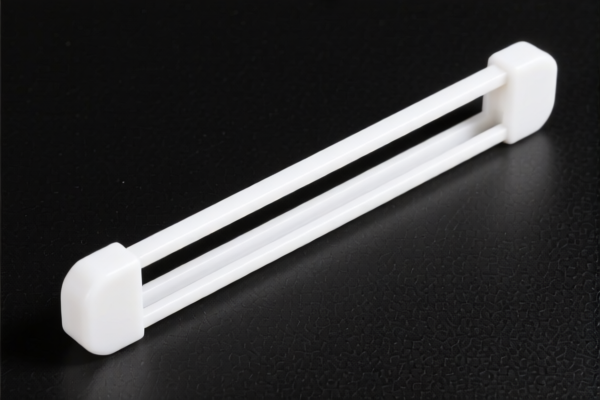
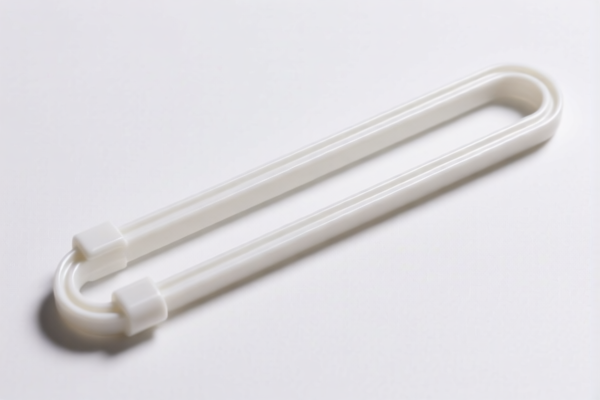
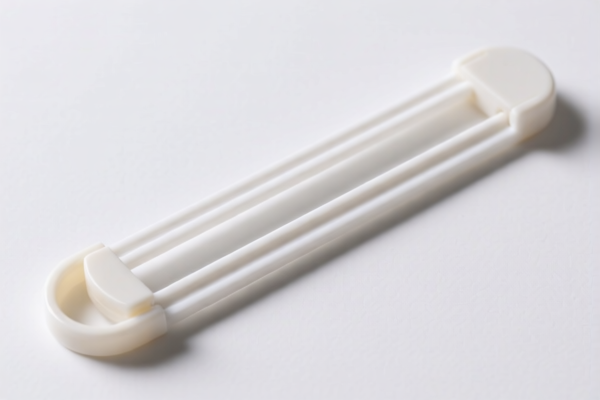
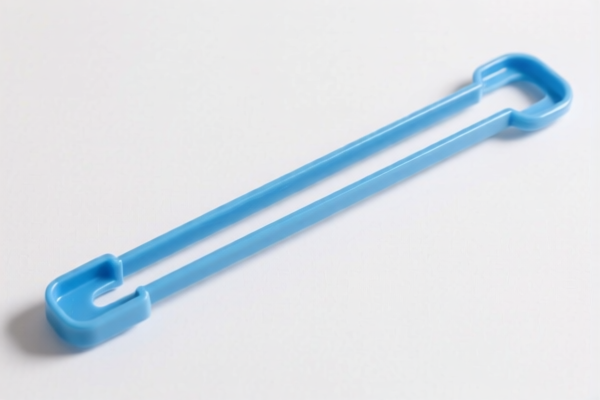
AI Analysis
💪 Pull Bands (Resistance Bands) | 2026 HS Code Classification & Customs Clearance Guide
🌐 HS Code Reference & Clearance Guide | Latest 2026 Tariff Analysis | Professional Strategy for Elastomers vs. Sports Equipment
📌 I. Product Definition & Classification: What Exactly Is a "Pull Band"?
Pull Bands (Resistance Bands) are elastic fitness tools primarily used for strength training, physical therapy, and rehabilitation. In international trade, their classification hinges on a critical dichotomy: Are they classified as "Plastic/Elastic Goods" or "Sports Equipment"?
- Category A: Rubber/Elastomer Products (
4016): Defined by their material composition. If the band is primarily viewed as a molded rubber item, it falls under Chapter 40 (Rubber and articles thereof). This often incurs higher tariffs due to "Section 301" and "IEEPA" add-ons. - Category B: Sports/Fitness Equipment (
9503/9506): Defined by their function. If viewed as a generic sports accessory or toy, it falls under Chapter 95. This often attracts lower or zero base tariffs, though specific "122 Clause" taxes may apply.
⚠️ Key Distinction Point:
- If the product is purely elastic rubber without complex mechanical parts → Consider 4016.99.35.10 / 4016.99.60.50 (High Tax).
- If marketed as general fitness equipment or playground toy → Consider 9503.00.00.90 / 9506.99.60.80 (Lower Tax).
- Critical Note: The U.S. Customs and Border Protection (CBP) often scrutinizes rubber bands under Chapter 40 if they are basic elastic goods. However, if explicitly designed for gym use, Chapter 95 arguments are common but risky.
📦 II. HS Code Classification Details (2026 Latest Tariff Schedule)
| HS Code | Product Description | Applicability / Rationale | Base Duty | Add-ons | Total Tax Rate |
|---|---|---|---|---|---|
9503.00.00.90 |
Other toys, scaled models, and similar recreational models | Categorized as "Other sports-related toys or fitness aids." Broadest "toy/fitness" category. | 0.0% | 10% (122 Clause) | 10.0% |
9506.99.60.80 |
Other sports equipment (specifically steel/aluminum/copper components involved) | Categorized as "Other sports equipment." Note: Text mentions "Steel, Aluminum, Copper products add 50%," implying potential metal-core bands or heavy-duty gear. | 4.0% | 7.5% (Sec 301) + 10% (122 Clause) + 50% (Metal Add-on) | 21.5% |
9506.91.00.30 |
Other equipment for general physical education | Categorized as "General sports/fitness equipment." | 4.6% | 7.5% (Sec 301) + 10% (122 Clause) + 50% (Metal Add-on) | 22.1% |
4016.99.35.10 |
Other rubber articles, including rubber bands | Categorized by material: "Elastic rubber," fits "Vulcanized rubber articles." | 0.0% | 25.0% (Sec 301) + 10% (122 Clause) | 35.0% |
4016.99.60.50 |
Other rubber articles, including rubber fabrics | Categorized by material: "Elastic rubber or rubber-containing fabric." | 2.5% | 25.0% (Sec 301) + 10% (122 Clause) | 37.5% |
🔍 Critical Warning:
- 9506 Codes (21.5%-22.1%): These seem high because the source data includes a 50% surcharge for Steel, Aluminum, and Copper products. If your pull bands are 100% rubber/latex with no metal cores or clips, you should argue against this classification to avoid the 50% penalty. However, if they contain metal components, this tax is inevitable. - 4016 Codes (35.0%-37.5%): These are purely material-based. No metal penalty, but high Section 301/IEEPA base. - 9503 Code (10.0%): The lowest tax rate, but requires convincing CBP that it is a "toy" or "general fitness aid" not covered by specific sports equipment rules.
💰 III. 2026 Detailed Tariff Breakdown (US Market, China Origin)
✅ Applicable Country: USA (US)
✅ Origin: China (CN)
✅ Effective Date: Post-November 2025 (Current Regime)
🎯 1. 9503.00.00.90 — The "Lowest Tax" Candidate (Toys/Fitness Aids)
| Item | Content |
|---|---|
| Base Duty | 0.0% |
| Sec 301 Add-on | 0.0% |
| IEEPA/122 Clause | +10% |
| Total Rate | 10.0% |
| Tax Calculation | CIF Value × 10% |
| De Minimis? | ❌ No (Section 321 de minimis is usually void for Chinese goods under current enforcement) |
| Legal Path | HTS:9503.00.00.90 → NOTE:122 |
📌 Explanation:
This is the most favorable classification if accepted. It treats pull bands as general recreational items. Avoids the heavy 25% Section 301 tax because it's classified under Chapter 95 (Toys/Sports) rather than Chapter 40 (Rubber).
🎯 2. 9506.99.60.80 & 9506.91.00.30 — The "Metal Penalty" Trap
| Item | Content |
|---|---|
| Base Duty | 4.0% ~ 4.6% |
| Sec 301 Add-on | +7.5% |
| IEEPA/122 Clause | +10% |
| Metal Surcharge | +50% (For Steel, Aluminum, Copper products) |
| Total Rate | 21.5% ~ 22.1% |
| Tax Calculation | CIF Value × (21.5% or 22.1%) |
| De Minimis? | ❌ No |
| Legal Path | HTS:9506.99.60.80 → NOTE:Metal 50% |
📌 Warning:
- The 50% additional tariff is applied to steel, aluminum, and copper articles. If your pull bands are pure latex/rubber, you should not use this code. Using this code for pure rubber bands may be challenged by CBP as incorrect classification, leading to audits. - If your bands have metal handles, carabiners, or steel fibers, this classification might be forced, resulting in a 22.1% effective tax.
🎯 3. 4016.99.35.10 & 4016.99.60.50 — The "Material-Based" High Tax
| Item | Content |
|---|---|
| Base Duty | 0.0% ~ 2.5% |
| Sec 301 Add-on | +25.0% |
| IEEPA/122 Clause | +10% |
| Total Rate | 35.0% ~ 37.5% |
| Tax Calculation | CIF Value × (35.0% or 37.5%) |
| De Minimis? | ❌ No |
| Legal Path | HTS:4016.99... → NOTE:301 25% |
📌 Explanation:
- Chapter 40 (Rubber) attracts the full 25% Section 301 tariff. -4016.99.35.10(0% base) is slightly better than4016.99.60.50(2.5% base). - These codes are appropriate if CBP insists the product is a "rubber good" rather than "sports equipment."
🛠️ IV. Customs Clearance Practical Advice (Avoid Pitfalls)
✅ 1. Preparation Checklist (Must-Haves)
| Document | Required | Explanation |
|---|---|---|
| ✅ Product Specifications | ✔️ | Detail material (e.g., "100% Natural Latex," "TPE," "Fabric"). Crucial for proving no metal content. |
| ✅ Material Composition Report | ✔️ | Prove absence of steel/aluminum cores to avoid the 50% metal surcharge in Chapter 95. |
| ✅ Product Photos | ✔️ | Show the entire band, handles, and packaging. Label must match description. |
| ✅ Commercial Invoice | ✔️ | Clearly state "Resistance Pull Band for Fitness Use" or "Therapeutic Rubber Band." |
| ✅ Customs Ruling Request | ✔️ | Highly Recommended. Apply for a binding ruling to confirm whether it’s 9503 (Toy/Fitness) or 4016 (Rubber). |
| ✅ FCC Certification | ✔️ | If electronic resistance bands (smart bands), FCC is required. If passive bands, not needed. |
✅ 2. Declaration Strategy (Key Mantra)
🔥 "Material Matters, Metal Triggers Tax, Function Defines Chapter!"
| Scenario | Recommended HS Code | Why? |
|---|---|---|
| Pure Latex/TPE Bands | 9503.00.00.90 |
Argue as "General Fitness Toy/Aid" to get 10% tax. Avoid Chapter 40 (35%) and Chapter 95 Metal Penalty (22%). |
| Bands with Metal Clips/Handles | 9506.99.60.80 |
If metal is integral, you must pay the 22.1% tax. Do not try to hide it. |
| Therapeutic Rubber Bands (Medical) | 9503.00.00.90 or 4016.99.35.10 |
If marketed as medical, check medical exemptions. Otherwise, 9503 is safer if CBP accepts "fitness aid." |
| Fabric-Embedded Rubber Bands | 4016.99.60.50 |
If heavily fabric-reinforced, CBP may reject Chapter 95 and push to Chapter 40. Expect 37.5%. |
⚠️ Avoid:
- Declaring pure rubber bands as9506with metal components listed → Audit Risk.
- Declaring fabric-reinforced bands as9503→ CBP may reclassify to4016.
✅ 3. Special Cases
| Situation | Handling Advice |
|---|---|
| OEM Private Label | Provide contract + design specs. Show it’s a generic fitness tool, not a specialized medical device. |
| Smart Bands (Electronics) | If it has sensors/electronics, it may fall under Chapter 85 (Electrical machinery), not 95 or 40. Tax will differ! |
| Bulk Wholesale vs. Retail | Retail packaging supports "Toy/Fitness" (9503). Bulk industrial packs may be seen as "Rubber Goods" (4016). |
| Origin Labeling | Must clearly state "Made in China." No de minimis exemption for Chinese goods under current 301/IEEPA rules. |
🌍 V. Global Market Comparison (2026)
| Country/Region | Recommended HS Code | Estimated Duty (China Origin) | Notes |
|---|---|---|---|
| 🇺🇸 USA | 9503.00.00.90 |
10% | Best case. If reclassified to 4016, jumps to 35%. |
| 🇨🇳 China | 9506.99.00.00 |
~0-5% | Import duty is low, but VAT applies. No Section 301. |
| 🇪🇺 EU | 9506.99.00 |
0% | Generally low duty for sports goods. No US-style punitive tariffs. |
| 🇬🇧 UK | 9506.99.00 |
0% | Post-Brexit, similar to EU. |
| 🇦🇺 Australia | 9506.99.00 |
5% | Low base tariff. No major punitive add-ons. |
📌 Conclusion:
- The USA is the most complex market due to Section 301 and IEEPA tariffs.
- Classification as9503(10%) is the goal, but requires strong documentation proving it’s a "fitness toy/aid" and not a "rubber article" (4016- 35%).
- Avoid9506with metal surcharges unless your product contains metal.
📌 VI. Common Mistakes & Pitfalls (Lessons Learned)
❌ Mistake 1: Classifying all rubber bands as 4016 without checking Chapter 95 options.
👉 Result: Paying 35-37.5% tax instead of potentially 10%.
👉 Fix: Always argue for 9503 if the product is clearly for fitness/recreation.
❌ Mistake 2: Using 9506 codes for pure rubber bands.
👉 Result: CBP may assess the 50% metal surcharge erroneously if the description is vague.
👉 Fix: Be explicit: "No Metal Components."
❌ Mistake 3: Ignoring "122 Clause" (IEEPA).
👉 Result: Even if base duty is 0%, you still pay 10% on top.
👉 Fix: Factor 10% into all cost calculations for US imports.
❌ Mistake 4: Declaring "Plastic Bands" when they are Rubber.
👉 Result: Material mismatch → Customs delay, fines, or reclassification.
👉 Fix: Accurately state "Latex," "TPE," or "Thermoplastic Elastomer."
✅ Correct Approach:
"Resistance Pull Band, 100% Natural Latex, No Metal Parts, For Home Fitness Use, Model XYZ, BPA-Free."
🎯 VII. Conclusion: Smart Classification, Smarter Profits
🎯 Key Takeaway:
🔹 "For Pure Rubber Bands: Aim for
9503.00.00.90(10%)!"
🔹 "If Metal Exists: Prepare for9506(22.1%) or4016(35%)."
🔹 "Never assume Chapter 40 is the only path; Chapter 95 is the sweet spot if accepted!"
📌 Pro Tip:
Apply for a CBP Binding Ruling before your first shipment. It costs money but saves thousands in potential duties.
📞 Consult a Customs Broker to draft the description that emphasizes "Fitness Toy" rather than "Rubber Article."
📣 Take Action:
📦 Prepare Spec Sheets highlighting "No Metal" & "Fitness Use."
📝 Draft Invoice Description: "Fitness Resistance Pull Band (Non-Metallic)."
🚀 Maximize Margin by Minimizing Duty!
✨ Precise Classification Saves Money!
💼 Your Duty Bill Should Reflect Your Product, Not Just Your Material!
Customer Reviews
About HS Code Classification
The Harmonized System (HS) is an internationally standardized nomenclature developed by the World Customs Organization (WCO) to classify traded products. Over 200 countries use the HS system as the basis for customs tariffs, trade statistics, and import/export regulations.
Each HS code follows a hierarchical structure:
- Chapter (2 digits) — Broad category of goods (e.g., Chapter 84: Machinery and Mechanical Appliances)
- Heading (4 digits) — More specific grouping within the chapter
- Subheading (6 digits) — Internationally standardized breakdown, used by all WCO member countries
- National subdivisions (8-10 digits) — Country-specific extensions for further classification, such as US HTSUS 10-digit codes
Correct HS code classification is essential for smooth customs clearance, accurate duty payment, and compliance with trade regulations. Misclassification can lead to customs delays, overpayment of duties, or penalties.
When importing from CN to US, the applicable tariff rates may include:
- Most-Favored-Nation (MFN) rate — The standard duty rate applied to WTO members
- General rate — Applied to countries without trade agreements
- Trade remedy duties — Additional tariffs such as Section 301 (anti-dumping), Section 232 (national security), or countervailing duties
The information provided on this page is for reference purposes only. For official classification, please consult with your local customs authority or a licensed customs broker.