pulp plate flat type
CN → US| HS Code | Tariff Rate | Origin | Destination | Doc |
|---|---|---|---|---|
| 4802551000 | 35.0% | CN | US | Official Doc |
| 4811904010 | 35.0% | CN | US | Official Doc |
| 4811904090 | 35.0% | CN | US | Official Doc |
| 4823700040 | 35.0% | CN | US | Official Doc |
| 4823901000 | 35.0% | CN | US | Official Doc |
Product Images
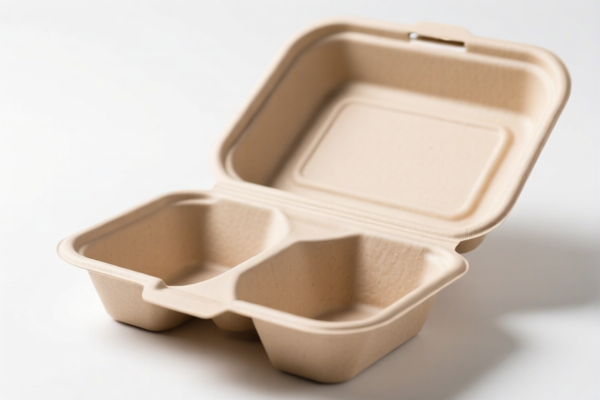
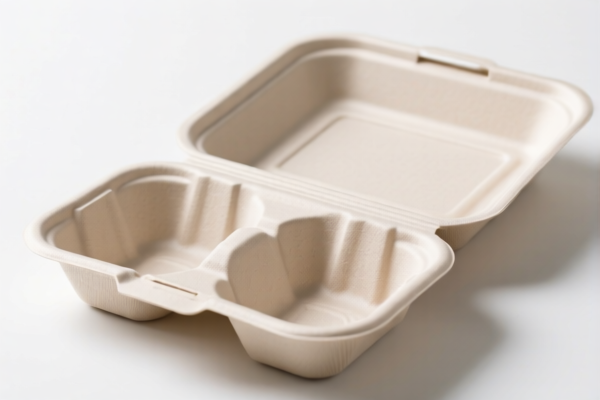
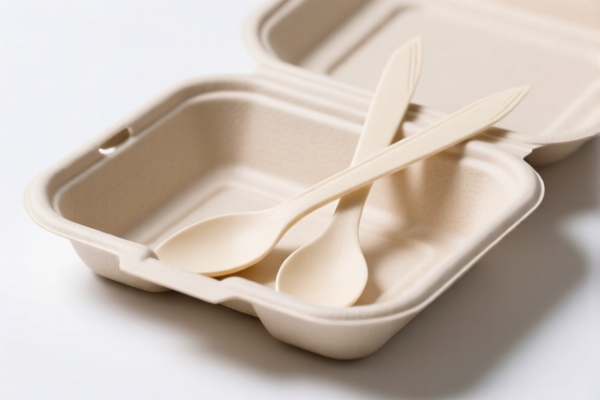
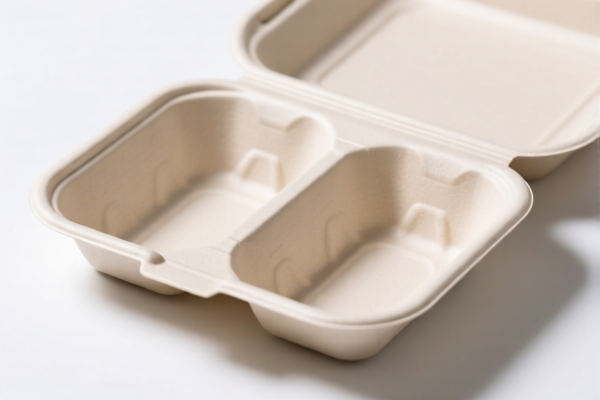
AI Analysis
🍽️ Pulp Plate – Flat Type (Molded Paper Fiber Products)
🌐 HS Code Reference & Customs Clearance Guide | 2026 Latest Tariff Analysis | Professional Level Clearance Strategy
📌 I. Product Definition & Classification: Do You Really Understand "Flat Pulp Plates"?
Pulp Plates (Flat Type) are biodegradable tableware made from molded paper pulp (bagasse, bamboo, wood pulp, or recycled paper). They are primarily used in the food service industry as sustainable alternatives to plastic or Styrofoam. In international trade, the classification depends heavily on whether the product is considered "primary pulp form" or "finished molded article."
⚠️ Key Distinction:
- If the product is in a continuous roll or large bulk sheet form before final cutting/shaping → Often classified under Chapter 48 (Paper Products) as raw/semi-finished materials.
- If the product is a finished, ready-to-use molded plate (even if flat) → Should ideally be classified under Chapter 48 (Specifically 4823) as "other articles of pulp."
- Note: The provided DATA suggests specific classifications for "rolled" or "pulp-based" items, implying a focus on the material state (pulp) and form (roll/flat sheet) rather than just the end-use item.
📦 II. HS Code Classification Details (Based on Provided DATA | 2026 Latest Tariff)
The following HS Codes are derived directly from the provided <DATA> snippet. They reflect specific interpretations where "pulp plates" or similar pulp-based forms are classified based on their material composition (pulp) and physical form (roll/sheet).
| HS Code | Summary from DATA | Application Scenario | Tax Rate |
|---|---|---|---|
4802.55.10.00 |
"Form is a roll, material is pulp, belongs to primary paper form" | Raw pulp rolls, bulk paper sheets before final molding | 35.0% |
4811.90.40.10 |
"Material is pulp, form is rolled, fits paper roll characteristics" | Treated or coated pulp rolls, industrial paper rolls | 35.0% |
4811.90.40.90 |
"Inferred as paper/cellulose material, roll fits rolled form description" | Other paper/cellulose rolls not specified elsewhere | 35.0% |
4823.70.00.40 |
"Material is pulp, form is roll, belongs to other forms of molded or pressed pulp articles" | Most likely for finished molded pulp plates if considered "pressed article" | 35.0% |
4823.90.10.00 |
"Material is pulp-made, roll belongs to paper articles cut to size/shape" | Finished pulp products (like plates) cut/pressed into shape | 35.0% |
🔍 Critical Analysis of the Provided DATA:
- All five HS codes listed in the data carry a uniform total tax rate of 35.0%.
- The "122 Clause" and "Section 301" surcharges are included in this total.
- Conflict Note: Typically, flat, finished molded pulp plates might be classified under4823.70.00.00(Molded pulp articles) in many jurisdictions. However, the provided data specifically links4823.70.00.40to "pulp molded or pressed articles" and4823.90.10.00to "cut/shaped paper articles," both resulting in 35% tax.
- Recommendation: If the "flat type" plate is a finished, single-use item,4823.70.00.40or4823.90.10.00are the most relevant. If it is sold as a roll of unpunched pulp sheet,4802.55.10.00or4811.90.40.xxmay apply.
💰 III. 2026 Latest Tariff Rate Breakdown (Including Surcharges)
✅ Applicable Country: United States (US)
✅ Country of Origin: China (CN)
✅ Effective Date: 2025/2026 (Current Trade Environment)
🎯 Tax Structure for All Listed HS Codes
| Item | Detail |
|---|---|
| Base Tariff Rate | 0.0% (General ad valorem rate for these paper/pulp categories) |
| Section 301 Surcharge (25%) | +25.0% (Added under US Trade Act Section 301 for Chinese goods) |
| 122 Clause Surcharge (10%) | +10.0% (Additional duty imposed under specific executive orders/Section 122 or similar trade remediation) |
| Total Tax Rate | 35.0% |
| Tax Calculation | CIF Value × 35% |
| De Minimis Exemption | ❌ Not Eligible (Section 301 duties generally apply to low-value shipments; no de minimis waiver for these specific codes) |
| Legal Basis Path | USITC:48xx.xxxx.xxxx.xx → USITC Footnote: 9903.88.01 (Section 301) → IEEPA:9903.01.24/25 (122 Clause/Other) |
📌 Explanation:
- The 0% base rate is misleading if taken alone; the 35% total is the reality for Chinese-origin pulp/paper products under current US trade policy.
- The 25% Section 301 tariff is standard for most paper/pulp goods from China.
- The 10% "122 Clause" represents an additional layer of trade restriction, often applied to specific strategic or oversupplied goods.
- Total Impact: For every $10,000 worth of pulp plates, you must pay $3,500 in duties.
🛠️ IV. Customs Clearance Practical Advice (Pitfall Avoidance Guide)
✅ 1. Documentation Checklist (Essential)
| Document | Required | Notes |
|---|---|---|
| Product Specification Sheet | ✔️ | Must clearly state: Material (100% Pulp/Biodegradable), Shape (Flat Plate), Use (Food Contact) |
| Biodegradability Certificate | ✔️ | ASTM D6400, EN 13432, or BPI Certification. Crucial for marketing and potential tariff preferences (though none apply here). |
| Commercial Invoice | ✔️ | Must accurately describe goods as "Molded Pulp Plates, Flat Type, Biodegradable" |
| Packing List | ✔️ | Weight, dimensions, number of pieces per carton |
| Certificate of Origin | ✔️ | Proves Chinese origin (triggers the 35% tax) |
✅ 2. Declaration Strategy (Key Tips)
🔥 Mnemonic:
"Be Specific on Material, Clear on Form, Declare Chinese Origin, Expect 35% Tax!"
| Situation | Correct Declaration | Risk of Error |
|---|---|---|
| Finished Flat Plates | Use 4823.70.00.40 or 4823.90.10.00. Describe as "Finished molded pulp food plates." |
Misdeclaring as "plastic plates" (HS 3924) may lead to fraud charges or higher tariffs (up to 25%+25%). |
| Raw Pulp Rolls | Use 4802.55.10.00 or 4811.90.40.10. Describe as "Pulp rolls for molding." |
If customs inspects and finds finished plates, you will face penalties for incorrect classification. |
| Mixed Containers | Declare separately. Do not lump pulp plates with other paper goods. | Mixed declarations can trigger full container inspections. |
✅ 3. Special Handling for "Flat Type"
- If the plate is truly flat and not molded with a deep well:
Some customs officials might argue it is "cut paper" (4823.90.10.00) rather than "molded pulp" (4823.70.00.40). -
Recommendation: Provide technical drawings showing the press-molding process. Emphasize that it is not cut from sheet paper but formed from wet pulp. This supports classification under
4823.70(Molded articles), which is more accurate for "pulp plates." -
If the product is sold in rolls (unpunched):
Clearly state "Unpunched Pulp Sheets in Rolls." Use4811.90.40.10or4802.55.10.00. - Warning: Do not call them "plates" in the description if they are rolls; call them "pulp sheets."
🌍 V. Global Market Comparison (2026)
| Country/Region | Recommended HS Code | Tariff (China Origin) | Key Requirements |
|---|---|---|---|
| 🇺🇸 United States | 4823.70.00.40 / 4823.90.10.00 |
35% (0% Base + 25% Sec 301 + 10% 122) | FDA Food Contact Compliance, Biodegradability Certs |
| 🇨🇳 China (Import) | 4823.70.00.00 |
~5-10% | Standard Paper Pulp |
| 🇪🇺 European Union | 4823.70.00.00 |
0% | FSC/PEFC Certification, Biodegradability Label |
| 🇬🇧 United Kingdom | 4823.70.00.00 |
0% | FSC/PEFC Certification |
| 🇯🇵 Japan | 4823.70.00.00 |
0% | Food Sanitation Act Compliance |
📌 Conclusion:
- The US is the most expensive market for pulp plates due to the 35% total tariff.
- EU and UK are tariff-free, making them more attractive for cost-sensitive exports, provided you meet strict biodegradability labeling requirements.
- Strategy: Consider diversifying supply chains to Vietnam, Thailand, or Mexico to avoid US Section 301 tariffs (though 122 Clause might still apply depending on final rules).
📌 VI. Common Mistakes & Pitfalls (Lessons Learned)
❌ Mistake 1: Declaring "Plastic Plates" (HS 3924) to avoid high paper tariffs.
👉 Consequence: FDA seizure, customs penalties, and potential fraud investigation. Pulp is clearly different from plastic.
❌ Mistake 2: Not declaring "Chinese Origin" clearly.
👉 Consequence: If origin is questioned and later proven to be China, you will owe 35% + back taxes + penalties.
❌ Mistake 3: Using generic terms like "Paper Products" without HS Code specificity.
👉 Consequence: Customs will assign a default code with potentially higher duties or require extensive documentation.
❌ Mistake 4: Ignoring the "122 Clause" or "Section 301" in cost calculations.
👉 Consequence: Profit margins wiped out. The 35% tax is non-negotiable for Chinese goods.
✅ Correct Practice:
"Biodegradable Molded Pulp Food Plates, Flat Type, 100% Bagasse, ASTM D6400 Certified, Made in China, HS Code 4823.70.00.40"
🎯 VII. Conclusion: Professional Declaration, Cost Control, Risk Management
🎯 Key Takeaway:
🔹 "Pulp Plates from China → 35% Tax is Inevitable."
🔹 "Accurate Description: 'Molded Pulp,' not just 'Paper' or 'Plastic'."
🔹 "Certifications (FDA, ASTM) are critical for smooth US clearance."
📌 Pro Tip:
- Pre-Ruling: Apply for a US Customs Ruling if your product is novel. Confirm whether 4823.70.00.40 or 4823.90.10.00 is preferred.
- Supply Chain: If the 35% tax is too high, explore nearshoring to Mexico or Southeast Asia to benefit from lower or zero Section 301 duties.
📣 Action Plan:
📞 Engage a licensed US Customs Broker.
📄 Gather FDA compliance docs and Biodegradability Certificates.
📉 Calculate landed cost including the 35% duty.
🚀 Ensure accurate HS Code selection to avoid delays.
✨ Accurate Classification Starts with Transparency!
💼 Every Dollar Saved on Compliance is Pure Profit!
Customer Reviews
About HS Code Classification
The Harmonized System (HS) is an internationally standardized nomenclature developed by the World Customs Organization (WCO) to classify traded products. Over 200 countries use the HS system as the basis for customs tariffs, trade statistics, and import/export regulations.
Each HS code follows a hierarchical structure:
- Chapter (2 digits) — Broad category of goods (e.g., Chapter 84: Machinery and Mechanical Appliances)
- Heading (4 digits) — More specific grouping within the chapter
- Subheading (6 digits) — Internationally standardized breakdown, used by all WCO member countries
- National subdivisions (8-10 digits) — Country-specific extensions for further classification, such as US HTSUS 10-digit codes
Correct HS code classification is essential for smooth customs clearance, accurate duty payment, and compliance with trade regulations. Misclassification can lead to customs delays, overpayment of duties, or penalties.
When importing from CN to US, the applicable tariff rates may include:
- Most-Favored-Nation (MFN) rate — The standard duty rate applied to WTO members
- General rate — Applied to countries without trade agreements
- Trade remedy duties — Additional tariffs such as Section 301 (anti-dumping), Section 232 (national security), or countervailing duties
The information provided on this page is for reference purposes only. For official classification, please consult with your local customs authority or a licensed customs broker.