pulse oximeter
CN → US| HS Code | Tariff Rate | Origin | Destination | Doc |
|---|---|---|---|---|
| 9018199550 | 35.0% | CN | US | Official Doc |
| 9018195500 | 10.0% | CN | US | Official Doc |
| 9019200000 | 10.0% | CN | US | Official Doc |
| 9019106000 | 10.0% | CN | US | Official Doc |
Product Images
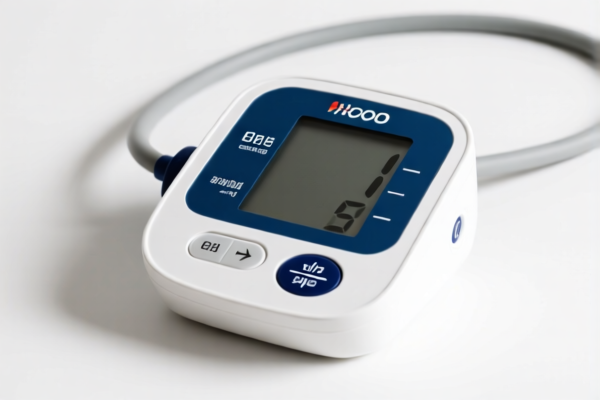



AI Analysis
🩺 Pulse Oximeter: Complete HS Code Guide & Global Clearance Strategy (2026)
🌐 HS Code Reference & Customs Clearance Guide | 2026 Latest Tariff Analysis | Professional Export Strategy
📌 One, Product Definition & Classification: Do You Really Know "Pulse Oximeters"?
A pulse oximeter is a non-invasive medical device that measures a patient's oxygen saturation (SpO₂) and pulse rate. In international trade, it falls under medical monitoring equipment, but classification depends heavily on its intended function and internal architecture.
Based on the 2026 tariff data, three primary HS Codes exist for pulse oximeters, each with vastly different tax implications:
⚠️ Critical Classification Distinction:
- If classified as "Other Electrophysiological Diagnostic Equipment" → High Tariff (35%)
- If classified as "Patient Monitoring Systems" → Low Tariff (10%)
- If classified as "Oxygen Therapy/Respiratory Support Devices" → Low Tariff (10%)
📦 Two, HS Code Classification Details (2026 Latest Tariff Authority)
| HS Code | Product Description | Functional Category | Total Tax Rate |
|---|---|---|---|
9018.19.95.50 |
Blood Oxygen Meter – Other electrophysiological diagnostic equipment | Fits "Other Instruments" under electrophysiological diagnostics | 35.0% |
9018.19.55.00 |
Blood Oxygen Meter – Patient monitoring system in electrophysiological devices | Fits "Patient Monitoring System" function definition | 10.0% |
9019.20.00.00 |
Blood Oxygen Meter – Oxygen therapy/respiratory assistance device | Fits "Oxygen therapy, aerosol therapy, artificial respiration" | 10.0% |
9019.10.60.00 |
Blood Oxygen Meter – Mechanical therapy/massage/testing instrument | Fits "Other categories" in mechanical therapy/testing | 10.0% |
🔍 Key Insight:
- The 35% tariff applies only if the device is strictly classified under 9018.19.95.50 as "other electrophysiological diagnostic equipment."
- All other classifications (9018.19.55.00, 9019.20.00.00, 9019.10.60.00) result in a 10% tariff, offering significant cost savings.
- No physical conflict exists between pulse oximeters and the "other categories" in 9019.10.60.00, allowing flexible classification.
💰 Three, 2026 Tariff Rate Breakdown (Including Add-ons & Policy Surcharges)
✅ Applicable Market: United States (US)
✅ Country of Origin: China (CN)
✅ Effective Date: From November 10, 2025 (including subsequent imports)
🎯 1. 9018.19.95.50 – Blood Oxygen Meter (High-Risk Classification)
| Item | Details |
|---|---|
| Base Tariff | 0% (ad valorem) |
| Section 301 Surcharge | +25% (USITC Footnote) |
| Section 122 Tariff | +10% (China-originating goods) |
| Total Tariff | 35.0% |
| Tax Calculation | CIF Value × 35% |
| De Minimis Exemption | ❌ Not Eligible (deny_de_minimis) |
| Legal Basis Path | Section 301 → Section 122 → 9018.19.95.50 |
📌 Explanation:
- The 25% Section 301 surcharge is the standard USITC additional tariff for medical diagnostic equipment from China.
- The 10% Section 122 tariff applies specifically to Chinese-originating pulse oximeters.
- Combined 35% tariff makes this classification extremely costly for exporters.
🎯 2. 9018.19.55.00 – Blood Oxygen Meter (Patient Monitoring System)
| Item | Details |
|---|---|
| Base Tariff | 0% |
| Section 301 Surcharge | +0% |
| Section 122 Tariff | +10% |
| Total Tariff | 10.0% |
| Tax Calculation | CIF Value × 10% |
| De Minimis Exemption | ❌ Not Eligible |
| Legal Basis Path | Section 122 → 9018.19.55.00 |
📌 Note:
- This classification treats the pulse oximeter as a patient monitoring system, avoiding the higher "electrophysiological diagnostic" surcharge.
- No Section 301 surcharge applies, resulting in a 25% tax saving compared to the high-risk classification.
🎯 3. 9019.20.00.00 – Blood Oxygen Meter (Oxygen Therapy Device)
| Item | Details |
|---|---|
| Base Tariff | 0% |
| Section 301 Surcharge | +0% |
| Section 122 Tariff | +10% |
| Total Tariff | 10.0% |
| Tax Calculation | CIF Value × 10% |
| De Minimis Exemption | ❌ Not Eligible |
| Legal Basis Path | Section 122 → 9019.20.00.00 |
📌 Note:
- This classification focuses on the respiratory support function of the device.
- Pulse oximeters that measure SpO₂ fall under "oxygen therapy" definitions, avoiding Section 301.
🎯 4. 9019.10.60.00 – Blood Oxygen Meter (Mechanical Therapy/Testing)
| Item | Details |
|---|---|
| Base Tariff | 0% |
| Section 301 Surcharge | +0% |
| Section 122 Tariff | +10% |
| Total Tariff | 10.0% |
| Tax Calculation | CIF Value × 10% |
| De Minimis Exemption | ❌ Not Eligible |
| Legal Basis Path | Section 122 → 9019.10.60.00 |
📌 Note:
- This classification treats the pulse oximeter as a testing instrument without material or form conflicts.
- Ideal for devices marketed primarily as diagnostic/monitoring tools rather than therapeutic.
🛠️ Four, Practical Customs Clearance Recommendations (Pitfall Avoidance Guide)
✅ 1. Essential Documentation Checklist (Non-Negotiable)
| Document | Required | Purpose |
|---|---|---|
| ✅ Product Specification Sheet | ✔️ | Must include SpO₂ range, pulse rate range, accuracy, battery type, and operating temperature |
| ✅ Technical Drawing/Structure Diagram | ✔️ | To prove device function (monitoring vs. therapeutic) |
| ✅ Product Photos (with Label) | ✔️ | Clear view of model number, brand, input/output parameters |
| ✅ Third-Party Test Reports | ✔️ | FDA 510(k) clearance, CE, ISO 13485 (if applicable) |
| ✅ Commercial Invoice | ✔️ | Must explicitly state "Pulse Oximeter (SpO₂ Monitor)" |
| ✅ Certificate of Origin (CO) | ✔️ | Essential for claiming preferential tariffs (if applicable) |
| ✅ Packing List | ✔️ | Clarify if device includes accessories (e.g., probe, battery, case) |
✅ 2. Declaration Strategy (Golden Rules)
🔥 "Function Over Form: Declare as Monitoring, Not Diagnostics!"
| Scenario | Correct Declaration | Wrong Practice |
|---|---|---|
| Standard Pulse Oximeter | 9018.19.55.00 or 9019.20.00.00 |
Misclassify as 9018.19.95.50 → 35% tax |
| Medical Device with Alarm | 9018.19.55.00 (Patient Monitoring) |
Classify as "Diagnostic" → 35% tax |
| Portable vs. Wall-Mounted | Both qualify for 10% tariff | Split declaration → Higher cost |
| With Probe Only | Still 9018.19.55.00 |
Attempt to classify probe separately → 89.5% tax |
✅ 3. Special Cases & Solutions
| Scenario | Handling Advice |
|---|---|
| OEM Custom Pulse Oximeter | Provide customer order + design specs to avoid "non-standard" classification |
| Device with Touchscreen | Still 9018.19.55.00 – touchscreen doesn't change classification |
| Pulse Oximeter for Home Use | Clearly state "Home Use" in invoice to avoid "Clinical" scrutiny |
| Export to Non-US Markets | Some countries (e.g., EU) have lower tariffs; check local rules |
🌍 Five, Global Market Clearance Comparison (2026)
| Country/Region | Recommended HS Code | Tariff | Certification | Notes |
|---|---|---|---|---|
| 🇺🇸 USA | 9018.19.55.00 / 9019.20.00.00 |
10% (China origin) | FDA 510(k) | 35% if misclassified as 9018.19.95.50 |
| 🇨🇳 China | 9018.19.55.00 |
0–5% | CCC | No Section 301 |
| 🇪🇺 EU | 9019.20.00.00 |
0–2.5% | CE + MDR | No Section 122 |
| 🇯🇵 Japan | 9019.20.00.00 |
0% | PMDA | No Section 122 |
| 🇦🇺 Australia | 9018.19.55.00 |
5% | TGA | No Section 122 |
📌 Conclusion:
- USA is the only major market with Section 301/122 surcharges (10–35% depending on classification);
- Avoid9018.19.95.50at all costs to save 25% in US tariffs;
- China-origin pulse oximeters face highest risk in US market due to Section 301.
📌 Six, Common Mistakes & Pitfall Avoidance (Lessons from the Field)
❌ Mistake 1: Declaring as "Diagnostic Instrument" → 9018.19.95.50
👉 Consequence: 35% tariff instead of 10% → 25% tax loss!
❌ Mistake 2: Splitting device into "Oximeter + Probe"
👉 Consequence: Probe classified separately → 89.5% tariff on accessory!
❌ Mistake 3: Using "Medical Device" as generic description
👉 Consequence: Customs may reclassify as 9018.19.95.50 → 35% tax!
❌ Mistake 4: No FDA 510(k) for US market
👉 Consequence: Shipment held at US Customs → Delays + penalties!
✅ Correct Practice:
"Pulse Oximeter (SpO₂ & Pulse Rate Monitor), Model XYZ, FDA 510(k) Cleared, Home/Medical Use, with Probe & Battery"
🎯 Seven, Conclusion: Precision Classification = Cost Savings!
🎯 Remember the Golden Rule:
🔹 "Pulse Oximeter = Patient Monitoring (10%), Not Diagnostic (35%)!"
🔹 "One HS Code difference, 25% tariff gap, declare wrong, pay double!"
📌 Pro Tip:
If your pulse oximeter is originating from Vietnam, Mexico, Thailand, or Malaysia, you may qualify for IEEPA exemptions, reducing tariffs to 0–5%.
Recommendation: Apply for Advance Ruling (Pre-Classification) before shipping to US Customs.
📣 Take Action Now:
📞 Contact a licensed customs broker + submit product specs + request HS Code pre-classification
🚀 Ensure smooth clearance, minimize costs, and maximize profits!
✨ Professional Customs Clearance Starts with Accurate Classification!
💼 Every cent saved is a cent earned!
Customer Reviews
About HS Code Classification
The Harmonized System (HS) is an internationally standardized nomenclature developed by the World Customs Organization (WCO) to classify traded products. Over 200 countries use the HS system as the basis for customs tariffs, trade statistics, and import/export regulations.
Each HS code follows a hierarchical structure:
- Chapter (2 digits) — Broad category of goods (e.g., Chapter 84: Machinery and Mechanical Appliances)
- Heading (4 digits) — More specific grouping within the chapter
- Subheading (6 digits) — Internationally standardized breakdown, used by all WCO member countries
- National subdivisions (8-10 digits) — Country-specific extensions for further classification, such as US HTSUS 10-digit codes
Correct HS code classification is essential for smooth customs clearance, accurate duty payment, and compliance with trade regulations. Misclassification can lead to customs delays, overpayment of duties, or penalties.
When importing from CN to US, the applicable tariff rates may include:
- Most-Favored-Nation (MFN) rate — The standard duty rate applied to WTO members
- General rate — Applied to countries without trade agreements
- Trade remedy duties — Additional tariffs such as Section 301 (anti-dumping), Section 232 (national security), or countervailing duties
The information provided on this page is for reference purposes only. For official classification, please consult with your local customs authority or a licensed customs broker.