pump
CN → US| HS Code | Tariff Rate | Origin | Destination | Doc |
|---|---|---|---|---|
| 8413702090 | 35.0% | CN | US | Official Doc |
| 8413810040 | 35.0% | CN | US | Official Doc |
| 8413810030 | 35.0% | CN | US | Official Doc |
| 8501722000 | 37.0% | CN | US | Official Doc |
| 8409915085 | 37.5% | CN | US | Official Doc |
Product Images
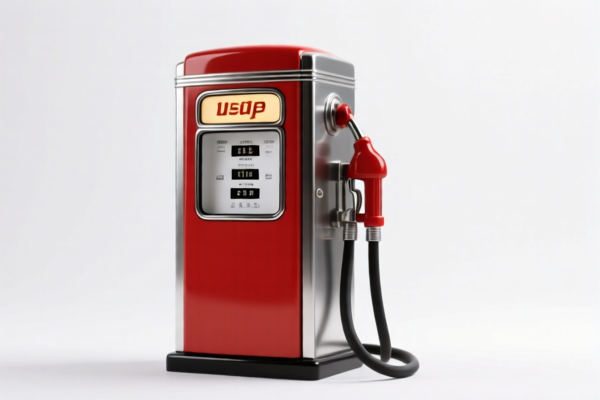
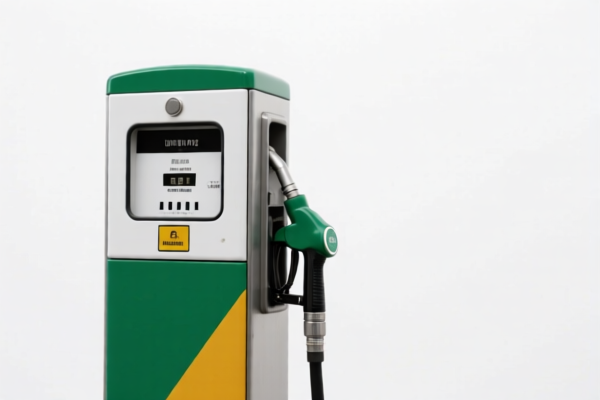
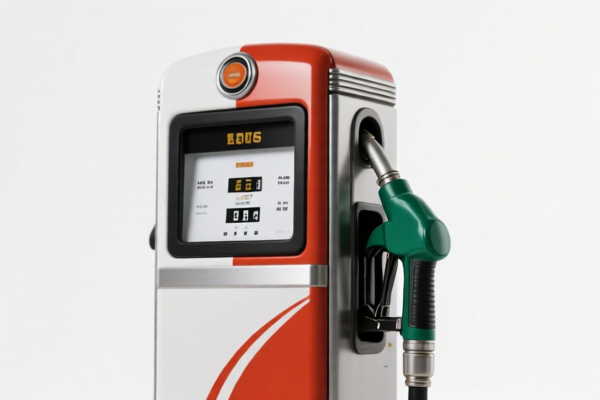
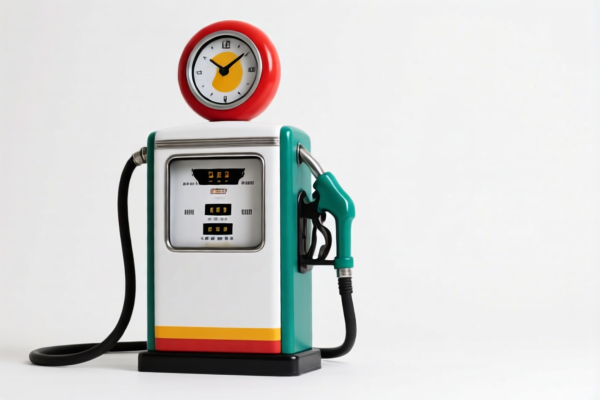
AI Analysis
🚰 Pumps (Liquid Pumps & Solar Pumping Systems)
🌐 HS Code Reference & Customs Clearance Guide | 2026 Latest Tariff Analysis | Professional Compliance Strategy
📌 I. Product Definition & Classification: Do You Really Understand "Pumps"?
In international trade, "Pumps" are not a monolithic category. They are strictly divided based on function, power source, and end-use application. Misclassification can lead to severe customs delays, back-taxes, or even seizure of goods.
There are three main categories relevant to this analysis: 1. General Liquid Pumps: Centrifugal pumps, rotary pumps, etc., for industrial or household use. 2. Solar-Powered Pumps: Systems specifically designed to be driven by photovoltaic panels. 3. Automotive Parts: Pumps integrated into or designed specifically for internal combustion engine vehicles.
⚠️ Key Distinction Point:
- Is it a standalone liquid mover? → Likely Chapter 84 (8413).
- Is it driven by solar energy and classified as a generator/motor system? → Could be Chapter 85 (8501).
- Is it an auto part? → Chapter 84 (8409).
📦 II. HS Code Classification Details (2026 Latest Tariff Authority Match)
Based on the provided data, here are the five specific HS Codes applicable to different "Pump" configurations, along with their tax implications.
| HS Code | Product Description | Application Scenario | Key Classification Logic |
|---|---|---|---|
8413.70.20.90 |
Other Centrifugal Pumps | Industrial/General Liquid Transfer | Classified as a "Liquid Pump," specifically centrifugal. No material/form conflicts. |
8413.81.00.40 |
Other Pumps (Non-Reciprocating) | General Industrial/Commercial Use | Broad category for liquid pumps that don't fit other specific sub-headings. |
8413.81.00.30 |
Solar Water Pumps (Liquid Lifters) | Agriculture/Irrigation/Solar Systems | Defined as a "Liquid Lifter/Pump." Focus is on the lifting function via solar energy. |
8501.72.20.00 |
Solar DC Generators (Photovoltaic) | Standalone Solar Power Units | Classified not as a pump, but as the Power Source (PV Generator) driving the system. Power range: 750W–75kW. |
8409.91.50.85 |
Automotive Water Pumps | Car/Motorcycle Repair & Parts | Classified as an Auto Part (other parts), regardless of whether it's metal or composite. |
🔍 Critical Note:
- Solar Pumps create a dual-classification dilemma: Are they a pump (8413) or a generator (8501)? The provided data suggests both classifications exist depending on how the system is packaged and declared. - Auto Pumps are strictly parts. Even if they look like centrifugal pumps, if they are for cars, they fall under 8409, not 8413.
💰 III. 2026 Latest Tariff Rate Breakdown (US Market - China Origin)
✅ Applicable Country: United States (US)
✅ Origin: China (CN)
✅ Effective Date: Rates include Section 301 Duties and IEEPA Surcharges effective from late 2025/2026.
🎯 1. General Liquid Pumps (8413.70.20.90 & 8413.81.00.40 & 8413.81.00.30)
These codes share an identical tax structure in the provided data.
| Item | Content |
|---|---|
| Base Duty Rate | 0.0% |
| Section 301 Surcharge | +25.0% |
| IEEPA Section 122 Surcharge | +10.0% |
| Total Effective Tariff | 35.0% |
| Tax Calculation | CIF Value × 35% |
| De Minimis Exemption? | ❌ No (High tariff rates typically disqualify packages from de minimis treatment under current enforcement). |
📌 Explanation:
- Base 0%: Standard MFN (Most Favored Nation) rate for many pumps is often low or zero. - +25%: Standard US Section 301 duty on Chinese goods in Chapter 84. - +10%: Additional IEEPA (International Emergency Economic Powers Act) surcharge specifically targeting Chinese origin goods in these categories. - Total 35%: This is a significant cost burden. Importers must factor this into their landed cost calculations.
🎯 2. Solar DC Generators (8501.72.20.00)
If the solar water pumping system is declared as the generator component (or a standalone PV generator unit):
| Item | Content |
|---|---|
| Base Duty Rate | 2.0% |
| Section 301 Surcharge | +25.0% |
| IEEPA Section 122 Surcharge | +10.0% |
| Total Effective Tariff | 37.0% |
| Tax Calculation | CIF Value × 37% |
| De Minimis Exemption? | ❌ No |
📌 Explanation:
- Unlike the liquid pumps, solar generators have a 2% base duty. - However, the total rate (37%) is higher than the general pump rates (35%). - Strategic Implication: Declaring a solar pump system as a "Generator" (8501) is more expensive than declaring it as a "Liquid Pump" (8413). Customs officers may scrutinize this choice if the product is clearly a pump with solar components attached.
🎯 3. Automotive Water Pumps (8409.91.50.85)
| Item | Content |
|---|---|
| Base Duty Rate | 2.5% |
| Section 301 Surcharge | +25.0% |
| IEEPA Section 122 Surcharge | +10.0% |
| Total Effective Tariff | 37.5% |
| Tax Calculation | CIF Value × 37.5% |
| De Minimis Exemption? | ❌ No |
📌 Explanation:
- Auto parts generally have higher base duties than general industrial pumps. - 37.5% is the highest rate among the provided options. - Material Irrelevance: Whether the pump is metal, plastic, or composite does not change the HS Code; it remains an "other part" of auto engines.
🛠️ IV. Customs Clearance Practical Advice (Risk Avoidance Guide)
✅ 1. Documentation Checklist (Mandatory)
| Document | Required? | Purpose |
|---|---|---|
| Product Specification Sheet | ✔️ | Must clearly state: Type (Centrifugal/Reciprocating), Material, Flow Rate, Head Pressure, Power Source (Solar/AC/DC). |
| System Diagram | ✔️ | Crucial for Solar Pumps: Show if it is a pump-only unit, a pump+controller, or a generator+panel assembly. |
| Commercial Invoice | ✔️ | Must match the HS Code description exactly. Avoid vague terms like "Motor" for a pump. |
| Country of Origin Certificate | ✔️ | Required to calculate accurate Section 301 and IEEPA duties. |
| Photos (Label & Internal) | ✔️ | To prove no "hidden" high-tech electronic components that might shift classification to Chapter 85. |
✅ 2. Declaration Strategy (Key Mantras)
🔥 "Match Function, Not Just Name! Declare the Core Use!"
| Scenario | Correct Declaration | Risk if Wrong |
|---|---|---|
| Standard Centrifugal Pump | 8413.70.20.90 (35%) |
If declared as "Motor" (8501), may face scrutiny for misclassification. |
| Solar Water Pump (Kit) | 8413.81.00.30 (35%) |
If declared as 8501.72.20.00, you pay 37% unnecessarily. |
| Car Water Pump | 8409.91.50.85 (37.5%) |
If declared as general pump, customs may penalize for "Auto Part" omission. |
| Solar Panel ONLY | Chapter 85 (Different Code) | Do not lump panels with pumps in one HS code. |
✅ 3. Special Considerations for Solar Pumps
- The "Generator" Trap: Many importers think "Solar = 8501". However, if the primary function is moving liquid, and the solar panel is just the power source for the pump, 8413.81.00.30 is often more appropriate and cheaper (35% vs 37%).
- Kit Packaging: If sold as a kit (Pump + Controller + Cables), declare the essential character (the pump) under 8413. Do not split the shipment, or you risk multiple entries and higher administrative costs.
🌍 V. Global Market Comparison (Snapshot)
| Market | Recommended HS Code | Est. Duty Rate (China Origin) | Key Requirement |
|---|---|---|---|
| 🇺🇸 USA | 8413.70.20.90 / 8413.81.00.30 |
35.0% | Section 301 + IEEPA 122 apply. |
| 🇨🇳 China | 8413.70.20.90 |
~2.5% - 5% | No surcharges. Standard VAT (13%). |
| 🇪🇺 EU | 8413.70.90 |
~1.4% - 2.7% | CE Marking, RoHS Compliance. |
| 🇦🇺 Australia | 8413.70.90 |
5.0% | RCM (Regulatory Compliance Mark) for electricals. |
📌 Conclusion:
- The USA is the most expensive market for pumps due to the 35-37.5% total tariff burden. - Solar Pumps should be carefully declared under 8413 (35%) rather than 8501 (37%) if the primary function is liquid lifting, to save 2% in duties.
📌 VI. Common Mistakes & Pitfalls (Lessons Learned)
❌ Mistake 1: Calling a "Solar Water Pump" a "DC Motor"
👉 Consequence: Misclassification. If accepted, it might be flagged for lacking proper energy labeling (DOE compliance). If rejected, shipment is delayed.
❌ Mistake 2: Declaring an Auto Pump as a General Pump
👉 Consequence: While the rate (35% vs 37.5%) is similar, customs may seize the goods for "Undeclared Auto Parts" if the invoice description is vague. Auto parts have stricter compliance checks.
❌ Mistake 3: Ignoring the "122 Clause" (IEEPA)
👉 Consequence: Calculating only 25% duty when the actual liability is 35%. This leads to underpayment, penalties, and potential bond claims.
✅ Correct Approach:
"Solar Centrifugal Water Pump, 500W, 12V DC Input, for Agricultural Irrigation, Model XYZ, Made in China"
→ Use8413.81.00.30.
🎯 VII. Conclusion: Precision in Classification Saves Money
🎯 Remember the Golden Rule:
🔹 "Solar Pump? Check 8413 (35%). Generator? Check 8501 (37%). Auto Part? Check 8409 (37.5%)."
🔹 "Don't guess the HS Code. The difference is 2-2.5%, which is pure profit loss."
📌 Pro Tip:
If you are importing large volumes of pumps to the US, consider applying for an HTS Exclusion (if applicable) or restructuring your supply chain. For Solar Pumps, ensure your commercial invoice explicitly states "Liquid Pump" and "Solar Powered" to justify the 8413 classification over 8501.
📣 Immediate Action:
📞 Verify the exact power source and primary function of your pump.
📄 Prepare technical diagrams showing the flow path and electrical connections.
🚀 Classify correctly to avoid 35%+ surprises at US Customs!
✨ Professional Customs Clearance Starts with Precise Classification!
💼 Your every dollar in duty is hard-earned—don't waste it on wrong HS Codes!
Customer Reviews
About HS Code Classification
The Harmonized System (HS) is an internationally standardized nomenclature developed by the World Customs Organization (WCO) to classify traded products. Over 200 countries use the HS system as the basis for customs tariffs, trade statistics, and import/export regulations.
Each HS code follows a hierarchical structure:
- Chapter (2 digits) — Broad category of goods (e.g., Chapter 84: Machinery and Mechanical Appliances)
- Heading (4 digits) — More specific grouping within the chapter
- Subheading (6 digits) — Internationally standardized breakdown, used by all WCO member countries
- National subdivisions (8-10 digits) — Country-specific extensions for further classification, such as US HTSUS 10-digit codes
Correct HS code classification is essential for smooth customs clearance, accurate duty payment, and compliance with trade regulations. Misclassification can lead to customs delays, overpayment of duties, or penalties.
When importing from CN to US, the applicable tariff rates may include:
- Most-Favored-Nation (MFN) rate — The standard duty rate applied to WTO members
- General rate — Applied to countries without trade agreements
- Trade remedy duties — Additional tariffs such as Section 301 (anti-dumping), Section 232 (national security), or countervailing duties
The information provided on this page is for reference purposes only. For official classification, please consult with your local customs authority or a licensed customs broker.