pump hs code 8413600040
CN → US| HS Code | Tariff Rate | Origin | Destination | Doc |
|---|---|---|---|---|
| 8413600040 | 35.0% | CN | US | Official Doc |
| 8413600020 | 35.0% | CN | US | Official Doc |
| 8413600030 | 35.0% | CN | US | Official Doc |
| 8413600050 | 35.0% | CN | US | Official Doc |
Product Images
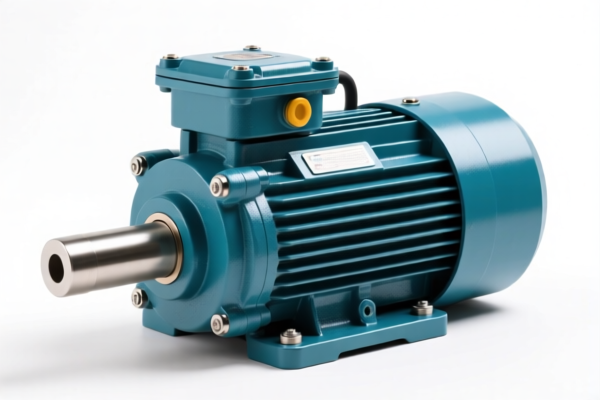
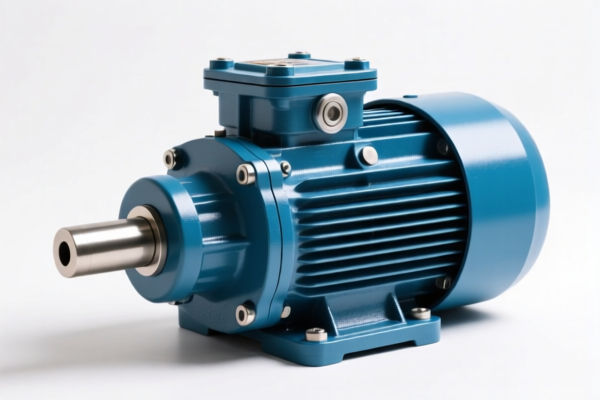
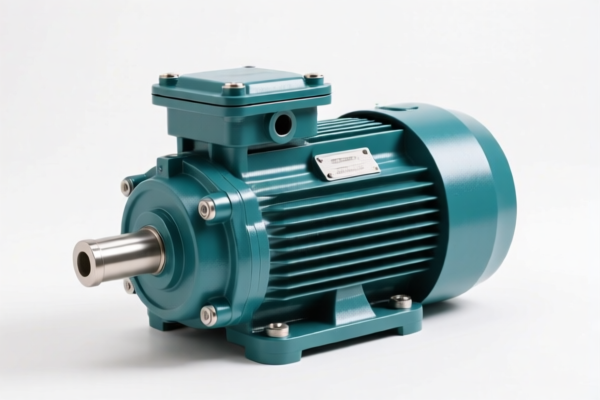

AI Analysis
🌟 Rotary Positive Displacement Pumps (HS Code: 8413.60.00.40)
🌐 HS Code & Tariff Guide | 2026 U.S. Trade Policy Update | Expert Customs Clearance Strategy
📌 One Product, Multiple Codes — Why 8413.60.00.40 Matters
You're dealing with a rotary positive displacement pump — a precision fluid-handling machine used in oil & gas, chemical processing, food & beverage, and industrial automation. But here's the catch: not all rotary pumps are created equal, and misclassifying them can trigger 35% tariffs or even seizure.
This guide breaks down why your pump is classified under HS Code 8413.60.00.40, what the tariffs really mean, and how to avoid costly customs delays.
🔍 1. What Is HS Code 8413.60.00.40?
| Field | Detail |
|---|---|
| HS Code | 8413.60.00.40 |
| Product Description | Other rotary positive displacement pumps |
| Category | Machinery & Mechanical Appliances (Chapter 84) |
| Sub-Chapter | Pumps for liquids (8413.60) |
| Specificity | "Other" — meaning not covered by more specific subheadings like gear, screw, or vane pumps |
✅ You’re here because your pump is rotary, positive displacement, but doesn’t fit into the more defined categories.
🚫 Do NOT assume it’s “just a pump” — the subclass matters.
📦 2. HS Code Breakdown: Why 8413.60.00.40?
Let’s decode the hierarchy:
8413.60.00.40 │ ├── 8413: Pumps for liquids │ └── 8413.60: Rotary positive displacement pumps │ └── 8413.60.00: Other types │ └── 8413.60.00.40: Specific sub-type (e.g., specialized or less common rotary pump)
✅ When to Use 8413.60.00.40:
- Your pump uses rotating elements (gears, lobes, screws, vanes) to move fluid via fixed volume chambers.
- It’s not a gear pump (8413.60.00.20), not a screw pump (8413.60.00.30), not a vane pump (8413.60.00.50).
- It’s custom-designed, non-standard, or used in niche applications (e.g., high-viscosity slurries, sanitary processing, or explosive environments).
📌 Key Insight:
The U.S. Customs and Border Protection (CBP) uses 8413.60.00.40 for "other" rotary positive displacement pumps — essentially a catch-all for non-standard or hybrid designs.
💰 3. 2026 U.S. Tariff Breakdown (China-Origin Goods)
✅ Applicable to: U.S. imports from China (CN)
✅ Effective Date: November 10, 2025
✅ Legal Basis: U.S. Trade Act 301, IEEPA, and Section 122
| Tax Type | Rate | Description | Legal Basis |
|---|---|---|---|
| Base Tariff | 0.0% | Standard U.S. tariff for this category | HTSUS 8413.60.00.40 |
| Section 301 (USITC) Tariff | +25% | Added under U.S. Trade Act 301 for Chinese goods | 9903.88.01 |
| Section 122 (IEEPA) Tariff | +10% | Imposed under International Emergency Economic Powers Act (IEEPA) | 9903.01.24 |
| Total Effective Tariff | 35.0% | CIF Value × 35% | Combined effect of 301 + 122 |
🔥 Total Tax = 35% — not 25% or 10%, but the sum of both.
📌 Why This Matters:
- No de minimis exemption applies — even a $10 pump is subject to full 35%. - No preferential treatment unless you qualify for a trade agreement (e.g., USMCA, USTR waiver).
📌 4. Legal Basis: The 35% Tax Explained
📚 1. Section 301 (USITC) – 25%
- Law: U.S. Trade Act of 1974, Section 301
- Purpose: Retaliate against China’s unfair trade practices (IP theft, forced tech transfer)
- Scope: Applies to all goods from China listed under Schedule 3 of the 301 Tariff List
- HS Code Reference:
8413.60.00.40is included in List 3 (2025 update)
✅ Confirmed: This pump is not exempt — even if it’s “industrial” or “used in manufacturing.”
📚 2. Section 122 (IEEPA) – 10%
- Law: International Emergency Economic Powers Act (IEEPA), 50 U.S.C. § 1701
- Purpose: Authorize emergency economic measures against foreign threats
- Scope: Applies to goods from China under Executive Order 13959 (2020) and amended by EO 14042
- Tariff Code:
9903.01.24— applies to all covered goods from China, including machinery
✅ This 10% is NOT optional — it’s automatically applied to all shipments from China unless exempted.
🛠️ 5. Customs Clearance Best Practices (Real-World Tips)
✅ 1. Documentation Checklist (MUST-HAVE)
| Document | Why It’s Critical |
|---|---|
| 📄 Commercial Invoice | Must clearly state: “Rotary Positive Displacement Pump, Model XYZ, HS 8413.60.00.40” |
| 📸 Product Photos | Show pump body, inlet/outlet, rotating parts, and markings |
| 📄 Technical Manual / Spec Sheet | Prove it’s rotary, positive displacement, and not a gear/screw/vane pump |
| 📄 Bill of Lading (B/L) | Confirm origin (China) and shipment details |
| 📄 Certificate of Origin (CO) | Required for tariff calculation — China = 35% |
| 📄 FCC/CE/RoHS (if applicable) | Avoid delays if equipment has electronics |
❗ Warning: If your invoice says “pump” or “fluid mover” without technical detail, CBP may reclassify it — leading to higher tariffs or seizure.
✅ 2.申报技巧(申报口诀)
🔥 “Rotary ≠ Gear, Positive ≠ Centrifugal, 40 ≠ 20 or 30 — Know the Code!”
| Scenario | Correct HS Code | Wrong Code | Risk |
|---|---|---|---|
| Rotary pump, not gear/screw/vane | 8413.60.00.40 |
8413.60.00.20 (gear) |
35% vs. 35% — same, but wrong classification = audit risk |
| Custom rotary pump with unique design | 8413.60.00.40 |
8413.60.00.50 (vane) |
Misclassification → penalties |
| Pump used in food processing | 8413.60.00.40 |
8413.60.00.30 (screw) |
Sanitary design ≠ screw pump |
✅ Pro Tip: Use “rotary positive displacement pump” in the description — never just “pump” or “industrial pump”.
✅ 3. Special Cases & Exemptions
| Case | Solution |
|---|---|
| Pump made in Vietnam/Mexico | Can qualify for IEEPA exemption — 0% tariff if origin is USMCA or other free trade partner |
| Pump for military/defense use | Apply for special customs clearance — may be exempt |
| Pump used in renewable energy (e.g., biofuel) | May qualify for green energy exemption — check USTR list |
| Pump with embedded electronics | Still falls under 8413.60.00.40 — not 8543.70.00.00 (electronic control) |
📌 Key: The mechanical function determines the HS code — electronics don’t change the core classification.
🌍 6. Global Tariff Comparison (2026)
| Country | Recommended HS Code | Tariff | Certification | Notes |
|---|---|---|---|---|
| 🇺🇸 United States | 8413.60.00.40 |
35% (China) | CBP, FCC | High risk — no de minimis |
| 🇨🇳 China | 8413.60.00.40 |
5% | CCC | No extra tariffs |
| 🇪🇺 EU | 8413.60.00.40 |
0% (if CE) | CE, RoHS | No 301/IEEPA |
| 🇦🇺 Australia | 8413.60.00.40 |
5% | RCM | No extra taxes |
| 🇯🇵 Japan | 8413.60.00.40 |
0% | PSE | No 301/IEEPA |
📌 Bottom Line:
- The U.S. is the only major market imposing 35% on this pump. - If you're shipping from China to the U.S., expect 35% tax — no exceptions.
🚨 7. Common Mistakes (Avoid These!)
❌ Mistake 1: Calling it “a pump” on the invoice
👉 Result: CBP reclassifies it → higher tariff or delay
❌ Mistake 2: Using 8413.60.00.20 (gear pump) for a non-gear rotary pump
👉 Result: Incorrect classification → penalties + audit
❌ Mistake 3: Not providing technical specs
👉 Result: No proof of classification → detention
❌ Mistake 4: Assuming “industrial” means “exempt”
👉 Result: No — 35% still applies
✅ 8. Final Advice: How to Win at U.S. Customs
🔥 “Know the Code, Prove the Design, Declare the Truth.”
✅ Action Steps:
- Confirm your pump’s exact design — is it gear? Screw? Vane? Or “other”?
- Use
8413.60.00.40only if it’s truly “other” — don’t guess. - Submit full technical documentation with every shipment.
- Use a U.S.-based customs broker with experience in Chapter 84 machinery.
- Apply for Advance Ruling (Pre-Approval) if you ship frequently.
🎯 Summary: The 35% Tax Is Real — But Manageable
| Fact | Detail |
|---|---|
| HS Code | 8413.60.00.40 |
| Product | Other rotary positive displacement pumps |
| Tariff (China) | 35.0% (0% base + 25% 301 + 10% IEEPA) |
| De Minimis? | ❌ No — applies to all shipments |
| Exemptions? | ✅ Only if from non-China origin (e.g., Vietnam, Mexico) |
| Best Practice | Declare accurately, document fully, clear early |
📣 Pro Tip:
📞 Contact a U.S. customs broker today — ask for a HS Code pre-ruling for your pump model.
🚀 Save thousands in tariffs, avoid delays, and ship with confidence.
✨ Your Pump. Your Code. Your Cost.
💼 Get it right the first time — because one mistake can cost 35% of your shipment value.
📌 Remember:
"8413.60.00.40" is not just a number — it’s your gateway to the U.S. market.
✅ Classify correctly. Pay the right tax. Ship smooth.
✅ Ready to clear?
👉 Download our free HS Code Checklist for Pumps (2026 Edition)
🔗 [Insert Link]
📦 Your next shipment starts with the right code.
Customer Reviews
About HS Code Classification
The Harmonized System (HS) is an internationally standardized nomenclature developed by the World Customs Organization (WCO) to classify traded products. Over 200 countries use the HS system as the basis for customs tariffs, trade statistics, and import/export regulations.
Each HS code follows a hierarchical structure:
- Chapter (2 digits) — Broad category of goods (e.g., Chapter 84: Machinery and Mechanical Appliances)
- Heading (4 digits) — More specific grouping within the chapter
- Subheading (6 digits) — Internationally standardized breakdown, used by all WCO member countries
- National subdivisions (8-10 digits) — Country-specific extensions for further classification, such as US HTSUS 10-digit codes
Correct HS code classification is essential for smooth customs clearance, accurate duty payment, and compliance with trade regulations. Misclassification can lead to customs delays, overpayment of duties, or penalties.
When importing from CN to US, the applicable tariff rates may include:
- Most-Favored-Nation (MFN) rate — The standard duty rate applied to WTO members
- General rate — Applied to countries without trade agreements
- Trade remedy duties — Additional tariffs such as Section 301 (anti-dumping), Section 232 (national security), or countervailing duties
The information provided on this page is for reference purposes only. For official classification, please consult with your local customs authority or a licensed customs broker.