pushchair sleeping bag
CN → US| HS Code | Tariff Rate | Origin | Destination | Doc |
|---|---|---|---|---|
| 9503000071 | 10.0% | CN | US | Official Doc |
| 9503000090 | 10.0% | CN | US | Official Doc |
| 8715000020 | 14.4% | CN | US | Official Doc |
Product Images

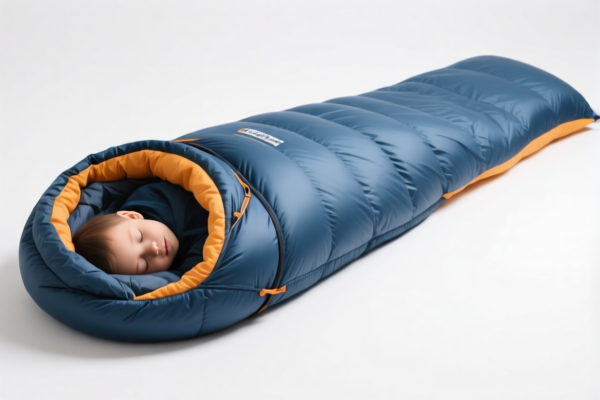
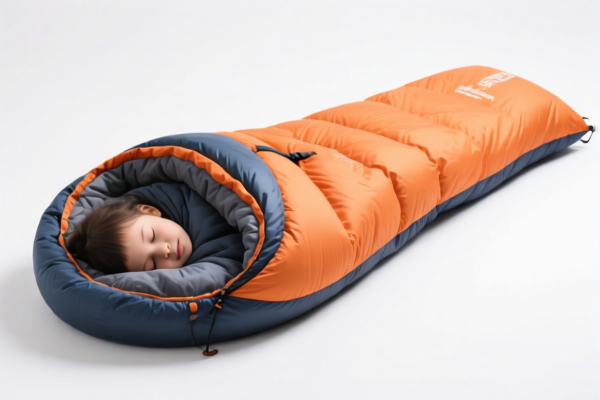
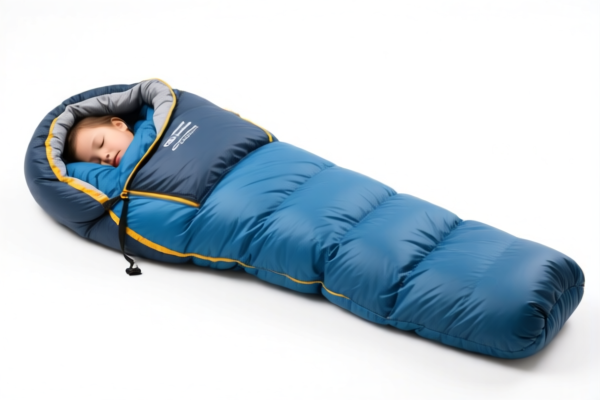
AI Analysis
🛒 Pushchair Sleeping Bag (Stroller Sack)
🌐 HS Code Reference & Customs Clearance Guide | 2026 Latest Tariff Analysis | Professional Clearance Strategy
📌 1. Product Definition & Classification: What is a "Pushchair Sleeping Bag"?
A Pushchair Sleeping Bag (also known as a Stroller Sack, Stroller Footmuff, or Pram Liner) is an insulated accessory designed to keep infants warm while seated in a pushchair/stroller. It typically features a zippered shell that attaches to the stroller frame or seat, often containing cotton, fleece, or synthetic insulation.
In international trade, its classification depends on whether it is viewed as: * A Toy/Accessory: A generic accessory for a toy-like vehicle (HS Chapter 95). * A Vehicle Part/Accessory: A functional component for a non-motorized vehicle (HS Chapter 87).
⚠️ Key Distinction Point: * If marketed primarily as a "toy accessory" or generic baby gear item without specific vehicle integration features → Often归类 (classified) under 9503 (Toys). * If marketed as a functional part of the stroller (integral to the vehicle's operation/safety/winter use) → Often归类 (classified) under 8715 (Buggies and carriages).
📦 2. HS Code Classification Details (2026 Latest Tariff Authority Comparison)
| HS Code | Product Description | Application Scenario | Tax Rate |
|---|---|---|---|
9503.00.00.71 |
Classified as "Doll's prams" or similar wheeled toys. | Generic marketing where the pushchair is treated as a "toy" or the sleeping bag is an accessory to such a "toy." | 10.0% |
9503.00.00.90 |
Classified as "Toys, doll's prams, and accessories" under other headings. | Broad "other" category for stroller accessories if not explicitly listed elsewhere in Chapter 95. | 10.0% |
8715.00.00.20 |
Classified as "Infant carriages (including buggies)." | Functional classification where the sleeping bag is seen as an essential part of the infant carriage itself. | 14.4% |
🔍 Key Insight: * The difference lies in the legal interpretation of the parent product. * If Customs views the stroller as a "Toy" (Chapter 95), the sleeping bag inherits that classification (10% Total Tax). * If Customs views the stroller as a "Vehicle/Transport Device" (Chapter 87), the sleeping bag is classified as part of the carriage (14.4% Total Tax).
💰 3. 2026 Latest Tariff Rate Breakdown (Including Surtaxes & Policy Add-ons)
✅ Applicable Country: United States (US)
✅ Origin: China (CN)
✅ Effective Date: Post-November 10, 2025 (Current Trade War Conditions)
🎯 1. 9503.00.00.71 & 9503.00.00.90 —— Classified as Toy Accessories (Doll's Prams/Toys)
| Item | Detail |
|---|---|
| Base Tariff | 0% (ad valorem) |
| Section 301 Surtax | 0% (Note: Standard 301 rates may apply to some toys, but data indicates 0% base here) |
| 122 Clause Tariff | +10% |
| Total Tax Rate | 10.0% |
| Tax Calculation | CIF Value × 10% |
| De Minimis Eligibility | ❌ Not Eligible (Deny De Minimis) for Section 301/122 items |
| Legal Basis Path | HS:9503.00.00.71 → 122 Clause: 10% |
📌 Explanation:
These codes fall under Chapter 95 (Toys).
The 10% additional tariff is applied under the "122 Clause" (a specific trade remedy provision).
Total Cost: Only 10% of the CIF value. This is the lower tax bracket* for this product.
🎯 2. 8715.00.00.20 —— Classified as Infant Carriage Part (Vehicle Accessory)
| Item | Detail |
|---|---|
| Base Tariff | 4.4% (ad valorem) |
| Section 301 Surtax | 0% (Note: Vehicle parts may have different 301 treatment; data indicates 0% here) |
| 122 Clause Tariff | +10% |
| Total Tax Rate | 14.4% |
| Tax Calculation | CIF Value × 14.4% |
| De Minimis Eligibility | ❌ Not Eligible (Deny De Minimis) for Section 301/122 items |
| Legal Basis Path | HS:8715.00.00.20 → Base: 4.4% + 122 Clause: 10% |
📌 Explanation:
This code falls under Chapter 87 (Vehicles).
It incurs the base tariff of 4.4% PLUS the 122 Clause surcharge of 10%.
Total Cost: 14.4% of the CIF value. This is 4.4% higher* than the toy classification.
🛠️ 4. Customs Clearance Practical Advice (Real-World Pitfall Avoidance)
✅ 1. Documentation Checklist (Critical)
| Document | Required | Notes |
|---|---|---|
| ✅ Product Specification Sheet | ✔️ | Must describe material (fleece, cotton), filling, and attachment method. |
| ✅ Product Photos | ✔️ | Show the sleeping bag attached to a stroller vs. isolated. |
| ✅ Commercial Invoice | ✔️ | Crucial: Choose the correct Commodity Name. |
| ✅ Packing List | ✔️ | Ensure quantities match. |
| ✅ Origin Certificate | ✔️ | To prove CN origin (triggers surtaxes). |
✅ 2. Declaration Strategy (Key Mantra)
🔥 "Toy Name = 10% | Vehicle Name = 14.4%"
| Scenario | Correct Declaration Approach | Wrong Approach |
|---|---|---|
| Marketing as "Baby Gear" | Use HS 9503.00.00.71 or .90. Name: "Stroller Liner" or "Baby Sleeping Bag." |
Use 8715. You pay 4.4% extra unnecessarily. |
| Marketing as "Stroller Part" | Use HS 8715.00.00.20. Name: "Infant Carriage Accessory." |
Use 9503. Risk of Customs reclassification if product looks too "vehicle-integrated." |
| Packaged with Stroller | Declare Together. If sold as a set, declare the principal item. | Split declaration. Leads to higher combined rates. |
✅ 3. Special Considerations
| Situation | Advice |
|---|---|
| OEM Custom Brands | Provide design files to prove it's a standard sleeping bag, not a unique toy. |
| Material Composition | If the product contains electronic heating elements, it may be reclassified as an electrical appliance (Chapter 85), changing taxes entirely. Stick to passive insulation for HS 95/87. |
| De Minimis Risk | For shipments under $800, Section 301/122 taxes still apply. Do not assume low-value shipments are tax-free. |
🌍 5. Global Market Comparison (2026)
| Country/Region | Recommended HS Code | Total Tax (CN Origin) | Certification Requirements | Notes |
|---|---|---|---|---|
| 🇺🇸 USA | 9503.00.00.71 / 8715.00.00.20 |
10% / 14.4% | CPSIA (US) | 122 Clause applies. Always declare correctly. |
| 🇨🇳 China | 9503.00.00.90 / 8715.00.00.20 |
0% / 0% | CCC (if applicable) | No surtaxes for domestic trade. |
| 🇪🇺 EU | 9503.00.00 / 8715.00.00 |
4.7% / 4.5% | CE / REACH | No 122 Clause in EU. |
| 🇬🇧 UK | 9503.00.00 / 8715.00.00 |
4.7% / 4.5% | UKCA | Post-Brexit rules. |
📌 Conclusion:
The USA is the only market with the 122 Clause surtax.
For US exports, classifying as "Toy" (9503) saves 4.4% compared to "Vehicle Part" (8715).
However, accuracy is key*. Misclassifying a vehicle part as a toy can lead to penalties.
📌 6. Common Mistakes & Pitfalls (Blood & Tears Lessons)
❌ Mistake 1: Declaring "Stroller Sleeping Bag" under 8715 when marketing materials show it as a "Toy Accessory."
👉 Consequence: Overpaying 4.4% unnecessarily.
👉 Fix: Align HS Code with product marketing and naming.
❌ Mistake 2: Assuming "Baby Products" are tax-free under De Minimis.
👉 Consequence: Customs seizes shipment for unpaid 122 Clause tax.
👉 Fix: Pay the 10-14.4% tax even for small packages.
❌ Mistake 3: Using vague names like "Baby Warm Bag."
👉 Consequence: Customs assigns the wrong code (often the highest one).
👉 Fix: Use precise names: "Fleece Stroller Liner" or "Infant Carriage Footmuff."
✅ Correct Practice:
"Fleece Infant Stroller Liner, Non-Electric, Zip-Attach, Model XYZ, CPSIA Compliant"
→ Declare under9503.00.00.71for 10% tax rate.
🎯 7. Conclusion: Smart Classification, Lower Costs!
🎯 Remember the Mantra:
🔹 "Toy Name = 10%, Vehicle Name = 14.4%."
🔹 "122 Clause Adds 10% to Both, But Base Rate Differs!"
🔹 "Accurate Name Saves 4.4% on Every Shipment!"
📌 Pro Tip:
If your product can be reasonably argued as a "toy accessory" (e.g., marketed for play or general baby care, not just vehicle utility), choose 9503 to save the 4.4% base tariff.
Always provide product images and marketing descriptions to Customs to support your chosen classification.
📣 Take Action Now:
📞 Consult a licensed customs broker + Provide product photos + Choose the lower tax code (
9503) if compliant
🚀 Clear customs smoothly, reduce costs, and maximize profits!
✨ Professional clearance starts with precise classification!
💼 Every percent counts in international trade!
Customer Reviews
About HS Code Classification
The Harmonized System (HS) is an internationally standardized nomenclature developed by the World Customs Organization (WCO) to classify traded products. Over 200 countries use the HS system as the basis for customs tariffs, trade statistics, and import/export regulations.
Each HS code follows a hierarchical structure:
- Chapter (2 digits) — Broad category of goods (e.g., Chapter 84: Machinery and Mechanical Appliances)
- Heading (4 digits) — More specific grouping within the chapter
- Subheading (6 digits) — Internationally standardized breakdown, used by all WCO member countries
- National subdivisions (8-10 digits) — Country-specific extensions for further classification, such as US HTSUS 10-digit codes
Correct HS code classification is essential for smooth customs clearance, accurate duty payment, and compliance with trade regulations. Misclassification can lead to customs delays, overpayment of duties, or penalties.
When importing from CN to US, the applicable tariff rates may include:
- Most-Favored-Nation (MFN) rate — The standard duty rate applied to WTO members
- General rate — Applied to countries without trade agreements
- Trade remedy duties — Additional tariffs such as Section 301 (anti-dumping), Section 232 (national security), or countervailing duties
The information provided on this page is for reference purposes only. For official classification, please consult with your local customs authority or a licensed customs broker.