pvc
CN → US| HS Code | Tariff Rate | Origin | Destination | Doc |
|---|---|---|---|---|
| 3919905040 | 40.8% | CN | US | Official Doc |
| 3904100000 | 41.5% | CN | US | Official Doc |
| 3920435000 | 39.2% | CN | US | Official Doc |
| 3920490000 | 40.8% | CN | US | Official Doc |
| 3919905060 | 40.8% | CN | US | Official Doc |
Product Images
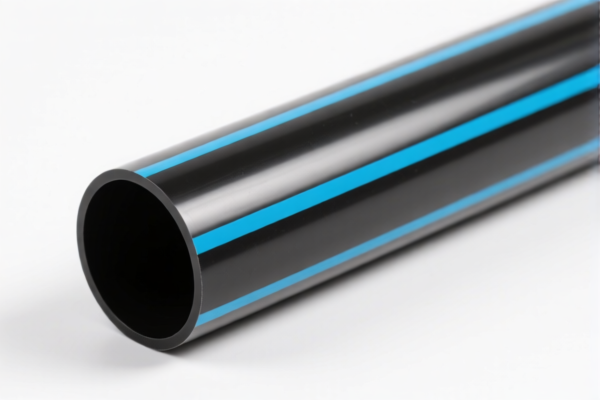
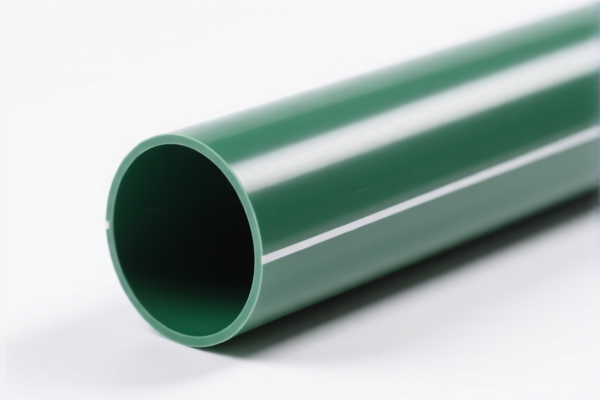
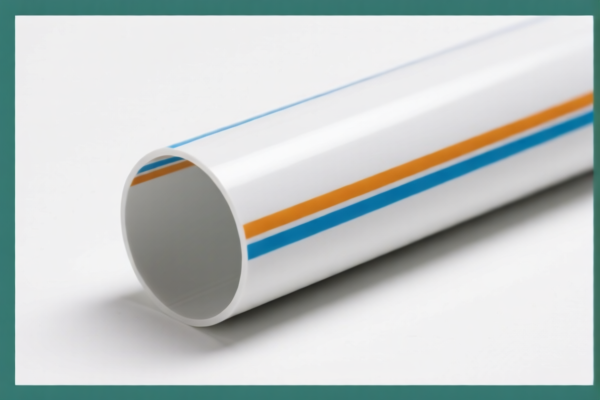
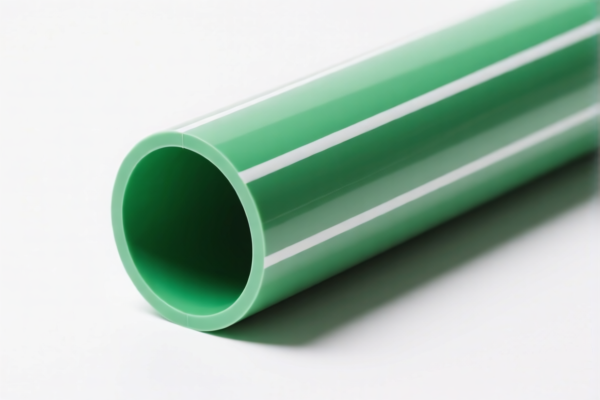
AI Analysis
🧪 PVC Sheets (Polyvinyl Chloride Sheets)
🌐 HS Code Reference & Customs Clearance Guide | 2026 Latest Tariff Analysis | Professional Entry Strategies for US Imports
📌 I. Product Definition: What Exactly is "PVC Sheet"?
Polyvinyl Chloride (PVC) is one of the most widely produced plastics globally. In international trade, "PVC Sheet" is not a single unified commodity but a generic term that covers various forms depending on its physical shape, functionality, and manufacturing stage.
Key Distinctions for Classification: * Raw Polymer/Unworked Sheets: If the PVC is in its basic resin form or pressed into simple sheets without further processing (like self-adhesive properties or specific plate definitions), it falls under different headings. * Self-Adhesive Products: If the PVC sheet has an adhesive backing (e.g., for wall covering, flooring, or signage), it is classified as a "Self-adhesive plastic plate, sheet, film..." * Finished Plates/Sheets: If the PVC is processed into flat plates or sheets that are not self-adhesive and are not merely raw polymer, they fall under specific "Plates, Sheets" categories based on whether they are "Other" plastics.
⚠️ Critical Classification Point:
- If it is Self-Adhesive → 3919.90.50.xx
- If it is Raw/Basic Polymer Form → 3904.10.00.00
- If it is a Standard Plate/Sheet (Non-adhesive) → 3920.43.50.00 or 3920.49.00.00 (depending on exact polymer definition)
- Misclassification can lead to significant tariff differences and customs holds.
📦 II. HS Code Classification Details (2026 Latest Tariff Reference)
| HS Code | Product Description | Application/Scenario | Key Identifier |
|---|---|---|---|
3919.90.50.40 |
Self-adhesive PVC sheets, PVC material, sheet form, matches "Self-adhesive plastic plates, sheets, films..." | Wall decals, adhesive flooring, signage backing | ✅ Self-Adhesive |
3904.10.00.00 |
PVC sheets, PVC material, sheet form, belongs to common shapes of primary polymers | Raw PVC pellets pressed into sheets, unprocessed industrial stock | ✅ Raw/Primary Polymer |
3920.43.50.00 |
PVC sheets, Polyvinyl Chloride material, plate/sheet form, matches "Plates/Sheets" description | Standard non-adhesive PVC plates, industrial lining, construction sheets | ✅ Non-Adhesive Plate |
3920.49.00.00 |
PVC sheets, Vinyl Polymer material, sheet form, fully consistent with classification | Other vinyl polymer sheets, non-specific PVC sheets not covered by 3920.43 | ✅ Non-Adhesive Sheet |
3919.90.50.60 |
PVC sheets, Plastic material, flat sheet form, matches flat shape classification | General flat plastic sheets with adhesive properties, generic self-adhesive plastic | ✅ Self-Adhesive (Generic) |
🔍 Key Reminder:
- Self-Adhesive products (HS 3919) often have a lower base tariff (5.8%) compared to raw polymers (HS 3904 at 6.5%) or standard plates (HS 3920 at 4.2%-5.8%), but all are subject to the same high additional tariffs. - Raw Polymer (HS 3904) is for products that are essentially the plastic in its basic form, even if shaped as a sheet. - Standard Plates/Sheets (HS 3920) are for finished or semi-finished plastic plates that are not self-adhesive.
💰 III. 2026 Latest Tariff Rate Breakdown (Including Surtaxes & Policy Add-ons)
✅ Applicable Country: United States (US)
✅ Origin: China (CN)
✅ Effective Time: 2025 November 10 onwards (including subsequent imports)
🎯 1. 3919.90.50.40 & 3919.90.50.60 —— Self-Adhesive PVC Sheets
| Item | Content |
|---|---|
| Base Tariff | 5.8% (ad valorem) |
| USITC Additional Tariff | +25% (From USITC Footnote 9903.88.01, Section 301) |
| IEEPA Additional Tariff | +10% (Targeting China/HK products, effective from Nov 10, 2025) |
| Total Tax Rate | 40.8% |
| Tax Calculation | CIF Value × 40.8% |
| De Minimis Exemption | ❌ Not Applicable (deny_de_minimis) |
| Legal Basis Path | IEEPA:9903.01.25 → IEEPA:9903.01.24 → USITC:3919.90.50.xx → FOOTNOTE:9903.88.01 |
📌 Explanation:
- The 25% USITC tariff is part of the Section 301 trade remedy against China. - The 10% IEEPA tariff is an additional layer on top, specific to Chinese-origin goods. - Total 40.8% is a very high tax burden. Proper documentation proving "self-adhesive" nature is crucial to avoid being misclassified as a raw polymer (which might have similar rates but different compliance requirements).
🎯 2. 3904.10.00.00 —— PVC Sheets (Primary Polymer Form)
| Item | Content |
|---|---|
| Base Tariff | 6.5% (ad valorem) |
| USITC Additional Tariff | +25% |
| IEEPA Additional Tariff | +10% |
| Total Tax Rate | 41.5% |
| Tax Calculation | CIF Value × 41.5% |
| De Minimis Exemption | ❌ Not Applicable |
| Legal Basis Path | IEEPA:9901.25 → IEEPA:9903.01.24 → USITC:3904.10.00.00 → FOOTNOTE:9903.88.01 |
📌 Note:
- This classification is for PVC that is considered a primary polymer in sheet form. - Even though the base rate is higher (6.5% vs 5.8%), the total rate is only marginally higher (41.5% vs 40.8%). - Risk: Misclassifying a processed sheet as "primary polymer" to avoid "self-adhesive" declarations can lead to customs audits. Ensure the product truly lacks adhesive backing and is in a basic polymer state.
🎯 3. 3920.43.50.00 & 3920.49.00.00 —— PVC Plates/Sheets (Non-Adhesive)
| Item | Content |
|---|---|
| Base Tariff | 4.2% (for 3920.43.50.00) / 5.8% (for 3920.49.00.00) |
| USITC Additional Tariff | +25% |
| IEEPA Additional Tariff | +10% |
| Total Tax Rate | 39.2% (for 3920.43.50.00) / 40.8% (for 3920.49.00.00) |
| Tax Calculation | CIF Value × 39.2% or 40.8% |
| De Minimis Exemption | ❌ Not Applicable |
| Legal Basis Path | IEEPA:9903.01.25 → IEEPA:9903.01.24 → USITC:3920.4x.xx.xx → FOOTNOTE:9903.88.01 |
📌 Note:
- 3920.43.50.00 is for "Other plates, sheets..." of PVC, often with specific technical properties. - 3920.49.00.00 is a broader category for other vinyl polymer sheets. - These are non-adhesive. If your product has an adhesive backing, do not use this code, as it is fraud. - 3920.43.50.00 offers the lowest total rate (39.2%), making it the most favorable if the product qualifies as a standard non-adhesive plate.
🛠️ IV. Customs Clearance Practical Advice (Real-World Pitfall Avoidance)
✅ 1. Documentation Checklist (Mandatory)
| Document | Must Provide | Explanation |
|---|---|---|
| ✅ Product Specification Sheet | ✔️ | Details: Material (100% PVC or blend), Thickness, Width, Length, Adhesive Type (if any), Hardness. |
| ✅ Product Photos (With Label) | ✔️ | Clear shots of the sheet, showing edges, surface texture, and any packaging labels. |
| ✅ Composition Statement | ✔️ | Declare exact chemical composition. If additives are present, declare them. |
| ✅ Commercial Invoice | ✔️ | Must clearly state "PVC Sheet" and specify if "Self-Adhesive" or "Non-Adhesive". |
| ✅ Packing List | ✔️ | Show dimensions and weight. Ensure no loose components that could trigger "kit" classification. |
| ✅ Third-Party Test Report | ✔️ | RoHS, REACH, or other safety standards (if required by buyer). |
✅ 2. Declaration Tips (Key Mnemonics)
🔥 "Adhesive is 3919, Raw is 3904, Standard Plate is 3920. Don't Mix!"
| Scenario | Correct Declaration | Incorrect Practice |
|---|---|---|
| Self-Adhesive PVC Roll/Sheet | 3919.90.50.40 or 3919.90.50.60 |
Declare as 3920.43 to save base tariff → High Audit Risk |
| Raw PVC Pellets Pressed into Sheet | 3904.10.00.00 |
Declare as 3920 → Misclassification |
| Standard Non-Adhesive PVC Plate | 3920.43.50.00 |
Declare as 3919 → Overpayment of Base Tariff |
| PVC Sheet with Printing/Coating | Determine if coating = "Adhesive" | If coating is just ink/paint, it may still be 3920. If it has glue, it's 3919. |
✅ 3. Special Cases Handling
| Scenario | Handling Advice |
|---|---|
| Laminated PVC Sheets | If one layer is adhesive, classify as 3919. If layers are just bonded for strength, classify based on primary material/function. |
| Colored PVC Sheets | Color does not change the HS code. Only material and form matter. |
| Foam PVC Sheets | If it has a foamed structure, it may fall under different subheadings. Check if it's "Cellular" (may affect 3904/3920). |
| Recycled PVC | Still classified under the same HS codes. Ensure "Recycled" is declared if applicable for compliance. |
🌍 V. Global Market Comparison (2026 Latest)
| Country/Region | Recommended HS Code | Tariff (China Origin) | Certification Required | Notes |
|---|---|---|---|---|
| 🇺🇸 USA | 3920.43.50.00 / 3919.90.50.40 |
39.2% - 41.5% | None Specific | High surtaxes apply. |
| 🇨🇳 China | 3920.43.50.00 |
~5-6% | CCC (if applicable) | No additional surtaxes. |
| 🇪🇺 EU | 3920.43.50.00 |
~6.5% | REACH, RoHS | No Section 301 equivalent. |
| 🇬🇧 UK | 3920.43.50.00 |
~6.5% | UKCA, RoHS | Post-Brexit rules apply. |
| 🇦🇺 Australia | 3920.43.50.00 |
~5% | RCM | No additional surtaxes. |
📌 Conclusion:
- USA is the most expensive market for PVC sheets due to Section 301 and IEEPA tariffs. - EU and UK are more favorable for non-adhesive PVC sheets, with no additional punitive tariffs. - Consider supply chain diversification if targeting the US market to avoid high duties.
📌 VI. Common Errors & Pitfall Guide (Lessons Learned)
❌ Error 1: Declaring Self-Adhesive sheets as Non-Adhesive (3920) to save base tariff.
👉 Consequence: Customs detects adhesive, reclassifies, and imposes penalties + back taxes.
❌ Error 2: Declaring Raw Polymer (3904) for Processed Sheets with coatings or prints.
👉 Consequence: Misclassification, leading to audits and delays.
❌ Error 3: Ignoring the 10% IEEPA Tariff in cost calculations.
👉 Consequence: Profit margin erosion, as the total tax is ~40%, not just the base rate.
❌ Error 4: Using "Plastic Sheet" as a generic description without specifying Adhesive vs. Non-Adhesive.
👉 Consequence: Customs asks for clarification, causing shipment delays.
✅ Correct Practice:
"PVC Self-Adhesive Sheet, 1mm Thickness, Clear Adhesive Backing, For Wall Decoration, Model XYZ, No PVC Phthalates"
🎯 VII. Conclusion: Professional Declaration, Time-Saving, Cost-Effective!
🎯 Remember the Mnemonics:
🔹 "Adhesive is 3919 (40.8%), Raw is 3904 (41.5%), Standard is 3920 (39.2%)."
🔹 "Total Tax is ~40%, Don't Forget the Surtaxes!"
🔹 "Adhesive or Not, Declare Clearly to Avoid Delays!"
📌 Tips:
If your PVC sheets are originating from Vietnam, Mexico, Thailand, or Malaysia, you may qualify for IEEPA Exemptions, reducing the total tariff to 0%~5%.
Recommend applying for a Pre-Ruling (Advance Ruling) from CBP to confirm the correct HS Code before shipping.
📣 Immediate Action:
📞 Contact a Professional Customs Broker + Provide Product Photos + Apply for HS Code Pre-Ruling
🚀 Let your PVC sheets clear customs smoothly, efficiently, and profitably!
✨ Professional Customs Clearance Starts with Accurate Classification!
💼 Every Cent of Your Cost Deserves Precise Calculation!
Customer Reviews
About HS Code Classification
The Harmonized System (HS) is an internationally standardized nomenclature developed by the World Customs Organization (WCO) to classify traded products. Over 200 countries use the HS system as the basis for customs tariffs, trade statistics, and import/export regulations.
Each HS code follows a hierarchical structure:
- Chapter (2 digits) — Broad category of goods (e.g., Chapter 84: Machinery and Mechanical Appliances)
- Heading (4 digits) — More specific grouping within the chapter
- Subheading (6 digits) — Internationally standardized breakdown, used by all WCO member countries
- National subdivisions (8-10 digits) — Country-specific extensions for further classification, such as US HTSUS 10-digit codes
Correct HS code classification is essential for smooth customs clearance, accurate duty payment, and compliance with trade regulations. Misclassification can lead to customs delays, overpayment of duties, or penalties.
When importing from CN to US, the applicable tariff rates may include:
- Most-Favored-Nation (MFN) rate — The standard duty rate applied to WTO members
- General rate — Applied to countries without trade agreements
- Trade remedy duties — Additional tariffs such as Section 301 (anti-dumping), Section 232 (national security), or countervailing duties
The information provided on this page is for reference purposes only. For official classification, please consult with your local customs authority or a licensed customs broker.