pvc corner bead
CN → US| HS Code | Tariff Rate | Origin | Destination | Doc |
|---|---|---|---|---|
| 3925900000 | 40.3% | CN | US | Official Doc |
| 3916200091 | 40.8% | CN | US | Official Doc |
| 3916200020 | 40.8% | CN | US | Official Doc |
| 3926305000 | 22.8% | CN | US | Official Doc |
| 3926909989 | 22.8% | CN | US | Official Doc |
Product Images
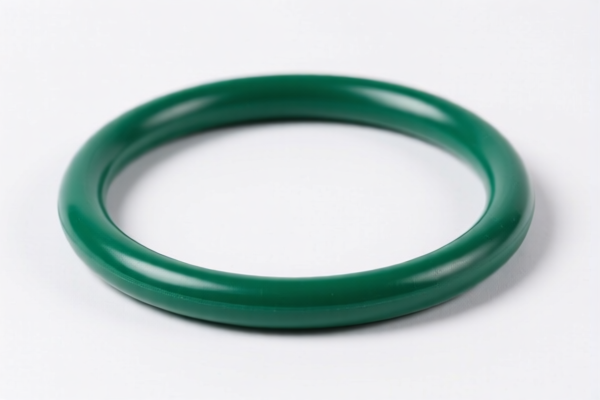
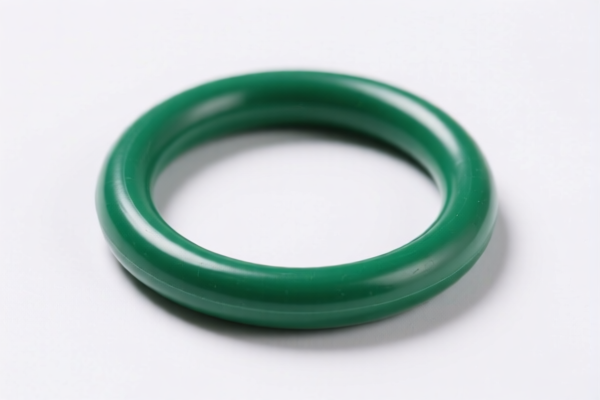

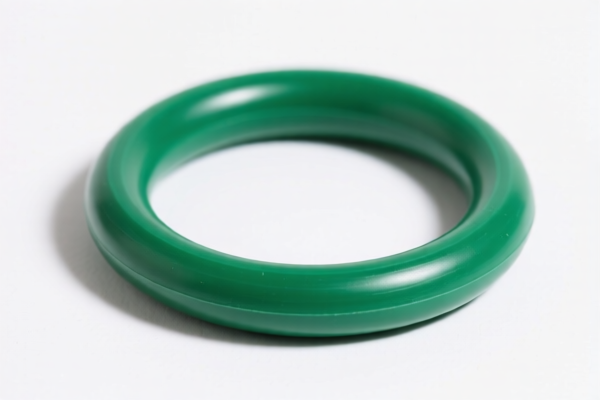
AI Analysis
🏗️ PVC Corner Bead (Plastic Corner Profiles for Construction & Furniture)
🌐 HS Code Reference & Customs Clearance Guide | 2026 Latest Tariff Analysis | Professional Compliance Strategy
📌 I. Product Definition & Classification: What Exactly is a "PVC Corner Bead"?
PVC Corner Beads are essential building components used to protect, reinforce, and finish the external or internal corners of walls, ceilings, and furniture. In international trade, they fall under Chapter 39 (Plastics and Articles Thereof), but the specific classification depends heavily on their physical form (extruded profile vs. simple strip) and primary usage (construction vs. furniture accessory).
Key Distinction Logic: 1. Construction/Architectural Profiles: If the item is an extruded profile specifically shaped for plasterboard/jointing or architectural finishing, it often falls under Heading 3916 (Plastics for rods/tubes/profiles) or Heading 3925 (Builders' ware). 2. General Plastic Parts/Accessories: If the item is a generic plastic strip used for furniture protection or car body protection, it is classified under Heading 3926 (Other articles of plastic).
⚠️ Critical Classification Trap:
- Misclassifying a construction-grade "jointing bead" as a "furniture part" (3926) instead of a "plastic profile" (3916) can lead to different duty rates and regulatory scrutiny.
- The presence of "122 Section" (Section 301/Trade War) tariffs significantly impacts costs for Chinese-origin goods.
📦 II. HS Code Classification Details (Based on Provided Data)
| HS Code | Product Description | Application/State | Total Tax Rate* | Tax Breakdown |
|---|---|---|---|---|
3925.90.00.00 |
PVC Corner Bead, Plastic, Architectural/Construction (Other) | Building components, general construction use | 40.3% | Base: 5.3% + Add'l: 25.0% (Sec 301) + 122 Sec: 10.0% |
3916.20.00.91 |
PVC Corner Bead, Vinyl Polymer, Strips/Bars | General purpose strips, non-specific end-use | 40.8% | Base: 5.8% + Add'l: 25.0% (Sec 301) + 122 Sec: 10.0% |
3916.20.00.20 |
PVC Corner Bead, Vinyl Polymer, Profiles | Construction or furniture matching profiles | 40.8% | Base: 5.8% + Add'l: 25.0% (Sec 301) + 122 Sec: 10.0% |
3926.30.50.00 |
PVC Corner Bead, Plastic, Furniture/Car Body Protection | Furniture connectors, car trim protection parts | 22.8% | Base: 5.3% + Add'l: 7.5% (Sec 301) + 122 Sec: 10.0% |
3926.90.99.89 |
PVC Corner Bead, Plastic, Other Plastic Articles | General plastic parts, not elsewhere specified | 22.8% | Base: 5.3% + Add'l: 7.5% (Sec 301) + 122 Sec: 10.0% |
* Note: Rates apply to imports from China. The "122 Section" refers to specific US administrative tariffs often applied alongside Section 301.
💰 III. 2026 Tariff Rate Deep Dive
🎯 1. High Tax Bracket: Construction & General Profiles (3925 & 3916)
Applicable Codes: 3925.90.00.00, 3916.20.00.91, 3916.20.00.20
| Item | Detail |
|---|---|
| Total Effective Rate | 40.3% – 40.8% |
| Base Duty | 5.3% – 5.8% (Standard MFN rate for plastics) |
| Section 301 Add-on | +25.0% (Heavy tariff on Chinese plastics/construction materials) |
| Section 122/Other Add-on | +10.0% (Additional administrative or specific trade remedy tariff) |
| Calculation Basis | CIF Value × Total Rate |
| Strategic Insight | These codes are for products viewed as building materials or raw plastic profiles. The high tariff (+35% add-ons) reflects US policy to protect domestic plastic manufacturing and construction supply chains. |
🎯 2. Lower Tax Bracket: Accessories & Parts (3926)
Applicable Codes: 3926.30.50.00, 3926.90.99.89
| Item | Detail |
|---|---|
| Total Effective Rate | 22.8% |
| Base Duty | 5.3% |
| Section 301 Add-on | +7.5% (Significantly lower than the 25% bracket) |
| Section 122/Other Add-on | +10.0% |
| Calculation Basis | CIF Value × 22.8% |
| Strategic Insight | These codes classify the corner beads as "Other Plastic Articles" or "Parts of Furniture/Vehicles". By positioning the product as a furniture accessory or general plastic part rather than a "construction material," shippers can save ~18% in duties. This is a common optimization strategy if the product’s primary use can be documented as furniture/automotive trim. |
🛠️ IV. Customs Clearance Practical Advice (Pitfall Avoidance)
✅ 1. Documentation Checklist (Essential for Smooth Clearance)
| Document | Required? | Purpose |
|---|---|---|
| Product Specification Sheet | ✅ Yes | Must clearly state: Material (PVC/Vinyl), Shape (Profile/Strip), Dimensions. |
| Intended Use Statement | ✅ Yes | Crucial for distinguishing between 3916/3925 (Construction) vs. 3926 (Furniture/Part). |
| Photos of Product | ✅ Yes | Show the cross-section profile to prove it is a "profile" (3916) or a "part" (3926). |
| Commercial Invoice | ✅ Yes | Description must match HS code logic. E.g., "PVC Corner Guard for Furniture" vs. "PVC Wall Corner Bead for Construction." |
| Country of Origin Certificate | ✅ Yes | Must confirm China origin to apply the correct Section 301 tariffs. |
✅ 2. Classification Strategy & Declarations
🔥 "Use Case Defines Code, Code Defines Cost!"
| Scenario | Recommended HS Code | Reasoning |
|---|---|---|
| Sold to Builders/Gypsum Wallboard Installers | 3925.90.00.00 or 3916.20.00.20 |
Clearly a construction accessory/profile. Expect 40%+ tax. |
| Sold to Furniture Manufacturers/Auto Trim Shops | 3926.30.50.00 or 3926.90.99.89 |
Classified as a part/accessory. Lower tax (22.8%). |
| Generic Bulk Strips with No Specific End-Use | 3916.20.00.91 |
Treated as raw plastic profiles for further processing. |
⚠️ Warning:
- Do not misdeclare a construction-grade corner bead as a "furniture part" to save taxes. If the product is visibly designed for drywall/jointing (e.g., perforated legs for plaster adhesion), customs will reclassify it to 3925 or 3916 and impose penalties.
- Ensure the description on the invoice aligns with the actual physical characteristics and advertised use.
✅ 3. Special Considerations for Section 301 & 122
- Section 301 (25% vs 7.5%): The jump from 7.5% to 25% is significant. If your product can legitimately be used in furniture or automotive applications, ensure your marketing and invoices highlight this "dual-use" potential to justify the
3926classification. - 122 Section Tariff (10%): This applies uniformly across the provided data. It is likely a specific administrative duty. Budget for this cost regardless of the base code.
🌍 V. Global Market Comparison (Contextual)
| Market | Typical HS Classification for PVC Corner Beads | Approx. Duty (China Origin) | Notes |
|---|---|---|---|
| 🇺🇸 USA | 3926 or 3916/3925 |
22.8% – 40.8% | Heavily affected by Section 301. Classification optimization is key. |
| 🇪🇺 EU | 3926.90 |
~5-8% | No Section 301. Generally lower barriers for plastic parts. |
| 🇨🇳 China (Export) | N/A | 0% (Export) | Focus on downstream market duties. |
| 🇨🇦 Canada | 3926.90 |
~5-10% | CUSMA benefits may apply if re-exported, but direct CN import faces tariffs. |
📌 Key Takeaway:
The USA is the most complex market due to the layered tariff structure (Base + Sec 301 + Sec 122). Strategic classification is not just about compliance, but profitability.
📌 VI. Common Errors & How to Avoid Them
❌ Error 1: Ignoring the "Primary Use"
👉 Consequence: Using 3926 for a product clearly intended for construction drywall leads to audits, back-taxes, and delays.
✅ Fix: If sold to construction companies, use 3925.90.00.00. Be honest about the end-user.
❌ Error 2: Misidentifying "Profiles" vs. "Articles"
👉 Consequence: Confusion between 3916 (Profiles/Rods/Tubes) and 3926 (Other Articles).
✅ Fix: Check the physical shape. Extruded, long, continuous shapes used as building materials often lean toward 3916 or 3925. Finished, cut-to-size protective corners for cars/furniture lean toward 3926.
❌ Error 3: Underestimating "122 Section" Costs
👉 Consequence: Budgeting only for Sec 301 and missing the additional 10%.
✅ Fix: Always include the +10% in your landed cost calculations for US imports from China.
🎯 VII. Conclusion: Optimize Your Landed Cost
🎯 Key Strategy:
🔹 "If it fits a car or sofa, try
3926(22.8%). If it goes on a wall, expect3925/3916(40%+)."
🔹 "Document the 'Furniture/Trim' use case to justify lower tariffs, but ensure physical evidence supports it."
🔹 "Always include the 10% Section 122 tariff in your P&L."
📌 Pro Tip:
If you are a manufacturer, consider labeling your products with dual-use instructions (e.g., "For protecting corners in automotive trim AND furniture assembly") to provide flexibility in classification. However, always consult a licensed customs broker for a Binding Tariff Ruling before large-scale shipments.
✨ Smart Classification = Lower Duties = Higher Margins!
💼 Don't let incorrect HS Codes eat your profit!
Customer Reviews
About HS Code Classification
The Harmonized System (HS) is an internationally standardized nomenclature developed by the World Customs Organization (WCO) to classify traded products. Over 200 countries use the HS system as the basis for customs tariffs, trade statistics, and import/export regulations.
Each HS code follows a hierarchical structure:
- Chapter (2 digits) — Broad category of goods (e.g., Chapter 84: Machinery and Mechanical Appliances)
- Heading (4 digits) — More specific grouping within the chapter
- Subheading (6 digits) — Internationally standardized breakdown, used by all WCO member countries
- National subdivisions (8-10 digits) — Country-specific extensions for further classification, such as US HTSUS 10-digit codes
Correct HS code classification is essential for smooth customs clearance, accurate duty payment, and compliance with trade regulations. Misclassification can lead to customs delays, overpayment of duties, or penalties.
When importing from CN to US, the applicable tariff rates may include:
- Most-Favored-Nation (MFN) rate — The standard duty rate applied to WTO members
- General rate — Applied to countries without trade agreements
- Trade remedy duties — Additional tariffs such as Section 301 (anti-dumping), Section 232 (national security), or countervailing duties
The information provided on this page is for reference purposes only. For official classification, please consult with your local customs authority or a licensed customs broker.