pvc corner strip
CN → US| HS Code | Tariff Rate | Origin | Destination | Doc |
|---|---|---|---|---|
| 3925200091 | 22.8% | CN | US | Official Doc |
| 3925900000 | 40.3% | CN | US | Official Doc |
| 3916200091 | 40.8% | CN | US | Official Doc |
| 3916200020 | 40.8% | CN | US | Official Doc |
| 3926305000 | 22.8% | CN | US | Official Doc |
| 3926909989 | 22.8% | CN | US | Official Doc |
Product Images
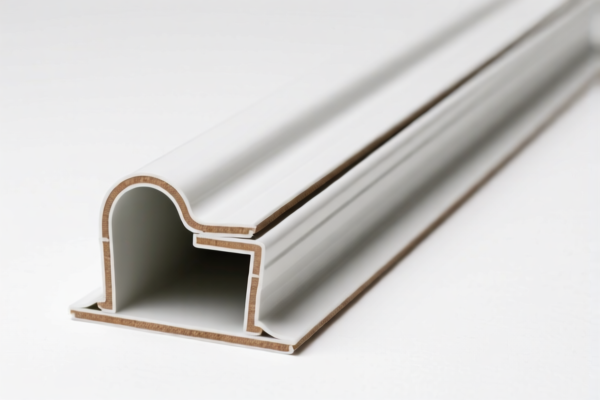
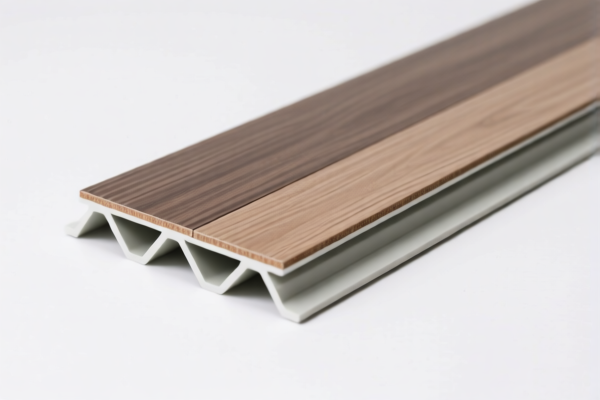
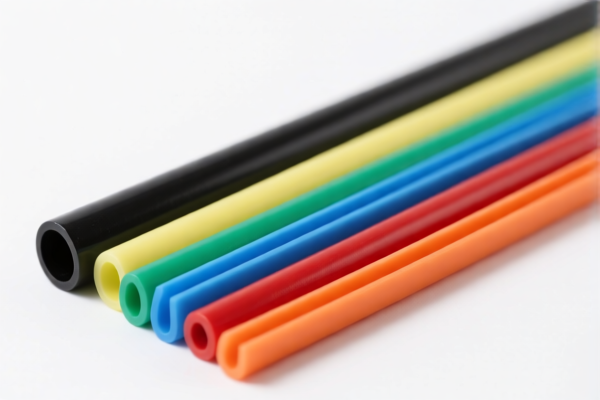

AI Analysis
🛡️ PVC Corner Strip (PVC Protective Edge Strip)
🌐 HS Code Classification & Clearance Guide | 2026 Latest Tariff Analysis | Strategic Import Strategy
📌 I. Product Definition & Classification: Do You Really Understand "PVC Corner Strips"?
PVC Corner Strips are essential building components and furniture accessories used for edge protection, decoration, and structural reinforcement. In international trade, their classification depends heavily on their specific application (construction vs. general use) and physical form (extruded profile vs. finished accessory).
Key Distinction Points:
- Construction Profiles: If used as part of window frames, door frames, or architectural trim, they may fall under Chapter 39.25.
- General Plastic Articles: If used for general furniture protection, wall corner guards, or generic packaging edge protection, they typically fall under Chapter 39.26 or 39.16 (depending on shape).
- Raw Profiles: If sold as unfinished extruded bars/profiles intended for further fabrication, they may fall under Chapter 39.16.
⚠️ Critical Classification Risk:
Misclassifying a finished "corner guard" as a "raw plastic profile" can lead to severe penalties. Conversely, classifying a raw profile as a "finished article" may result in overpayment or audit flags.
📦 II. HS Code Classification Details (2026 Latest Tariff Alignment)
Based on the provided data, here are the six potential HS Codes for PVC Corner Strips, along with their rationale and tax implications.
| HS Code | Product Description & Rationale | Total Tax Rate | Tax Breakdown (CN Origin to US) |
|---|---|---|---|
| 3925.20.00.91 | Plastic Installation Goods for Doors/Windows: Rationale: PVC is plastic; corner strips are viewed as "accessories for plastic window/door frames." |
22.8% | Base: 5.3% Section 301: 7.5% 122 Section: 10% |
| 3925.90.00.00 | Other Builders' Work of Plastic: Rationale: PVC is plastic; corner strips are seen as "other building components" not specifically for windows/doors. |
40.3% | Base: 5.3% Section 301: 25.0% 122 Section: 10% |
| 3916.20.00.91 | Other Articles of Vinyl Polymers: Rationale: PVC is a vinyl polymer; shaped as strips/profiles. Classified as "other" extruded items. |
40.8% | Base: 5.8% Section 301: 25.0% 122 Section: 10% |
| 3916.20.00.20 | Vinyl Polymer Articles for Buildings/Furniture: Rationale: PVC vinyl polymer; strip shape used for building or furniture profiles. |
40.8% | Base: 5.8% Section 301: 25.0% 122 Section: 10% |
| 3926.30.50.00 | Plastic Articles for Furniture/Bodywork: Rationale: PVC plastic; corner strips viewed as "connectors/protective parts" for furniture or vehicles. |
22.8% | Base: 5.3% Section 301: 7.5% 122 Section: 10% |
| 3926.90.99.89 | Other Plastic Articles: Rationale: PVC plastic; corner strips as "other plastic articles" with no specific conflict in general category. |
22.8% | Base: 5.3% Section 301: 7.5% 122 Section: 10% |
🔍 Important Note:
- 3916 codes carry the highest tax burden (40.8%) due to higher Section 301 rates (25%).
- 3925 and 3926 codes are significantly more cost-effective (22.8%) and should be prioritized if the product fits these descriptions.
- The difference between 7.5% and 25% Section 301 tariffs is crucial for profit margin calculation.
💰 III. 2026 Latest Tariff Rate Breakdown (Including Surcharges)
✅ Applicable Country: United States (US)
✅ Origin: China (CN)
✅ Effective Date: Current policies (Section 301 + 122 Section)
🎯 1. 3925.20.00.91 & 3926.30.50.00 & 3926.90.99.89 — Low-Tax Category (22.8%)
These three codes share the same tax structure, making them the most economical options if applicable.
| Item | Content |
|---|---|
| Base Tariff | 5.3% (Ad Valorem) |
| Section 301 Tariff | +7.5% (Reduced rate for certain goods; Note: Verify if this applies to your specific subheading) |
| 122 Section Tariff | +10% (USTR Section 122, often applicable to imports affecting national security/trade balance) |
| Total Tax Rate | 22.8% |
| Tax Calculation | CIF Value × 22.8% |
| De Minimis Eligibility | ❌ Not Applicable (De Minimis usually does not apply to China-origin goods under Section 301/122) |
| Legal Basis Path | HTSUS:3925.20.00.91 / 3926.30.50.00 / 3926.90.99.89 → Section 301: 7.5% → Section 122: 10% |
📌 Explanation:
- These codes benefit from a lower Section 301 rate (7.5%) compared to the standard 25%.
- This is ideal for importers looking to minimize duty costs.
- Ensure the product description aligns with "window/door accessories" (3925) or "furniture/plastic articles" (3926) to qualify.
🎯 2. 3925.90.00.00 — Medium-Tax Category (40.3%)
| Item | Content |
|---|---|
| Base Tariff | 5.3% |
| Section 301 Tariff | +25.0% (Standard Section 301 rate) |
| 122 Section Tariff | +10% |
| Total Tax Rate | 40.3% |
| Tax Calculation | CIF Value × 40.3% |
| Legal Basis Path | HTSUS:3925.90.00.00 → Section 301: 25% → Section 122: 10% |
📌 Explanation:
- This code falls under "Other plastic installation goods" and is subject to the full 25% Section 301 tariff.
- Use this only if the product cannot be classified under 3925.20 or 3926.
🎯 3. 3916.20.00.91 & 3916.20.00.20 — High-Tax Category (40.8%)
| Item | Content |
|---|---|
| Base Tariff | 5.8% |
| Section 301 Tariff | +25.0% (Standard Section 301 rate) |
| 122 Section Tariff | +10% |
| Total Tax Rate | 40.8% |
| Tax Calculation | CIF Value × 40.8% |
| Legal Basis Path | HTSUS:3916.20.00.91 / 3916.20.00.20 → Section 301: 25% → Section 122: 10% |
📌 Explanation:
- Chapter 3916 refers to plastics in primary forms (e.g., rods, tubes, profiles).
- If your corner strips are unfinished extruded profiles intended for further processing, they may fall here.
- High risk: Many finished "corner guards" are incorrectly declared here, leading to higher taxes and potential customs scrutiny.
🛠️ IV. Customs Clearance Practical Advice (Pitfall Avoidance Guide)
✅ 1. Documentation Checklist (Must-Haves)
| Document | Required | Explanation |
|---|---|---|
| ✅ Product Specification Sheet | ✔️ | Dimensions, material (100% PVC or composite), hardness, color, usage (interior/exterior). |
| ✅ Technical Drawing | ✔️ | Show if it’s a finished corner piece or an unfinished profile. |
| ✅ Product Photos | ✔️ | Clear images showing the corner shape, surface texture, and any branding. |
| ✅ Commercial Invoice | ✔️ | Clearly state "PVC Corner Strip" or "PVC Profile for Window Frame" – avoid vague terms like "Plastic Parts". |
| ✅ Packing List | ✔️ | Include net/gross weight, dimensions, and package count. |
| ✅ Material Safety Data Sheet (MSDS) | ✔️ | If applicable, to prove non-hazardous nature. |
✅ 2. Declaration Strategies (Key Tips)
🔥 "Define Use, Not Just Material!"
| Scenario | Recommended HS Code | Declaration Description |
|---|---|---|
| Finished corner guards for furniture | 3926.30.50.00 or 3926.90.99.89 |
"PVC Corner Protector for Furniture, Finished Article" |
| Trim pieces for window/door frames | 3925.20.00.91 |
"PVC Corner Strip for Plastic Window/Door Frame Assembly" |
| General building corner beads | 3925.90.00.00 |
"PVC Building Corner Guard for Wall Protection" |
| Unfinished extruded PVC rods/tubes | 3916.20.00.91 |
"PVC Extruded Profile, Unfinished, for Further Fabrication" |
⚠️ Critical Warning:
- Do not declare finished corner guards as "plastic profiles" (3916) to save costs if they are clearly finished goods. Customs may reclassify them and apply penalties.
- If the product is used for both furniture and construction, choose the code that best represents its primary function.
✅ 3. Special Considerations
| Situation | Handling Advice |
|---|---|
| Custom-Extruded Shapes | Provide detailed drawings to justify Chapter 3916 (profiles) vs. 3926 (articles). |
| Composite Materials | If PVC is mixed with other materials, consult the "Essential Character" rule. Pure PVC favors Chapter 39. |
| Markings/Branding | Ensure no prohibited trademarks or misleading "Made in USA" claims if imported from China. |
| Section 122 Applicability | Verify if the 10% Section 122 tariff still applies to your specific import date and product category, as policies can change. |
🌍 V. Global Market Comparison (2026 Latest)
| Country/Region | Recommended HS Code | Tariff (China Origin) | Certification Requirements | Notes |
|---|---|---|---|---|
| 🇺🇸 USA | 3925.20.00.91 / 3926.30.50.00 |
22.8% (Best Case) | None specific, but ensure non-toxic PVC | Avoid 3916 (40.8%) if possible. |
| 🇨🇳 China | 3925.20.00.91 / 3926.90.99.89 |
~5% (Import Duty) | CCC (if applicable) | Low duty, but check export controls. |
| 🇪🇺 EU | 3926.90.99 / 3925.90.90 |
0–6.5% (varies) | REACH, RoHS | No Section 301/122 surcharges. |
| 🇬🇧 UK | 3926.90.99 / 3925.90.90 |
0–6.5% | UKCA, REACH | Post-Brexit rules apply. |
| 🇨🇦 Canada | 3925.20.00 / 3926.90.99 |
0–5% (CUSMA eligible) | Health Canada (if contact food) | CUSMA may eliminate tariffs. |
📌 Conclusion:
- The USA has the most complex tariff structure for PVC goods due to Section 301 and 122.
- Strategic Classification between 3925/3926 (22.8%) and 3916/3925.90 (40%+) can save ~17-18% in duties.
- Always prioritize 3925.20 or 3926.30 if the product fits, as they offer the lowest tax burden.
📌 VI. Common Mistakes & Pitfalls (Lessons Learned)
❌ Mistake 1: Declaring finished corner guards as "PVC Rods/Tubes" (3916)
👉 Consequence: Customs may reclassify and charge 40.8% instead of 22.8%, plus penalties.
👉 Fix: Use accurate descriptions like "Corner Protector" or "Trim Piece."
❌ Mistake 2: Ignoring the "122 Section" tariff
👉 Consequence: Unexpected 10% surcharge at customs.
👉 Fix: Include 10% in your cost calculations for all China-origin PVC imports.
❌ Mistake 3: Misidentifying "Window Accessories" vs. "Building Materials"
👉 Consequence: Incorrect HS Code (3925.20 vs 3925.90).
👉 Fix: Provide proof of intended use (e.g., customer contracts, product catalogs).
✅ Correct Declaration Example:
"PVC Corner Strip, White, 1.5m Length, for Use in Interior Window Frame Assembly, Finished Article, Model: PVC-CORNER-01"
🎯 VII. Conclusion: Professional Classification Saves Money!
🎯 Key Takeaways:
🔹 "Use Determines Code: Window/Door → 3925.20 (22.8%); Furniture/General → 3926 (22.8%); Raw Profiles → 3916 (40.8%)."
🔹 "Avoid 3916 unless truly unfinished: The 18% duty difference is significant!"
🔹 "Include 122 Section 10% in all cost models for China-origin PVC goods."
📌 Pro Tip:
If your PVC Corner Strips are used in high-end construction projects, consider classifying under 3925.20.00.91 to leverage the lower Section 301 rate.
For furniture or DIY markets, 3926.30.50.00 is ideal.
📣 Immediate Action:
📞 Consult a licensed customs broker to confirm the best HS Code based on your exact product design and intended use.
📄 Request an Advance Ruling from CBP if your product falls into a gray area (e.g., half-finished profiles).
🚀 Optimize your supply chain: Right Code = Lower Duty = Higher Profit!
✨ Precision in Classification, Profitability in Import!
💼 Every Dollar Saved in Duty is a Dollar Earned in Profit!
Customer Reviews
About HS Code Classification
The Harmonized System (HS) is an internationally standardized nomenclature developed by the World Customs Organization (WCO) to classify traded products. Over 200 countries use the HS system as the basis for customs tariffs, trade statistics, and import/export regulations.
Each HS code follows a hierarchical structure:
- Chapter (2 digits) — Broad category of goods (e.g., Chapter 84: Machinery and Mechanical Appliances)
- Heading (4 digits) — More specific grouping within the chapter
- Subheading (6 digits) — Internationally standardized breakdown, used by all WCO member countries
- National subdivisions (8-10 digits) — Country-specific extensions for further classification, such as US HTSUS 10-digit codes
Correct HS code classification is essential for smooth customs clearance, accurate duty payment, and compliance with trade regulations. Misclassification can lead to customs delays, overpayment of duties, or penalties.
When importing from CN to US, the applicable tariff rates may include:
- Most-Favored-Nation (MFN) rate — The standard duty rate applied to WTO members
- General rate — Applied to countries without trade agreements
- Trade remedy duties — Additional tariffs such as Section 301 (anti-dumping), Section 232 (national security), or countervailing duties
The information provided on this page is for reference purposes only. For official classification, please consult with your local customs authority or a licensed customs broker.