pvc flat pipe
CN → US| HS Code | Tariff Rate | Origin | Destination | Doc |
|---|---|---|---|---|
| 3917230000 | 38.1% | CN | US | Official Doc |
| 3917320010 | 38.1% | CN | US | Official Doc |
| 3926909987 | 22.8% | CN | US | Official Doc |
| 3926909989 | 22.8% | CN | US | Official Doc |
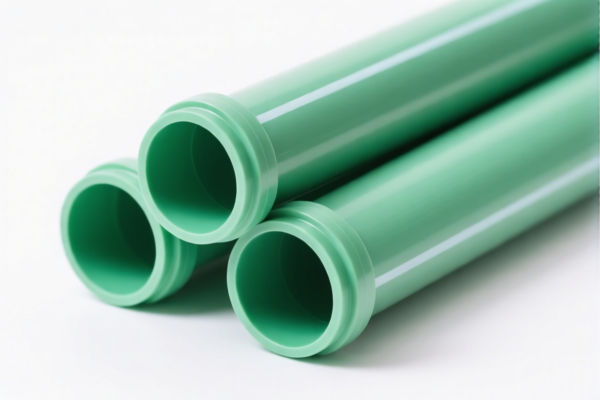
Product Images


AI Analysis
🖇️ PVC Flat Pipe (Flat Plastic Conduits)
🌐 HS Code Reference & Clearance Guide | 2026 Latest Tariff Analysis | Professional Customs Strategy
📌 I. Product Definition & Classification: Understanding "PVC Flat Pipe"
PVC Flat Pipes (often referred to as flat ducts, flat conduits, or flexible flat tubing) are specialized plastic products used for wiring protection, ventilation, or fluid transport in compact spaces. In international trade, they are strictly categorized based on their material composition and physical form.
Key Distinction: * Material: Primarily Polyvinyl Chloride (PVC) or other vinyl polymers. * Shape: Flat (cross-section is rectangular or oval, not circular). * Function: Flexible or semi-rigid tubes for cables, hoses, or air.
⚠️ Critical Classification Logic: * If it is a tube/piping made of vinyl polymers (PVC) → It generally falls under HS 3917 (Tubes, pipes, and hoses, and fittings thereof). * If it is considered a general plastic article without specific tubing characteristics → It might fall under HS 3926 (Other articles of plastics).
📦 II. HS Code Classification Details (2026 Latest Tariff Authority)
Based on the provided data, here are the precise classifications for PVC Flat Pipes, categorized by material specificity and legal definition.
| HS Code | Product Description | Application Scenario | Material Specificity |
|---|---|---|---|
3917.23.00.00 |
PVC Flat Pipe (Vinyl Polymer) | Dedicated flat piping, cable conduits, specific PVC forms | ✅ High (Specifically "Vinyl Polymers") |
3917.32.00.10 |
PVC Pipe (General PVC) | General PVC tubes/pipes, including flat variants if deemed standard PVC | ✅ High (Specifically "Polyvinyl Chloride") |
3926.90.99.87 |
Other Plastic Articles | PVC pipes that do not fit specific vinyl polymer definitions, "catch-all" for plastics | ⚠️ Low (Generic "Plastic") |
3926.90.99.89 |
Other Plastic Articles | Similar to above, generic catch-all for plastic tubing not in 3917 | ⚠️ Low (Generic "Plastic") |
🔍 Key Insight: * HS 3917 is the preferred classification for PVC pipes/tubes because it is specific to "Tubes, pipes, and hoses." * HS 3926 is a "catch-all" (兜底类目) for plastic articles. It is only used if the product fails to meet the strict definition of 3917 (e.g., if it's not strictly a "tube" or made of non-vinyl plastics). * Note: The data shows
3917.23.00.00specifically lists "PVC Flat Pipe," making it the most accurate entry for this specific item.
💰 III. 2026 Latest Tariff Rate Breakdown (Including Surtaxes & Policy Add-ons)
✅ Applicable Country: United States (US)
✅ Origin: China (CN)
✅ Effective Date: Current rates applicable for 2025/2026 imports
🎯 1. 3917.23.00.00 & 3917.32.00.10 — PVC Pipes/Tubes (Vinyl Polymer)
These codes attract the highest tariff burden due to stricter classification under Section 3917.
| Item | Content |
|---|---|
| Base Tariff | 3.1% (Ad valorem) |
| Section 301 Surcharge | +25.0% (USITC Footnote) |
| Section 122 Tariff | +10.0% (Specific US Policy Add-on) |
| Total Effective Tax Rate | 38.1% |
| Tax Calculation | CIF Value × 38.1% |
| De Minimis Exemption? | ❌ NO (Not eligible for $800 de minimis exemption) |
| Legal Basis Path | USITC:3917.23.00.00 → SECTION301:25% → SECTION122:10% |
📌 Explanation: * Base 3.1%: Standard Most Favored Nation (MFN) rate for PVC tubes. * 25% Section 301: Standard retaliatory tariff on Chinese plastic goods. * 10% Section 122: Additional tariff imposed on certain goods under Section 122 of the Trade Expansion Act. * Total 38.1%: This is a high-cost classification. Importers must budget for this heavy tax burden.
🎯 2. 3926.90.99.87 & 3926.90.99.89 — Other Plastic Articles (Generic)
These codes use the "catch-all" classification for plastics, resulting in lower but still significant tariffs.
| Item | Content |
|---|---|
| Base Tariff | 5.3% (Ad valorem) |
| Section 301 Surcharge | +7.5% (Reduced Surcharge for Generic Plastics) |
| Section 122 Tariff | +10.0% (Same Section 122 Policy) |
| Total Effective Tax Rate | 22.8% |
| Tax Calculation | CIF Value × 22.8% |
| De Minimis Exemption? | ❌ NO (Not eligible for $800 de minimis exemption) |
| Legal Basis Path | USITC:3926.90.99.87 → SECTION301:7.5% → SECTION122:10% |
📌 Explanation: * Base 5.3%: Higher base rate than 3917, but... * 7.5% Section 301: Significantly lower than the 25% for specific PVC tubes. This is the key savings. * Total 22.8%: This is 15.3% lower than the 3917 classification. * ⚠️ Risk: Using HS 3926 for a product that clearly fits HS 3917 (PVC Pipe) may lead to customs audits, re-classification penalties, or delays. Only use if the product strictly does not meet 3917 definitions.
🛠️ IV. Customs Clearance Practical Advice (Real-World Pitfall Guide)
✅ 1. Documentation Checklist (Do Not Miss Any)
| Document | Required | Notes |
|---|---|---|
| ✅ Product Specification Sheet | ✔️ | Must state material: "100% PVC" or "Polyvinyl Chloride". Avoid vague terms like "plastic." |
| ✅ Cross-Section Diagram | ✔️ | Show that it is Flat (rectangular/oval), not round. |
| ✅ Commercial Invoice | ✔️ | Description: "PVC Flat Pipe, Vinyl Polymer, for Cable Protection." |
| ✅ Packing List | ✔️ | Detail weight and dimensions. |
| ✅ Material Certificate | ✔️ | Confirm PVC composition. |
✅ 2. Classification Strategy (Key Tips)
🔥 “Be Specific: Vinyl Polymer = 38.1% | Generic Plastic = 22.8% (But Risky)”
| Scenario | Recommended HS Code | Tariff Rate | Risk Level |
|---|---|---|---|
| Standard PVC Flat Pipe (Clear PVC material, tubing function) | 3917.23.00.00 |
38.1% | ✅ Low (Accurate) |
| PVC Flat Pipe (Ambiguous material, possibly mixed plastic) | 3926.90.99.87 |
22.8% | ⚠️ Medium (May be challenged) |
| Non-PVC Plastic Flat Duct (e.g., PE, PP) | 3926.90.99.89 |
22.8% | ✅ Low (Accurate) |
📌 Crucial Warning: * If your product is explicitly PVC, customs may force reclassification to
3917if you declare3926, leading to back taxes + penalties. * Recommendation: If the material is 100% PVC, accept the 38.1% rate for compliance safety. If you want to use the 22.8% rate, ensure the material is not purely vinyl, or consult a customs broker for a Pre-Ruling.
✅ 3. Special Cases
| Situation | Handling Advice |
|---|---|
| OEM Custom Flat Pipes | Provide client specs to prove intended use. |
| Reinforced PVC Pipes | If reinforced with metal/fiberglass, still likely 3917 if plastic is primary material. |
| Small Sample Shipments | No de minimis exemption. Even $50 samples incur 38.1% tax. Factor into costs. |
🌍 V. Global Market Clearance Comparison (2026)
| Country/Region | Recommended HS Code | Tariff (China Origin) | Notes |
|---|---|---|---|
| 🇺🇸 USA | 3917.23.00.00 |
38.1% | High tariffs due to Sec 301 + 122 |
| 🇨🇳 China | 3917.23.00.00 |
5-10% | Standard import tariff, no surcharges |
| 🇪🇺 EU | 3917.23.00.00 |
4-6% | No Section 122/301 equivalents |
| 🇬🇧 UK | 3917.23.00.00 |
4-6% | Post-Brexit independent rates |
| 🇦🇺 Australia | 3917.23.00.00 |
5% | Generally low tariffs |
📌 Conclusion: * The US market is exceptionally expensive for PVC pipes due to layered tariffs. * Supply Chain Strategy: Consider sourcing from Vietnam, Mexico, or Thailand to avoid Section 301 (25%) and Section 122 (10%) surcharges. * If sourced from China, the total landed cost increases by ~38% vs. FOB price.
📌 VI. Common Errors & Pitfall Guide (Lessons Learned)
❌ Error 1: Declaring "Plastic Tube" under 3926 when it is clearly PVC.
👉 Consequence: Customs reclassifies to 3917 → Pay extra 15.3% + penalties.
❌ Error 2: Ignoring Section 122 Tariff. 👉 Consequence: Underpayment of 10%. Customs demands back taxes + interest.
❌ Error 3: Claiming De Minimis ($800 exemption) for small samples. 👉 Consequence: Seizure or forced payment. PVC pipes are not exempt.
❌ Error 4: Vague Description "Plastic Pipe." 👉 Consequence: Customs delays for valuation and classification review.
✅ Correct Approach:
“PVC Flat Pipe, Polyvinyl Chloride Polymer, Flexible, for Electrical Conduit, Model XYZ, HS 3917.23.00.00”
🎯 VII. Conclusion: Precise Classification Saves Money!
🎯 Remember the Rule:
🔹 “PVC Pipe = 3917 (38.1%) | Generic Plastic = 3926 (22.8%)”
🔹 “Accuracy Over Savings: Don’t risk penalties for a 15% difference!”
🔹 “No De Minimis: Even $10 samples pay tax!”
📌 Pro Tip: * If your PVC Flat Pipes are sourced from Vietnam or Mexico, apply for Tariff Exclusion or enjoy 0-5% rates. * Apply for an Advance Ruling with US CBP if you are uncertain about the material composition. This provides legal certainty.
📣 Immediate Action:
📞 Consult your customs broker to confirm material specifications.
🚀 Calculate total landed cost with 38.1% tax before ordering.
💼 Your bottom line depends on accurate HS coding!
✨ Professional Clearance Starts with Precision!
💼 Every cent of tax is worth calculating correctly!
Customer Reviews
About HS Code Classification
The Harmonized System (HS) is an internationally standardized nomenclature developed by the World Customs Organization (WCO) to classify traded products. Over 200 countries use the HS system as the basis for customs tariffs, trade statistics, and import/export regulations.
Each HS code follows a hierarchical structure:
- Chapter (2 digits) — Broad category of goods (e.g., Chapter 84: Machinery and Mechanical Appliances)
- Heading (4 digits) — More specific grouping within the chapter
- Subheading (6 digits) — Internationally standardized breakdown, used by all WCO member countries
- National subdivisions (8-10 digits) — Country-specific extensions for further classification, such as US HTSUS 10-digit codes
Correct HS code classification is essential for smooth customs clearance, accurate duty payment, and compliance with trade regulations. Misclassification can lead to customs delays, overpayment of duties, or penalties.
When importing from CN to US, the applicable tariff rates may include:
- Most-Favored-Nation (MFN) rate — The standard duty rate applied to WTO members
- General rate — Applied to countries without trade agreements
- Trade remedy duties — Additional tariffs such as Section 301 (anti-dumping), Section 232 (national security), or countervailing duties
The information provided on this page is for reference purposes only. For official classification, please consult with your local customs authority or a licensed customs broker.