pvc foam plastic sheet black
CN → US| HS Code | Tariff Rate | Origin | Destination | Doc |
|---|---|---|---|---|
| 3926909989 | 22.8% | CN | US | Official Doc |
| 3921121100 | 39.2% | CN | US | Official Doc |
| 3921125000 | 41.5% | CN | US | Official Doc |
Product Images
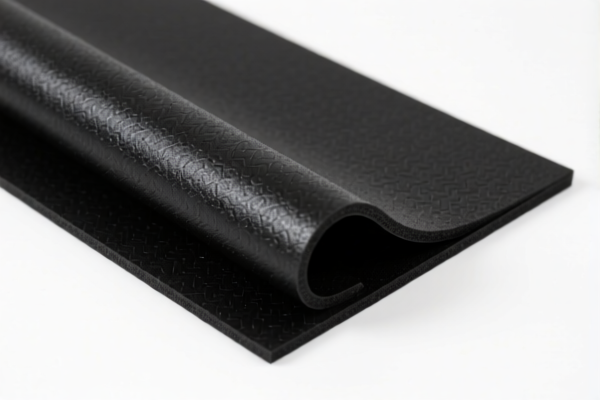
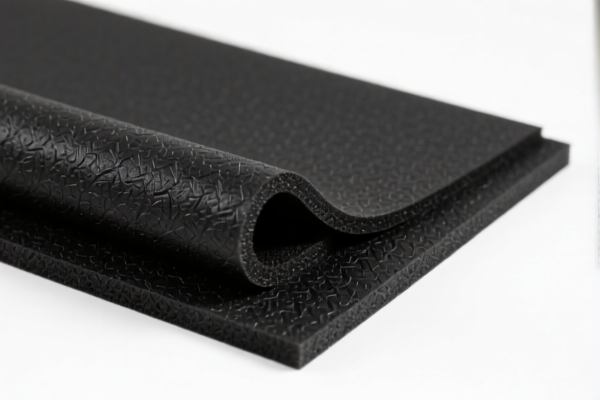
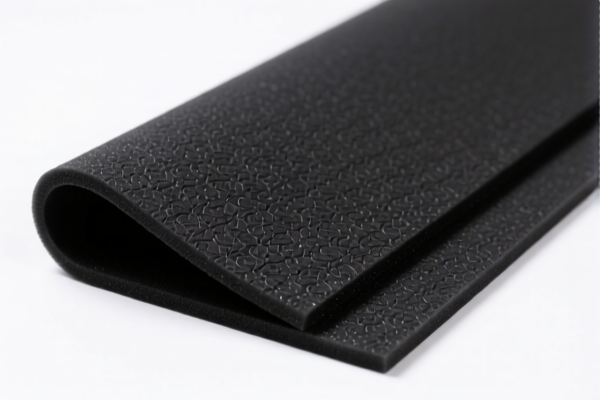
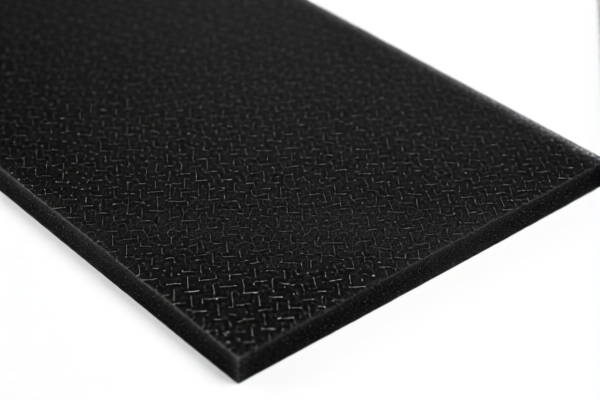
AI Analysis
🖥️ PVC Foam Plastic Sheet (Black)
🌐 HS Code Reference & Customs Clearance Guide | 2026 Latest Tariff Analysis | Professional-Level Compliance Strategy
📌 I. Product Definition & Classification: Do You Really Understand "Black PVC Foam Sheets"?
PVC foam sheets (black) are rigid, lightweight plastic boards widely used in signage, construction, cabinetry, and industrial applications. In international trade, their classification depends heavily on material composition, physical form, and processing level. The key distinction lies in whether the product is considered a "plastic board" generally or a "foam-specific polymer board," which drastically affects tariff rates due to US trade policies.
⚠️ Key Distinction Point:
- If classified as a generic "other plastic article" → Lower base tariff, lower additional duties.
- If classified as a "foamed PVC board" → Higher base tariff, higher additional duties (Section 301 + Section 122).
📦 II. HS Code Classification Details (2026 Latest Tariff Authority Comparison)
| HS Code | Product Description | Application Scenario | Foam Type | Total Tax Rate |
|---|---|---|---|---|
3926.90.99.89 |
Other plastic articles; PVC foam plastic board (black) | General-purpose black PVC boards, signage, basic industrial use | Rigid PVC board (non-foamed or minimally foamed) | 22.8% |
3921.12.11.00 |
Industrial PVC foam board; Polyvinyl chloride polymer foam board | High-end industrial applications, specialized construction, premium signage | Foamed/Porous structure | 39.2% |
3921.12.50.00 |
Foam boards, sheets, and membranes; PVC foam board | General foam board/membrane category, mixed-use industrial foam | Foamed/Porous structure | 41.5% |
🔍 Critical Reminder:
- Black color does not change the HS code but may affect visual inspection by customs.
- Foamed vs. Non-Foamed: If the product has a visible cellular structure (like cheese or sponge), it likely falls under 3921.12 (Foamed). If it is solid, dense, or minimally processed, it may fall under 3926.90 (Other plastic articles).
- Misclassification Risk: Declaring a foamed board as3926.90.99.89to save on taxes can lead to penalties, audits, and back-tariffs.
💰 III. 2026 Latest Tariff Rate Breakdown (Including Additional Taxes & Policy Surcharges)
✅ Applicable Country: United States (US)
✅ Origin: China (CN)
✅ Effective Date: Current (as per 2026 tariff structure)
🎯 1. 3926.90.99.89 – Other Plastic Articles (Black PVC Board)
| Item | Detail |
|---|---|
| Base Tariff | 5.3% |
| Section 301 Additional Tariff | 7.5% |
| Section 122 Tariff | 10% |
| Total Tax Rate | 22.8% |
| Tax Calculation | CIF Value × 22.8% |
| De Minimis Exemption | ❌ Not Eligible (Deny De Minimis) |
| Legal Basis Path | USITC:3926.90.99.89 → Section 301: 7.5% → Section 122: 10% |
📌 Explanation:
- This classification is the most cost-effective for black PVC sheets if they can be legally classified as "other plastic articles" rather than "foamed boards."
- Section 301 (7.5%) applies to all Chinese-origin plastics in this category.
- Section 122 (10%) is a specific additional duty on certain plastic products.
- Total burden: 22.8% is relatively lower compared to foamed counterparts.
🎯 2. 3921.12.11.00 – Industrial PVC Foam Board (Polymer Foam)
| Item | Detail |
|---|---|
| Base Tariff | 4.2% |
| Section 301 Additional Tariff | 25.0% |
| Section 122 Tariff | 10% |
| Total Tax Rate | 39.2% |
| Tax Calculation | CIF Value × 39.2% |
| De Minimis Exemption | ❌ Not Eligible (Deny De Minimis) |
| Legal Basis Path | USITC:3921.12.11.00 → Section 301: 25% → Section 122: 10% |
📌 Note:
- The base tariff is lower (4.2%), but the Section 301 tariff is much higher (25%) because this code is classified under "foamed plastics," which face stricter trade restrictions.
- Total burden: 39.2% is significantly higher than3926.90.99.89.
🎯 3. 3921.12.50.00 – Foam Boards, Sheets, and Membranes (PVC)
| Item | Detail |
|---|---|
| Base Tariff | 6.5% |
| Section 301 Additional Tariff | 25.0% |
| Section 122 Tariff | 10% |
| Total Tax Rate | 41.5% |
| Tax Calculation | CIF Value × 41.5% |
| De Minimis Exemption | ❌ Not Eligible (Deny De Minimis) |
| Legal Basis Path | USITC:3921.12.50.00 → Section 301: 25% → Section 122: 10% |
📌 Note:
- This is the highest tariff category among the three.
- It applies to broader "foam sheets/membranes" and often attracts the same high Section 301 rate (25%) as other foamed plastics.
- Avoid this code unless your product is explicitly a "membrane" or "sheet" with specific foam characteristics that do not qualify for3921.12.11.00.
🛠️ IV. Customs Clearance Practical Advice (Real-World Pitfall Avoidance)
✅ 1. Required Documentation Checklist (Mandatory)
| Document | Required? | Description |
|---|---|---|
| ✅ Product Specification Sheet | ✔️ | Must include material (PVC), form (board/sheet), density, thickness, color (black), and foam structure details. |
| ✅ Technical Data Sheet | ✔️ | Proof of whether the product is foamed (cellular structure) or solid. This is the #1 determinant for HS code. |
| ✅ Product Photos | ✔️ | Clear images showing cross-section (to prove foam vs. solid) and overall appearance. |
| ✅ Commercial Invoice | ✔️ | Must accurately describe the product as "Black PVC Foam Sheet" or "Black PVC Board." |
| ✅ Packing List | ✔️ | Detail weight, dimensions, and packaging type. |
| ✅ Origin Certificate | ✔️ | If applicable for preferential treatment (though unlikely for China-US trade in this category). |
✅ 2. Declaration Tips (Key Mantra)
🔥 "Foam Structure Determines Code, 301 Tariff Kills Profit!"
| Scenario | Correct Declaration | Incorrect Practice |
|---|---|---|
| Solid/Dense Black PVC Board | 3926.90.99.89 (22.8%) |
Misdeclare as foamed → 39.2%+ |
| Open-Cell/Close-Cell Foamed PVC | 3921.12.11.00 (39.2%) or 3921.12.50.00 (41.5%) |
Claim as solid to avoid Section 301 → Audit & Penalty |
| Mixed Shipment (Foam + Solid) | Split declarations by HS code | Combine into one code → Risk of seizure |
| OEM Custom Black Sheets | Provide client design + material proof | Vague description "Plastic Sheet" → Customs Holds |
✅ 3. Special Case Handling
| Scenario | Handling Advice |
|---|---|
| Low-Density Foam | If density is very low (<0.3 g/cm³), it may still be classified as foamed. Ensure documentation reflects this. |
| High-Density Solid Board | If density is high (>1.2 g/cm³), argue for 3926.90.99.89 as "other plastic articles." Provide lab tests. |
| Black Color Specifics | Black pigment does not affect HS code, but ensure no other materials (metal, wood) are present, or it may be classified elsewhere. |
| Pre-Ruling Application | Highly Recommended: Apply for a Binding Tariff Information (BTI) or US Customs Ruling to lock in the HS code before shipment. |
🌍 V. Global Market Comparison (2026 Latest)
| Country/Region | Recommended HS Code | Tariff (China Origin) | Certification Requirements | Notes |
|---|---|---|---|---|
| 🇺🇸 United States | 3926.90.99.89 (if solid) |
22.8% | None specific | 3921.12 codes face 39.2%+ |
| 🇨🇳 China | 3926.90.99.89 |
5.3% | CCC (if applicable) | No additional surcharges |
| 🇪🇺 EU | 3926.90.99 |
6.5% | CE, REACH | No Section 301/122 |
| 🇬🇧 UK | 3926.90.99 |
6.5% | UKCA | Post-Brexit rules apply |
| 🇯🇵 Japan | 3921.12.00 |
8.0% | PSE (if electrical) | Foam vs. solid distinction matters |
📌 Conclusion:
- The US is the most challenging market due to the combination of Section 301 (25%) and Section 122 (10%) on foamed plastics.
- Strategic Recommendation: If possible, design products to be "solid" or "non-foamed" to qualify for3926.90.99.89(22.8% vs. 39.2%+). This can save ~16-18% in tariffs.
📌 VI. Common Errors & Pitfall Guide (Lessons Learned)
❌ Mistake 1: Declaring foamed PVC as "solid plastic" to avoid 25% Section 301.
👉 Consequence: Customs requires proof (density test, cross-section). If denied, back-tariffs + 50% penalty.
❌ Mistake 2: Using 3921.12.50.00 when 3921.12.11.00 is more specific for industrial boards.
👉 Consequence: Overpayment of taxes (41.5% vs. 39.2%).
❌ Mistake 3: Not providing density data.
👉 Consequence: Customs uses default higher rates or holds shipment for testing.
❌ Mistake 4: Ignoring Section 122 (10%).
👉 Consequence: Underestimation of total landed cost. Always include 10% in your cost model.
✅ Correct Practice:
"Black PVC Rigid Board, Density 0.8 g/cm³, Non-Foamed, For Signage Use, Model XYZ"
→ Supports3926.90.99.89(22.8%).
🎯 VII. Conclusion: Professional Declaration, Cost Optimization, Risk Mitigation!
🎯 Remember This Mantra:
🔹 "Foamed = 39%+, Solid = 22.8%. Density is King!"
🔹 "Section 301 + Section 122 = 35% on Foam. Avoid if Possible!"
🔹 "Always Get a Pre-Ruling for Black PVC Sheets."
📌 Pro Tip:
If your product is 100% solid PVC (no foam structure), fight for
3926.90.99.89.
If it is foamed, accept3921.12.11.00(39.2%) as the best option.
Never misdeclare foam as solid. The risk is not worth the savings.
📣 Immediate Action:
📞 Contact your customs broker + Provide density test report + Apply for a Binding Ruling.
🚀 Optimize your product design to minimize foam content if possible, to qualify for lower tariffs.
✨ Professional Clearance Starts with Accurate Classification!
💼 Your Bottom Line Depends on These 2.8% Differences!
Customer Reviews
About HS Code Classification
The Harmonized System (HS) is an internationally standardized nomenclature developed by the World Customs Organization (WCO) to classify traded products. Over 200 countries use the HS system as the basis for customs tariffs, trade statistics, and import/export regulations.
Each HS code follows a hierarchical structure:
- Chapter (2 digits) — Broad category of goods (e.g., Chapter 84: Machinery and Mechanical Appliances)
- Heading (4 digits) — More specific grouping within the chapter
- Subheading (6 digits) — Internationally standardized breakdown, used by all WCO member countries
- National subdivisions (8-10 digits) — Country-specific extensions for further classification, such as US HTSUS 10-digit codes
Correct HS code classification is essential for smooth customs clearance, accurate duty payment, and compliance with trade regulations. Misclassification can lead to customs delays, overpayment of duties, or penalties.
When importing from CN to US, the applicable tariff rates may include:
- Most-Favored-Nation (MFN) rate — The standard duty rate applied to WTO members
- General rate — Applied to countries without trade agreements
- Trade remedy duties — Additional tariffs such as Section 301 (anti-dumping), Section 232 (national security), or countervailing duties
The information provided on this page is for reference purposes only. For official classification, please consult with your local customs authority or a licensed customs broker.