pvc interior wall decoration
CN → US| HS Code | Tariff Rate | Origin | Destination | Doc |
|---|---|---|---|---|
| 3925200091 | 22.8% | CN | US | Official Doc |
| 3925900000 | 40.3% | CN | US | Official Doc |
| 3926904800 | 13.4% | CN | US | Official Doc |
| 3926904000 | 12.8% | CN | US | Official Doc |
| 3925305000 | 22.8% | CN | US | Official Doc |
Product Images
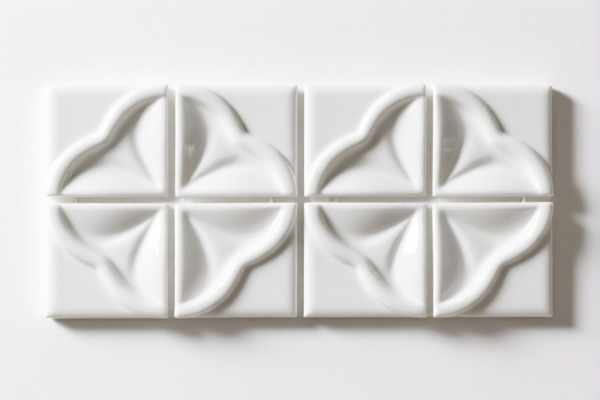


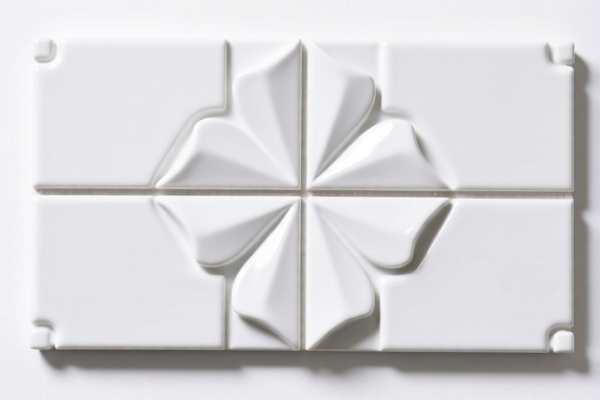
AI Analysis
🧱 PVC Interior Wall Decoration (PVC Wall Panels)
🌐 HS Code Reference & Customs Clearance Guide | 2024/2025 Tariff Analysis | Strategic Compliance Strategy
📌 I. Product Definition: What Exactly Is "PVC Interior Wall Decoration"?
PVC Interior Wall Panels are versatile architectural materials used for interior finishing, offering aesthetic appeal, moisture resistance, and ease of installation. In international trade, their classification depends heavily on specific morphology and intended use:
1. Architectural Components (Building Materials):
Panels designed as structural or semi-structural cladding, often rigid, with specific dimensions for wall coverage.
2. General Plastic Articles:
Items that do not fit the strict definition of "building materials" or are considered "other" plastic products due to form factor.
⚠️ Key Distinction Point:
- If the product is clearly identified as a building construction accessory (e.g., siding, cladding, wall paneling for structural coverage) → It falls under Chapter 39.25 (Builders' ware of plastics).
- If it is classified as a generic plastic decorative item not meeting specific building component criteria → It falls under Chapter 39.26 (Other articles of plastics).
📦 II. HS Code Classification Matrix (Based on Provided Data)
| HS Code | Product Description | Application Scenario | Key Classification Feature |
|---|---|---|---|
3925.20.00.91 |
PVC Solid Wall Decorative Boards (Plastic Material) | Interior wall cladding, decorative architecture | Classified as Plastic Building Components |
3925.90.00.00 |
PVC Solid Wall Decorative Boards (PVC Material) | General architectural cladding | Classified as Other Plastic Building Components |
3926.90.48.00 |
PVC Solid Wall Decorative Boards (General Plastic) | Decorative plastic goods | Classified as Other Plastic Articles |
3926.90.40.00 |
PVC Solid Wall Decorative Boards (PVC Articles) | General PVC plastic items | Classified as Other PVC Plastic Articles |
3925.30.50.00 |
PVC Fire-Retardant Decorative Wall Panels | Fire-rated interior walls, commercial buildings | Classified as Other Building Plastic Articles |
🔍 Critical Reminder:
- Chapter 39.25 is generally preferred for construction-specific items.
- Chapter 39.26 applies when the item is deemed a general plastic article rather than a specialized building component.
- Misclassification between 39.25 and 39.26 can lead to massive tariff differences due to Section 301 and 122(a) tariffs.
💰 III. 2024/2025 Tariff Rate Breakdown (Detailed Analysis)
✅ Applicable Market: United States (US)
✅ Origin: China (CN)
✅ Effective Dates: Current trade policy (including Section 301 and 122(a) provisions)
🎯 1. 3925.20.00.91 – PVC Solid Wall Decorative Boards (Building Components)
| Item | Details |
|---|---|
| Base Tariff | 5.3% |
| Section 301 Surcharge | 7.5% |
| 122(a) Surcharge | 10% |
| Total Tariff Rate | 22.8% |
| Calculation Basis | CIF Value × 22.8% |
| De Minimis Exemption | ❌ Not Eligible (High tariff threshold prevents $800 exemption in many cases) |
| Legal Path | Base Tariff → Section 301 (7.5%) → 122(a) (10%) |
📌 Explanation:
- This code captures standard plastic building components.
- The 22.8% rate is moderate compared to other codes, driven by the 7.5% Section 301 surcharge.
- Note: The 122(a) tariff is specifically targeting certain Chinese imports under recent executive orders.
🎯 2. 3925.90.00.00 – Other Plastic Building Components
| Item | Details |
|---|---|
| Base Tariff | 5.3% |
| Section 301 Surcharge | 25.0% |
| 122(a) Surcharge | 10% |
| Total Tariff Rate | 40.3% |
| Calculation Basis | CIF Value × 40.3% |
| De Minimis Exemption | ❌ Not Eligible |
| Legal Path | Base Tariff → Section 301 (25%) → 122(a) (10%) |
📌 Warning:
- This code incurs the highest Section 301 surcharge (25%).
- Total 40.3% makes this one of the most expensive classifications for PVC wall panels.
- Only use if the product strictly fits "Other Building Components" and cannot be classified under3925.20.
🎯 3. 3926.90.48.00 – Other Plastic Articles (General)
| Item | Details |
|---|---|
| Base Tariff | 3.4% |
| Section 301 Surcharge | 0.0% |
| 122(a) Surcharge | 10% |
| Total Tariff Rate | 13.4% |
| Calculation Basis | CIF Value × 13.4% |
| De Minimis Exemption | ❌ Not Eligible (Due to 122(a)) |
| Legal Path | Base Tariff → 122(a) (10%) |
📌 Strategic Note:
- No Section 301 Surcharge! This is a key advantage.
- Total 13.4% is significantly lower than building component codes.
- Risk: Must prove the item is not a "building component" but a general plastic article. Requires strong product description and possibly expert opinion.
🎯 4. 3926.90.40.00 – Other PVC Plastic Articles
| Item | Details |
|---|---|
| Base Tariff | 2.8% |
| Section 301 Surcharge | 0.0% |
| 122(a) Surcharge | 10% |
| Total Tariff Rate | 12.8% |
| Calculation Basis | CIF Value × 12.8% |
| De Minimis Exemption | ❌ Not Eligible |
| Legal Path | Base Tariff → 122(a) (10%) |
📌 Strategic Note:
- Lowest Total Tariff (12.8%).
- No Section 301 Surcharge.
- Highest Risk of Misclassification: Customs may argue this is a "building component" and reclassify to3925.xx, resulting in back taxes + penalties.
- Use Case: Suitable for decorative, non-structural PVC panels where "building component" status is weak.
🎯 5. 3925.30.50.00 – PVC Fire-Retardant Wall Panels
| Item | Details |
|---|---|
| Base Tariff | 5.3% |
| Section 301 Surcharge | 7.5% |
| 122(a) Surcharge | 10% |
| Total Tariff Rate | 22.8% |
| Calculation Basis | CIF Value × 22.8% |
| De Minimis Exemption | ❌ Not Eligible |
| Legal Path | Base Tariff → Section 301 (7.5%) → 122(a) (10%) |
📌 Explanation:
- Identical tariff structure to3925.20.00.91.
- Specifically for fire-retardant products.
- Must provide fire rating certifications (e.g., ASTM E84) to support classification.
🛠️ IV. Customs Clearance Practical Advice (Avoid Pitfalls)
✅ 1. Required Documentation Checklist
| Document | Required? | Notes |
|---|---|---|
| ✅ Product Specification Sheet | ✔️ | Must detail material (PVC), thickness, dimensions, and intended use (Interior Decoration). |
| ✅ Technical Data Sheet | ✔️ | Include fire rating (if claiming 3925.30.50.00), density, and installation method. |
| ✅ Product Photos | ✔️ | Show installation context (wall coverage) vs. decorative item. |
| ✅ Certificate of Origin | ✔️ | For US-Mexico-Canada Agreement (USMCA) if applicable (though PVC usually CN origin). |
| ✅ Commercial Invoice | ✔️ | Clearly state: "PVC Interior Wall Panels – Decorative Building Material" or "Plastic Decorative Items". |
| ✅ Fire Rating Certificate | ✔️ | Crucial for 3925.30.50.00. Without it, customs may reject fire-retardant classification. |
✅ 2. Classification Strategy & Risk Assessment
| Strategy | Recommendation | Risk Level |
|---|---|---|
| Lowest Tariff Approach | Classify under 3926.90.40.00 (12.8%) |
⚠️ High Risk – Customs may reclassify to 3925 if product is clearly for building use. |
| Safe Building Component | Classify under 3925.20.00.91 (22.8%) |
✅ Low Risk – Standard for wall panels. Accepts 22.8% as fair cost. |
| Fire-Rated Products | Classify under 3925.30.50.00 (22.8%) |
✅ Low Risk – If fire certificate is provided. Same rate as standard. |
| Avoid | 3925.90.00.00 (40.3%) |
❌ High Cost – Only use if no other 3925 code fits. Avoid due to 25% Section 301. |
🔥 Pro Tip:
- If you choose3926.90.40.00, ensure your product description emphasizes "Decorative," "Non-structural," and "General Purpose" to avoid being flagged as a building component.
- If you choose3925.20.00.91, emphasize "Construction," "Cladding," and "Wall Coverage."
✅ 3. Special Scenarios
| Scenario | Handling Advice |
|---|---|
| Composite Materials | If PVC is combined with wood/metal, consult a customs broker. May fall under different chapters. |
| Fire-Rated Claims | Must provide ASTM E84 or UL 723 test reports. Without them, you cannot claim 3925.30.50.00. |
| Sample Imports | Even samples are subject to tariffs. Use De Minimis only if under $800 AND code is eligible (note: many PVC codes are not eligible due to 122(a)). |
| OEM/White Label | Provide contract showing you are the importer of record. Ensure label matches HS code description. |
🌍 V. Global Market Comparison (2024/2025)
| Country/Region | Recommended HS Code | Tariff Rate | Key Certifications | Notes |
|---|---|---|---|---|
| 🇺🇸 USA | 3926.90.40.00 |
12.8% | None specific | Lowest tariff, but highest audit risk. |
| 🇺🇸 USA | 3925.20.00.91 |
22.8% | None specific | Safer, more common for wall panels. |
| 🇪🇺 EU | 3926.90 | ~6.5% | CE, REACH | Lower tariffs, no Section 301. |
| 🇨🇳 China | 3926.90 | ~6.5% | CCC (if applicable) | Export from China, import to other markets. |
| 🇬🇧 UK | 3926.90 | ~6.5% | UKCA | Post-Brexit, aligns with EU largely. |
📌 Conclusion for US Market:
- Cost Savings:3926.90.40.00saves ~10% vs.3925.20.00.91.
- Compliance Cost: Higher audit risk for3926codes.
- Recommendation: For high-volume, low-risk products, consider3926.90.40.00with strong documentation. For standard building panels, stick to3925.20.00.91.
📌 VI. Common Mistakes & Pitfalls (Lessons Learned)
❌ Mistake 1: Using 3926.90.40.00 for large-scale wall cladding systems.
👉 Result: Customs reclassifies to 3925.90.00.00 → 40.3% tariff + penalties.
❌ Mistake 2: Claiming fire-retardant status without certification.
👉 Result: Denied classification under 3925.30.50.00 → Falls back to general code, potential audit.
❌ Mistake 3: Ignoring 122(a) Surcharge.
👉 Result: Underestimating total landed cost. All listed codes include 10% 122(a) surcharge. Do not forget this in margin calculations.
✅ Correct Approach:
"PVC Interior Wall Panels, Decorative, 4mm Thickness, for Residential Use"
→ If non-structural →3926.90.40.00(12.8%)
→ If structural/cladding →3925.20.00.91(22.8%)
🎯 VII. Conclusion: Smart Classification for Maximum Profit
🎯 Key Takeaway:
🔹 Lowest Tariff:
3926.90.40.00(12.8%) – High Risk
🔹 Safest Tariff:3925.20.00.91(22.8%) – Low Risk
🔹 Avoid:3925.90.00.00(40.3%) – Too Expensive
🔹 Special Case: Fire-Rated →3925.30.50.00(22.8%) – Requires Certs
📌 Pro Tip:
- Always consult a licensed customs broker for pre-classification rulings.
- Keep fire rating certificates and product specs ready for audit.
- Factor in 122(a) 10% in all pricing models.
📣 Immediate Action:
📞 Contact a Customs Broker to review your product's physical characteristics.
📄 Prepare Documentation (Specs, Photos, Certs).
🚀 Optimize Landed Cost by choosing the right HS Code!
✨ Precision in Classification, Profit in Compliance!
💼 Every Percent Counts in International Trade!
Customer Reviews
About HS Code Classification
The Harmonized System (HS) is an internationally standardized nomenclature developed by the World Customs Organization (WCO) to classify traded products. Over 200 countries use the HS system as the basis for customs tariffs, trade statistics, and import/export regulations.
Each HS code follows a hierarchical structure:
- Chapter (2 digits) — Broad category of goods (e.g., Chapter 84: Machinery and Mechanical Appliances)
- Heading (4 digits) — More specific grouping within the chapter
- Subheading (6 digits) — Internationally standardized breakdown, used by all WCO member countries
- National subdivisions (8-10 digits) — Country-specific extensions for further classification, such as US HTSUS 10-digit codes
Correct HS code classification is essential for smooth customs clearance, accurate duty payment, and compliance with trade regulations. Misclassification can lead to customs delays, overpayment of duties, or penalties.
When importing from CN to US, the applicable tariff rates may include:
- Most-Favored-Nation (MFN) rate — The standard duty rate applied to WTO members
- General rate — Applied to countries without trade agreements
- Trade remedy duties — Additional tariffs such as Section 301 (anti-dumping), Section 232 (national security), or countervailing duties
The information provided on this page is for reference purposes only. For official classification, please consult with your local customs authority or a licensed customs broker.