pvc low voltage pipe
CN → US| HS Code | Tariff Rate | Origin | Destination | Doc |
|---|---|---|---|---|
| 3917320010 | 38.1% | CN | US | Official Doc |
| 5909002000 | 38.3% | CN | US | Official Doc |
| 3917390020 | 38.1% | CN | US | Official Doc |
| 3917230000 | 38.1% | CN | US | Official Doc |
| 3917390020 | 38.1% | CN | US | Official Doc |
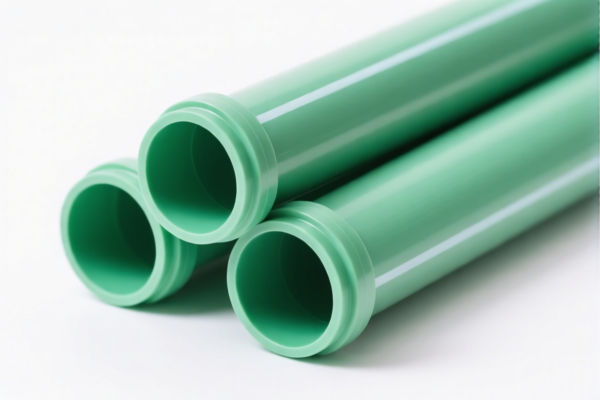
Product Images


AI Analysis
🚰 PVC Low Voltage Pipe (低压PVC软管)
🌐 HS Code Reference & Clearance Guide | 2026 Latest Tariff Analysis | Professional Customs Strategy
📌 I. Product Definition & Classification: Do You Truly Understand "PVC Pipes"?
PVC (Polyvinyl Chloride) pipes are fundamental components in electrical wiring, fluid transport, and industrial infrastructure. In international trade, the classification of PVC pipes is strictly dictated by their physical state (rigid vs. flexible) and application context.
For "PVC Low Voltage Pipe", the critical distinction lies in whether the pipe is treated as a general plastic tubing or a textile/industrial hose. This distinction directly impacts the HS Code and, consequently, the tariff liability.
⚠️ Key Classification Point:
- If the PVC pipe is flexible/hose-like and intended for electrical conduit or similar uses → Often classified under 3917 (Plastics tubing).
- If the PVC pipe has a specific woven or textile-like structure (or is classified broadly as "other hoses") → May fall under 5909 (Textile hose pipes).
- Rigidity vs. Flexibility: Rigid pipes vs. Flexible hoses have different subheadings within Chapter 39.
📦 II. HS Code Classification Details (2026 Authoritative Comparison)
Based on the provided data, here are the four potential HS Codes for PVC Low Voltage Pipes, along with their specific justifications and tax implications.
| HS Code | Product Description & Justification | Applicable Scenario | Material/Form Constraint |
|---|---|---|---|
3917.32.00.10 |
PVC material, low-pressure hose form. Fits the classification of "Other tubes, pipes, and hoses of plastics" specifically for PVC. | General PVC low-pressure flexible tubing, electrical conduits (non-textile reinforced). | ✅ PVC, Hose Form |
5909.00.20.00 |
PVC material, low-pressure hose form. Classified under "Textile hose pipes and similar hose of textile material" as "Other" category. | PVC hoses with textile reinforcement or those legally categorized under textile-related hose definitions. | ✅ PVC, Hose Form, Textile Context |
3917.39.00.20 |
PVC material, low-pressure hose form. Perfectly matches the material and form limitations in the classification. | Precise fit for PVC hoses that do not fall under other specific subheadings (like 3917.32). | ✅ PVC, Hose Form, Exact Match |
3917.23.00.00 |
PVC material, pipe form. Corresponds to "Tubes, pipes, and hoses of plastics" specifically for Vinyl Chloride Polymers. | Rigid or semi-rigid PVC pipes, not necessarily "hoses" in the flexible sense. | ✅ PVC, Pipe Form |
3917.32.00.10 |
PVC material, pipe form. Fits the definition of "Polyvinyl Chloride" material and "Pipe/Hose" form. | General PVC piping system components, flexible or rigid, categorized under PVC-specific subheadings. | ✅ PVC, Pipe Form |
🔍 Critical Reminder:
-3917.32.00.10appears twice with slightly different summaries (one as "hose", one as "pipe"). This indicates it is the most common code for general PVC low-pressure applications.
-5909.00.20.00is a high-risk classification. If the pipe does not meet the "textile hose" definition, misclassification here can lead to customs disputes.
-3917.23.00.00is for Vinyl Chloride Polymers specifically. Ensure the PVC composition is correctly declared.
💰 III. 2026 Latest Tariff Rate Breakdown (Detailed Tax Analysis)
✅ Applicable Country: United States (US)
✅ Country of Origin: China (CN)
✅ Effective Date: 2025/2026 (Post-Trade War Tariffs)
All four HS Codes listed below are subject to the same total tax rate of ~38.1% - 38.3% due to the current trade policy between the US and China.
🎯 1. 3917.32.00.10 & 3917.39.00.20 & 3917.23.00.00 —— PVC Pipes/Hoses
| Item | Content |
|---|---|
| Base Tariff Rate | 3.1% (MFN Rate for Chapter 39) |
| Section 301 Additional Tariff | +25.0% (Trade War Tariff on Chinese Goods) |
| Section 122 Tariff | +10.0% (Specific Additional Tariff on Certain Chinese Imports) |
| Total Effective Tax Rate | 38.1% |
| Tax Calculation | CIF Value × 38.1% |
| De Minimis Exemption | ❌ Not Eligible (Section 301 and Section 122 tariffs usually apply regardless of value for covered items) |
| Legal Basis | HTSUS: 3917.32.00.10 / 3917.39.00.20 / 3917.23.00.00 + Section 301 + Section 122 |
📌 Explanation:
- 3.1%: The standard Most Favored Nation (MFN) duty for plastic tubes and hoses.
- 25.0%: Imposed under Section 301 of the Trade Act of 1974, targeting a wide range of Chinese-manufactured plastics and industrial goods.
- 10.0%: Imposed under Section 122 (or similar ongoing trade provisions), adding an extra layer of cost.
- Total: 38.1%. This is a significant cost factor. Do not underestimate this in your pricing model.
🎯 2. 5909.00.20.00 —— Textile Hose Pipes (PVC-coated)
| Item | Content |
|---|---|
| Base Tariff Rate | 3.3% (MFN Rate for Chapter 59) |
| Section 301 Additional Tariff | +25.0% |
| Section 122 Tariff | +10.0% |
| Total Effective Tax Rate | 38.3% |
| Tax Calculation | CIF Value × 38.3% |
| De Minimis Exemption | ❌ Not Eligible |
| Legal Basis | HTSUS: 5909.00.20.00 + Section 301 + Section 122 |
📌 Note:
- The base rate is slightly higher (3.3% vs 3.1%) due to the textile-related classification.
- The total tax is 38.3%, the highest among the options.
- Ensure the product truly qualifies as a "textile hose pipe" to avoid misclassification penalties.
🛠️ IV. Customs Clearance Practical Advice (Real-World Pitfall Avoidance)
✅ 1. Required Documentation Checklist (Non-Negotiable)
| Document | Mandatory? | Description |
|---|---|---|
| ✅ Product Specification Sheet | ✔️ | Must clearly state: Material (PVC), Pressure Rating (Low Voltage/Low Pressure), Diameter, Length, Color, and Application (e.g., Electrical Conduit, Water Hose). |
| ✅ Material Safety Data Sheet (MSDS) | ✔️ | Confirms chemical composition (Polyvinyl Chloride). |
| ✅ Commercial Invoice | ✔️ | Must explicitly state: "PVC Low Voltage Pipe", HS Code, Country of Origin (China), and Unit Price. |
| ✅ Packing List | ✔️ | Details net/gross weight, carton dimensions, and quantity. |
| ✅ Certificate of Origin (CO) | ✔️ | Proof of Chinese origin (triggers the 38%+ tariffs). |
| ✅ Photos of Product & Labeling | ✔️ | Show the pipe's flexibility, inner/outer surface, and any printed markings (e.g., "PVC", "Low Voltage"). |
| ✅ Third-Party Test Report | ✔️ | UL, CE, or RoHS certification (if required by the end-user). |
✅ 2. Declaration Strategy (Key Tips)
🔥 "Describe Accurately, Don't Guess, Tax Difference is Huge!"
| Scenario | Correct Declaration | Wrong Action |
|---|---|---|
| Flexible PVC Conduit | 3917.32.00.10 (PVC Hose) |
Misclassifying as rigid pipe 3917.21.xx |
| Reinforced PVC Hose | 5909.00.20.00 (Textile Hose) |
Misclassifying as plain plastic hose (or vice versa) |
| Rigid PVC Pipe | 3917.23.00.00 (PVC Pipe) |
Misclassifying as "hose" if it's rigid |
| Mixed Pack (Pipes + Fittings) | Declare separately or as set? | Combining unrelated items → Clearance delay |
📌 Best Practice:
- Use clear English descriptions: "Flexible Polyvinyl Chloride (PVC) Tubing, Low Pressure, for Electrical Conduit, 1/2 Inch Diameter, Coiled."
- Avoid vague terms like "Plastic Tube" without specifying material (PVC) and form (Hose/Pipe).
✅ 3. Special Cases & Solutions
| Situation | Handling Advice |
|---|---|
| OEM Custom PVC Pipes | Provide customer POs and design drawings. Prove that the product is customized and not generic. |
| PVC Pipes with Textile Reinforcement | Likely 5909.00.20.00. Ensure the textile layer is significant enough to trigger this classification. |
| Imported for Industrial Use | No special tariff exemption. The 38% rate applies regardless of end-use. |
| Small Quantity Samples | No De Minimis Exemption. Even samples under $800 may be subject to Section 301 tariffs if from China. |
🌍 V. Global Market Comparison (2026 Overview)
| Country/Region | Recommended HS Code | Base Tariff | Additional Taxes | Notes |
|---|---|---|---|---|
| 🇺🇸 USA | 3917.32.00.10 / 5909.00.20.00 |
3.1% - 3.3% | +35.0% (301 + 122) | Total ~38.1-38.3%. High barrier. |
| 🇨🇳 China | 3917.32.00.10 |
6.5% - 10% | None | Standard import duty. |
| 🇪🇺 EU | 3917.32.00.00 |
6.5% | None | No major additional tariffs for China. |
| 🇬🇧 UK | 3917.32.00.00 |
6.5% | None | Post-Brexit rules apply. |
| 🇦🇺 Australia | 3917.32.00.00 |
5.0% | None | Free Trade Agreement considerations. |
📌 Conclusion:
- The USA market is the most expensive due to the cumulative 35%+ additional tariffs.
- EU, UK, and other markets have much lower barriers (~5-7%).
- Strategy: Consider sourcing PVC pipes from non-China origins (e.g., Vietnam, Thailand, Mexico) if targeting the US market to avoid Section 301 and Section 122 tariffs.
📌 VI. Common Mistakes & Pitfall Guide (Lessons Learned)
❌ Mistake 1: Declaring PVC Pipes as "Plastic Pipes" without specifying PVC.
👉 Consequence: Customs may reclassify to a higher duty rate or demand detailed chemical analysis.
❌ Mistake 2: Ignoring the "Section 122" tariff.
👉 Consequence: Underpaying tax by 10% → Back taxes + Penalties upon audit.
❌ Mistake 3: Misclassifying "Textile-Reinforced PVC Hoses" as plain plastic hoses.
👉 Consequence: Wrong HS Code (3917 vs 5909) → Clearance delay, potential fines for misdeclaration.
❌ Mistake 4: Assuming De Minimis ($800) exemption applies to small shipments.
👉 Consequence: Incorrect. Section 301 and 122 tariffs often negate de minimis for Chinese goods. Always pay the tax, even for samples.
✅ Correct Approach:
"Flexible PVC Low-Pressure Conduit, 1/2-inch Diameter, 100ft Roll, UL Listed, Made in China."
🎯 VII. Conclusion: Precision in Classification, Savings in Costs!
🎯 Remember the Mantra:
🔹 "PVC Low Voltage? Check Form! Hose vs Pipe? Check Tax! 38% is the Cost, Plan Ahead!"
🔹 "HS Code Determines Destiny, 10% Difference Costs Thousands, Declare Accurately, Avoid Delays!"
📌 Pro Tip:
If your PVC pipes are sourced from Vietnam, Thailand, or Mexico, you may qualify for 0%~5% duty (excluding Section 301/122).
Recommendation: Apply for an Advance Ruling from US Customs and Border Protection (CBP) before shipping. This provides legal certainty on the HS Code and tariff rate.
📣 Immediate Action:
📞 Contact a Professional Customs Broker + Provide Product Photos + Apply for HS Code Advance Ruling
🚀 Let your PVC Pipes Clear Customs Smoothly, Maximize Profits, and Expand Globally!
✨ Professional Clearance Starts with Accurate Classification!
💼 Every Penny of Cost Deserves Precise Calculation!
Customer Reviews
About HS Code Classification
The Harmonized System (HS) is an internationally standardized nomenclature developed by the World Customs Organization (WCO) to classify traded products. Over 200 countries use the HS system as the basis for customs tariffs, trade statistics, and import/export regulations.
Each HS code follows a hierarchical structure:
- Chapter (2 digits) — Broad category of goods (e.g., Chapter 84: Machinery and Mechanical Appliances)
- Heading (4 digits) — More specific grouping within the chapter
- Subheading (6 digits) — Internationally standardized breakdown, used by all WCO member countries
- National subdivisions (8-10 digits) — Country-specific extensions for further classification, such as US HTSUS 10-digit codes
Correct HS code classification is essential for smooth customs clearance, accurate duty payment, and compliance with trade regulations. Misclassification can lead to customs delays, overpayment of duties, or penalties.
When importing from CN to US, the applicable tariff rates may include:
- Most-Favored-Nation (MFN) rate — The standard duty rate applied to WTO members
- General rate — Applied to countries without trade agreements
- Trade remedy duties — Additional tariffs such as Section 301 (anti-dumping), Section 232 (national security), or countervailing duties
The information provided on this page is for reference purposes only. For official classification, please consult with your local customs authority or a licensed customs broker.