pvc pipe
CN → US| HS Code | Tariff Rate | Origin | Destination | Doc |
|---|---|---|---|---|
| 3917230000 | 38.1% | CN | US | Official Doc |
| 3917320010 | 38.1% | CN | US | Official Doc |
| 3926909987 | 22.8% | CN | US | Official Doc |
| 3926909989 | 22.8% | CN | US | Official Doc |
| 3917400020 | 40.3% | CN | US | Official Doc |
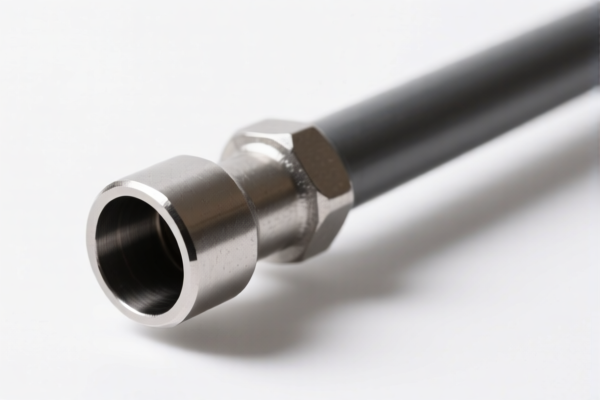
Product Images



AI Analysis
🛠️ PVC Pipe (Polyvinyl Chloride Tubing)
🌐 HS Code Classification & Customs Clearance Guide | 2026 Tariff Analysis | Strategic Export Strategy
📌 I. Product Definition & Classification: Is It Just a "Pipe"?
PVC Pipe is a ubiquitous plastic conduit used in water supply, drainage, sewage, electrical cable protection, and ventilation systems. In international trade, its HS Code classification hinges on three critical factors:
1. Specific Form: Is it a simple tube, a plumbing pipe, or a complex fitting?
2. Specific Use: Is it for plumbing/pressure, ventilation, or general "other" uses?
3. Material Composition: Is it strictly PVC (chlorinated polymer) or a general plastic mix?
⚠️ Key Classification Triggers:
- Rigid Pressure Pipes (for water/gas) → Usually 3917 (Tubes, pipes & hoses).
- Ventilation Ducts (flexible or rigid, for air flow) → 3917.40 (Fittings) or specific subcategories.
- Unspecified/General Plastic Tubes (non-structural, non-pressure) → Often 3926 (Other articles of plastics).
- Misclassification Risk: Classifying a pressure pipe as a general plastic tube can lead to underpayment of duties and severe penalties.
📦 II. HS Code Classification Details (Based on Provided Data)
The following table details the five specific HS Codes applicable to your PVC pipe products, along with their exact tax breakdowns.
| HS Code | Product Summary | Material & Form | Specific Use / Notes | Total Tax |
| :--- | :--- | :--- | :--- :--- |
| 3917.23.00.00 | Rigid PVC Pipe | Chlorinated Polymer (PVC) | Tubing, piping; general plumbing/pressure | 38.1% |
| 3917.32.00.10 | PVC Pipe | Polyvinyl Chloride | Tubing; standard rigid piping | 38.1% |
| 3917.40.00.20 | PVC Ventilation Pipe | Polyvinyl Chloride | Ventilation specific use | 40.3% |
| 3926.90.99.87 | General PVC Tube | Plastic (Unspecified) | Tubing; Usage unclear; "Other" plastics | 22.8% |
| 3926.90.99.89 | General PVC Tube | Polyvinyl Chloride | Tubing; "Other" plastics (No specific use) | 22.8% |
🔍 Critical Distinction:
- 3917 Series (38.1% - 40.3%): Reserved for pipes designed for specific fluid transport (water, gas) or ventilation. These carry higher tariffs due to specific trade restrictions.
- 3926 Series (22.8%): For general plastic tubes where the specific application is not defined or is not a primary pressure conduit. This is the "catch-all" category with a lower base tariff.
💰 III. 2026 Tariff Rate Breakdown (Detailed Policy Analysis)
✅ Applicable Market: USA (US)
✅ Country of Origin: China (CN)
✅ Policy Context: Section 301, Section 122, and IEEPA provisions active.
🎯 Scenario A: The "High-Tax" Category (3917.23.00.00 / 3917.32.00.10)
Applicable to standard plumbing and pressure PVC pipes.
| Tax Component | Rate | Legal Basis & Description |
|---|---|---|
| MFN Base Duty | 3.1% | Standard Most-Favored-Nation tariff for plastic tubes. |
| Section 301 Duty | 25.0% | "Additional" tariff imposed under the US Trade Act (301) on Chinese goods. |
| Section 122 Duty | 10.0% | "Section 122" tariff (often related to specific strategic goods or retaliatory measures). |
| Total Effective Rate | 38.1% | 3.1% + 25.0% + 10.0% |
📌 Explanation:
These pipes are heavily targeted. The 25% Section 301 is the primary driver, combined with the specific 10% Section 122 levy. The total 38.1% significantly impacts profit margins.
🎯 Scenario B: The "Ventilation" Category (3917.40.00.20)
Applicable to PVC ducts specifically for air ventilation.
| Tax Component | Rate | Legal Basis & Description |
|---|---|---|
| MFN Base Duty | 5.3% | Slightly higher base duty than standard tubes (5.3% vs 3.1%). |
| Section 301 Duty | 25.0% | Same heavy Section 301 tariff applies. |
| Section 122 Duty | 10.0% | Same Section 122 levy applies. |
| Total Effective Rate | 40.3% | 5.3% + 25.0% + 10.0% |
📌 Explanation:
Ventilation pipes carry the highest total tax (40.3%) due to a higher base rate (5.3%) combined with the full stack of additional duties.
🎯 Scenario C: The "General/Unspecified" Category (3926.90.99.87 / 3926.90.99.89)
Applicable to PVC tubes with unclear or non-standard uses.
| Tax Component | Rate | Legal Basis & Description |
|---|---|---|
| MFN Base Duty | 5.3% | Base tariff for "Other articles of plastics." |
| Section 301 Duty | 7.5% | Reduced Section 301 duty compared to the 3917 category (7.5% vs 25%). |
| Section 122 Duty | 10.0% | The 10% Section 122 levy still applies. |
| Total Effective Rate | 22.8% | 5.3% + 7.5% + 10.0% |
📌 Explanation:
Crucial Strategy: If your product can be legitimately classified under 3926 (e.g., non-structural tubing, decorative, or general-purpose), the Section 301 duty drops from 25% to 7.5%, saving 17.5% in total tax. However, this requires strong justification that the pipe is not a pressure conduit.
🛠️ IV. Customs Clearance Practical Advice (Actionable Strategy)
✅ 1. Documentation Preparation (The "Must-Haves")
To avoid reclassification and delays, you must provide:
| Document | Requirement | Why It Matters |
|---|---|---|
| Technical Data Sheet | ✔️ Mandatory | Must explicitly state "Pressure Rating" (PSI/bar), "Intended Fluid" (Water/Air/Sewage), and "Standards Met" (ASTM/ISO). |
| Product Photos | ✔️ Mandatory | Show the pipe ends (socketed vs. plain), markings (PVC, schedule 40, etc.), and any insulation/coating. |
| Application Declaration | ✔️ Mandatory | A signed letter stating the specific use (e.g., "For residential water supply," "For HVAC ducting," or "For cable protection"). |
| Bill of Lading | ✔️ Mandatory | Must match the HS Code exactly (e.g., do not list "General Plastic" if it is a Pressure Pipe). |
✅ 2. Classification Strategy: How to Avoid the 40.3% Trap?
🔥 The "Use-Case" Pivot Strategy
If your pipe is not used for high-pressure water or gas transport, do not declare it under 3917.23 or 3917.32.Correct Approach:
- If the pipe is for cable protection (non-pressure): Consider 3926.90.99.87/89 (22.8% rate).
- If the pipe is for light duty drainage: Verify if it qualifies for 3926 or 3917 based on ASTM standards.Warning: Misclassifying a high-pressure PVC pipe as "General Plastic" to save tax is fraud. Customs officers use the intended use and technical specs to determine the code. If the pipe has a high pressure rating but you declare it as "General," you risk 100% penalty + seizure.
✅ 3. Common Pitfalls (Do NOT Do This)
| ❌ Mistake | 🚨 Consequence |
|---|---|
| Claiming "Ventilation Pipe" as "General PVC Tube" | If the pipe has a specific ventilation profile, it must be 3917.40 (40.3%). Declaring it as 3926 (22.8%) leads to audits. |
| Using Vague Terms like "Plastic Pipe" on Invoice | Customs will auto-assign the highest risk code or demand clarification, causing 7-14 day delays. |
| Ignoring Section 122 | Many shippers forget the 10% Section 122 tariff. Even if the 3926 rate is lower, you still pay the full 10% + 7.5% + 5.3%. |
| Splitting a Single Shipment by HS Code | Do not split a shipment of "PVC Pipes" into two codes unless they are physically different products. Customs may reject partial declarations. |
🌍 V. Quick Comparison: Why the Rate Difference?
| Feature | 3917 Series (Plumbing/Ventilation) | 3926 Series (General/Other) |
|---|---|---|
| Primary Use | Transporting fluids (Water/Gas) or Air (Ventilation) | Non-structural, decorative, or unspecified uses |
| Pressure Rating | Often High (Schedule 40/80) | Low or None |
| Base Duty | 3.1% - 5.3% | 5.3% |
| Section 301 Tax | 25.0% (Heavy) | 7.5% (Lighter) |
| Section 122 Tax | 10.0% | 10.0% |
| Total Tax | 38.1% - 40.3% | 22.8% |
📌 Conclusion:
The Section 301 tariff is the main differentiator. If your product can be legally classified under 3926, you save 15.3% - 17.5% in taxes. However, if it is a standard water/gas pipe, you must pay the 38.1% - 40.3% rate.
📌 VI. Final Checklist for Exporters
- Verify Material: Is it pure PVC? (Polyvinyl Chloride).
- Define Use: Is it for water, gas, ventilation, or something else?
- Check Specs: Does it meet pressure standards? (If yes, avoid 3926).
- Select Code:
- Water/Gas Pipe →
3917.23.00.00or3917.32.00.10(38.1%) - Ventilation Pipe →
3917.40.00.20(40.3%) - General/Unspecified →
3926.90.99.87/89(22.8%)
- Water/Gas Pipe →
- Prepare Docs: Have your Technical Data Sheet ready for Customs.
✨ Pro Tip:
"If it flows water under pressure, it's 3917. If it's just a sleeve or non-pressure tube, it might be 3926. Check your specs before declaring!"
💼 Your Cost Strategy:
Accurate Classification = Saved Money. Don't guess; let the technical specs guide you.
📢 Ready to Ship?
Confirm your Product Intended Use today.
PVC Pipe is a high-risk category for re-classification.
Clarity is your best defense.
🚀 Clear Customs, Clear Profits!
🔍 Precision Starts with the Right HS Code!
Customer Reviews
About HS Code Classification
The Harmonized System (HS) is an internationally standardized nomenclature developed by the World Customs Organization (WCO) to classify traded products. Over 200 countries use the HS system as the basis for customs tariffs, trade statistics, and import/export regulations.
Each HS code follows a hierarchical structure:
- Chapter (2 digits) — Broad category of goods (e.g., Chapter 84: Machinery and Mechanical Appliances)
- Heading (4 digits) — More specific grouping within the chapter
- Subheading (6 digits) — Internationally standardized breakdown, used by all WCO member countries
- National subdivisions (8-10 digits) — Country-specific extensions for further classification, such as US HTSUS 10-digit codes
Correct HS code classification is essential for smooth customs clearance, accurate duty payment, and compliance with trade regulations. Misclassification can lead to customs delays, overpayment of duties, or penalties.
When importing from CN to US, the applicable tariff rates may include:
- Most-Favored-Nation (MFN) rate — The standard duty rate applied to WTO members
- General rate — Applied to countries without trade agreements
- Trade remedy duties — Additional tariffs such as Section 301 (anti-dumping), Section 232 (national security), or countervailing duties
The information provided on this page is for reference purposes only. For official classification, please consult with your local customs authority or a licensed customs broker.