PVC Pipe Profiles
CN → US| HS Code | Tariff Rate | Origin | Destination | Doc |
|---|---|---|---|---|
| 3917320010 | 38.1% | CN | US | Official Doc |
| 3916200091 | 40.8% | CN | US | Official Doc |
| 3917230000 | 38.1% | CN | US | Official Doc |
| 3916200020 | 40.8% | CN | US | Official Doc |
| 3926909989 | 22.8% | CN | US | Official Doc |
Product Images
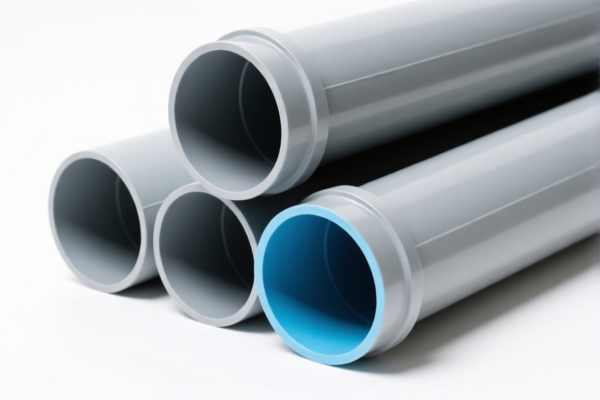
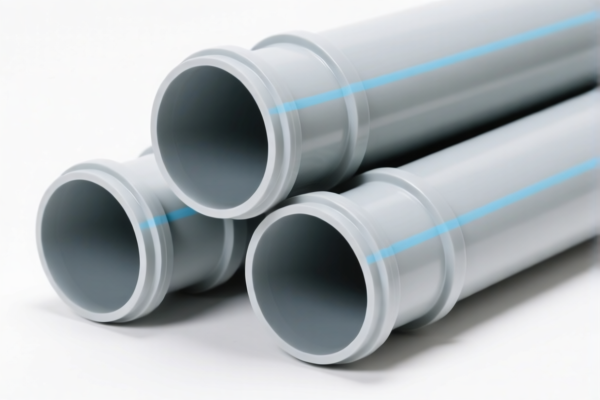
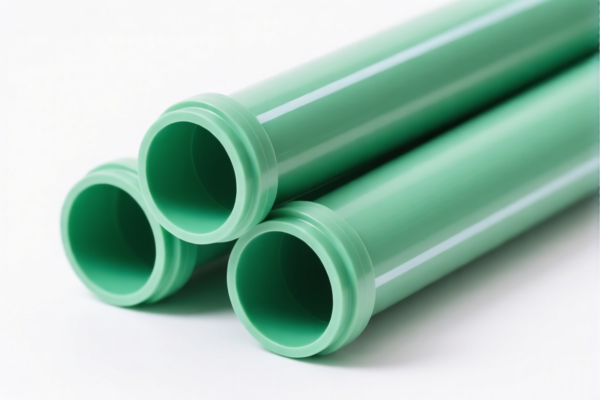

AI Analysis
🏗️ PVC Pipe Profiles: HS Code Classification & US Customs Clearance Strategy (2026 Update)
🌐 HS Code Reference & Clearance Guide | 2026 Latest Tariff Analysis | Professional Clearance Strategy
📌 I. Product Definition & Classification: Do You Really Understand "PVC Pipe Profiles"?
PVC Pipe Profiles are semi-finished or finished products made from Polyvinyl Chloride (PVC), primarily used in construction, plumbing, and industrial applications. In international trade, they are categorized based on form (pipe vs. profile) and material composition (hard pipe vs. general plastic profile).
Key Distinctions:
- Pipes (Tubes): Cylindrical, hollow, and designed for fluid/gas transmission or structural support. Classified under Chapter 3917.
- Profiles: Solid or hollow shapes with specific cross-sections (e.g., rods, bars, molded shapes) not primarily for fluid transport. Classified under Chapter 3916.
- General Plastic Articles: If the item doesn’t fit strict definitions of pipes or profiles, it may fall under general plastic goods (Chapter 3926).
⚠️ Critical Classification Point:
- Hollow + Cylindrical + For Transmission → HS 3917 (Pipes/Hoses)
- Solid/Hollow + Structural/Molded Shape → HS 3916 (Plastic Profiles/Bars)
- Generic Plastic Article → HS 3926 (Other Plastic Articles)
📦 II. HS Code Classification Details (2026 Latest Tariff Authority Mapping)
Based on the provided data, here are the precise HS Code mappings for PVC Pipe Profiles:
| HS Code | Product Description | Key Characteristics | Form Factor |
|---|---|---|---|
3917.32.00.10 |
PVC Round Pipe Profiles | Material: PVC; Form: Pipes; Matches PVC Pipe Classification | Hollow, Cylindrical |
3916.20.00.91 |
PVC Round Pipe Profiles | Material: PVC; Form: Profiles; Matches Plastic Profile Classification | Hollow/Solid, Specific Cross-Section |
3917.23.00.00 |
PVC Round Pipe Profiles | Material: Vinyl Chloride Polymer; Form: Rigid Pipes; Matches Rigid Pipe Definition | Hollow, Cylindrical, Rigid |
3916.20.00.20 |
PVC Round Pipe Profiles | Material: PVC; Form: Profiles; Matches Plastic Bars/Rods/Profiles Classification | Solid/Hollow, Rod/Bar Shape |
3926.90.99.89 |
PVC Round Pipe Profiles | Material: Plastic; Form: Profiles; No Specific Conflict, Classified as Plastic Articles | Generic Plastic Item |
🔍 Key Reminder:
- HS 3917 is reserved for pipes, tubes, and hoses. If the item is clearly a pipe (cylindrical, for flow), use this chapter.
- HS 3916 is for plastic rods, bars, sticks, and profiles. If the item is a structural profile or rod, use this chapter.
- HS 3926 is a catch-all for other plastic articles. Only use if the item doesn’t fit 3916 or 3917 definitions strictly.
💰 III. 2026 Latest Tariff Rate Breakdown (Including Additional Duties & Policy Surcharges)
✅ Applicable Country: United States (US)
✅ Origin: China (CN)
✅ Effective Date: November 10, 2025 (and subsequent imports)
🎯 1. 3917.32.00.10 —— PVC Round Pipe Profiles (PVC Pipes)
| Item | Content |
|---|---|
| Base Tariff | 3.1% (ad valorem) |
| Section 301 Surcharge | +25.0% |
| Section 122 Surcharge | +10.0% |
| Total Tariff | 38.1% |
| Tax Calculation | CIF Value × 38.1% |
| De Minimis Eligibility | ❌ No (deny_de_minimis) |
| Legal Basis Path | USITC:3917.32.00.10 → FOOTNOTE:301.3917.32 → IEEPA:122.3917 |
📌 Explanation:
- "Base Tariff 3.1%": Standard MFN rate for PVC pipes.
- "Section 301 Surcharge 25%": Added to Chinese-origin goods under Trade Act of 1974 Section 301.
- "Section 122 Surcharge 10%": Additional duty under IEEPA for specific national security concerns.
- Total 38.1%: High tariff, must be factored into cost planning.
🎯 2. 3916.20.00.91 —— PVC Round Pipe Profiles (Plastic Profiles)
| Item | Content |
|---|---|
| Base Tariff | 5.8% (ad valorem) |
| Section 301 Surcharge | +25.0% |
| Section 122 Surcharge | +10.0% |
| Total Tariff | 40.8% |
| Tax Calculation | CIF Value × 40.8% |
| De Minimis Eligibility | ❌ No (deny_de_minimis) |
| Legal Basis Path | USITC:3916.20.00.91 → FOOTNOTE:301.3916.20 → IEEPA:122.3916 |
📌 Note:
- Slightly higher base tariff (5.8%) than pipes (3.1%) due to classification as "profiles."
- Same surcharges apply. Total 40.8% is the highest among pipe/profile categories.
🎯 3. 3917.23.00.00 —— PVC Round Pipe Profiles (Rigid PVC Pipes)
| Item | Content |
|---|---|
| Base Tariff | 3.1% (ad valorem) |
| Section 301 Surcharge | +25.0% |
| Section 122 Surcharge | +10.0% |
| Total Tariff | 38.1% |
| Tax Calculation | CIF Value × 38.1% |
| De Minimis Eligibility | ❌ No (deny_de_minimis) |
| Legal Basis Path | USITC:3917.23.00.00 → FOOTNOTE:301.3917.23 → IEEPA:122.3917 |
📌 Important:
- Classified as rigid pipes, same base tariff as flexible pipes (3.1%).
- Total 38.1% same as general PVC pipes.
🎯 4. 3916.20.00.20 —— PVC Round Pipe Profiles (Plastic Rods/Bars)
| Item | Content |
|---|---|
| Base Tariff | 5.8% (ad valorem) |
| Section 301 Surcharge | +25.0% |
| Section 122 Surcharge | +10.0% |
| Total Tariff | 40.8% |
| Tax Calculation | CIF Value × 40.8% |
| De Minimis Eligibility | ❌ No (deny_de_minimis) |
| Legal Basis Path | USITC:3916.20.00.20 → FOOTNOTE:301.3916.20 → IEEPA:122.3916 |
📌 Note:
- Same tariff as3916.20.00.91.
- Applies to solid rods, bars, or molded profiles.
🎯 5. 3926.90.99.89 —— PVC Round Pipe Profiles (General Plastic Articles)
| Item | Content |
|---|---|
| Base Tariff | 5.3% (ad valorem) |
| Section 301 Surcharge | +7.5% |
| Section 122 Surcharge | +10.0% |
| Total Tariff | 22.8% |
| Tax Calculation | CIF Value × 22.8% |
| De Minimis Eligibility | ❌ No (deny_de_minimis) |
| Legal Basis Path | USITC:3926.90.99.89 → FOOTNOTE:301.3926.90 → IEEPA:122.3926 |
📌 Critical Advantage:
- Lowest total tariff (22.8%) among all options.
- Section 301 surcharge is only 7.5% (not 25%) because it’s classified as a "general plastic article," not a pipe/profile.
- Only use if the item doesn’t strictly fit pipe/profile definitions. Misclassification here can lead to penalties.
🛠️ IV. Clearance Practical Advice (Real-World Pitfall Avoidance Guide)
✅ 1. Documentation Checklist (All Required)
| Document | Required | Notes |
|---|---|---|
| ✅ Product Specifications | ✔️ | Include material (PVC), shape (pipe/profile), diameter, wall thickness, rigidity. |
| ✅ Cross-Section Diagram | ✔️ | Critical to distinguish between "pipe" (cylindrical) and "profile" (non-cylindrical). |
| ✅ Product Photos | ✔️ | Clear images of ends, cross-sections, and packaging. |
| ✅ Commercial Invoice | ✔️ | Must specify "PVC Pipe Profile" and HS Code. |
| ✅ Packing List | ✔️ | Detail item weights, dimensions, and quantities. |
| ✅ Certificate of Origin (CO) | ✔️ | Required for origin verification; China origin triggers surcharges. |
| ✅ Third-Party Test Report | ✔️ | ASTM/ISO standards for PVC material properties (if available). |
✅ 2. Declaration Tips (Key Mnemonics)
🔥 "Pipe vs. Profile: Shape is Key! Cylindrical = 3917, Non-Cylindrical = 3916, Generic = 3926 (Lower Tax)!"
| Scenario | Correct Declaration | Wrong Approach |
|---|---|---|
| Cylindrical Hollow Tube | 3917.32.00.10 or 3917.23.00.00 |
Declare as "Plastic Profile" → 40.8% |
| Solid Rod or Molded Shape | 3916.20.00.91 or 3916.20.00.20 |
Declare as "Pipe" → 38.1% |
| Irregular Plastic Item | 3926.90.99.89 |
Declare as "Pipe" → 38.1% (Higher Tax) |
| Mixed Package (Pipe + Profile) | Split Declaration | Mixed declaration → Risk of seizure or penalty |
✅ 3. Special Cases Handling
| Scenario | Handling Advice |
|---|---|
| OEM Custom PVC Profiles | Provide design drawings to prove classification (pipe vs. profile). |
| PVC Pipes with Fittings | Declare separately. Fittings may fall under different HS codes (e.g., 3917.29). |
| Colored/Filled PVC | If additives change material properties, verify if it still qualifies as "PVC" (3901) or "Other Plastics" (3906/3907). |
| Small Quantities for Samples | No De Minimis Exemption: Even small shipments face full tariffs if from China. |
🌍 V. Global Market Comparison for PVC Profiles (2026 Latest)
| Country/Region | Recommended HS Code | Tariff (China Origin) | Certification | Notes |
|---|---|---|---|---|
| 🇺🇸 USA | 3917.32.00.10 |
38.1% (Pipe) / 40.8% (Profile) / 22.8% (General) | FDA (if for water) | Highest tariffs due to Section 301/122. |
| 🇨🇳 China | 3917.32.00.10 |
5.0% | CCC (if applicable) | Lower base tariffs, no US surcharges. |
| 🇪🇺 EU | 3917.32.00 |
6.5% | REACH, RoHS | No Section 301/122. Lower risk. |
| 🇯🇵 Japan | 3917.32.00 |
3.8% | PSE (if electrical) | Low tariffs, stable market. |
| 🇦🇺 Australia | 3917.32.00 |
5.0% | RCM | Moderate tariffs, no US-style surcharges. |
📌 Conclusion:
- USA is the most challenging market due to 38–41% effective tariffs.
- EU/Asia markets are more favorable with tariffs under 7%.
- Strategy: Consider supply chain diversification (e.g., Vietnam, Mexico) to avoid US surcharges.
📌 VI. Common Errors & Pitfall Guide (Lessons Learned)
❌ Error 1: Declaring PVC Pipes as Plastic Profiles (3916)
👉 Consequence: Higher tariff (40.8% vs. 38.1%) + Potential Penalty for misclassification.
❌ Error 2: Declaring Plastic Profiles as Pipes (3917)
👉 Consequence: Lower tariff (38.1% vs. 40.8%) but Risk of Customs Audit if physical inspection reveals non-pipe shape.
❌ Error 3: Using Generic "Plastic Article" (3926) for Items That Are Clearly Pipes/Profiles
👉 Consequence: 38.1% vs. 22.8% savings, but Severe Penalties for fraud/misclassification.
❌ Error 4: Ignoring Section 122 Surcharge
👉 Consequence: Unexpected 10% cost increase. Always include in cost calculations.
✅ Correct Practice:
"PVC Rigid Pipe, Ø50mm, Wall 2mm, ASTM D1785, Pure PVC, No Additives, Origin: China"
🎯 VII. Conclusion: Precision in Classification Saves Costs!
🎯 Remember the Mnemonic:
🔹 "Pipe = 3917 (38.1%), Profile = 3916 (40.8%), Generic = 3926 (22.8%)! Shape Dictates Tax!"
🔹 "US Tariffs are High: 38–41%. Plan Ahead, Avoid Penalties!"
📌 Pro Tip:
- If your PVC profiles can be argued as "General Plastic Articles" (non-pipe, non-profile), HS 3926.90.99.89 offers the lowest tariff (22.8%). However, ensure the item truly doesn’t fit pipe/profile definitions to avoid audit risks.
- For US imports, consider Advance Rulings from CBP to confirm classification and avoid post-import liabilities.
📣 Immediate Action:
📞 Contact a licensed Customs Broker + Provide Product Drawings + Apply for HS Code Pre-Ruling
🚀 Ensure Smooth Clearance, Minimize Tariff Burden, Maximize Profit!
✨ Professional Clearance Starts with Accurate Classification!
💼 Every Percent of Tariff Matters – Get It Right!
Customer Reviews
About HS Code Classification
The Harmonized System (HS) is an internationally standardized nomenclature developed by the World Customs Organization (WCO) to classify traded products. Over 200 countries use the HS system as the basis for customs tariffs, trade statistics, and import/export regulations.
Each HS code follows a hierarchical structure:
- Chapter (2 digits) — Broad category of goods (e.g., Chapter 84: Machinery and Mechanical Appliances)
- Heading (4 digits) — More specific grouping within the chapter
- Subheading (6 digits) — Internationally standardized breakdown, used by all WCO member countries
- National subdivisions (8-10 digits) — Country-specific extensions for further classification, such as US HTSUS 10-digit codes
Correct HS code classification is essential for smooth customs clearance, accurate duty payment, and compliance with trade regulations. Misclassification can lead to customs delays, overpayment of duties, or penalties.
When importing from CN to US, the applicable tariff rates may include:
- Most-Favored-Nation (MFN) rate — The standard duty rate applied to WTO members
- General rate — Applied to countries without trade agreements
- Trade remedy duties — Additional tariffs such as Section 301 (anti-dumping), Section 232 (national security), or countervailing duties
The information provided on this page is for reference purposes only. For official classification, please consult with your local customs authority or a licensed customs broker.