pvc plastic lamination sheet
CN → US| HS Code | Tariff Rate | Origin | Destination | Doc |
|---|---|---|---|---|
| 3921121100 | 39.2% | CN | US | Official Doc |
| 3921121500 | 41.5% | CN | US | Official Doc |
| 5903102010 | 35.0% | CN | US | Official Doc |
| 5903102090 | 35.0% | CN | US | Official Doc |
Product Images
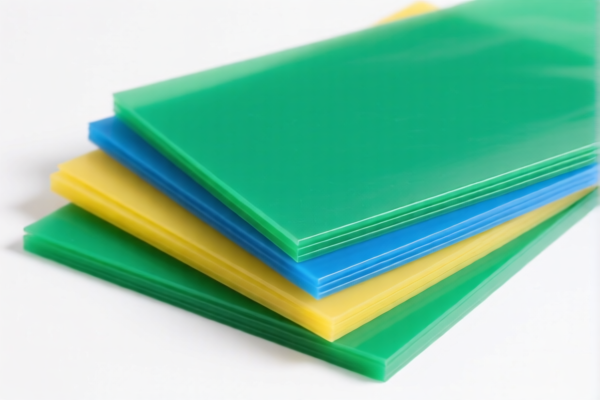
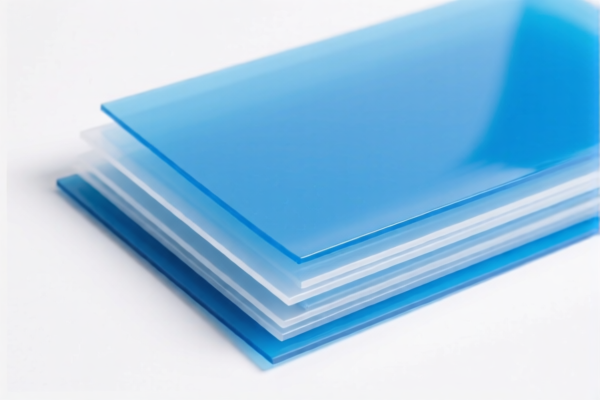
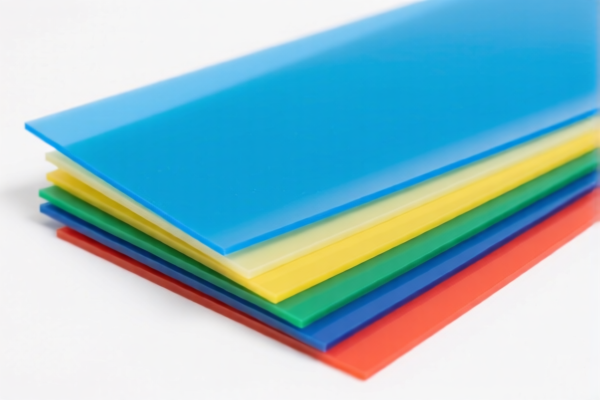
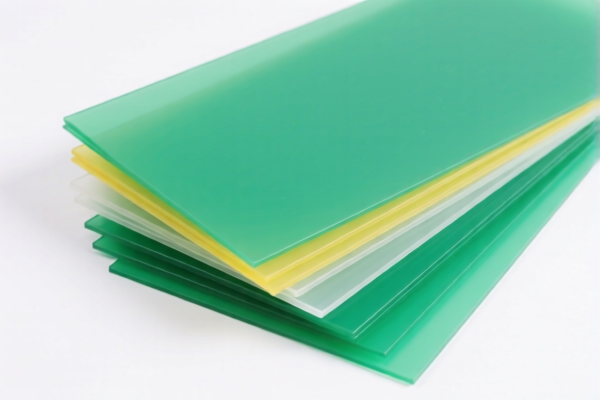
AI Analysis
📜 PVC Plastic Lamination Sheet (PVC Laminated Textile/Plastic Composites)
🌐 HS Code Reference & Customs Clearance Guide | 2024 Latest Tariff Analysis | Strategic Clearance Strategy
📌 I. Product Definition & Classification: What Exactly Is "PVC Plastic Lamination Sheet"?
In international trade, the term "PVC Plastic Lamination Sheet" is a broad description that often refers to composite materials. It generally falls into two distinct categories based on the base material and structure:
- Textile-Based Laminates: Fabric (man-made fibers) impregnated, coated, covered, or laminated with Polyvinyl Chloride (PVC). This is common in tarpaulins, awnings, truck covers, and inflatable structures.
- Plastic Sheet-Based Composites: Cellular or non-cellular PVC sheets that are combined with textile materials. This is common in flooring, wall coverings, or rigid packaging materials.
⚠️ Critical Distinction:
- If the primary structure is fabric (yarns) coated/laminated with PVC → Look to Heading 5903.
- If the primary structure is PVC sheet/film combined with textile → Look to Heading 3921.
- Do not confuse with pure PVC sheets (Heading 3920) if textiles are present.
📦 II. HS Code Classification Details (Latest Tariff Schedule)
| HS Code | Product Description | Primary Application | Key Feature |
|---|---|---|---|
5903.10.20.10 |
Textile fabrics impregnated, coated, covered, or laminated with plastics (PVC): Of man-made fibers: Over 70% by weight of rubber or plastics. Specifically: Fabrics of yarns sheathed with PVC, not otherwise impregnated/coated. | Industrial tarps, heavy-duty coatings, PVC-sheathed cords/yarns | High plastic content; Fabric base. |
5903.10.20.90 |
Textile fabrics impregnated, coated, covered, or laminated with plastics (PVC): Of man-made fibers: Other (Over 70% by weight of rubber or plastics). | General PVC-coated fabrics, awnings, banners | Standard PVC-coated man-made fabric. |
3921.12.11.00 |
Other plates, sheets, film, foil, and strip of plastics: Cellular: Of polymers of vinyl chloride: Combined with textile materials: Over 70% by weight of plastics. | Rigid PVC flooring, wall panels, packaging composites | Plastic dominates; Cellular PVC + Textile. |
3921.12.15.00 |
Other plates, sheets, film, foil, and strip of plastics: Cellular: Of polymers of vinyl chloride: Combined with textile materials: Other. | Lightweight PVC laminates, decorative sheets | Lower plastic weight or specific "other" classifications. |
🔍 Focus Reminder:
- For flexible fabrics (tarps, tents, bags), focus on 5903.
- For rigid sheets/boards (flooring, wall cladding) with textile backing, focus on 3921.
- The 70% weight threshold is critical for sub-classification in both headings.
💰 III. 2024 Latest Tariff Rate Breakdown (Including Additional Taxes)
✅ Applicable Country: United States (US)
✅ Origin: China (CN)
✅ Effective Date: Ongoing (Subject to USITC Section 301 Duties)
🎯 1. 5903.10.20.10 & 5903.10.20.90 (PVC-Coated Textile Fabrics)
| Item | Details |
|---|---|
| Base Tariff | 0.0% (Ad Valorem) |
| Section 301 Additional Duty | +25.0% (List 4A / Footnote 9903.88.01) |
| Total Effective Tax Rate | 25.0% |
| Calculation Basis | CIF Value × 25% |
| De Minimis Exemption | ❌ Not Eligible (Deny de minimis for China-origin goods under HTS 9801.01.00/9802.00.80 restrictions) |
| Legal Basis Path | USITC: 5903.10.20.10/90 → FOOTNOTE: 9903.88.01 → Section 301 |
📌 Explanation:
- These are considered "Textile and Apparel" related plastic laminates.
- Although the base duty is 0%, the 25% Section 301 tariff applies due to the product being Chinese-origin PVC-coated fabrics.
- High Volume Impact: Even at 0% base, the 25% surcharge is significant for bulk imports.
🎯 2. 3921.12.11.00 (Cellular PVC + Textile, >70% Plastic)
| Item | Details |
|---|---|
| Base Tariff | 4.2% (Ad Valorem) |
| Section 301 Additional Duty | +25.0% (List 4A) |
| Total Effective Tax Rate | 29.2% |
| Calculation Basis | CIF Value × 29.2% |
| De Minimis Exemption | ❌ Not Eligible |
| Legal Basis Path | USITC: 3921.12.11.00 → FOOTNOTE: 9903.88.01 → Section 301 |
📌 Note:
- This classification applies to cellular (foamed) PVC sheets combined with textiles where plastic makes up over 70% by weight.
- The base duty is higher (4.2%), making the total tax burden 29.2%.
🎯 3. 3921.12.15.00 (Cellular PVC + Textile, Other)
| Item | Details |
|---|---|
| Base Tariff | 0.0% (Ad Valorem) |
| Section 301 Additional Duty | 0.0% (Exempted under Specific Lists/Exclusions) |
| Total Effective Tax Rate | 0.0% |
| Calculation Basis | CIF Value × 0% |
| De Minimis Exemption | ⚠️ Check Current List (May be subject to change; currently listed as 0% in provided data) |
| Legal Basis Path | USITC: 3921.12.15.00 |
📌 Important:
- This is the most tariff-efficient code if the product fits this description.
- It applies to cellular PVC sheets combined with textiles where plastic weight is not over 70% or falls under "Other" exclusions.
- Verify Eligibility: Ensure the product does not meet the ">70% plastic" criteria of3921.12.11.00.
🛠️ IV. Customs Clearance Practical Advice (Actionable Pitfall Guide)
✅ 1. Documentation Checklist (Mandatory)
| Document | Required? | Notes |
|---|---|---|
| ✅ Product Specification Sheet | ✔️ | Must specify: Base material (Man-made fiber vs. PVC), PVC weight %, Cellular vs. Non-cellular. |
| ✅ Cross-Sectional Image | ✔️ | To prove layer structure (Fabric/PVC/Textile). Critical for 5903 vs. 3921 distinction. |
| ✅ Weight Percentage Calculation | ✔️ | Provide lab report or formula showing % of PVC vs. Textile by weight. |
| ✅ Commercial Invoice | ✔️ | Clearly state "PVC Laminated Man-Made Fiber Fabric" or "Cellular PVC Sheet with Textile Backing". |
| ✅ Bill of Lading | ✔️ | Ensure no mixed shipments with non-China origin goods if claiming specific exemptions. |
✅ 2. Classification Strategy (Key Mnemonic)
🔥 “Fabric Base? Go 5903. Plastic Base? Go 3921. Weight Matters! 70% is the Line.”
| Scenario | Correct HS Code | Risk of Misclassification |
|---|---|---|
| PVC-coated polyester tarp (Flexible) | 5903.10.20.90 |
Low if described as "Fabric". |
| PVC-sheathed nylon cord | 5903.10.20.10 |
High if described as "Plastic Sheet". |
| Foamed PVC flooring with fabric backing | 3921.12.11.00 |
High if plastic weight >70%. |
| Thin PVC laminate on textile (Low plastic %) | 3921.12.15.00 |
Verify weight % to avoid 25% tax. |
✅ 3. Special Considerations
| Situation | Advice |
|---|---|
| OEM Custom Orders | Provide design specs showing material layers. Customs may inspect for "principal character" (Fabric vs. Plastic). |
| Mixed Materials | If textile weight > PVC weight in a 3921 product, it may be reclassified under textile headings (higher risk). Stick to provided codes. |
| De Minimis (Section 321) | Not Available for China-origin PVC laminates. All shipments >$800 are subject to duties. |
| Anti-Dumping (AD) | Check if specific PVC products have AD/CVD orders. Most laminates do not, but verify. |
🌍 V. Global Market Comparison (2024)
| Country/Region | Recommended HS Code | Tariff Rate (China Origin) | Certification | Notes |
|---|---|---|---|---|
| 🇺🇸 USA | 5903.10.20.90 or 3921.12.15.00 |
25% or 0% | None specific | Section 301 duties apply. Choose 3921.12.15.00 if eligible for 0%. |
| 🇨🇳 China | Same HS Codes | 5-10% | RoHS | Low export tax, high import duty for re-exports. |
| 🇪🇺 EU | 5903 or 3921 | 4-6.5% | REACH, CE | No Section 301 equivalent, but check carbon taxes (CBAM) for plastics. |
| 🇬🇧 UK | Same as EU | 4-6.5% | UKCA | Post-Brexit rules apply. |
| 🇻🇳 Vietnam | Same HS Codes | 0-5% | None | Opportunity: Manufacture here to avoid US Section 301 duties. |
📌 Conclusion:
- USA is the most expensive market due to Section 301 tariffs.
- EU/UK have moderate duties but strict environmental compliance (REACH).
- Vietnam is a strategic alternative for US-bound goods to mitigate 25% tariffs.
📌 VI. Common Errors & Pitfall Guide (Lessons Learned)
❌ Error 1: Declaring PVC-coated fabric as "Plastic Sheet" (3921) when it’s actually Fabric (5903).
👉 Consequence: Customs may reclassify and apply different inspection rules or penalties.
👉 Fix: Use accurate description: "PVC-coated Polyester Fabric."
❌ Error 2: Ignoring the 70% weight threshold for 3921.12.11.00.
👉 Consequence: If PVC >70%, you owe 29.2% instead of 0%.
👉 Fix: Provide weight calculation reports.
❌ Error 3: Assuming "Plastic Lamination" = No Tariff.
👉 Consequence: 25% Section 301 duty applies to most Chinese PVC goods.
👉 Fix: Budget for 25-29% tax unless eligible for 3921.12.15.00.
❌ Error 4: Using "Laminated Plastic" without specifying base material.
👉 Consequence: Customs delay for clarification.
👉 Fix: Specify: "Man-made fiber fabric laminated with PVC."
✅ Best Practice:
“PVC-Coated Polyester Tarpaulin, 1000D Polyester Base, PVC Coating Weight 250g/m², Flame Retardant, Made in China”
🎯 VII. Conclusion: Smart Classification, Cost Savings!
🎯 Remember:
🔹 “Fabric Base? 5903. Plastic Base? 3921. Check the 70% Rule!”
🔹 “USA Tariff = 25% or 29.2%, unless you qualify for 0%!”
📌 Tips:
- If your product is cellular PVC + Textile and plastic is <70% by weight, aim for 3921.12.15.00 (0% tariff).
- If your product is fabric-based, expect 25% tariff.
- Consider supply chain diversification (e.g., Vietnam) for US-bound goods to avoid Section 301 duties.
📣 Immediate Action:
📞 Consult a customs broker to verify weight percentages of PVC vs. Textile.
🚀 Apply for a Binding Ruling if importing large volumes to lock in the 0% rate.
✨ Professional Clearance Starts with Accurate Classification!
💼 Every Percent of Tax Matters in Your Profit Margin!
Customer Reviews
About HS Code Classification
The Harmonized System (HS) is an internationally standardized nomenclature developed by the World Customs Organization (WCO) to classify traded products. Over 200 countries use the HS system as the basis for customs tariffs, trade statistics, and import/export regulations.
Each HS code follows a hierarchical structure:
- Chapter (2 digits) — Broad category of goods (e.g., Chapter 84: Machinery and Mechanical Appliances)
- Heading (4 digits) — More specific grouping within the chapter
- Subheading (6 digits) — Internationally standardized breakdown, used by all WCO member countries
- National subdivisions (8-10 digits) — Country-specific extensions for further classification, such as US HTSUS 10-digit codes
Correct HS code classification is essential for smooth customs clearance, accurate duty payment, and compliance with trade regulations. Misclassification can lead to customs delays, overpayment of duties, or penalties.
When importing from CN to US, the applicable tariff rates may include:
- Most-Favored-Nation (MFN) rate — The standard duty rate applied to WTO members
- General rate — Applied to countries without trade agreements
- Trade remedy duties — Additional tariffs such as Section 301 (anti-dumping), Section 232 (national security), or countervailing duties
The information provided on this page is for reference purposes only. For official classification, please consult with your local customs authority or a licensed customs broker.