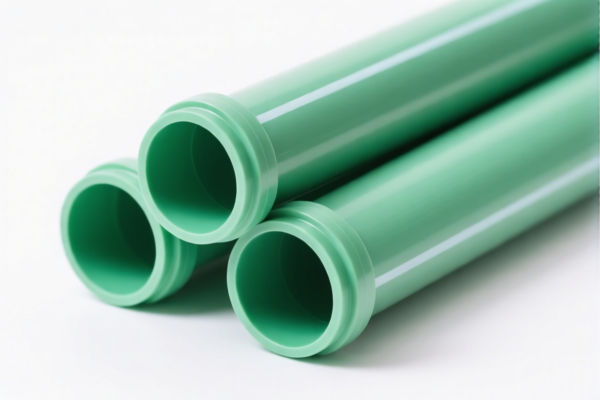
pvc sewer pipe
CN → US| HS Code | Tariff Rate | Origin | Destination | Doc |
|---|---|---|---|---|
| 3917320010 | 38.1% | CN | US | Official Doc |
| 3917230000 | 38.1% | CN | US | Official Doc |
| 3926909987 | 22.8% | CN | US | Official Doc |
| 3926909989 | 22.8% | CN | US | Official Doc |
| 3917400020 | 40.3% | CN | US | Official Doc |
Product Images


AI Analysis
🚰 PVC Sewer Pipe (Polyvinyl Chloride Conduit/Pipe)
🌐 HS Code Reference & Customs Clearance Guide | 2026 Latest Tariff Analysis | Professional Clearance Strategy
📌 I. Product Definition & Classification: What Exactly is a "PVC Sewer Pipe"?
PVC Sewer Pipes are rigid or semi-rigid pipes made from Polyvinyl Chloride (PVC) polymers. In international trade, their classification depends heavily on material composition, physical form, and specific end-use/application.
Key Distinctions: * Polymer vs. Accessory: Is it the pipe itself (Chapter 39, Heading 3917) or a general plastic part (Chapter 39, Heading 3926)? * Pressure Rating: Is it designed for pressure flow (water supply) or gravity flow (sewer/vent)? * Function: Is it a structural conduit or a ventilation duct?
⚠️ Critical Classification Point:
- If it is a rigid plastic pipe for conveying fluids (including sewage), it generally falls under Heading 3917 (Tubes, Pipes and Hoses).
- If it is considered a generic plastic part not elsewhere specified, it may fall under Heading 3926 (Other articles of plastics).
- Note: Heading 3917 is more specific for "tubes/pipes," making it the preferred classification for standard sewer pipes, but 3926 may apply in certain "catch-all" scenarios or for non-standard fittings.
📦 II. HS Code Classification Details (2026 Latest Tariff Authority Mapping)
Based on the provided data, here are the five possible HS Codes for PVC Sewer Pipes, ranging from specific polymer classification to generic plastic articles.
| HS Code | Summary & Logic | Total Tax Rate | Tax Breakdown |
|---|---|---|---|
3917.32.00.10 |
Specific Polymer Match: PVC is Polyvinyl Chloride. This code specifically covers tubes/pipes of this polymer. | 38.1% | Base: 3.1% + Section 301: 25.0% + Section 122: 10% |
3917.23.00.00 |
Material & Form Match: PVC = Vinyl Polymer; Form = Tube/Pipe. Fits the definition of tubes/hoses of plastics. | 38.1% | Base: 3.1% + Section 301: 25.0% + Section 122: 10% |
3917.40.00.20 |
Application-Specific: Classified under non-pressure rated accessories specifically for ventilation purposes. | 40.3% | Base: 5.3% + Section 301: 25.0% + Section 122: 10% |
3926.90.99.87 |
Catch-All (General): PVC tube is a plastic article. If not strictly fitting 3917 sub-headings, it falls under "Other plastic articles." | 22.8% | Base: 5.3% + Section 301: 7.5% + Section 122: 10% |
3926.90.99.89 |
Catch-All (Other): Another generic "Other plastic articles" code for PVC tubes, used when specific polymer codes don't apply. | 22.8% | Base: 5.3% + Section 301: 7.5% + Section 122: 10% |
🔍 Key Insight:
- Headings 3917.32 and 3917.23 are more precise for pipes but carry a higher Section 301 tariff (25%).
- Headings 3926.99 are less specific "catch-all" categories with a lower Section 301 tariff (7.5%), but may risk customs scrutiny for misclassification if the product clearly fits 3917.
- Heading 3917.40 is higher taxed (40.3%) because it is categorized under accessories/parts for ventilation, which often attracts higher base duties (5.3% vs 3.1%).
💰 III. 2026 Latest Tariff Rate Details (Detailed Breakdown)
✅ Applicable Country: United States (US)
✅ Origin: China (CN)
✅ Effective Date: November 10, 2025 (for imports after this date)
🎯 1. 3917.32.00.10 & 3917.23.00.00 —— PVC Pipes (Specific Polymer/Form)
Most Accurate Classification for Standard Sewer Pipes
| Item | Content |
|---|---|
| Base Duty Rate | 3.1% (Ad Valorem) |
| USITC Additional Duty (Section 301) | +25.0% (Footnote related to Chinese plastic pipes) |
| IEEPA Additional Duty (Section 122) | +10.0% (Targeted US imports from China) |
| Total Effective Rate | 38.1% |
| Calculation Basis | CIF Value × 38.1% |
| De Minimis Eligibility | ❌ No (Deny De Minimis) |
| Legal Path | IEEPA:9903.01.25 → USITC:3917.32.00.10 → FOOTNOTE:301_PLASTIC |
📌 Explanation:
- These codes are technically precise for PVC (Polyvinyl Chloride) tubes/pipes.
- The 25% Section 301 tariff is significant here because plastic pipes are often targeted in trade remedy cases.
- Total 38.1% is a heavy burden. Importers must ensure the product description matches "Tube/Pipe" strictly to avoid rejection.
🎯 2. 3917.40.00.20 —— Ventilation Accessories (Non-Pressure)
Higher Risk, Higher Tax
| Item | Content |
|---|---|
| Base Duty Rate | 5.3% (Ad Valorem) |
| USITC Additional Duty (Section 301) | +25.0% |
| IEEPA Additional Duty (Section 122) | +10.0% |
| Total Effective Rate | 40.3% |
| Calculation Basis | CIF Value × 40.3% |
| De Minimis Eligibility | ❌ No |
| Legal Path | IEEPA:9903.01.25 → USITC:3917.40.00.20 → FOOTNOTE:301_ACCESSORIES |
📌 Explanation:
- This code is for non-pressure rated pipes used in ventilation.
- If your sewer pipe is used for gravity flow (sewage) and not pressurized, some might argue for this, but it is taxed higher due to the 5.3% base duty compared to 3.1% for other pipes.
- Total 40.3% makes this the least favorable code for standard sewer pipes.
🎯 3. 3926.90.99.87 & 3926.90.99.89 —— Other Plastic Articles (Catch-All)
Lower Tariff, Higher Compliance Risk
| Item | Content |
|---|---|
| Base Duty Rate | 5.3% (Ad Valorem) |
| USITC Additional Duty (Section 301) | +7.5% (Reduced rate for some plastic articles) |
| IEEPA Additional Duty (Section 122) | +10.0% |
| Total Effective Rate | 22.8% |
| Calculation Basis | CIF Value × 22.8% |
| De Minimis Eligibility | ❌ No |
| Legal Path | IEEPA:9903.01.24 → USITC:3926.90.99.87 → FOOTNOTE:301_GEN |
📌 Explanation:
- These are generic "Other" plastic articles.
- The Section 301 tariff is only 7.5% instead of 25%, resulting in a total tax of 22.8%.
- ⚠️ RISK: Customs may challenge this classification if the product is clearly a "tube/pipe" (Heading 3917). Misclassification can lead to penalties, interest, and retroactive duties up to 38.1%. Use only if the product is a non-standard plastic fitting or accessory that does not fit 3917.
🛠️ IV. Customs Clearance Practical Advice (Avoiding Pitfalls)
✅ 1. Documentation Checklist (Essential for Clearance)
| Document | Required? | Notes |
|---|---|---|
| ✅ Product Specification Sheet | ✔️ | Must specify material (PVC), diameter, wall thickness, pressure rating (if any). |
| ✅ Commercial Invoice | ✔️ | Must clearly state "PVC Sewer Pipe" and HS Code. |
| ✅ Packing List | ✔️ | Detail contents, weights, and dimensions. |
| ✅ Origin Certificate | ✔️ | To confirm CN origin for Section 301/122 calculation. |
| ✅ Photos of Product & Labels | ✔️ | Show "PVC" markings, size, and usage instructions. |
| ✅ Letter of Explanation | Optional but Recommended | Explain why 3917 vs 3926 was chosen. E.g., "Used for gravity drainage, not pressure." |
✅ 2. Classification Strategy (Pro Tips)
🔥 Mnemonic:
"Pipe vs. Part: 3917 is King, 3926 is Risk. Ventilation is Expensive, Catch-All is Tricky!"
| Scenario | Recommended HS Code | Tax Rate | Reason |
|---|---|---|---|
| Standard Rigid PVC Sewer Pipe | 3917.32.00.10 or 3917.23.00.00 |
38.1% | Most accurate for PVC tubes/pipes. |
| PVC Pipe for Ventilation (No Pressure) | 3917.40.00.20 |
40.3% | Specific for ventilation accessories. |
| Non-Standard Plastic Fittings/Accessories | 3926.90.99.87/89 |
22.8% | Only if not strictly a "pipe/tube." Risk of audit. |
| Flexible PVC Hose (Not Rigid Pipe) | Check 3917.40 or 3917.39 | Varies | Flexible hoses may have different subheadings. |
✅ 3. Special Considerations
| Situation | Advice |
|---|---|
| High Tariff Avoidance | Consider if the product can be classified as an accessory (3926) instead of a pipe (3917). However, this requires strong justification and may trigger an audit. |
| Mixed Containers | If shipping both pipes (3917) and fittings (3926), declare separately to avoid misclassification penalties. |
| Section 122 Impact | The 10% Section 122 duty applies to all listed codes for Chinese-origin goods. No exemption for plastic pipes. |
| Pre-Ruling | Apply for an Advance Ruling from US Customs to confirm the correct HS Code (3917 vs 3926) before shipping. This protects against retroactive duties. |
🌍 V. Global Market Comparison (2026)
| Country/Region | Recommended HS Code | Tariff (China Origin) | Key Requirements |
|---|---|---|---|
| 🇺🇸 USA | 3917.32.00.10 |
38.1% | Section 301 (25%) + Section 122 (10%) |
| 🇪🇺 EU | 3917.21.00 |
~5-6.5% | CE Marking (if applicable), REACH compliance |
| 🇨🇳 China | 3917.23.00 |
~5-10% | CCC Certification (if applicable) |
| 🇬🇧 UK | 3917.23.00 |
~6.5% | UKCA Marking |
| 🇨🇦 Canada | 3917.23.00 |
~0-5% | CSAC Standards |
📌 Conclusion:
- The USA has the highest effective tariff (38.1% - 40.3%) due to Section 301 and Section 122.
- EU/UK/Canada have much lower tariffs, making them more cost-effective markets for PVC pipes.
- Strategy: If targeting the US, ensure accurate classification to avoid overpayment or penalties. Consider supply chain diversification if tariffs are too high.
📌 VI. Common Errors & Pitfalls (Lessons Learned)
❌ Error 1: Classifying PVC Sewer Pipes as 3926 (Other Plastic Articles) to save on Section 301 tariff.
👉 Consequence: Customs may reclassify to 3917, resulting in back taxes of 15.3% difference + penalties.
❌ Error 2: Using 3917.40 for sewer pipes (gravity flow) instead of 3917.32.
👉 Consequence: Higher base duty (5.3% vs 3.1%) and potential misclassification if not for ventilation.
❌ Error 3: Ignoring Section 122 (10%) in total cost calculation.
👉 Consequence: Profit margin erosion. Many importers forget to include the 10% additional duty.
❌ Error 4: Incomplete product description on Invoice.
👉 Consequence: Customs delays for clarification. Always specify "PVC," "Sewer," "Diameter," and "Material."
✅ Correct Practice:
"Rigid PVC Sewer Pipe, 4-inch Diameter, ASTM D3034, Non-Pressure, Made in China"
🎯 VII. Conclusion: Precise Classification for Cost Efficiency
🎯 Key Takeaways:
🔹 Standard PVC Sewer Pipes →
3917.32.00.10or3917.23.00.00→ 38.1% Total Tax.
🔹 Ventilation Pipes →3917.40.00.20→ 40.3% Total Tax.
🔹 Generic Plastic Parts →3926.90.99.87→ 22.8% Total Tax (High Risk).🔹 Always include Section 122 (10%) in your cost model.
🔹 Get an Advance Ruling if you are unsure between3917and3926.
📌 Pro Tip:
If your PVC pipe is originating from Vietnam, Mexico, or Thailand, you may be eligible for IEEPA Exemptions or lower Section 301 rates.
Recommendation: Apply for HS Code Pre-Ruling with US Customs to confirm the correct code and avoid costly errors.
📣 Act Now:
📞 Consult a Licensed Customs Broker + Provide Product Specs + Request Advance Ruling
🚀 Clear Customs Smoothly, Minimize Duties, Maximize Profit!
✨ Professional Clearance Starts with Accurate Classification!
💼 Every Percent of Tariff Matters in the PVC Trade!
Customer Reviews
About HS Code Classification
The Harmonized System (HS) is an internationally standardized nomenclature developed by the World Customs Organization (WCO) to classify traded products. Over 200 countries use the HS system as the basis for customs tariffs, trade statistics, and import/export regulations.
Each HS code follows a hierarchical structure:
- Chapter (2 digits) — Broad category of goods (e.g., Chapter 84: Machinery and Mechanical Appliances)
- Heading (4 digits) — More specific grouping within the chapter
- Subheading (6 digits) — Internationally standardized breakdown, used by all WCO member countries
- National subdivisions (8-10 digits) — Country-specific extensions for further classification, such as US HTSUS 10-digit codes
Correct HS code classification is essential for smooth customs clearance, accurate duty payment, and compliance with trade regulations. Misclassification can lead to customs delays, overpayment of duties, or penalties.
When importing from CN to US, the applicable tariff rates may include:
- Most-Favored-Nation (MFN) rate — The standard duty rate applied to WTO members
- General rate — Applied to countries without trade agreements
- Trade remedy duties — Additional tariffs such as Section 301 (anti-dumping), Section 232 (national security), or countervailing duties
The information provided on this page is for reference purposes only. For official classification, please consult with your local customs authority or a licensed customs broker.