pvc textile filter material
CN → US| HS Code | Tariff Rate | Origin | Destination | Doc |
|---|---|---|---|---|
| 8421290040 | 35.0% | CN | US | Official Doc |
| 8421390140 | 35.0% | CN | US | Official Doc |
| 3926905900 | 37.4% | CN | US | Official Doc |
| 3926905700 | 41.5% | CN | US | Official Doc |
Product Images
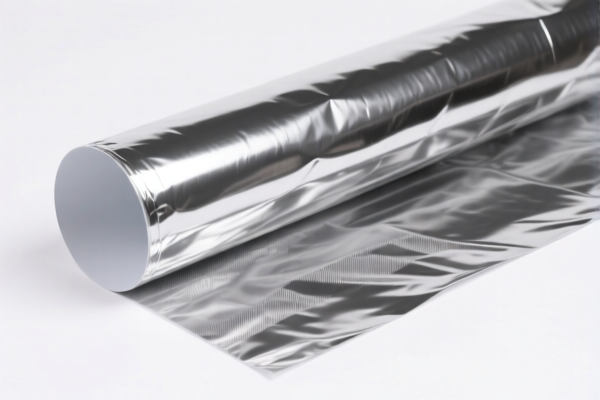

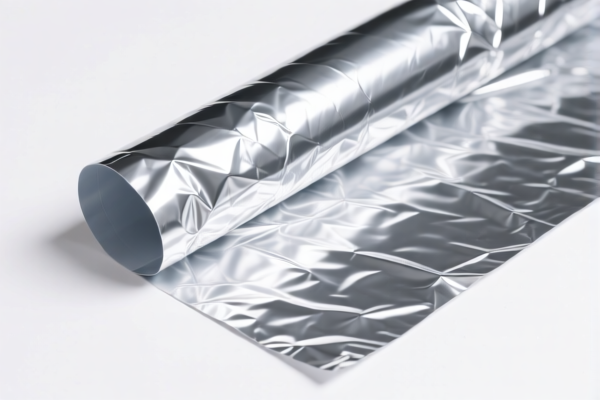
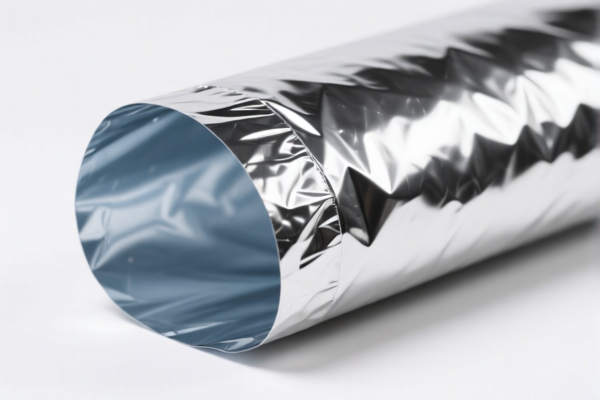
AI Analysis
🛠️ PVC Textile Filter Material (Hydraulic & Gas Separation Systems)
🌐 HS Code Reference & Customs Clearance Guide | 2026 Latest Tariff Analysis | Professional Clearance Strategy
📌 I. Product Definition & Classification: What is "PVC Textile Filter Material"?
In the context of industrial fluid power and gas processing, "PVC Textile Filter Material" refers to specialized filtration media constructed from Polyvinyl Chloride (PVC) reinforced with textile fibers. These materials are critical components in: 1. Hydraulic Fluid Power Systems: Filtering contaminants from hydraulic oils to protect pumps, valves, and actuators. 2. Gas Separation & Purification: Removing particulates, moisture, or specific gas components from industrial gas streams.
⚠️ Key Distinction:
- If the material is part of a completed filter cartridge or housing ready for installation → It may be classified as a part of filtering machinery.
- If the material is a raw mesh/fabric intended for further processing → It is classified under Plastics Articles.
- Critical Threshold: For hydraulic filters, performance rating (e.g., ≥ 1,000 kPa) is a decisive factor for classification.
📦 II. HS Code Classification Details (2026 Latest Tariff Authority)
Based on the provided data, the classification depends on the final application and technical specifications of the filter material.
| HS Code | Product Description | Application Scenario | Key Criteria |
|--------|--------------------------|--------------------------|
| 8421.29.00.40 | Hydraulic Fluid Power Filters | Hydraulic systems, heavy machinery, industrial hydraulics | Rated at ≥ 1,000 kPa pressure |
| 8421.39.01.40 | Gas Separation Equipment | Industrial gas purification, pneumatic systems | For gases; specific separation function |
| 3926.90.59.00 | Other Plastic Belts/Belts (Textile) | Raw PVC textile filter material (not yet a finished filter) | Contains textile fibers; Other category |
| 3926.90.57.00 | Belting/Belts for Machinery (Synthetic Fiber Predominant) | PVC filter material with man-made fibers predominating by weight | Man-made fibers > Other textiles |
🔍 Key Note:
- If the product is a finished filter element for hydraulics (≥1,000 kPa), it falls under 8421.29.00.40.
- If it is a finished filter for gases, it falls under 8421.39.01.40.
- If it is raw material (PVC textile mesh) not yet assembled into a filter housing/cartridge, it falls under 3926.90.
- Do not mix raw materials with finished machinery parts in declaration.
💰 III. 2026 Latest Tariff Rate Breakdown (Including Surtaxes)
✅ Applicable Country: China (Export)
✅ Destination Market: United States (US) – Based on surtax context in data
✅ Effective Date: As per current trade regulations (including Section 301/IEEPA surtaxes)
🎯 1. 8421.29.00.40 – Hydraulic Fluid Power Filters (≥ 1,000 kPa)
| Item | Detail |
|---|---|
| Base Tariff | 0.0% |
| Additional Surtax | 25.0% (Section 301) |
| Total Tax Rate | 25.0% |
| Tax Calculation | CIF Value × 25% |
| De Minimis Exemption | ❌ Not Eligible (Commercial shipment) |
| Legal Basis | USITC:8421.29.00.40 → Section 301 Surtax |
📌 Explanation:
- Hydraulic filters are considered industrial machinery parts.
- Despite a 0% base tariff, the 25% surtax significantly increases cost.
- High-value industrial components are strictly scrutinized for origin and value.
🎯 2. 8421.39.01.40 – Gas Separation Equipment
| Item | Detail |
|---|---|
| Base Tariff | 0.0% |
| Additional Surtax | 25.0% (Section 301) |
| Total Tax Rate | 25.0% |
| Tax Calculation | CIF Value × 25% |
| De Minimis Exemption | ❌ Not Eligible |
| Legal Basis | USITC:8421.39.01.40 → Section 301 Surtax |
📌 Explanation:
- Gas separation filters are treated similarly to hydraulic filters.
- The 25% surtax applies uniformly to this category.
🎯 3. 3926.90.59.00 – Other Plastic Belts/Belts (Textile)
| Item | Detail |
|---|---|
| Base Tariff | 2.4% |
| Additional Surtax | 25.0% (Section 301) |
| Total Tax Rate | 27.4% |
| Tax Calculation | CIF Value × 27.4% |
| De Minimis Exemption | ❌ Not Eligible |
| Legal Basis | USITC:3926.90.59.00 → Section 301 Surtax |
📌 Explanation:
- This code applies to PVC textile filter material that is not yet a finished filter.
- Higher total rate (27.4%) due to the 2.4% base tariff.
- Warning: Misdeclaring raw material as machinery parts can lead to customs penalties.
🎯 4. 3926.90.57.00 – Belting with Predominant Man-Made Fibers
| Item | Detail |
|---|---|
| Base Tariff | 0.0% |
| Additional Surtax | 0.0% |
| Total Tax Rate | 0.0% |
| Tax Calculation | CIF Value × 0% |
| De Minimis Exemption | ✅ Eligible (if under threshold) |
| Legal Basis | USITC:3926.90.57.00 |
📌 Explanation:
- Zero tariff! This is a cost-saving opportunity.
- Applies only if the material is plastic belting and man-made fibers (e.g., polyester, nylon) predominate by weight over other textiles.
- Critical Condition: Must be classified as "belting for machinery" (raw material), not as a finished filter.
- Strategy: If your PVC textile filter material meets this fiber composition criteria, consider declaring under this code to save 25–27.4% in duties.
🛠️ IV. Customs Clearance Practical Advice (Real-World Pitfall Avoidance)
✅ 1. Documentation Checklist (Non-Negotiable)
| Document | Required? | Notes |
|---|---|---|
| ✅ Product Specification Sheet | ✔️ | Must specify: PVC content, textile fiber type, weight ratio, pressure rating (if ≥1,000 kPa). |
| ✅ Fiber Composition Analysis | ✔️ | Lab report proving if man-made fibers predominate (for 3926.90.57.00). |
| ✅ Pressure Rating Certificate | ✔️ | For hydraulic filters: Must prove ≥ 1,000 kPa for 8421.29.00.40. |
| ✅ Commercial Invoice | ✔️ | Clearly state: "PVC Textile Filter Material" vs. "Hydraulic Filter Cartridge". |
| ✅ Packing List | ✔️ | Distinguish between raw rolls/fabrics and finished filter units. |
| ✅ HS Code Pre-Ruling | ✔️ | Recommended to confirm classification with US CBP before shipment. |
✅ 2. Declaration Strategy (Key Mantra)
🔥 “Raw Material vs. Finished Part: Know the Difference!”
| Scenario | Correct HS Code | Risk if Wrong |
|---|---|---|
| Raw PVC Textile Mesh (Man-made fibers predominate) | 3926.90.57.00 |
0% Tax – Huge Savings! |
| Raw PVC Textile Mesh (Other textiles) | 3926.90.59.00 |
27.4% Tax |
| Finished Hydraulic Filter (≥1,000 kPa) | 8421.29.00.40 |
25% Tax |
| Finished Gas Filter | 8421.39.01.40 |
25% Tax |
⚠️ Critical Warning:
- Do NOT declare raw material as finished machinery parts to avoid surtaxes. Customs will inspect and penalize for misdeclaration.
- Do NOT declare finished filters as raw plastic materials to claim 0% tax. This is customs fraud.
✅ 3. Special Handling Tips
| Situation | Recommendation |
|---|---|
| Mixed Shipment (Raw + Finished) | Declare Separately. Do not combine HS Codes in one line item. |
| Fiber Composition Unclear | Conduct a third-party lab test to prove man-made fiber predominance for 3926.90.57.00. |
| Pressure Rating Dispute | Provide manufacturer test reports showing ≥1,000 kPa rating for hydraulic filters. |
| Customs Audit Risk | Maintain production records linking raw material to final product for traceability. |
🌍 V. Global Market Comparison (2026)
| Country/Region | Recommended HS Code | Tariff Rate | Notes |
|---|---|---|---|
| 🇺🇸 USA | 3926.90.57.00 (Raw) |
0% | If man-made fibers predominate. Best for cost saving. |
| 🇺🇸 USA | 8421.29.00.40 (Finished) |
25% | Surtax applies. No de minimis. |
| 🇨🇳 China | 3926.90.57.00 |
2.4% | Base tariff. No surtax. |
| 🇪🇺 EU | 3926.90.57.00 |
3.5% | Check EU tariff schedule for nuances. |
| 🇯🇵 Japan | 3926.90.57.00 |
4.0% | Standard duty rate. |
📌 Conclusion:
- USA is the most complex market due to Section 301 surtaxes.
- Raw material classification (3926.90.57.00) offers the best tariff advantage (0%) if fiber composition qualifies.
- Finished filters face 25% surtax regardless of base rate.
📌 VI. Common Mistakes & Pitfalls (Lessons Learned)
❌ Mistake 1: Declaring raw PVC textile as "Hydraulic Filter" to avoid raw material tariffs.
👉 Consequence: Customs rejection, fines, and 25% surtax plus penalties.
❌ Mistake 2: Failing to provide fiber composition proof for 3926.90.57.00.
👉 Consequence: Reclassified to 3926.90.59.00 → 27.4% tax + back duties.
❌ Mistake 3: Combining raw material and finished filters in one HS Code line.
👉 Consequence: Entire shipment held for inspection, delays, and potential penalties.
❌ Mistake 4: Ignoring pressure rating for hydraulic filters.
👉 Consequence: Incorrect HS Code if rated <1,000 kPa → Different tariff treatment.
✅ Correct Approach:
“PVC Textile Filter Media, Man-Made Fibers Predominate, Raw Material, Not Assembled” →
3926.90.57.00
“Hydraulic Filter Cartridge, Rated 1,500 kPa, Finished Part” →8421.29.00.40
🎯 VII. Conclusion: Optimize Your Tariff Strategy!
🎯 Remember These Rules:
🔹 “Raw Material + Man-Made Fibers = 0% Tax in USA!”
🔹 “Finished Filters = 25% Surtax in USA!”
🔹 “Fiber Composition Proof is Your Best Friend!”
🔹 “Never Mix Raw and Finished Goods in One Declaration!”
📌 Pro Tip:
If your PVC textile filter material has ≥80% man-made fibers by weight, apply for HS Code 3926.90.57.00 to achieve 0% tariff in the US.
For finished hydraulic filters, budget for 25% surtax and ensure pressure rating documentation is ready.
📣 Immediate Action:
📞 Consult Customs Broker for fiber composition analysis.
📄 Request Pre-Ruling from US CBP for ambiguous cases.
🚀 Separate Raw Materials and Finished Goods in packaging and documentation.
✨ Professional Clearance Starts with Accurate Classification!
💼 Every Percent Saved in Tariffs is Pure Profit!
Customer Reviews
About HS Code Classification
The Harmonized System (HS) is an internationally standardized nomenclature developed by the World Customs Organization (WCO) to classify traded products. Over 200 countries use the HS system as the basis for customs tariffs, trade statistics, and import/export regulations.
Each HS code follows a hierarchical structure:
- Chapter (2 digits) — Broad category of goods (e.g., Chapter 84: Machinery and Mechanical Appliances)
- Heading (4 digits) — More specific grouping within the chapter
- Subheading (6 digits) — Internationally standardized breakdown, used by all WCO member countries
- National subdivisions (8-10 digits) — Country-specific extensions for further classification, such as US HTSUS 10-digit codes
Correct HS code classification is essential for smooth customs clearance, accurate duty payment, and compliance with trade regulations. Misclassification can lead to customs delays, overpayment of duties, or penalties.
When importing from CN to US, the applicable tariff rates may include:
- Most-Favored-Nation (MFN) rate — The standard duty rate applied to WTO members
- General rate — Applied to countries without trade agreements
- Trade remedy duties — Additional tariffs such as Section 301 (anti-dumping), Section 232 (national security), or countervailing duties
The information provided on this page is for reference purposes only. For official classification, please consult with your local customs authority or a licensed customs broker.