pvc textile packaging material
CN → US| HS Code | Tariff Rate | Origin | Destination | Doc |
|---|---|---|---|---|
| 3926905700 | 41.5% | CN | US | Official Doc |
| 3926905900 | 37.4% | CN | US | Official Doc |
| 3923900080 | 38.0% | CN | US | Official Doc |
| 3921125000 | 41.5% | CN | US | Official Doc |
| 3921121950 | 40.3% | CN | US | Official Doc |
Product Images
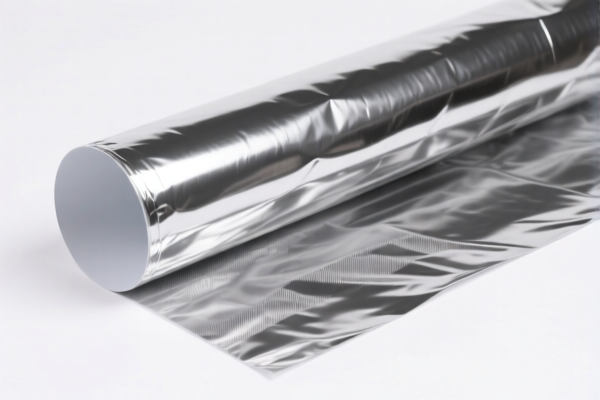
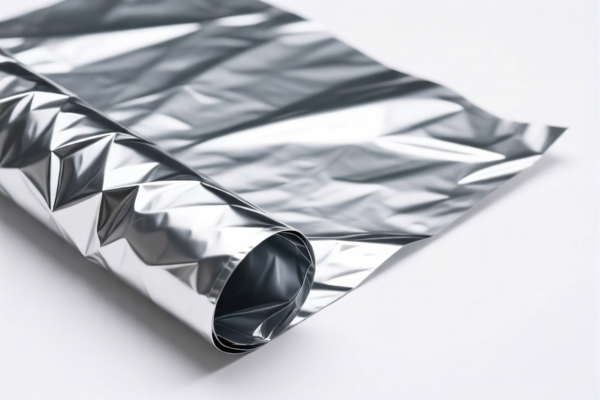
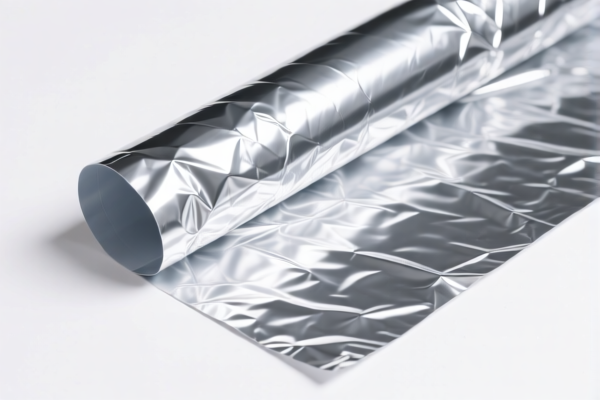
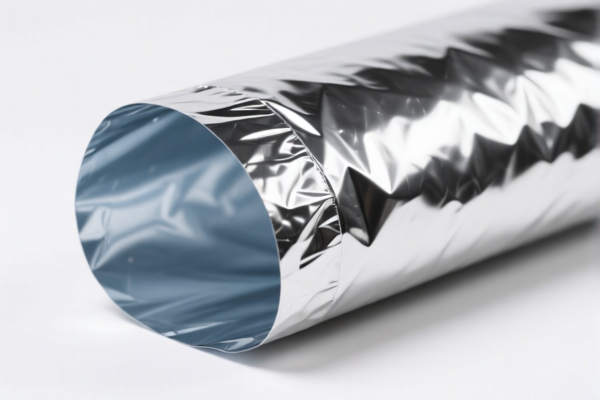
AI Analysis
🧵 PVC Textile Packaging Material
🌐 HS Code Reference & Customs Clearance Guide | 2026 Latest Tariff Analysis | Professional Clearance Strategy
📌 I. Product Definition & Classification: What Exactly is "PVC Textile Packaging Material"?
PVC Textile Packaging Materials are composite or coated goods combining Polyvinyl Chloride (PVC) with textile fibers. In international trade, these are primarily classified based on their primary function and physical form:
- Filter Media: PVC-coated textiles used specifically for filtration processes.
- Packaging/Transport Boards: Rigid or semi-rigid PVC sheets/boards used for packaging, display, or shipping protection.
⚠️ Key Classification Distinction:
- If the product is used as a filter (permeable or semi-permeable mesh/fabric) → It falls under Chapter 39, Heading 3926 (Other articles of plastics).
- If the product is a solid board/plate used for packaging or structural support → It falls under Chapter 39, Heading 3921 (Plates, sheets, film, foil, and strip).
- ⚠️ Note: Misclassifying a "Packaging Board" as a "Filter" (or vice versa) can lead to significant duty differences due to varying base rates and 122-Clause tariffs.
📦 II. HS Code Classification Details (2026 Latest Tariff Authority Comparison)
| HS Code | Product Description | Application Scenario | Material Form | Key Classification Logic |
|---|---|---|---|---|
3926.90.57.00 |
PVC Textile Filter Material | Used in industrial filtration systems | Textile fabric/coated fabric | Primary use is filtration; PVC is the coating/matrix. |
3926.90.59.00 |
Other PVC Textile Articles | General PVC textile goods, not specified elsewhere | Filter material containing textile fibers | Catch-all for PVC textiles not fitting specific filter subheadings; includes composite filter materials. |
3923.90.00.80 |
PVC Packaging Boards/Plastic Articles | Packaging, shipping containers, display stands | Rigid/Semi-rigid PVC articles | Used for packaging or transport; often treated as "other articles" of plastics. |
3921.12.50.00 |
PVC Packaging Board (Plate/Sheet) | Structural packaging, protective boards | PVC Plate/Sheet | Matches description of Chlorinated Polymer Plates/Sheets; rigid form. |
3921.12.19.50 |
PVC Packaging Board (General Plate) | General PVC packaging boards | PVC Plate | Fallback/Catch-all for PVC plates not specified in other subheadings. |
🔍 Critical Reminder:
- Filters (3926) vs. Packaging (3921/3923): The distinction lies in the primary function declared in customs. A "PVC Textile Board" used to hold a product in a box is packaging (3921/3923). A "PVC Textile Mesh" used to filter liquids/air is a filter (3926).
- Base Tariff Variance: The base tariff for Packaging Boards (3921) ranges from 3.0% to 6.5%, while Filter Materials (3926) range from 2.4% to 6.5%. This small difference significantly impacts the total tax burden when combined with surcharges.
💰 III. 2026 Latest Tariff Rate Breakdown (Including Surcharges & Policy Add-ons)
✅ Applicable Country: United States (US)
✅ Origin: China (CN)
✅ Effective Time: Current tariffs apply (incl. 122-Clause and Section 301)
🎯 1. 3926.90.57.00 – PVC Textile Filter Material
| Item | Content |
|---|---|
| Base Tariff | 6.5% |
| Section 301 Surcharge | +25.0% |
| 122-Clause Tariff | +10.0% |
| Total Tax Rate | 41.5% |
| Tax Calculation | CIF Value × 41.5% |
| De Minimis Exemption | ❌ Not Applicable |
| Legal Basis Path | Section 301: 9903.88.01 → 122-Clause: 9910.01.01 → USITC: 3926.90.57.00 |
📌 Explanation:
- This classification carries the highest base tariff (6.5%) among the filter options.
- Combined with the 25% Section 301 tariff and 10% 122-Clause tariff, the total burden is 41.5%.
- Risk: If the product is merely a "textile with PVC" but not primarily for filtration, it may be reclassified, potentially lowering the base rate but increasing audit risk.
🎯 2. 3926.90.59.00 – Other PVC Textile Articles (Filter/Mixed)
| Item | Content |
|---|---|
| Base Tariff | 2.4% |
| Section 301 Surcharge | +25.0% |
| 122-Clause Tariff | +10.0% |
| Total Tax Rate | 37.4% |
| Tax Calculation | CIF Value × 37.4% |
| De Minimis Exemption | ❌ Not Applicable |
| Legal Basis Path | Section 301: 9903.88.01 → 122-Clause: 9910.01.01 → USITC: 3926.90.59.00 |
📌 Note:
- This is the lowest tax rate among all listed HS Codes (37.4%).
- Caution: This code is a "catch-all." Using it requires proving the product does not fit more specific categories (like 57.00). If customs determines it is a standard filter, they may back-charge the difference to 41.5%.
🎯 3. 3923.90.00.80 – PVC Packaging Boards/Plastic Articles
| Item | Content |
|---|---|
| Base Tariff | 3.0% |
| Section 301 Surcharge | +25.0% |
| 122-Clause Tariff | +10.0% |
| Total Tax Rate | 38.0% |
| Tax Calculation | CIF Value × 38.0% |
| De Minimis Exemption | ❌ Not Applicable |
| Legal Basis Path | Section 301: 9903.88.01 → 122-Clause: 9910.01.01 → USITC: 3923.90.00.80 |
📌 Explanation:
- Used when the PVC textile product is processed into a packaging article (e.g., bags, boxes, liners) rather than a raw board or filter.
- 38.0% is slightly higher than the 59.00 filter code but lower than the 57.00 code.
🎯 4. 3921.12.50.00 – PVC Packaging Board (Plate/Sheet)
| Item | Content |
|---|---|
| Base Tariff | 6.5% |
| Section 301 Surcharge | +25.0% |
| 122-Clause Tariff | +10.0% |
| Total Tax Rate | 41.5% |
| Tax Calculation | CIF Value × 41.5% |
| De Minimis Exemption | ❌ Not Applicable |
| Legal Basis Path | Section 301: 9903.88.01 → 122-Clause: 9910.01.01 → USITC: 3921.12.50.00 |
📌 Explanation:
- Specific to PVC Plates/Sheets. If your "Packaging Material" is a rigid PVC board, this is the correct code.
- 41.5% is high due to the 6.5% base rate. Ensure the product is strictly a "plate/sheet" and not a "textile fabric" to avoid misclassification.
🎯 5. 3921.12.19.50 – PVC Packaging Board (General Plate)
| Item | Content |
|---|---|
| Base Tariff | 5.3% |
| Section 301 Surcharge | +25.0% |
| 122-Clause Tariff | +10.0% |
| Total Tax Rate | 40.3% |
| Tax Calculation | CIF Value × 40.3% |
| De Minimis Exemption | ❌ Not Applicable |
| Legal Basis Path | Section 301: 9903.88.01 → 122-Clause: 9910.01.01 → USITC: 3921.12.19.50 |
📌 Explanation:
- A fallback category for PVC plates not specified elsewhere.
- 40.3% is a middle-ground rate. Use this if the product doesn't fit the specific "50" subheading but is clearly a PVC plate/sheet.
🛠️ IV. Customs Clearance Practical Advice (Real-World Pitfall Avoidance)
✅ 1. Required Documentation Checklist (Mandatory)
| Document | Mandatory? | Description |
|---|---|---|
| ✅ Product Specification Sheet | ✔️ | Must detail material composition (PVC %, Textile %), thickness, and intended use (Filter vs. Packaging). |
| ✅ Technical Data Sheet (TDS) | ✔️ | For filters: Permeability, pore size. For packaging: Rigidity, load capacity. |
| ✅ Product Photos | ✔️ | Clear images showing texture, cross-section, and any branding. |
| ✅ Commercial Invoice | ✔️ | Must accurately describe the product (e.g., "PVC-Coated Polyester Filter Fabric" vs. "PVC Rigid Board"). |
| ✅ Packing List | ✔️ | Detailed weight and dimensions. |
| ✅ Certificate of Origin (CO) | ✔️ | To verify Chinese origin and apply correct surcharges. |
✅ 2. Declaration Strategy (Key Mnemonics)
🔥 "Function Defines Code, Form Defines Chapter!"
| Scenario | Correct Declaration | Wrong Declaration |
|---|---|---|
| PVC-coated fabric for filtering air/water | 3926.90.57.00 (if specific filter) or 3926.90.59.00 |
3921.12.50.00 (Board) → High Audit Risk |
| Rigid PVC board for product packaging | 3921.12.50.00 or 3921.12.19.50 |
3926.90.57.00 (Filter) → Misclassification |
| PVC Bags/Boxes for shipping | 3923.90.00.80 |
3921.12.50.00 (Board) → Incorrect Form |
| Unspecified PVC Textile Item | 3926.90.59.00 |
3921.12.19.50 → Risk of Penalty |
📌 Note:
- If you declare "PVC Textile Packaging Material," be prepared to prove whether it is a Filter (3926) or a Packaging Article/Board (3921/3923).
- 3926.90.59.00 offers the lowest total tax (37.4%) but requires careful justification that the product is not a specific filter or a rigid board.
✅ 3. Special Circumstances Handling
| Situation | Handling Advice |
|---|---|
| Multi-layer PVC Textile | Provide a breakdown of layers. If the PVC content is >50% by weight, Chapter 39 applies. |
| Filter vs. Packaging Ambiguity | If the product can be used for both, declare the primary intended use. Provide an End-Use Declaration. |
| OEM Custom Products | Include customer specifications in the invoice to justify the HS Code. |
| High-Value Shipments | Consider applying for an Advance Ruling (Pre-classification) to avoid post-clearance audits and penalties. |
🌍 V. Global Market Comparison (2026 Latest)
| Country/Region | Recommended HS Code | Tariff Rate (China Origin) | Certification Requirements | Notes |
|---|---|---|---|---|
| 🇺🇸 USA | 3926.90.59.00 (Best Rate) |
37.4% (Total) | None specific, but documentation critical | Highest burden due to Section 301 + 122-Clause. |
| 🇨🇳 China | 3926.90.59.00 |
~6-10% (Import) | None | No surcharges. |
| 🇪🇺 EU | 3926.90.90 |
~4-6% | REACH, RoHS | No Section 301 tariffs. |
| 🇬🇧 UK | 3926.90.90 |
~4-6% | UKCA, REACH | Post-Brexit rules apply. |
| 🇦🇺 Australia | 3926.90.90 |
~5% | None | No surcharges. |
📌 Conclusion:
- USA is the most complex market due to layered tariffs.
- 37.4% is the minimum total tax for PVC Textile Packaging Materials from China to the US.
- Documentation is key to defending the 3926.90.59.00 classification against potential reclassification to higher base rates.
📌 VI. Common Errors & Pitfall Guide (Lessons Learned)
❌ Error 1: Declaring a Rigid PVC Board as a Filter Fabric (3926.90.57.00)
👉 Consequence: Customs rejects because physical form doesn't match function. Penalty + Back Taxes.
❌ Error 2: Declaring a Filter as a Packaging Board (3921.12.50.00)
👉 Consequence: Base rate is 6.5% vs. 2.4% (for 59.00). Overpaying ~4% in total tax.
❌ Error 3: Using generic terms like "Plastic Material" on Invoice
👉 Consequence: Customs assigns a generic code with higher audit risk or incorrect duty.
❌ Error 4: Ignoring the 122-Clause Tariff
👉 Consequence: Failure to account for the 10% additional tariff leads to underpayment and seizures.
✅ Correct Practice:
"PVC-Coated Polyester Filter Fabric, 0.5mm thickness, for Industrial Liquid Filtration, Model XYZ"
vs.
"Rigid PVC Packaging Board, 2mm thickness, for Display Units, Model ABC"
🎯 VII. Conclusion: Precise Classification Saves Money!
🎯 Remember the Key Takeaway:
🔹 "Lowest Tax: 3926.90.59.00 (37.4%)"
🔹 "Highest Risk: Misclassifying Form vs. Function"
🔹 "Total Tax = Base + 25% Section 301 + 10% 122-Clause"
📌 Pro Tip:
If your product is PVC-coated textile and its primary use is not filtration and not a rigid board, consider 3926.90.59.00 for the lowest duty (37.4%). However, ensure you have technical documentation to support this classification if audited.
📣 Immediate Action:
📞 Consult a Customs Broker for Pre-Classification Ruling.
🚀 Save up to 4.1% by choosing3926.90.59.00over other codes.
✅ Ensure Invoice Description Matches HS Code Function Exactly.
✨ Professional Clearance Starts with Accurate Classification!
💼 Every Percentage Point Counts in Global Trade!
Customer Reviews
About HS Code Classification
The Harmonized System (HS) is an internationally standardized nomenclature developed by the World Customs Organization (WCO) to classify traded products. Over 200 countries use the HS system as the basis for customs tariffs, trade statistics, and import/export regulations.
Each HS code follows a hierarchical structure:
- Chapter (2 digits) — Broad category of goods (e.g., Chapter 84: Machinery and Mechanical Appliances)
- Heading (4 digits) — More specific grouping within the chapter
- Subheading (6 digits) — Internationally standardized breakdown, used by all WCO member countries
- National subdivisions (8-10 digits) — Country-specific extensions for further classification, such as US HTSUS 10-digit codes
Correct HS code classification is essential for smooth customs clearance, accurate duty payment, and compliance with trade regulations. Misclassification can lead to customs delays, overpayment of duties, or penalties.
When importing from CN to US, the applicable tariff rates may include:
- Most-Favored-Nation (MFN) rate — The standard duty rate applied to WTO members
- General rate — Applied to countries without trade agreements
- Trade remedy duties — Additional tariffs such as Section 301 (anti-dumping), Section 232 (national security), or countervailing duties
The information provided on this page is for reference purposes only. For official classification, please consult with your local customs authority or a licensed customs broker.