pvc tray
CN → US| HS Code | Tariff Rate | Origin | Destination | Doc |
|---|---|---|---|---|
| 3923102000 | 35.0% | CN | US | Official Doc |
| 3923109000 | 38.0% | CN | US | Official Doc |
| 3926909989 | 22.8% | CN | US | Official Doc |
| 3923102000 | 35.0% | CN | US | Official Doc |
| 3923109000 | 38.0% | CN | US | Official Doc |
Product Images
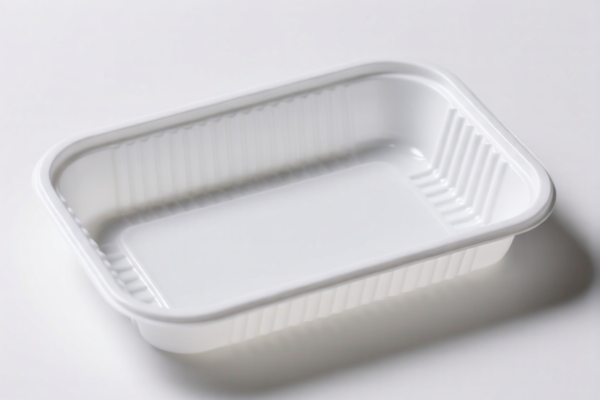
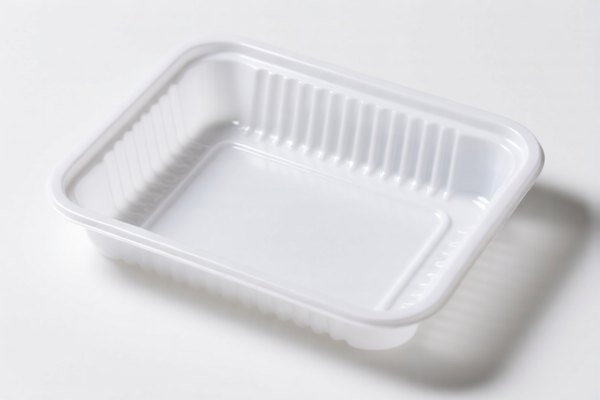
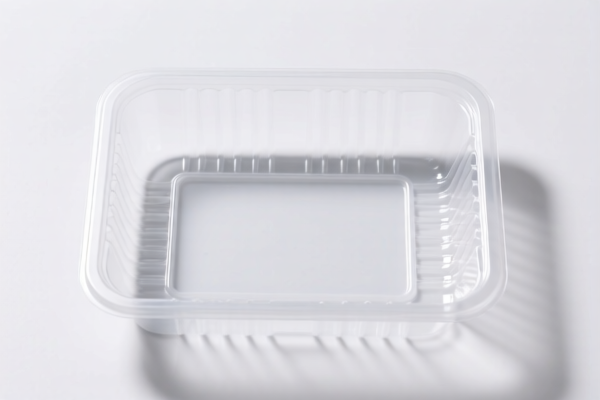
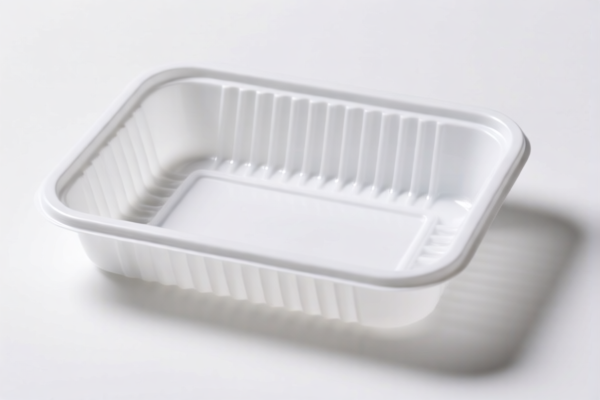
AI Analysis
📦 PVC Tray (Plastic Trays)
🌐 HS Code Reference & Customs Clearance Guide | 2026 Latest Tariff Analysis | Professional Clearance Strategy 📌 I. Product Definition: What is a "PVC Tray"?
A PVC Tray is a flat or shallow container made primarily of Polyvinyl Chloride (PVC) plastic. In international trade, its classification depends strictly on its specific design, usage, and structural characteristics. It is not a single uniform item but falls into different categories based on whether it is a generic packaging component or a specialized transport tool.
Key Classification Logic: * Generic/Non-Specific Use: If the tray does not fit specific packaging standards (e.g., standard crates, boxes, pallets), it is often classified under "Other articles of plastic." * Transport/Packaging Specific: If the tray is designed specifically for holding, protecting, or transporting goods (like a crate, case, or pallet), it falls under "Articles for the conveyance or packing of goods."
⚠️ Critical Distinction Point: * If it is a custom-shaped, non-standard, or general-purpose container (e.g., a cosmetic display tray, a generic food liner): → 3926.90.99.89 * If it is a standardized shipping crate, case, or pallet designed for logistics: → 3923.10.20.00 or 3923.10.90.00
📦 II. HS Code Classification Details (2026 Latest Tariff Authority Comparison)
Based on the provided data, there are three possible HS Codes for PVC Trays, each with distinct tax implications.
| HS Code | Product Description | Applicable Scenario | Primary Function |
|---|---|---|---|
3926.90.99.89 |
Other articles of plastic, other, other (PVC Tray) | Non-specific use, generic containers, display trays | Miscellaneous Plastic Article |
3923.10.20.00 |
Articles for the conveyance or packing of goods, wooden boxes, cases, crates, drums and similar containers (Plastic) | Standardized transport crates, pallets, shipping cases | Specific Packaging/Transport |
3923.10.90.00 |
Other articles for the conveyance or packing of goods (Plastic) | Other specialized packing/transport items not listed above | Other Specific Packaging |
🔍 Key Reminder: * Misclassification Risk: Declaring a generic "display tray" as a "shipping crate" (3923 series) to lower base tariffs is a common compliance error. Customs will inspect the design intent. * Base Tariff Difference:
3926has a higher base tariff (5.3%) but lower additional taxes compared to3923(0% base), BUT the total tax burden is significantly different due to Section 301 and IEEPA tariffs.
💰 III. 2026 Latest Tariff Rate Breakdown (Including Surcharges & Policy Add-ons)
✅ Applicable Country: United States (US) ✅ Origin: China (CN) ✅ Effective Date: 2025/2026 Import Season
🎯 1. 3926.90.99.89 — Other Articles of Plastic (Generic PVC Tray)
| Item | Content |
|---|---|
| Base Tariff | 5.3% (Most Favored Nation Rate) |
| Section 301 Surcharge | +7.5% (From USITC Footnote) |
| IEEPA Surcharge (Section 122) | +10% (Targeting China/HK Products) |
| Total Tax Rate | 22.8% |
| Tax Calculation | CIF Value × 22.8% |
| De Minimis Exemption | ❌ Not Available (High risk of audit for low-value shipments) |
| Legal Basis Path | HTSUS:3926.90.99.89 → Section 301:3926.90.99.89 → IEEPA:9903.01.25 |
📌 Explanation: * This is the lowest total tax rate among the three options. * Why? Because while the base tariff is higher (5.3% vs 0%), the Section 301 surcharge is lower (7.5% vs 25%). * Strategy: If your product is a generic, non-standardized, or decorative tray, this is the most cost-effective classification.
🎯 2. 3923.10.20.00 — Plastic Crates/Cases for Conveyance (Specific Packaging)
| Item | Content |
|---|---|
| Base Tariff | 0.0% |
| Section 301 Surcharge | +25.0% (Aggressive Surcharge) |
| IEEPA Surcharge (Section 122) | +10% |
| Total Tax Rate | 35.0% |
| Tax Calculation | CIF Value × 35.0% |
| De Minimis Exemption | ❌ Not Available |
| Legal Basis Path | HTSUS:3923.10.20.00 → Section 301:3923.10.20.00 → IEEPA:9903.01.25 |
📌 Explanation: * Although the base tariff is 0%, the Section 301 surcharge is 25%, making the total burden very high. * Strategy: Only use this if the product is strictly a heavy-duty shipping crate or pallet and cannot be argued as a "generic article."
🎯 3. 3923.10.90.00 — Other Plastic Articles for Conveyance/Packing
| Item | Content |
|---|---|
| Base Tariff | 3.0% |
| Section 301 Surcharge | +25.0% |
| IEEPA Surcharge (Section 122) | +10% |
| Total Tax Rate | 38.0% |
| Tax Calculation | CIF Value × 38.0% |
| De Minimis Exemption | ❌ Not Available |
| Legal Basis Path | HTSUS:3923.10.90.00 → Section 301:3923.10.90.00 → IEEPA:9903.01.25 |
📌 Explanation: * This is the highest tax rate option. * Strategy: Avoid this code unless your product fits this "catch-all" category for packaging and cannot be classified elsewhere. It offers no tax advantage.
🛠️ IV. Customs Clearance Practical Advice (Actionable Pitfall Avoidance)
✅ 1. Documentation Checklist (Non-negotiable)
| Document | Mandatory? | Description |
|---|---|---|
| ✅ Product Specifications | ✔️ | Must detail material (100% PVC), dimensions, weight, and intended use. |
| ✅ Product Photos | ✔️ | High-res images showing: 1. Overall shape 2. Bottom/structural details 3. Any branding/logos |
| ✅ Commercial Invoice | ✔️ | Must explicitly state "PVC Tray, Made in China" and not use vague terms like "Plastic Good." |
| ✅ Packing List | ✔️ | Must match invoice exactly. |
| ✅ Function Description | ✔️ | Crucial: Explain if it is for storage, shipping, or display. This determines the HS Code. |
✅ 2. Declaration Strategy (The "Golden Rules")
🔥 "Define Use, Choose Code, Save Tax!"
| Scenario | Recommended HS Code | Total Tax | Why? |
|---|---|---|---|
| Generic Display/Storage Tray (e.g., cosmetics, jewelry, office supplies) | 3926.90.99.89 |
22.8% | Lowest total tax. Classified as "Other plastic article." |
| Heavy-Duty Shipping Crate (e.g., industrial parts, bulk logistics) | 3923.10.20.00 |
35.0% | Must prove it is a "crate/case" for transport. |
| Specialized Packing Tool (e.g., custom molded insert for machinery) | 3923.10.90.00 |
38.0% | Highest risk/cost. Avoid if possible. |
⚠️ Warning: * Do NOT misclassify a generic tray as a "shipping crate" (
3923) just to get 0% base tariff. The 25% Section 301 surcharge will negate any savings. * Do NOT under-declare value. The total tax is calculated on CIF (Cost, Insurance, Freight).
✅ 3. Special Considerations
| Situation | Handling Advice |
|---|---|
| OEM Custom Trays | Provide the design blueprint to prove it is a generic article (3926) or a specific crate (3923). Customization does not automatically mean "generic." |
| Stackable Trays | If designed to stack on pallets for transport, it may lean towards 3923. If for display on shelves, it is 3926. |
| Mixed Contents | If the tray contains other goods (e.g., electronics inside), the tray is part of the packing. The value of the tray must be included in the CIF value of the main product, but the HS Code for the main product usually dictates the clearance. However, if declared separately as a "packaging material," use the HS Code above. |
🌍 V. Global Market Comparison (2026 Snapshot)
| Country/Region | Recommended HS Code | Approx. Tariff (China Origin) | Notes |
|---|---|---|---|
| 🇺🇸 USA | 3926.90.99.89 |
22.8% (Best Option) | High Section 301 + IEEPA. Avoid 3923 if possible. |
| 🇨🇳 China | 3926.90.99.89 |
~5.3% | Lower base tariff. No Section 301/IEEPA. |
| 🇪🇺 EU | 3926.90.99.90 |
~5.0% | No Section 301/IEEPA. VAT applies separately. |
| 🇬🇧 UK | 3926.90.99.90 |
~5.0% | Similar to EU. Post-Brexit rules apply. |
| 🇦🇺 Australia | 3926.90.99.90 |
~5.0% | No additional punitive tariffs. |
📌 Conclusion: * The USA is the most complex market for PVC Trays due to layered tariffs. * Optimization Strategy: Aim for
3926.90.99.89(22.8%) whenever the product design allows. Only use3923codes if the product is unequivocally a "conveyance crate."
📌 VI. Common Errors & Pitfalls (Lessons Learned)
❌ Error 1: Declaring a "Plastic Storage Bin" as "Plastic Crate" (3923.10.20.00)
👉 Consequence: You pay 35% instead of 22.8%. You lose 12.2% in unnecessary taxes.
❌ Error 2: Using vague descriptions like "Plastic Item"
👉 Consequence: Customs may reclassify to the highest duty rate (3923.10.90.00 at 38%) or delay shipment for inspection.
❌ Error 3: Ignoring IEEPA Section 122 👉 Consequence: All three HS Codes have a 10% IEEPA surcharge. Assuming "packaging" is exempt is a costly mistake.
✅ Correct Practice:
"PVC Plastic Tray, Grey, 12x12 inch, for Display of Cosmetics, Made in China, HS 3926.90.99.89"
🎯 VII. Conclusion: Smart Classification, Maximize Profit!
🎯 Key Takeaway:
🔹 "Generic = 3926 (22.8%) | Shipping Crate = 3923 (35-38%)" 🔹 Total Tax > Base Tariff: Always calculate the sum of Base + Section 301 + IEEPA.
📌 Pro Tip:
If your PVC Tray is not a standard shipping crate, always prefer
3926.90.99.89. It saves you 12-15% in total tax compared to the3923codes.
✨ Professional Clearance Starts with Accurate Classification! 💼 Your Profit Margin Depends on These Digits!
Customer Reviews
About HS Code Classification
The Harmonized System (HS) is an internationally standardized nomenclature developed by the World Customs Organization (WCO) to classify traded products. Over 200 countries use the HS system as the basis for customs tariffs, trade statistics, and import/export regulations.
Each HS code follows a hierarchical structure:
- Chapter (2 digits) — Broad category of goods (e.g., Chapter 84: Machinery and Mechanical Appliances)
- Heading (4 digits) — More specific grouping within the chapter
- Subheading (6 digits) — Internationally standardized breakdown, used by all WCO member countries
- National subdivisions (8-10 digits) — Country-specific extensions for further classification, such as US HTSUS 10-digit codes
Correct HS code classification is essential for smooth customs clearance, accurate duty payment, and compliance with trade regulations. Misclassification can lead to customs delays, overpayment of duties, or penalties.
When importing from CN to US, the applicable tariff rates may include:
- Most-Favored-Nation (MFN) rate — The standard duty rate applied to WTO members
- General rate — Applied to countries without trade agreements
- Trade remedy duties — Additional tariffs such as Section 301 (anti-dumping), Section 232 (national security), or countervailing duties
The information provided on this page is for reference purposes only. For official classification, please consult with your local customs authority or a licensed customs broker.