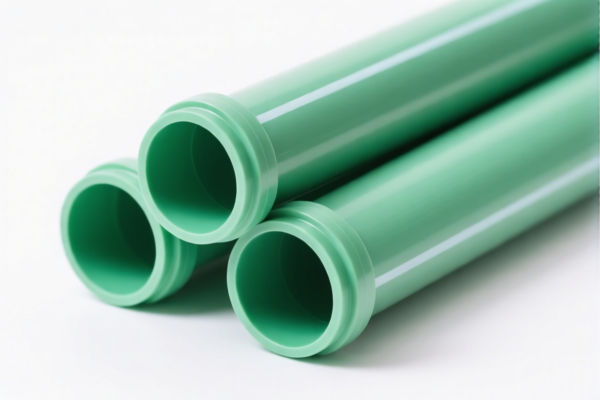
pvc watering pipe
CN → US| HS Code | Tariff Rate | Origin | Destination | Doc |
|---|---|---|---|---|
| 3926909987 | 22.8% | CN | US | Official Doc |
| 3926909989 | 22.8% | CN | US | Official Doc |
| 3917320010 | 38.1% | CN | US | Official Doc |
| 3917230000 | 38.1% | CN | US | Official Doc |
| 3917400020 | 40.3% | CN | US | Official Doc |
Product Images


AI Analysis
🚰 PVC Watering Pipe (PVC Plastic Pipes and Tubes)
🌐 HS Code Reference & Customs Clearance Guide | 2026 Latest Tariff Analysis | Professional Clearance Strategy 📌 1. Product Definition & Classification: Are You Classifying "Pipes" Correctly?
PVC (Polyvinyl Chloride) watering pipes are rigid or semi-rigid plastic conduits used for transporting water, irrigation, or ventilation. In international trade, the classification hinges on two critical factors: 1. Material & Form: Is it a unified polymer tube? 2. Function: Is it a pressure-bearing pipe, a ventilation duct, or a generic plastic fitting?
⚠️ Key Distinction Point: - If it is a standard pressure pipe made of PVC (chlorinated polymer) → It likely falls under Chapter 3917 (Tubes, Pipes, and Hoses). - If it is a ventilation-specific or non-pressure rated item → It may fall under 3917.40. - If the specific pipe definition is unclear or it is considered a generic plastic accessory/part rather than a finished pipe → It falls under the Fallback Category (3926.90).
📦 2. HS Code Classification Details (2026 Latest Tariff Authority Cross-Reference)
| HS Code | Product Description | Application Scenario | Tax Rate |
|---|---|---|---|
3917.23.00.00 |
PVC Tubes, Pipes, and Hoses (Chlorinated Polymers) | Standard rigid PVC water pipes, pressure-rated plumbing | 38.1% |
3917.32.00.10 |
PVC Material Pipes (Fully Compliant) | PVC pipes meeting exact material and morphological requirements | 38.1% |
3917.40.00.20 |
PVC Pipes for Ventilation Use | Non-pressure rated pipes specifically for air/ventilation systems | 40.3% |
3926.90.99.87 |
PVC Tubular Products (General Plastic Fallback) | Use unclear, generic PVC tubing not strictly defined as "pipe" | 22.8% |
3926.90.99.89 |
PVC Plastic Tubular Products (Other) | Fits "Other Plastic Products" definition, loose classification | 22.8% |
🔍 Critical Reminder: -
3917Series: These are the primary classifications for "Pipes." They incur higher base tariffs but are technically more accurate for standard plumbing/irrigation pipes. -3926Series: These are fallback categories. Use them only if the item is not clearly a "pipe" (e.g., small diameter tubing, fittings, or if documentation is insufficient). Lower tax (22.8%) but higher compliance risk.
💰 3. 2026 Latest Tariff Rate Breakdown (Including Surcharges & Policy Add-ons)
✅ Applicable Country: United States (US) ✅ Origin: China (CN) ✅ Effective Date: November 10, 2025 (and subsequent imports)
🎯 1. 3917.23.00.00 & 3917.32.00.10 — PVC Pipes (Primary Pipe Category)
| Item | Content |
|---|---|
| Base Tariff | 3.1% (Ad valorem) |
| Section 301 Surcharge | +25.0% (USITC Footnote for Chapter 39) |
| Section 122 Tariff | +10.0% (Specific trade remedy surcharge) |
| Total Rate | 38.1% |
| Tax Calculation | CIF Value × 38.1% |
| De Minimis Exemption | ❌ Not Available (deny_de_minimis) |
| Legal Basis Path | USITC:3917.23.00.00 → Footnote:301_Section → 122_Clause |
📌 Explanation: - These codes represent true PVC pipes. The high tax (38.1%) is due to the combination of the standard duty (3.1%) and two major surcharges: the 25% Section 301 tariff (trade war tariff) and the 10% Section 122 tariff (national security/supply chain tariff). - Risk: High audit probability. Customs will check if it is indeed a "pipe" and not just a plastic tube.
🎯 2. 3917.40.00.20 — PVC Pipes for Ventilation
| Item | Content |
|---|---|
| Base Tariff | 5.3% (Ad valorem) |
| Section 301 Surcharge | +25.0% |
| Section 122 Tariff | +10.0% |
| Total Rate | 40.3% |
| Tax Calculation | CIF Value × 40.3% |
| De Minimis Exemption | ❌ Not Available |
| Legal Basis Path | USITC:3917.40.00.20 → Footnote:301_Section → 122_Clause |
📌 Note: - Even though the base tariff is slightly higher (5.3% vs 3.1%), the total is 40.3% due to the same surcharges. - This code is strictly for ventilation. Using it for water pipes is misclassification and carries heavy penalties.
🎯 3. 3926.90.99.87 & 3926.90.99.89 — Generic PVC Tubular Products (Fallback)
| Item | Content |
|---|---|
| Base Tariff | 5.3% (Ad valorem) |
| Section 301 Surcharge | +7.5% (Note: Different 301 footnote applies to Ch 3926) |
| Section 122 Tariff | +10.0% |
| Total Rate | 22.8% |
| Tax Calculation | CIF Value × 22.8% |
| De Minimis Exemption | ❌ Not Available |
| Legal Basis Path | USITC:3926.90.99.87 → Footnote:301_Ch3926 → 122_Clause |
📌 Important: - The total tax is significantly lower (22.8%) compared to the pipe category (38.1%+). - BUT: This is a fallback category ("Other Plastic Products"). You can only use this if: 1. The product is not strictly a "pipe" (e.g., small diameter tubing, fittings, or non-pressure tubes). 2. The function is unclear. 3. Warning: Misclassifying a standard PVC water pipe into 3926 to save 15%+ in tax is high-risk. Customs may reclassify it during audit, leading to back taxes, penalties, and seizure.
🛠️ 4. Customs Clearance Practical Advice (Battle-Tested Pitfall Guide)
✅ 1. Documentation Checklist (Non-Negotiable)
| Document | Must Provide? | Explanation |
|---|---|---|
| ✅ Product Specification Sheet | ✔️ | Must specify: Material (PVC), Diameter, Wall Thickness, Pressure Rating, Intended Use (Water/Irrigation/Ventilation). |
| ✅ Technical Drawing | ✔️ | Clear cross-section showing it is a hollow tube/pipe, not a solid rod or fitting. |
| ✅ Product Photos (Clear Label) | ✔️ | Must show printed text on pipe: "PVC", "Schedule 40/80", "For Water", or "Ventilation". |
| ✅ Commercial Invoice | ✔️ | Must match HS Code description. Do NOT write "Accessories" if it's a pipe. |
| ✅ Bill of Lading / Packing List | ✔️ | Ensure weight and dimensions match declared goods. |
✅ 2. Declaration Strategy (Key Mantra)
🔥 "Accurate Use Determines Code, Code Determines Tax!"
| Scenario | Correct Declaration | Wrong Declaration |
|---|---|---|
| Standard PVC Water Pipe (Rigid, Pressure) | 3917.23.00.00 or 3917.32.00.10 |
Misclassify as 3926.90.99.89 → Audit Risk + Back Tax |
| PVC Ventilation Duct (Non-Pressure) | 3917.40.00.20 |
Misclassify as 3917.23.00.00 → Slightly higher base tax, but acceptable if function is ambiguous |
| Small Diameter PVC Tubing (Not a "Pipe") | 3926.90.99.87 |
Call it "Pipe" → Misclassification |
| PVC Pipe Fittings (Elbows, Tees) | 3926.90.99.87/89 |
Call them "Pipes" → Wrong Code |
✅ 3. Special Case Handling
| Situation | Handling Advice |
|---|---|
| OEM Custom Pipes | Provide customer design specs. If it's standard, use 3917. If unique, provide engineering justification for fallback 3926. |
| Mixed Containers | If packing both PVC pipes and PVC fittings, declare separately. Do not lump all under one HS code. |
| Ambiguous "Watering Pipe" | If the pipe is soft, flexible, and non-pressure rated, consider 3926.90.99.89 (22.8%). If rigid and pressure-rated, must use 3917 (38.1%). |
| Pre-Ruling Application | For large volume imports, Apply for an Advance Ruling with CBP. It locks in the classification and protects against future audits. |
🌍 5. Global Market Clearance Comparison (2026 Latest)
| Country/Region | Recommended HS Code | Tariff | Certification Requirements | Notes |
|---|---|---|---|---|
| 🇺🇸 USA | 3917.23.00.00 |
38.1% | No specific cert, but must comply with FDA/NSF for potable water | High Surcharge (301 + 122) |
| 🇪🇺 EU | 3917.21.00 |
~4-7% | CE Marking, WRAS (UK), NSF/ANSI 61 | No 301/122 Tariffs |
| 🇨🇳 China | 3917.21.00 |
~5-6% | CCC (if applicable), GB Standards | Low Tariff |
| 🇦🇺 Australia | 3917.21.00 |
~5% | RCM, AS/NZS Standards | Low Tariff |
📌 Conclusion: - USA is the most expensive market for PVC pipes due to Section 301 and Section 122 tariffs. - European and Asian markets have significantly lower tariff barriers. - Cost Optimization: If importing to the US, consider transshipment (though risky and illegal if not genuinely processed) or supply chain diversification (e.g., sourcing from Vietnam/Mexico if available) to mitigate 38.1% tax burden.
📌 6. Common Mistakes & Pitfall Guide (Blood-Teaching Lessons)
❌ Mistake 1: Classifying all PVC tubular products under 3926 to save tax.
👉 Consequence: CBP audits will reclassify to 3917, resulting in 15.3% back tax + penalties per unit.
❌ Mistake 2: Declaring "Ventilation Pipe" (3917.40) for actual "Water Pipe" (3917.23).
👉 Consequence: While tax difference is small (40.3% vs 38.1%), the documentation mismatch (pressure rating, material spec) will trigger customs detention and rejection.
❌ Mistake 3: Ignoring the "Section 122" tariff. 👉 Consequence: Even if you think Section 301 is suspended or reduced, Section 122 (10%) is often still active for Chinese plastics. Failing to include it leads to underpayment.
❌ Mistake 4: Using "Plastic Tube" in description for a rigid "PVC Pipe". 👉 Consequence: Ambiguous description leads to HS Code uncertainty, causing customs delays and storage fees.
✅ Correct Approach:
"Rigid PVC Pipe, Schedule 40, 2-inch Diameter, For Potable Water Use, NSF/ANSI 61 Certified, Model XYZ"
🎯 7. Conclusion: Precision in Classification Saves Money!
🎯 Remember the Mantra:
🔹 "Rigid Water Pipe = 3917 (38.1%) | Ventilation = 3917.40 (40.3%) | Generic/Small Tube = 3926 (22.8%)" 🔹 "Do not force 3926 if it's clearly a pipe. The risk of audit is not worth the 15% savings!"
📌 Pro Tip: If your PVC pipes are originally from Vietnam, Thailand, or Mexico, you may avoid Section 301 and Section 122 tariffs, reducing the total tax to ~5-10%. Recommendation: Apply for a Pre-Ruling (Ruling Letter) from CBP before shipping. It provides legal certainty and prevents costly disputes at the port.
📣 Immediate Action:
📞 Contact a Professional Customs Broker + Provide Technical Specs + Apply for HS Code Pre-Ruling 🚀 Ensure Smooth Customs Clearance, Avoid Penalties, and Protect Your Profit Margin!
✨ Professional Clearance Starts with Accurate Classification! 💼 Every Percent of Tax Matters in the PVC Trade!
Customer Reviews
About HS Code Classification
The Harmonized System (HS) is an internationally standardized nomenclature developed by the World Customs Organization (WCO) to classify traded products. Over 200 countries use the HS system as the basis for customs tariffs, trade statistics, and import/export regulations.
Each HS code follows a hierarchical structure:
- Chapter (2 digits) — Broad category of goods (e.g., Chapter 84: Machinery and Mechanical Appliances)
- Heading (4 digits) — More specific grouping within the chapter
- Subheading (6 digits) — Internationally standardized breakdown, used by all WCO member countries
- National subdivisions (8-10 digits) — Country-specific extensions for further classification, such as US HTSUS 10-digit codes
Correct HS code classification is essential for smooth customs clearance, accurate duty payment, and compliance with trade regulations. Misclassification can lead to customs delays, overpayment of duties, or penalties.
When importing from CN to US, the applicable tariff rates may include:
- Most-Favored-Nation (MFN) rate — The standard duty rate applied to WTO members
- General rate — Applied to countries without trade agreements
- Trade remedy duties — Additional tariffs such as Section 301 (anti-dumping), Section 232 (national security), or countervailing duties
The information provided on this page is for reference purposes only. For official classification, please consult with your local customs authority or a licensed customs broker.