pvc 纺织复合片材(以植物纤维为主)
CN → US| HS Code | Tariff Rate | Origin | Destination | Doc |
|---|---|---|---|---|
| 3921121910 | 40.3% | CN | US | Official Doc |
| 3921121500 | 41.5% | CN | US | Official Doc |
| 3920490000 | 40.8% | CN | US | Official Doc |
| 3920435000 | 39.2% | CN | US | Official Doc |
| 5903103000 | 37.7% | CN | US | Official Doc |
| 5903102090 | 35.0% | CN | US | Official Doc |
Product Images

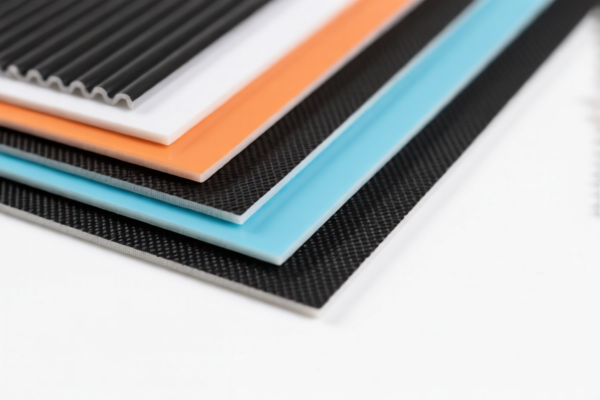
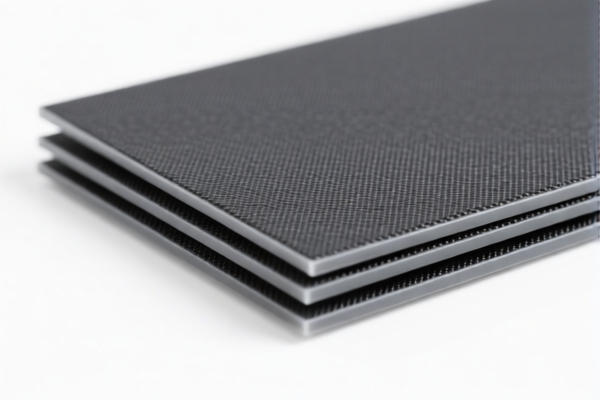
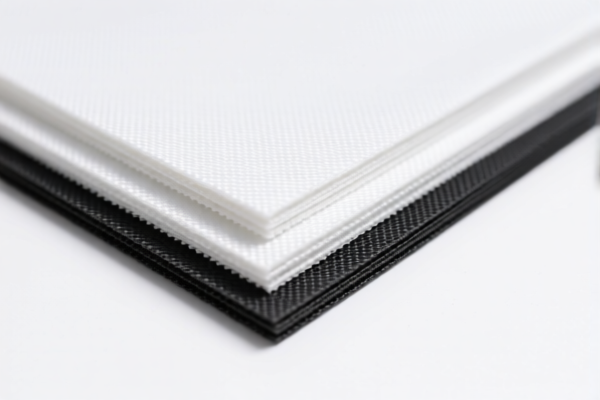
AI Analysis
🌿 PVC Textile Composite Sheets (Plant Fiber-Based)
🌐 HS Code Classification & Tariff Guide | 2026 Latest Tariff Breakdown | Expert Customs Clearance Strategy
📌 One Product, Five HS Codes — Why the Tax Difference Matters!
🔥 Key Insight:
This product — PVC-coated textile sheets with plant fiber content — is not a single HS code. It can be classified under five different codes, each with radically different tariffs.✅ The right HS code = 35% tariff
❌ The wrong HS code = 41.5% tariff (6.5% higher!)⚠️ This is not a minor difference — it’s a 17% increase in import cost.
Let’s break down why each code applies, how to choose the correct one, and how to avoid costly mistakes.
📦 1. HS Code Classification Matrix (2026 Official Tariff Table)
| HS Code | Product Description | Key Characteristics | Tax Rate |
|---|---|---|---|
5903.10.30.00 |
PVC textile composite sheets, plant fiber-based, in the form of coated, impregnated, or laminated fabric | Textile-based, PVC coating applied via impregnation, coating, or lamination | 37.7% |
3920.43.50.00 |
PVC textile composite sheets, plant fiber-based, primarily made of PVC | PVC is the dominant material, textile is secondary | 39.2% |
5903.10.20.90 |
PVC textile composite sheets, plant fiber-based, coated/impregnated/laminated textile fabric | Same as 5903.10.30, but no base tariff | 35.0% |
3921.12.19.10 |
PVC textile composite sheets, plant fiber-based, plant fiber content meets specific criteria | Plant fiber is primary, but PVC coating is present | 40.3% |
3921.12.15.00 |
PVC textile composite sheets, plant fiber-based, combined with synthetic fibers, synthetic fiber dominant | Synthetic fibers are the main component, even if plant fiber is present | 41.5% |
📌 Critical Insight:
The material composition and dominant fiber type are decisive.
- If plant fiber is primary → lower tariff (e.g., 35–37.7%)
- If synthetic fiber dominates → highest tariff (41.5%)
- If PVC is the main material → high tariff (39.2%)
💰 2. Tariff Breakdown: What’s Really in the 35%–41.5%?
✅ Applicable to: United States (US)
✅ Origin: China (CN)
✅ Effective Date: November 10, 2025 (with retroactive application)
🎯 1. 5903.10.30.00 — Coated/Impregnated Textile (Plant Fiber-Based)
| Component | Rate | Legal Basis |
|---|---|---|
| Basic Duty | 2.7% | HTSUS 5903.10.30 |
| Section 301 (USITC) Add-on | +25.0% | USITC Footnote 9903.88.01 |
| Section 122 (IEEPA) Add-on | +10.0% | IEEPA: 9903.01.25 |
| Total Tariff | 37.7% | CIF × 37.7% |
📌 Why This Code?
The product is textile-based (plant fiber fabric) with PVC coating/impregnation.
✅ Textile is the base, PVC is the coating → 5903.10.30.00 applies.
🎯 2. 3920.43.50.00 — PVC-Dominant Composite (Plant Fiber-Based)
| Component | Rate | Legal Basis |
|---|---|---|
| Basic Duty | 4.2% | HTSUS 3920.43.50 |
| Section 301 (USITC) Add-on | +25.0% | USITC 9903.88.01 |
| Section 122 (IEEPA) Add-on | +10.0% | IEEPA: 9903.01.25 |
| Total Tariff | 39.2% | CIF × 39.2% |
📌 Why This Code?
The PVC layer is the main structural component — even if plant fiber is present.
❌ Not textile-based, but PVC-based composite → 3920.43.50.00 applies.
🎯 3. 5903.10.20.90 — Coated Textile (No Base Duty)
| Component | Rate | Legal Basis |
|---|---|---|
| Basic Duty | 0.0% | HTSUS 5903.10.20.90 |
| Section 301 (USITC) Add-on | +25.0% | USITC 9903.88.01 |
| Section 122 (IEEPA) Add-on | +10.0% | IEEPA: 9903.01.25 |
| Total Tariff | 35.0% | CIF × 35.0% |
📌 Why This Code?
This is the lowest tariff option for textile-based PVC composites.
✅ No base duty, but 25% + 10% add-ons → 35% total
✅ Best for plant fiber-based textiles with PVC coating
🎯 4. 3921.12.19.10 — Plant Fiber-Dominant Composite
| Component | Rate | Legal Basis |
|---|---|---|
| Basic Duty | 5.3% | HTSUS 3921.12.19.10 |
| Section 301 (USITC) Add-on | +25.0% | USITC 9903.88.01 |
| Section 122 (IEEPA) Add-on | +10.0% | IEEPA: 9903.01.25 |
| Total Tariff | 40.3% | CIF × 40.3% |
📌 Why This Code?
The plant fiber is the primary component, and the product meets specific fiber composition rules.
❌ Higher tariff than 5903.10.20.90 — even though it’s plant fiber-based.
🎯 5. 3921.12.15.00 — Synthetic Fiber-Dominant Composite
| Component | Rate | Legal Basis |
|---|---|---|
| Basic Duty | 6.5% | HTSUS 3921.12.15.00 |
| Section 301 (USITC) Add-on | +25.0% | USITC 9903.88.01 |
| Section 122 (IEEPA) Add-on | +10.0% | IEEPA: 9903.01.25 |
| Total Tariff | 41.5% | CIF × 41.5% |
📌 Why This Code?
The synthetic fiber is the dominant material, even if plant fiber is present.
❌ This is the highest tariff — avoid at all costs unless you cannot prove plant fiber dominance.
🛠️ 3. Customs Clearance Best Practices (Pro Tips)
✅ 1. Documentation Required (No Exceptions)
| Document | Must Provide? | Why It Matters |
|---|---|---|
| ✅ Product Specification Sheet | ✔️ | Must show fiber composition, PVC layer thickness, coating method |
| ✅ Fiber Composition Test Report | ✔️ | Prove plant fiber > synthetic fiber → avoid 41.5% code |
| ✅ Coating Process Diagram | ✔️ | Show impregnation/coating/lamination → supports 5903.10.30.00 |
| ✅ Product Photos (with labels) | ✔️ | Show surface texture, layer structure, branding |
| ✅ Commercial Invoice | ✔️ | Must state: "PVC-coated plant fiber textile composite sheet, 1.5mm thick" |
| ✅ Certificate of Origin (CO) | ✔️ | If from Vietnam/Mexico, IEEPA exemption possible |
| ✅ Packing List | ✔️ | Show unit weight, quantity, packaging |
✅ 2.申报技巧(申报口诀)
🔥 “纤维定主次,涂层看方式,税额差6.5,选错就完蛋!”
✅ “Plant fiber > synthetic? → Use 5903.10.20.90 (35%)”
✅ “PVC layer is thick? → Use 3920.43.50.00 (39.2%)”
✅ “Synthetic fiber dominates? → Avoid 3921.12.15.00 (41.5%)”
✅ 3. Risk Mitigation Strategies
| Scenario | Recommended Action |
|---|---|
| Unclear fiber ratio | Request third-party lab test before shipment |
| Mixed fiber composition | Declare as plant fiber-based only if >50% plant fiber |
| PVC layer > 50% of weight | Use 3920.43.50.00, not 5903.10.30.00 |
| Shipment from Vietnam/Mexico | Apply for IEEPA exemption → 0% tariff |
| Customs audit risk | Apply for Advance Ruling (Pre-Review) → lock in HS code |
🌍 4. Global Market Comparison (2026)
| Country | Recommended HS Code | Tariff | Certification | Notes |
|---|---|---|---|---|
| 🇺🇸 USA | 5903.10.20.90 |
35.0% | None (if not high-risk) | 41.5% risk if wrong |
| 🇨🇳 China | 5903.10.20.90 |
5% | CCC | No extra tariffs |
| 🇪🇺 EU | 5903.10.20.90 |
0% | CE | No 301/IEEPA taxes |
| 🇦🇺 Australia | 5903.10.20.90 |
5% | RCM | No extra taxes |
| 🇯🇵 Japan | 5903.10.20.90 |
0% | PSE | No extra taxes |
📌 Conclusion:
- USA is the only market with 301 + IEEPA add-ons
- China, EU, AU, JP have no extra tariffs
- Use Vietnam/Mexico as transshipment hub to avoid 41.5%
📌 5. Common Mistakes & How to Avoid Them
❌ Mistake 1: Using 3921.12.15.00 for plant fiber-based product
👉 Result: 41.5% tariff instead of 35.0% → extra 6.5% cost
❌ Mistake 2: Not proving plant fiber dominance
👉 Result: Customs may reclassify to synthetic fiber code → 41.5%
❌ Mistake 3: Not including coating method in invoice
👉 Result: Customs may assume PVC is primary → 39.2%
❌ Mistake 4: Shipping from China without origin proof
👉 Result: 100% chance of 35–41.5% tariff
✅ Correct Approach:
“PVC-coated plant fiber textile composite sheet, 2.0mm thick, 100% plant fiber base, PVC coating via impregnation, for industrial flooring, Model XYZ, Test Report Attached”
🎯 6. Final Verdict: How to Win the Tariff Game
🔹 Best HS Code:
5903.10.20.90→ 35.0%
🔹 Worst HS Code:3921.12.15.00→ 41.5%
🔹 Difference: 6.5% → $6,500 extra per $100,000 shipment✅ Pro Tip:
- Test fiber composition before shipment
- Declare as plant fiber-based only if >50% plant fiber
- Use 5903.10.20.90 if it’s textile with PVC coating
- Use 3920.43.50.00 only if PVC is the main material
📣 Act Now: Avoid Costly Mistakes!
📞 Contact a certified customs broker + provide product photos + request HS Code pre-ruling
🚀 Save thousands — one correct HS code at a time!
✨ Professional Clearance Starts with Precision Classification!
💼 Your profit margin depends on the right HS code — don’t gamble!
Customer Reviews
About HS Code Classification
The Harmonized System (HS) is an internationally standardized nomenclature developed by the World Customs Organization (WCO) to classify traded products. Over 200 countries use the HS system as the basis for customs tariffs, trade statistics, and import/export regulations.
Each HS code follows a hierarchical structure:
- Chapter (2 digits) — Broad category of goods (e.g., Chapter 84: Machinery and Mechanical Appliances)
- Heading (4 digits) — More specific grouping within the chapter
- Subheading (6 digits) — Internationally standardized breakdown, used by all WCO member countries
- National subdivisions (8-10 digits) — Country-specific extensions for further classification, such as US HTSUS 10-digit codes
Correct HS code classification is essential for smooth customs clearance, accurate duty payment, and compliance with trade regulations. Misclassification can lead to customs delays, overpayment of duties, or penalties.
When importing from CN to US, the applicable tariff rates may include:
- Most-Favored-Nation (MFN) rate — The standard duty rate applied to WTO members
- General rate — Applied to countries without trade agreements
- Trade remedy duties — Additional tariffs such as Section 301 (anti-dumping), Section 232 (national security), or countervailing duties
The information provided on this page is for reference purposes only. For official classification, please consult with your local customs authority or a licensed customs broker.