pvc天花板装饰条
CN → US| HS Code | Tariff Rate | Origin | Destination | Doc |
|---|---|---|---|---|
| 3925900000 | 40.3% | CN | US | Official Doc |
| 3916200091 | 40.8% | CN | US | Official Doc |
| 3926909989 | 22.8% | CN | US | Official Doc |
| 3926305000 | 22.8% | CN | US | Official Doc |
| 3925200091 | 22.8% | CN | US | Official Doc |
Product Images
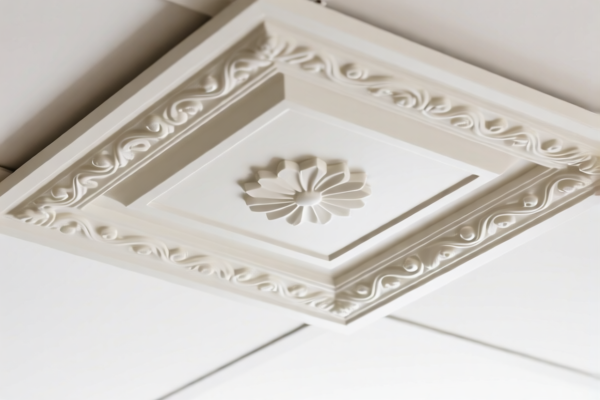

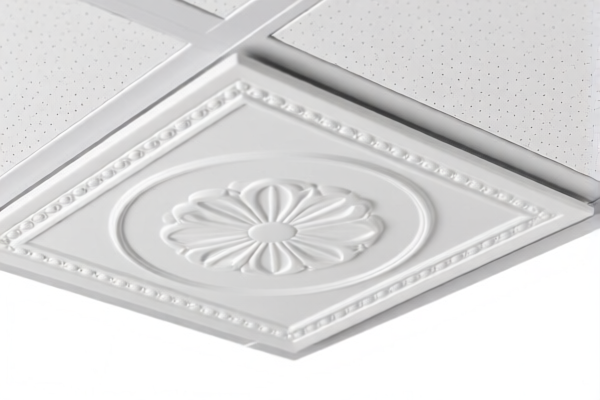

AI Analysis
🏠 PVC Ceiling Corner Protection Strips (PVC Ceiling Decorative Strips)
🌐 HS Code Reference & Customs Clearance Guide | 2026 Latest Tariff Analysis | Professional Strategy for Safe Passage
📌 I. Product Definition & Classification: Do You Truly Understand "PVC Ceiling Strips"?
PVC Ceiling Corner Protection Strips are essential architectural components used to reinforce, decorate, and protect the corners of ceilings in residential, commercial, and industrial buildings. Made primarily from Polyvinyl Chloride (PVC), they offer durability, moisture resistance, and aesthetic appeal.
In international trade, these products fall under the broader category of "Articles of Plastics" or "Construction Materials," but their specific classification depends on: - Function: Is it primarily a structural "corner protection" (architectural) or a decorative "trim"? - Form: Is it a "strip/profile" (extruded) or a generic "furniture/decorative accessory"? - Application: Is it for ceiling, wall, window/door frame, or furniture use?
⚠️ Key Differentiation Points:
- If designed specifically for ceiling corner protection as an architectural component → Likely3925.90.00.00(High Tax: 40.3%) or3925.20.00.91(Lower Tax: 22.8%).
- If classified as a general PVC profile/strip for decoration → Likely3916.20.00.91(High Tax: 40.8%).
- If treated as a generic PVC accessory (not specifically architectural) → Likely3926.90.99.89or3926.30.50.00(Lower Tax: 22.8%).
📦 II. HS Code Classification Details (2026 Latest Tariff Reference)
| HS Code | Product Description | Application Scenario | Tax Rate (Total) |
|---|---|---|---|
3925.90.00.00 |
PVC Ceiling Corner Protection Component (Architectural) | Ceiling corners, wall-ceiling junctions, architectural trim | 40.3% |
3916.20.00.91 |
PVC Profiles/Strips (General Decorative) | General building decoration strips, molding | 40.8% |
3926.90.99.89 |
Other PVC Plastic Articles (General Accessories) | General corner guards, non-specific architectural use | 22.8% |
3926.30.50.00 |
PVC Connectors/Accessories (Furniture/Decor) | Furniture parts, decorative fittings, small connectors | 22.8% |
3925.20.00.91 |
PVC Building Components (Window/Door Frame) | Window/door frame trim, decorative attachments | 22.8% |
🔍 Critical Warning:
-3916.20.00.91and3925.90.00.00carry the highest tax rates (40.8% / 40.3%) due to being classified as specific "architectural" or "profile" items with heavy附加 tariffs. -3926.90.99.89,3926.30.50.00, and3925.20.00.91offer a lower tax rate (22.8%) if the product can be argued as a generic accessory, connector, or window/door trim rather than a dedicated ceiling architectural component. - Misclassification Risk: Declaring a ceiling corner strip as a "general plastic article" when it is clearly "architectural" can lead to customs audits, back-taxes, and delays.
💰 III. 2026 Latest Tariff Rate Breakdown (Including Surcharges & Policy Add-ons)
✅ Applicable Country: United States (US)
✅ Origin: China (CN)
✅ Effective Date: November 10, 2025 (and subsequent imports)
🎯 1. 3925.90.00.00 —— PVC Ceiling Corner Protection (Architectural)
| Item | Content |
|---|---|
| Base Tariff | 5.3% |
| Section 301 Surcharge | +25.0% |
| Section 122 Tariff | +10.0% |
| Total Tax Rate | 40.3% |
| Tax Calculation | CIF Value × 40.3% |
| De Minimis Exemption | ❌ No (Not eligible) |
| Legal Basis Path | Section 301: 9903.88.01 → Section 122: 9903.10.00 → HTSUS: 3925.90.00.00 |
📌 Explanation:
- The 25.0% Section 301 surcharge is applied to Chinese-origin "Plastic Articles" under the "301 List 3 & 4". - The 10.0% Section 122 tariff is a specific punitive measure targeting certain Chinese imports. - Total 40.3% is a heavy burden, making accurate classification critical for cost control.
🎯 2. 3916.20.00.91 —— PVC Profiles/Strips (General Decorative)
| Item | Content |
|---|---|
| Base Tariff | 5.8% |
| Section 301 Surcharge | +25.0% |
| Section 122 Tariff | +10.0% |
| Total Tax Rate | 40.8% |
| Tax Calculation | CIF Value × 40.8% |
| De Minimis Exemption | ❌ No |
| Legal Basis Path | Section 301: 9903.88.01 → Section 122: 9903.10.00 → HTSUS: 3916.20.00.91 |
📌 Note:
- This code applies if the product is strictly defined as an "extruded profile" for building decoration. - It carries the highest tax rate (40.8%) among all options. - Risk: High classification risk if the product's "profile" nature is ambiguous.
🎯 3. 3926.90.99.89 —— Other PVC Plastic Articles (General Accessories)
| Item | Content |
|---|---|
| Base Tariff | 5.3% |
| Section 301 Surcharge | +7.5% |
| Section 122 Tariff | +10.0% |
| Total Tax Rate | 22.8% |
| Tax Calculation | CIF Value × 22.8% |
| De Minimis Exemption | ❌ No (but lower base) |
| Legal Basis Path | Section 301: 9903.88.01 (Lower Tier) → Section 122: 9903.10.00 → HTSUS: 3926.90.99.89 |
📌 Strategy:
- This is the most favorable classification if the product can be argued as a "general accessory" rather than a specific "architectural component". - Savings: 18.0% lower than the "Architectural" classification! - Requirement: Must prove the item is not exclusively for "ceiling corner protection" but has broader use.
🎯 4. 3926.30.50.00 —— PVC Connectors/Accessories (Furniture/Decor)
| Item | Content |
|---|---|
| Base Tariff | 5.3% |
| Section 301 Surcharge | +7.5% |
| Section 122 Tariff | +10.0% |
| Total Tax Rate | 22.8% |
| Tax Calculation | CIF Value × 22.8% |
| De Minimis Exemption | ❌ No |
| Legal Basis Path | Section 301: 9903.88.01 (Lower Tier) → Section 122: 9903.10.00 → HTSUS: 3926.30.50.00 |
📌 Strategy:
- Ideal if the product is marketed as a "connector" or "furniture accessory" rather than a ceiling component. - Savings: 18.0% lower than the "Architectural" classification!
🎯 5. 3925.20.00.91 —— PVC Building Components (Window/Door Frame)
| Item | Content |
|---|---|
| Base Tariff | 5.3% |
| Section 301 Surcharge | +7.5% |
| Section 122 Tariff | +10.0% |
| Total Tax Rate | 22.8% |
| Tax Calculation | CIF Value × 22.8% |
| De Minimis Exemption | ❌ No |
| Legal Basis Path | Section 301: 9903.88.01 (Lower Tier) → Section 122: 9903.10.00 → HTSUS: 3925.20.00.91 |
📌 Strategy:
- Applicable if the strip is used for window/door frames or general decorative attachments. - Savings: 18.0% lower than the "Architectural" classification! - Condition: Must be used in window/door contexts, not exclusively for ceilings.
🛠️ IV. Practical Customs Clearance Advice (Avoiding Pitfalls)
✅ 1. Preparation Checklist (Must-Haves)
| Document | Required? | Explanation |
|---|---|---|
| ✅ Product Specification Sheet | ✔️ | Detail dimensions, profile shape, material (PVC), intended use (ceiling, wall, window). |
| ✅ Photos & Drawings | ✔️ | Show the strip, how it fits into a corner, and its connection mechanism. |
| ✅ Usage Description | ✔️ | Clearly state: "PVC Ceiling Corner Protection Strip" OR "PVC General Decorative Accessory". |
| ✅ Commercial Invoice | ✔️ | Must match the declared HS Code and product name exactly. |
| ✅ Packing List | ✔️ | Show quantity, weight, and packaging details. |
| ✅ Origin Certificate (CO) | ✔️ | Essential for proving Chinese origin and applying Section 301/122 tariffs. |
✅ 2. Declaration Strategy (Golden Rules)
🔥 "Know Your Use, Choose Your Code, Save 18%!"
| Situation | Correct Declaration | Wrong Action |
|---|---|---|
| Dedicated Ceiling Corner Protection | 3925.90.00.00 or 3916.20.00.91 |
❌ Misdeclare as 3926.90.99.89 → Audit risk! |
| General PVC Trim (Non-specific) | 3926.90.99.89 |
✅ Safe if product has multiple uses. |
| Connector/Accessory Type | 3926.30.50.00 |
✅ Safe if product is a connector. |
| Window/Door Frame Use | 3925.20.00.91 |
✅ Safe if product is for window/door. |
| Mixed Use (Ceiling + General) | 3926.90.99.89 (if broader) |
⚠️ Risk: If exclusively ceiling, may be challenged. |
💡 Pro Tip:
- If your product is only for ceiling corners, do not try to classify it as3926.90.99.89to save taxes. Customs will likely reject the classification, leading to back-taxes + penalties. - Safe Strategy: If the product has multiple applications (e.g., ceiling, wall, window), declare it as3926.90.99.89or3926.30.50.00to justify the lower tax rate.
✅ 3. Special Scenarios
| Scenario | Recommendation |
|---|---|
| OEM Customized Strips | Provide client order + design drawings to prove custom nature. |
| Multi-Purpose Strips | Highlight versatility in description to support 3926 classification. |
| Bulk Import | Consider Advance Ruling (CBP) to lock in the lower tax rate (3926 series) before shipment. |
| Mixed Shipment (Ceiling + Other) | Separate declaration: Ceiling items under 3925/3916, others under 3926. |
🌍 V. Global Market Comparison (2026 Tariff Landscape)
| Country/Region | Recommended HS Code | Tariff Rate | Certification | Notes |
|---|---|---|---|---|
| 🇺🇸 USA | 3925.90.00.00 (Ceiling) |
40.3% | None | Highest risk; 3926 series = 22.8% |
| 🇺🇸 USA | 3926.90.99.89 (General) |
22.8% | None | Lower tax if justified |
| 🇨🇳 China | 3925.90.00.00 |
5.3% | CCC | No Section 301/122 |
| 🇪🇺 EU | 3925.90.00.00 |
6.5% | CE, RoHS | No punitive tariffs |
| 🇦🇺 Australia | 3925.90.00.00 |
5.0% | RCM | No punitive tariffs |
| 🇯🇵 Japan | 3925.90.00.00 |
4.0% | PSE | No punitive tariffs |
📌 Conclusion:
- USA is the only market with punitive Section 301 (25%) + Section 122 (10%) tariffs on Chinese PVC building components. - Total tax difference: 40.3% vs. 22.8% = 17.5% savings if you can justify the3926classification. - Risk: Over-optimizing classification without proper documentation leads to customs seizures.
📌 VI. Common Mistakes & Pitfall Avoidance (Lessons Learned)
❌ Mistake 1: Declaring "Ceiling Corner Strips" as 3926.90.99.89 to save taxes.
👉 Consequence: Customs audit → Back-taxes + Penalty (18% tax gap).
❌ Mistake 2: Using "PVC Profile" for 3916.20.00.91 when the product is a "Corner Protector".
👉 Consequence: Higher tax (40.8% vs. 40.3% + potential audit).
❌ Mistake 3: Failing to provide product usage photos.
👉 Consequence: Customs cannot verify intended use → Delay or rejection.
❌ Mistake 4: Mixing "Ceiling" and "Window" strips in one declaration without separation.
👉 Consequence: Misclassification → Tax underpayment + Audit.
✅ Correct Approach:
"PVC Ceiling Corner Protection Strip (3925.90.00.00) OR PVC General Decorative Accessory (3926.90.99.89) – Based on multi-purpose usage and detailed product description."
🎯 VII. Conclusion: Strategic Classification = Cost Savings
🎯 Golden Rule:
🔹 "Ceiling Specific = 40.3% (High Risk)"
🔹 "General Accessory = 22.8% (Safe if Justified)"
🔹 "Documentation is Key: Photos + Specs + Usage"
🎯 Action Plan:
1. Evaluate your product's primary use (Ceiling vs. General).
2. Document its versatility (if applicable) to support 3926 classification.
3. Apply for an Advance Ruling from CBP before bulk shipment.
4. Prepare detailed specs and photos to avoid audits.
📌 Pro Tip:
If your product is exported to the US, consider re-routing via Vietnam/Mexico to avoid Section 301/122 tariffs (if eligible).
For domestic use, ensure CCC certification and local standards compliance.
📣 Take Action Now:
📞 Contact a Professional Customs Broker + Submit Product Photos + Apply for HS Code Advance Ruling
🚀 Save 18% on taxes, avoid audits, and ship with confidence!
✨ Smart Classification = Lower Costs, Faster Clearance!
💼 Your Product’s Tax Cost is Calculable, Your Strategy is Strategic!
Customer Reviews
About HS Code Classification
The Harmonized System (HS) is an internationally standardized nomenclature developed by the World Customs Organization (WCO) to classify traded products. Over 200 countries use the HS system as the basis for customs tariffs, trade statistics, and import/export regulations.
Each HS code follows a hierarchical structure:
- Chapter (2 digits) — Broad category of goods (e.g., Chapter 84: Machinery and Mechanical Appliances)
- Heading (4 digits) — More specific grouping within the chapter
- Subheading (6 digits) — Internationally standardized breakdown, used by all WCO member countries
- National subdivisions (8-10 digits) — Country-specific extensions for further classification, such as US HTSUS 10-digit codes
Correct HS code classification is essential for smooth customs clearance, accurate duty payment, and compliance with trade regulations. Misclassification can lead to customs delays, overpayment of duties, or penalties.
When importing from CN to US, the applicable tariff rates may include:
- Most-Favored-Nation (MFN) rate — The standard duty rate applied to WTO members
- General rate — Applied to countries without trade agreements
- Trade remedy duties — Additional tariffs such as Section 301 (anti-dumping), Section 232 (national security), or countervailing duties
The information provided on this page is for reference purposes only. For official classification, please consult with your local customs authority or a licensed customs broker.