pvc皮革
CN → US| HS Code | Tariff Rate | Origin | Destination | Doc |
|---|---|---|---|---|
| 6402993177 | 16.0% | CN | US | Official Doc |
| 6402992790 | 20.5% | CN | US | Official Doc |
| 9503000073 | 10.0% | CN | US | Official Doc |
| 3926909989 | 22.8% | CN | US | Official Doc |
| 9503000071 | 10.0% | CN | US | Official Doc |
Product Images
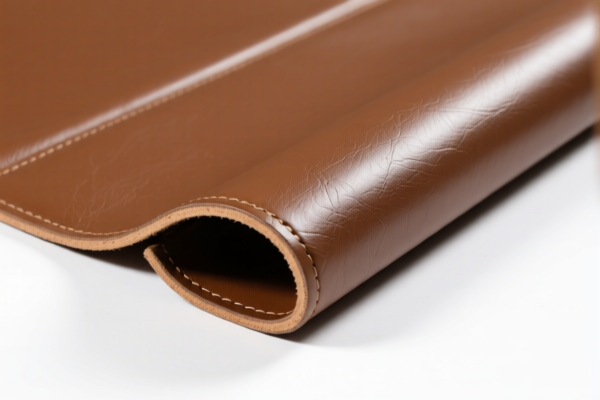
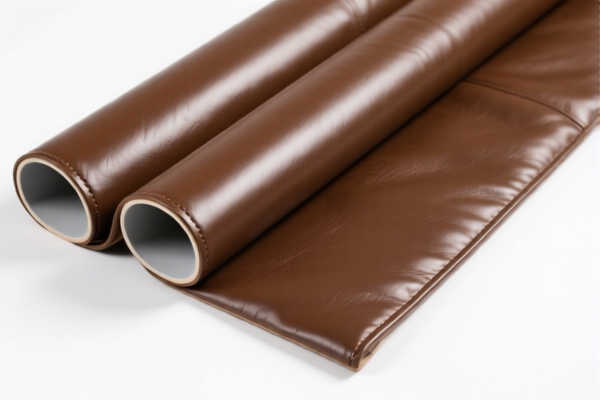
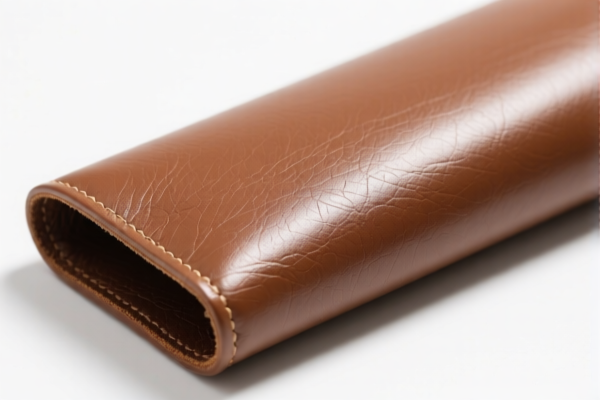

AI Analysis
🎯 PVC Leather (PVC-Coated Fabric) – HS Code Classification & Tariff Guide 2026 | Expert Customs Clearance Strategy
🌐 HS Code Reference & Compliance Blueprint | Full Tax Breakdown | Real-World Customs Advice
📌 One-Stop Guide for Exporters, Importers & Logistics Managers
📦 I. Product Definition & Classification: What Exactly Is "PVC Leather"?
PVC leather — also known as polyvinyl chloride-coated fabric — is a synthetic material widely used in fashion, footwear, accessories, and industrial applications. It mimics the look and feel of genuine leather but is more affordable, water-resistant, and easier to mass-produce.
✅ Key Features of PVC Leather: - Coated on a fabric base (usually polyester or cotton) - Durable, flexible, and weather-resistant - Commonly used in: shoes, bags, upholstery, wallets, and toys
⚠️ Critical Distinction: - PVC-coated fabric (no stitching, no shaping) → Not a finished product - PVC leather used in finished goods (e.g., shoe uppers, toy parts) → Must be classified under product-specific HS codes
🔍 Why This Matters:
Misclassifying PVC leather as a "raw material" when it’s already used in a finished product leads to incorrect tariff application, customs delays, fines, or even seizure.
📌 II. HS Code Classification & Tax Summary (2026 U.S. Tariff Schedule)
Below are the exact HS codes from your data, with full tax breakdowns and legal justifications.
| HS Code | Product Description | Total Tax | Tax Breakdown | Legal Basis |
|---|---|---|---|---|
6402.99.31.77 |
PVC shoes, outer sole & upper made of rubber or plastic | 16.0% | Base: 6.0%, +10% under Section 122, +0% Add-on | IEEPA + Section 122 |
6402.99.27.90 |
PVC shoes, material & shape match specification | 20.5% | Base: 3.0%, +7.5% Add-on, +10% under Section 122 | USITC + Section 122 |
9503.00.00.73 |
PVC toys, suitable for toys & models | 10.0% | Base: 0%, +0% Add-on, +10% under Section 122 | Section 122 Only |
3926.90.99.89 |
PVC toys, plastic-made other articles | 22.8% | Base: 5.3%, +7.5% Add-on, +10% under Section 122 | USITC + IEEPA + Section 122 |
9503.00.00.71 |
PVC toys, plastic material, intended for toys | 10.0% | Base: 0%, +0% Add-on, +10% under Section 122 | Section 122 Only |
📌 Note: All tariffs apply to goods originating from China (CN), effective November 10, 2025, under U.S. trade enforcement actions.
💰 III. Detailed Tax Clause Explanation (Legal & Practical)
🔹 1. Section 122 Tariff (10%) – The "Section 122 Clause"
✅ Legal Basis:
- Section 122 of the Trade Act of 1974 (as amended)
- Applies to goods from China that are subject to additional duties due to unfair trade practices
- Automatically applied to all listed HS codes if origin is China✅ Key Facts: - 10% flat rate on top of existing base tariff - Applies regardless of whether the product is a toy, shoe, or accessory - No exemptions for low-value shipments - Mandatory for all imports from China under current U.S. policy
📌 Example:
- A PVC shoe with 6% base tariff → +10% Section 122 → 16.0% total
🔹 2. USITC Add-on Tariff (3.0% – 7.5%) – The "301 Tariff"
✅ Legal Basis:
- U.S. Trade Representative (USTR) Section 301 Investigation
- Targeted at Chinese goods deemed to have unfair trade practices, including IP theft and forced technology transfer✅ Key Facts: - 3.0% for
6402.99.27.90(PVC shoes meeting specs)
- 7.5% for3926.90.99.89(PVC toys, plastic articles)
- Not applied to all PVC items — only those listed in the Section 301 List
- Excludes simple PVC sheets or raw materials unless used in a finished product📌 Why It Varies: - Some PVC shoes are exempt if they meet strict criteria (e.g., no synthetic leather upper) - PVC toys in
3926.90.99.89are heavily targeted due to high volume and low cost
🔹 3. Base Tariff (0% – 6%) – The "Standard Duty"
✅ Definition:
- The standard ad valorem duty set by the U.S. Harmonized Tariff Schedule (HTSUS)✅ Breakdown: -
6402.99.31.77→ 6.0% base -6402.99.27.90→ 3.0% base -9503.00.00.73/9503.00.00.71→ 0% base -3926.90.99.89→ 5.3% base📌 Note:
- Base tariffs are not waived even for small shipments - No de minimis exemption applies for Section 122 or 301 tariffs
🛠️ IV. Customs Clearance Best Practices (Pro Tips to Avoid Penalties)
✅ 1. Documentation Checklist (MUST-HAVE)
| Document | Required? | Why It Matters |
|---|---|---|
| ✅ Commercial Invoice | ✔️ | Must clearly state product type, material (PVC), intended use, and HS code |
| ✅ Packing List | ✔️ | Shows quantity, weight, and packaging — essential for risk scoring |
| ✅ Product Photos (with labels) | ✔️ | Prove material composition and intended use |
| ✅ Material Safety Data Sheet (MSDS) | ✔️ | For PVC toys — proves non-toxicity (if required) |
| ✅ Certificate of Origin (CO) | ✔️ | If not from China, may avoid Section 122 and 301 tariffs |
| ✅ Test Report (e.g., CPSC, ASTM F963) | ✔️ | For toys — mandatory for safety compliance |
| ✅ Technical Specifications | ✔️ | Prove whether PVC leather is used in shoes or toys |
✅ 2.申报技巧 (申报口诀)
🔥 “Material First, Use Second, Code Last – Don’t Guess, Verify!”
| Scenario | Correct HS Code | Wrong Approach | Risk |
|---|---|---|---|
| PVC shoe with rubber/plastic sole & upper | 6402.99.31.77 |
6402.99.27.90 |
Higher tax or audit |
| PVC shoe meeting exact specs | 6402.99.27.90 |
6402.99.31.77 |
Underpayment risk |
| PVC toy for children (plastic, molded) | 3926.90.99.89 |
9503.00.00.73 |
Higher tax |
| PVC toy for models (non-toy) | 9503.00.00.73 |
3926.90.99.89 |
Misclassification |
| PVC toy for play (intended for children) | 9503.00.00.71 |
9503.00.00.73 |
Missed 10% tariff |
📌 Pro Tip:
- Use "PVC-coated fabric" in the description only if it's raw material - Use "PVC shoe upper", "PVC toy part", or "PVC model" if it’s a component - Never use "synthetic leather" alone — too vague
✅ 3. Special Cases & Risk Mitigation
| Situation | Recommended Action |
|---|---|
| PVC leather used in shoes | Classify under 6402.99.31.77 or 6402.99.27.90 based on material & shape |
| PVC toy for children | Use 3926.90.99.89 (higher tax) or 9503.00.00.71 (lower tax) based on intended use |
| PVC toy for modeling (not play) | Use 9503.00.00.73 — only 10% total tax |
| Shipment from Vietnam/Mexico | Request CO — may avoid Section 122 and 301 tariffs |
| Low-value shipment (<$800) | Still subject to 10% Section 122 — no de minimis for these codes |
🌍 V. Global Market Comparison (2026 Tariff Snapshot)
| Country | Recommended HS Code | Base Duty | Section 122? | 301 Tariff? | Total Tax (China Origin) |
|---|---|---|---|---|---|
| 🇺🇸 United States | 6402.99.31.77 / 9503.00.00.71 |
0%–6% | ✅ Yes | ✅ Yes | 10%–22.8% |
| 🇨🇳 China | 6402.99.31.77 |
5% | ❌ No | ❌ No | 5% |
| 🇪🇺 European Union | 6402.99.31.77 |
0% (if CE) | ❌ No | ❌ No | 0% |
| 🇦🇺 Australia | 6402.99.31.77 |
5% | ❌ No | ❌ No | 5% |
| 🇯🇵 Japan | 6402.99.31.77 |
0% | ❌ No | ❌ No | 0% |
📌 Insight:
- U.S. is the only market with 10% Section 122 + 301 tariffs on PVC goods from China - China, EU, Japan, and Australia have no additional tariffs on PVC leather products - Consider shifting production to Vietnam, Mexico, or Thailand to avoid U.S. tariffs
🚨 VI. Common Mistakes & Legal Risks (Avoid These!)
❌ Mistake 1: Using "PVC leather" as the product name without specifying use
👉 Result: Customs may classify as raw material → higher risk of misclassification
❌ Mistake 2: Not distinguishing between toys for children vs. toys for models
👉 Result: Paying 22.8% instead of 10% — $1,000+ extra per container
❌ Mistake 3: Assuming "PVC" = "no tariff"
👉 Result: Ignoring Section 122 (10%) and 301 (7.5%) → fines + back duties
❌ Mistake 4: Not providing test reports for PVC toys
👉 Result: CPSC rejection, delayed clearance, product recall
✅ VII. Final Verdict: How to Win the Tariff Game
🎯 Proven Strategy: 1. Identify the end use of the PVC product (shoes? toys? accessories?) 2. Match the correct HS code from the list above 3. Verify origin — if not China, no Section 122 or 301 tariffs 4. Get a pre-ruling (Advance Ruling) from U.S. Customs for high-value shipments 5. Use a qualified customs broker with experience in PVC and toy classifications
📌 Golden Rule:
“Don’t guess the code — verify it. One wrong HS code can cost you 20% of your profit.”
📣 Call to Action: Act Now to Protect Your Profit Margin!
📞 Contact a U.S.-licensed customs broker today
📄 Request an HS Code pre-ruling for your PVC product
🌐 Explore alternative sourcing (Vietnam, Mexico, Thailand) to avoid U.S. tariffs
📊 Use this guide as your internal compliance manual
✨ Your Success Starts with Accurate Classification!
💼 PVC leather is not just a material — it’s a tax liability. Classify it right, and you save thousands.
🔗 Download this guide as a PDF → [Link to Download]
📝 Need help with your HS code? → [Contact Us Now]
✅ Professional Customs, Precision Tariffs, Zero Surprises.
🚀 Ship Smart. Pay Less. Grow Faster.
Customer Reviews
About HS Code Classification
The Harmonized System (HS) is an internationally standardized nomenclature developed by the World Customs Organization (WCO) to classify traded products. Over 200 countries use the HS system as the basis for customs tariffs, trade statistics, and import/export regulations.
Each HS code follows a hierarchical structure:
- Chapter (2 digits) — Broad category of goods (e.g., Chapter 84: Machinery and Mechanical Appliances)
- Heading (4 digits) — More specific grouping within the chapter
- Subheading (6 digits) — Internationally standardized breakdown, used by all WCO member countries
- National subdivisions (8-10 digits) — Country-specific extensions for further classification, such as US HTSUS 10-digit codes
Correct HS code classification is essential for smooth customs clearance, accurate duty payment, and compliance with trade regulations. Misclassification can lead to customs delays, overpayment of duties, or penalties.
When importing from CN to US, the applicable tariff rates may include:
- Most-Favored-Nation (MFN) rate — The standard duty rate applied to WTO members
- General rate — Applied to countries without trade agreements
- Trade remedy duties — Additional tariffs such as Section 301 (anti-dumping), Section 232 (national security), or countervailing duties
The information provided on this page is for reference purposes only. For official classification, please consult with your local customs authority or a licensed customs broker.