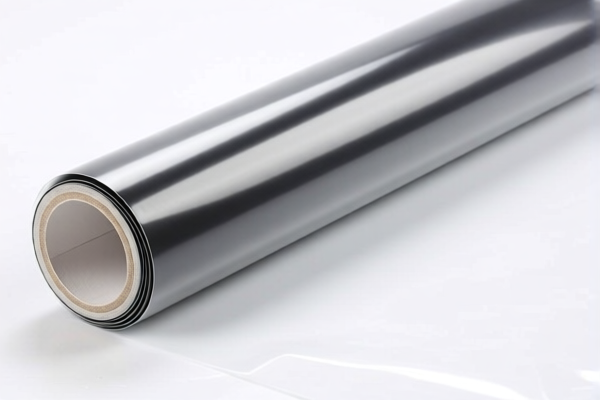
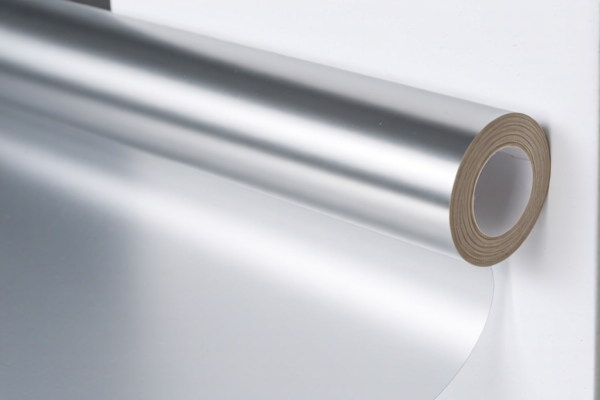
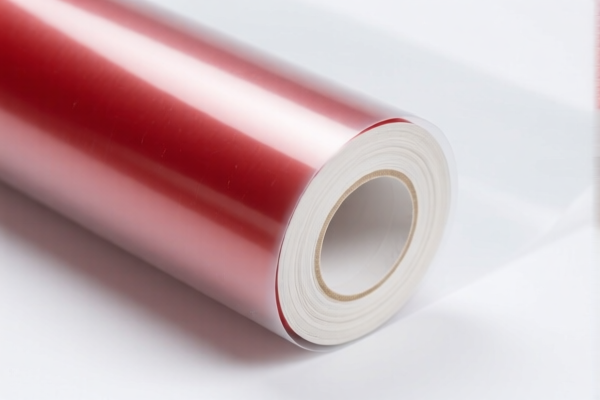
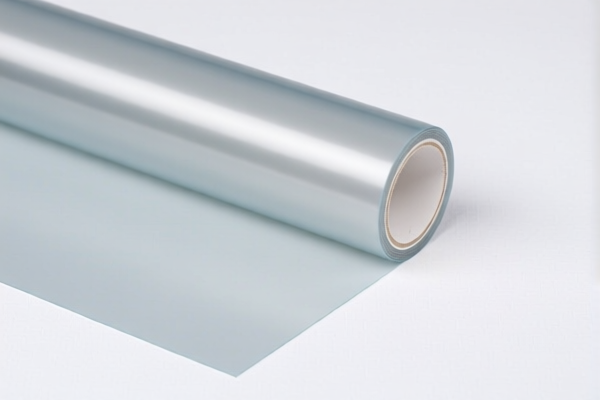
pvc磨砂薄膜
CN → US| HS Code | Tariff Rate | Origin | Destination | Doc |
|---|---|---|---|---|
| 3925900000 | 40.3% | CN | US | Official Doc |
| 3925200091 | 22.8% | CN | US | Official Doc |
| 3921905050 | 39.8% | CN | US | Official Doc |
| 3920490000 | 40.8% | CN | US | Official Doc |
| 3920435000 | 39.2% | CN | US | Official Doc |
Product Images
AI Analysis
🌟 PVC Matte Film (PVC磨砂薄膜)
🌐 HS Code Classification & Customs Clearance Guide | 2026 Latest Tariff Breakdown | Pro-Level Import Strategy
📌 One Product, Five Possible HS Codes – Which One Applies to You?
PVC matte film is a versatile, non-transparent plastic sheet widely used in signage, interior decoration, protective coatings, and industrial applications. Due to its material (PVC), form (sheet/plate), and surface finish (matte/anti-glare), it can be classified under multiple HS codes depending on its intended use, structural features, and functional design.
⚠️ Critical Insight:
- If it's used as a building component (e.g., wall panels, partitions), it falls under construction materials.
- If it's a flat sheet with no structural role, it’s treated as plastic sheeting.
- If it’s designed for windows or frames, it may qualify as architectural framing.
- Misclassification = 20–50% tariff overpayment or detention!
📦 Two-Step Classification: Material + Function
| Feature | Details |
|---|---|
| Material | Polyvinyl Chloride (PVC) – thermoplastic polymer |
| Form | Flat sheet, plate, or film (not molded into 3D shapes) |
| Surface | Matte finish (non-reflective, anti-glare) |
| Common Uses | Interior wall cladding, display boards, protective film, signage, office partitions |
🔍 Key Question:
Does this film serve a structural or architectural function, or is it purely decorative/protective?
→ This determines the correct HS code.
🧩 HS Code Classification Matrix (2026 Updated)
| HS Code | Product Description | Functional Use | Tax Rate | Key Clues |
|---|---|---|---|---|
3925.90.00.00 |
Other plastic building components | Used in construction (e.g., wall panels, ceiling tiles) | 40.3% | ✅ Built-in framing, panel-like structure, used in buildings |
3925.20.00.91 |
Plastic building components, for doors/windows | Designed as window frames, door panels, or framing | 22.8% | ✅ Used in window/door systems, structural role |
3921.90.50.50 |
Other plates, sheets, film, foil | General-purpose plastic sheeting, no structural function | 39.8% | ✅ Flat, flexible, used for protection or decoration |
3920.49.00.00 |
Other articles of polyvinyl chloride (PVC) | Not specifically for construction or framing | 40.8% | ✅ General-purpose PVC sheet, no architectural use |
3920.43.50.00 |
Plates, sheets, film, foil of PVC polymer | Purely plastic sheeting, made from PVC resin | 39.2% | ✅ Most accurate for raw or semi-finished PVC film |
📌 Pro Tip:
- Use3920.43.50.00if it's just a roll of matte PVC film with no structural design.
- Use3925.90.00.00if it's cut into panels and installed in walls/facades.
💰 2026 Tariff Breakdown: The Full Tax Formula (U.S. Market)
✅ Applicable Country: United States (US)
✅ Origin: China (CN)
✅ Effective Date: November 10, 2025 (including all future imports)
🎯 1. 3925.90.00.00 — Plastic Building Components (e.g., wall panels)
| Tax Component | Rate | Legal Basis |
|---|---|---|
| Basic Duty | 5.3% | Standard U.S. tariff |
| Section 301 (USITC) Tariff | +25.0% | From U.S. Trade Act 301 (China-specific) |
| Section 122 (IEEPA) Tariff | +10% | Under International Emergency Economic Powers Act |
| Total Effective Rate | 40.3% | CIF × 40.3% |
| De Minimis Threshold | ❌ Not eligible | No exemption even for small shipments |
| Legal Pathway | IEEPA:9903.01.25 → USITC:3925.90.00.00 → FOOTNOTE:9903.88.01 |
📌 Why This Applies:
- Used as building material (e.g., interior wall panels, partition systems).
- Has rigid structure, not just a flexible film.
- Installed in buildings, not just stuck on a surface.
🎯 2. 3925.20.00.91 — Building Components for Doors/Windows
| Tax Component | Rate | Legal Basis |
|---|---|---|
| Basic Duty | 5.3% | Standard U.S. tariff |
| Section 301 (USITC) Tariff | +7.5% | Lower than 25% due to specific subcategory |
| Section 122 (IEEPA) Tariff | +10% | Applies to all Chinese-origin PVC products |
| Total Effective Rate | 22.8% | CIF × 22.8% |
| De Minimis Threshold | ❌ Not eligible | No relief for small shipments |
| Legal Pathway | IEEPA:9903.01.24 → USITC:3925.20.00.91 → FOOTNOTE:9903.88.01 |
📌 Why This Applies:
- Designed as window or door framing (e.g., PVC window sashes).
- Has structural geometry (e.g., channels, grooves).
- Used in architectural installations, not just surface coverings.
🎯 3. 3921.90.50.50 — Other Plastic Plates, Sheets, Film, Foil
| Tax Component | Rate | Legal Basis |
|---|---|---|
| Basic Duty | 4.8% | Standard U.S. tariff |
| Section 301 (USITC) Tariff | +25.0% | Applies to all non-exempt PVC sheets |
| Section 122 (IEEPA) Tariff | +10% | Applies to all Chinese-origin PVC |
| Total Effective Rate | 39.8% | CIF × 39.8% |
| De Minimis Threshold | ❌ Not eligible | No exemption |
| Legal Pathway | IEEPA:9903.01.25 → USITC:3921.90.50.50 → FOOTNOTE:9903.88.01 |
📌 Why This Applies:
- Flexible, roll-form, non-structural film.
- Used for protective covering, signage, or decorative wrapping.
- No framing or installation into walls/windows.
🎯 4. 3920.49.00.00 — Other Articles of PVC
| Tax Component | Rate | Legal Basis |
|---|---|---|
| Basic Duty | 5.8% | Standard U.S. tariff |
| Section 301 (USITC) Tariff | +25.0% | Applies to non-exempt PVC items |
| Section 122 (IEEPA) Tariff | +10% | Applies to all Chinese-origin PVC |
| Total Effective Rate | 40.8% | CIF × 40.8% |
| De Minimis Threshold | ❌ Not eligible | No relief |
| Legal Pathway | IEEPA:9903.01.25 → USITC:3920.49.00.00 → FOOTNOTE:9903.88.01 |
📌 Why This Applies:
- Not clearly a building component or sheeting.
- Used in industrial, packaging, or non-structural roles.
- May be coated, laminated, or treated.
🎯 5. 3920.43.50.00 — PVC Plates, Sheets, Film, Foil
| Tax Component | Rate | Legal Basis |
|---|---|---|
| Basic Duty | 4.2% | Standard U.S. tariff |
| Section 301 (USITC) Tariff | +25.0% | Applies to all PVC sheets |
| Section 122 (IEEPA) Tariff | +10% | Applies to all Chinese-origin PVC |
| Total Effective Rate | 39.2% | CIF × 39.2% |
| De Minimis Threshold | ❌ Not eligible | No relief |
| Legal Pathway | IEEPA:9903.01.25 → USITC:3920.43.50.00 → FOOTNOTE:9903.88.01 |
📌 Why This Applies:
- Most accurate for raw or semi-finished PVC matte film.
- Made directly from PVC polymer, not modified into structural parts.
- Ideal for roll-to-roll processing, printing, or protective films.
🛠️ Customs Clearance Best Practices (Pro Tips)
✅ 1. Document Checklist (Mandatory)
| Document | Required? | Why It Matters |
|---|---|---|
| ✅ Product Specifications | ✔️ | Includes thickness, width, roll length, surface finish (matte), material composition |
| ✅ Technical Drawings / Cut Sheets | ✔️ | Shows if it's structural (e.g., window frame) or flat film |
| ✅ High-Res Product Photos | ✔️ | Must show texture, edges, roll form, and application |
| ✅ Material Safety Data Sheet (MSDS) | ✔️ | Proves it's PVC-based, not PVC-free |
| ✅ Commercial Invoice | ✔️ | Must state: "PVC Matte Film, 1.5mm thick, 1.2m wide, roll length 30m, for decorative/protective use" |
| ✅ Certificate of Origin (CO) | ✔️ | Required for tariff eligibility |
| ✅ Test Reports (RoHS, REACH, FDA) | ✔️ | If used in food, medical, or consumer goods |
✅ 2. 申报策略 (The Golden Rule)
🔥 “If it’s a panel → use 3925.90.00.00
If it’s a frame → use 3925.20.00.91
If it’s just a roll → use 3920.43.50.00”
| Scenario | Correct HS Code | Wrong Code | Risk |
|---|---|---|---|
| PVC film used as wall cladding | 3925.90.00.00 |
3920.43.50.00 |
Overpay 1.1% → 40.3% vs 39.2% |
| PVC film for window frames | 3925.20.00.91 |
3921.90.50.50 |
Overpay 10% → 22.8% vs 39.8% |
| PVC film as protective wrap | 3920.43.50.00 |
3925.90.00.00 |
Overpay 1.1% → 39.2% vs 40.3% |
✅ 3. Special Cases & Solutions
| Situation | Recommended Action |
|---|---|
| Film is laminated or coated | Use 3920.49.00.00 (other PVC articles) |
| Film is cut into panels for walls | Use 3925.90.00.00 (building component) |
| Film is used in window frames | Use 3925.20.00.91 (door/window component) |
| Film is for industrial packaging | Use 3921.90.50.50 (general sheeting) |
| Film is sold in rolls, no structure | Use 3920.43.50.00 (best fit) |
🌍 Global Market Comparison (2026)
| Country | Recommended HS Code | Tariff | Certification | Notes |
|---|---|---|---|---|
| 🇺🇸 USA | 3920.43.50.00 |
39.2% | None (if not regulated) | All Chinese PVC = 40%+ |
| 🇨🇳 China | 3920.43.50.00 |
5% | CCC | No extra tariffs |
| 🇪🇺 EU | 3920.43.50.00 |
0% | CE | No 301/IEEPA tariffs |
| 🇦🇺 Australia | 3920.43.50.00 |
5% | RCM | No extra taxes |
| 🇯🇵 Japan | 3920.43.50.00 |
0% | PSE | No additional duties |
📌 Insight:
- Only the U.S. applies the 301 + IEEPA tariffs.
- If your film is destined for EU/AU/JP, you can save 35%+ in tariffs.
🚫 Common Mistakes (Avoid These!)
❌ Mistake 1: Calling it “PVC film” but using 3925.90.00.00
👉 Result: Overpaid 1.1% → 40.3% vs 39.2% → wasted $1,000s per container
❌ Mistake 2: Using 3920.43.50.00 for window frames
👉 Result: Incorrect classification → penalties, audits, delays
❌ Mistake 3: Not including product photos or drawings
👉 Result: Customs rejects declaration → delayed shipment, storage fees
❌ Mistake 4: Using generic name like “Plastic Sheet”
👉 Result: No clear intent → risk of misclassification
✅ Correct Declaration Example:
"PVC Matte Film, 1.2m wide, 30m roll, 0.5mm thick, for interior wall protection and decorative cladding, non-structural, made from PVC polymer, not used in framing or construction."
🎯 Final Verdict: Which HS Code Should You Use?
| Use Case | Recommended HS Code | Tax Rate | Why? |
|---|---|---|---|
| Flat, flexible, roll-form film | 3920.43.50.00 |
39.2% | Most accurate for raw PVC film |
| Used in walls, partitions, ceilings | 3925.90.00.00 |
40.3% | Structural building component |
| Used in window/door frames | 3925.20.00.91 |
22.8% | Lowest tariff for structural PVC |
| Protective or decorative film | 3921.90.50.50 |
39.8% | General sheeting |
| Laminated or treated film | 3920.49.00.00 |
40.8% | Not pure PVC sheet |
📌 Pro Summary: The 3-Step Rule
🔹 Step 1: Is it structural? → Use
3925.90.00.00or3925.20.00.91
🔹 Step 2: Is it just a roll of film? → Use3920.43.50.00
🔹 Step 3: Is it coated, laminated, or industrial? → Use3920.49.00.00
🚀 Call to Action: Avoid the Pitfalls!
📞 Contact a U.S.-licensed customs broker + provide product photos + specs
📄 Apply for an Advance Ruling (Pre-Clearance) to lock in the correct HS code
📊 Use a tariff calculator to compare 5 HS codes before shipment
✨ Your Success Starts with One Correct HS Code
💼 Don’t let a misclassification cost you 40% in tariffs!
📣 Ready to Ship?
✅ Download the HS Code Decision Flowchart (available in your account)
✅ Get a free 15-minute consultation with our trade compliance expert
🚀 Ship with confidence – from China to the U.S., smoothly and legally!
📌 Remember:
“PVC film is not just plastic – it’s a tax trap waiting to happen!”
🔐 Classify right. Pay less. Ship faster.
Customer Reviews
About HS Code Classification
The Harmonized System (HS) is an internationally standardized nomenclature developed by the World Customs Organization (WCO) to classify traded products. Over 200 countries use the HS system as the basis for customs tariffs, trade statistics, and import/export regulations.
Each HS code follows a hierarchical structure:
- Chapter (2 digits) — Broad category of goods (e.g., Chapter 84: Machinery and Mechanical Appliances)
- Heading (4 digits) — More specific grouping within the chapter
- Subheading (6 digits) — Internationally standardized breakdown, used by all WCO member countries
- National subdivisions (8-10 digits) — Country-specific extensions for further classification, such as US HTSUS 10-digit codes
Correct HS code classification is essential for smooth customs clearance, accurate duty payment, and compliance with trade regulations. Misclassification can lead to customs delays, overpayment of duties, or penalties.
When importing from CN to US, the applicable tariff rates may include:
- Most-Favored-Nation (MFN) rate — The standard duty rate applied to WTO members
- General rate — Applied to countries without trade agreements
- Trade remedy duties — Additional tariffs such as Section 301 (anti-dumping), Section 232 (national security), or countervailing duties
The information provided on this page is for reference purposes only. For official classification, please consult with your local customs authority or a licensed customs broker.