pvc管
CN → US| HS Code | Tariff Rate | Origin | Destination | Doc |
|---|---|---|---|---|
| 3917230000 | 38.1% | CN | US | Official Doc |
| 3917320010 | 38.1% | CN | US | Official Doc |
| 3926909987 | 22.8% | CN | US | Official Doc |
| 3926909989 | 22.8% | CN | US | Official Doc |
| 3926909989 | 22.8% | CN | US | Official Doc |
Product Images

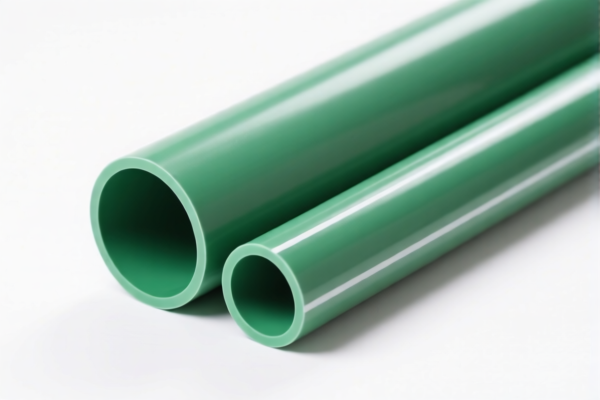

AI Analysis
🛠️ PVC Pipes (Polyvinyl Chloride Pipes and Fittings)
🌐 HS Code Reference & Customs Clearance Guide | 2026 Updated Tariff Analysis | Professional Import Strategy
📌 One, Product Definition & Classification: Do You Really Know What a PVC Pipe Is?
PVC (Polyvinyl Chloride) pipes are rigid thermoplastic conduits widely used in plumbing, drainage, irrigation, industrial fluid transport, and construction. In international trade, they are classified based on material composition, physical form, and intended use.
⚠️ Key Differentiation Points: - Rigid PVC pipes with defined internal/external diameters → HS 3917.23 or 3917.32 - General plastic pipes not meeting specific structural criteria → HS 3926.90.99.87 / 89 - PVC pipe fittings (elbows, tees, couplings) → fall under "other plastic articles" → HS 3926.90.99.89
✅ Important Note:
- Pipes are not the same as fittings — even if made from the same material, they are not interchangeable in HS classification. - Hard pipes (rigid, non-flexible) are not treated the same as flexible hoses or tubes.
📦 Two, HS Code Classification Details (2026 Official Tariff Breakdown)
| HS Code | Product Description | Applicable Use Case | Material & Form Requirement |
|---|---|---|---|
3917.23.00.00 |
PVC (vinyl polymer) pipes and pipe fittings, rigid, for plumbing or drainage | Residential/commercial plumbing, sewer lines, irrigation | PVC material, rigid pipe form, meets structural definition |
3917.32.00.10 |
PVC (polyvinyl chloride) pipes, conforming to material and shape standards | Industrial piping, chemical transport, HVAC systems | PVC, standard rigid pipe geometry, no special features |
3926.90.99.87 |
PVC plastic pipes, meeting hard pipe/hose characteristics | General-purpose rigid plastic pipes, not covered by 3917 | PVC, hard/semi-rigid, not specifically classified under 3917 |
3926.90.99.89 |
PVC plastic pipes, falling under "other plastic articles" (general category) | Miscellaneous plastic pipes, non-standard, or undefined | PVC, any form, not covered by specific subheadings |
3926.90.99.89 |
PVC plastic pipe fittings, within "other plastic articles" | Elbows, couplings, adapters, gaskets, etc. | PVC, fittings, no dedicated subheading |
🔍 Critical Insight:
- HS 3917.23.00.00 and 3917.32.00.10 are premium classifications — they apply only if the pipe meets exact material and shape criteria. - If not clearly fitting into 3917, the product defaults to 3926.90.99.89 — the "catch-all" category for plastic items. - Fittings are never classified under 3917 — they must go to 3926.90.99.89.
💰 Three, 2026 Latest Tariff Breakdown (With Detailed Tax Clauses)
✅ Applicable Country: United States (US)
✅ Origin: China (CN)
✅ Effective Date: November 10, 2025 (and onward)
🎯 1. 3917.23.00.00 — PVC Pipes (Rigid, Structural)
| Item | Details |
|---|---|
| Base Duty | 3.1% (ad valorem) |
| Section 301 (USITC) Additional Duty | +25.0% (from U.S. Trade Act Section 301) |
| Section 122 (IEEPA) Additional Duty | +10.0% (under International Emergency Economic Powers Act) |
| Total Effective Duty | 38.1% |
| Tax Calculation | CIF Value × 38.1% |
| De Minimis Exemption | ❌ Not available (denied under U.S. law) |
| Legal Basis Path | IEEPA:9903.01.25 → IEEPA:9903.01.24 → USITC:3917.23.00.00 → FOOTNOTE:9903.88.01 |
📌 Explanation:
- USITC 25% = Retaliatory tariff under Section 301 of the U.S. Trade Act (targeting China’s unfair trade practices). - IEEPA 10% = Emergency economic measure under International Emergency Economic Powers Act, applied to goods from China/HK. - Total = 38.1% — very high for industrial materials.
🎯 2. 3917.32.00.10 — PVC Pipes (Compliant with Material & Shape Standards)
| Item | Details |
|---|---|
| Base Duty | 3.1% |
| Section 301 (USITC) Additional Duty | +25.0% |
| Section 122 (IEEPA) Additional Duty | +10.0% |
| Total Effective Duty | 38.1% |
| Tax Calculation | CIF × 38.1% |
| De Minimis Exemption | ❌ Not available |
| Legal Basis Path | IEEPA:9903.01.25 → IEEPA:9903.01.24 → USITC:3917.32.00.10 → FOOTNOTE:9903.88.01 |
📌 Note:
- Identical to3917.23.00.00— same tax treatment. - Applies only if the pipe meets exact shape and material specs (e.g., standard diameter, wall thickness, rigidity). - If not fully compliant, it must be reclassified.
🎯 3. 3926.90.99.87 — PVC Plastic Pipes (Hard Pipe Characteristics)
| Item | Details |
|---|---|
| Base Duty | 5.3% |
| Section 301 (USITC) Additional Duty | +7.5% |
| Section 122 (IEEPA) Additional Duty | +10.0% |
| Total Effective Duty | 22.8% |
| Tax Calculation | CIF × 22.8% |
| De Minimis Exemption | ❌ Not available |
| Legal Basis Path | IEEPA:9903.01.25 → IEEPA:9903.01.24 → USITC:3926.90.99.87 → FOOTNOTE:9903.88.01 |
📌 Explanation:
- Lower base rate (5.3%) but still high overall due to 10% IEEPA. - Applies when the pipe is PVC, rigid, but does not meet the strict criteria of 3917. - Often used for non-standard or custom-sized pipes.
🎯 4. 3926.90.99.89 — PVC Plastic Pipes & Fittings (General Category)
| Item | Details |
|---|---|
| Base Duty | 5.3% |
| Section 301 (USITC) Additional Duty | +7.5% |
| Section 122 (IEEPA) Additional Duty | +10.0% |
| Total Effective Duty | 22.8% |
| Tax Calculation | CIF × 22.8% |
| De Minimis Exemption | ❌ Not available |
| Legal Basis Path | IEEPA:9903.01.25 → IEEPA:9903.01.24 → USITC:3926.90.99.89 → FOOTNOTE:9903.88.01 |
📌 Critical Note:
- Applies to both pipes and fittings that do not qualify under 3917. - Fittings (elbows, couplings, etc.) must be declared here — never under 3917. - Even if made of PVC, if not rigid pipe, use this code.
🛠️ Four, Customs Clearance Best Practices (Pro Tips to Avoid Penalties)
✅ 1. Required Documentation (Must-Have List)
| Document | Required? | Why It Matters |
|---|---|---|
| ✅ Product Specification Sheet | ✔️ | Shows material (PVC), dimensions, wall thickness, pressure rating |
| ✅ Technical Drawings / CAD Files | ✔️ | Proves pipe rigidity and structural compliance |
| ✅ High-Resolution Product Photos | ✔️ | Shows shape, joints, fittings, brand, and markings |
| ✅ Material Safety Data Sheet (MSDS) | ✔️ | Confirms PVC composition |
| ✅ Commercial Invoice | ✔️ | Must state: "PVC Pipe, Rigid, for Plumbing" or "PVC Fitting, for Industrial Use" |
| ✅ Certificate of Origin (CO) | ✔️ | Needed for tariff eligibility; if from Vietnam/Mexico, may qualify for lower rates |
| ✅ Packing List | ✔️ | Distinguishes between pipes and fittings |
✅ 2.申报技巧(Key Rules to Remember)
🔥 "Pipe vs Fitting, 3917 vs 3926, Structure Defines Tax!"
| Scenario | Correct HS Code | Wrong Practice |
|---|---|---|
| Standard rigid PVC pipe (e.g., 2-inch, Schedule 40) | 3917.23.00.00 or 3917.32.00.10 |
Misclassified as 3926.90.99.89 → higher tax risk |
| Custom-sized PVC pipe not meeting 3917 specs | 3926.90.99.87 |
Misclassified as 3917 → risk of penalty |
| PVC elbow, coupling, tee, reducer | 3926.90.99.89 |
Misclassified as pipe → incorrect duty |
| Mixed shipment: pipes + fittings | Split申报 (declare separately) | Combine into one line → risk of misclassification |
✅ 3. Special Cases & Solutions
| Situation | Recommended Action |
|---|---|
| PVC pipes from Vietnam, Mexico, or Malaysia | Apply for IEEPA exemption — duty drops to 0–5% |
| Custom/Non-standard pipe dimensions | Use 3926.90.99.87 — avoid 3917 |
| Fittings in bulk | Always use 3926.90.99.89 — no exceptions |
| PVC pipe with integrated fittings (e.g., pre-assembled joint) | Declare as fittings → 3926.90.99.89 |
| PVC pipe used in medical or food-grade systems | Must provide FDA/USDA compliance — may affect classification |
🌍 Five, Global Market Comparison (2026 Update)
| Country/Region | Recommended HS Code | Tariff Rate | Certification Required | Notes |
|---|---|---|---|---|
| 🇺🇸 United States | 3917.23.00.00 / 3926.90.99.89 |
22.8%–38.1% | FDA, ASTM, CE (if applicable) | Highest tariffs — China origin taxed heavily |
| 🇨🇳 China | 3917.23.00.00 |
5% | CCC, GB Standards | No extra tariffs |
| 🇪🇺 European Union | 3917.23.00.00 |
0% (if CE compliant) | CE, REACH, RoHS | No additional tariffs |
| 🇦🇺 Australia | 3917.23.00.00 |
5% | RCM | No extra duties |
| 🇯🇵 Japan | 3917.23.00.00 |
0% | PSE | No extra tariffs |
📌 Conclusion:
- U.S. is the most punitive market for Chinese PVC pipes. - Vietnam/Mexico origin can avoid 38.1% tax — strongly consider shifting production.
📌 Six, Common Mistakes & How to Avoid Them (Real-World Pitfalls)
❌ Mistake 1: Declaring PVC fittings as 3917.23.00.00
👉 Result: Incorrect classification, duty underpayment, penalties + interest
❌ Mistake 2: Using 3926.90.99.89 for standard rigid PVC pipe
👉 Result: Higher tax than needed — you’re paying 22.8% instead of 38.1%? No — wait! Actually, 3917 gives 38.1%, so 3926 is lower — but only if not eligible for 3917!
✅ Clarify:
- If eligible for 3917, use it → 38.1%
- If not eligible, use3926.90.99.87/89→ 22.8%
- Don’t use 3926 if you qualify for 3917 — you’ll pay less!
❌ Mistake 3: Not providing technical drawings
👉 Result: Customs may refuse to classify, delay shipment, or reclassify at higher rate.
❌ Mistake 4: Using generic name like “Plastic Pipe”
👉 Result: Misleading, leads to rejection or audit.
✅ Correct申报 Name Example:
"Rigid PVC Pipe, 4-inch Diameter, Schedule 40, for Drainage, Material: PVC, ASTM D1784 Compliant, Made in China"
🎯 Seven, Final Verdict: Smart Classification = Lower Cost & Faster Clearance!
🎯 Remember the Golden Rules:
🔹 "If it's rigid, PVC, and standard — go for 3917"
🔹 "If it's fitting, custom, or non-standard — use 3926.90.99.89"
🔹 "Never mix pipes and fittings — split the declaration!"
🔹 "China origin? Expect 38.1% or 22.8% — no de minimis!"
📌 Pro Tip:
✅ Apply for Advance Ruling (Pre-Approval) before shipment — get official HS Code confirmation from U.S. Customs.
✅ Shift production to Vietnam/Mexico — avoid IEEPA/Section 301 tariffs entirely.
📣 Act Now!
📞 Contact a licensed customs broker + send product specs + request HS Code pre-ruling
🚀 Avoid delays, penalties, and 38% tax surprises!
✨ Precision Classification = Profit Protection!
💼 Your import cost is only as low as your HS Code is accurate!
Customer Reviews
About HS Code Classification
The Harmonized System (HS) is an internationally standardized nomenclature developed by the World Customs Organization (WCO) to classify traded products. Over 200 countries use the HS system as the basis for customs tariffs, trade statistics, and import/export regulations.
Each HS code follows a hierarchical structure:
- Chapter (2 digits) — Broad category of goods (e.g., Chapter 84: Machinery and Mechanical Appliances)
- Heading (4 digits) — More specific grouping within the chapter
- Subheading (6 digits) — Internationally standardized breakdown, used by all WCO member countries
- National subdivisions (8-10 digits) — Country-specific extensions for further classification, such as US HTSUS 10-digit codes
Correct HS code classification is essential for smooth customs clearance, accurate duty payment, and compliance with trade regulations. Misclassification can lead to customs delays, overpayment of duties, or penalties.
When importing from CN to US, the applicable tariff rates may include:
- Most-Favored-Nation (MFN) rate — The standard duty rate applied to WTO members
- General rate — Applied to countries without trade agreements
- Trade remedy duties — Additional tariffs such as Section 301 (anti-dumping), Section 232 (national security), or countervailing duties
The information provided on this page is for reference purposes only. For official classification, please consult with your local customs authority or a licensed customs broker.